Thursday, July 12, 2007

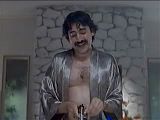
He was...well, he wasn't a good swimmer.

The following is my contribution to Final Girl's Friday the 13th Blog-a-Thon.


"No, what if there is some boy-beast running around Camp Crystal Lake? Let's try to think beyond the legend, put it in real terms. What would it be like today? Some sort of out-of-control psychopath? A frightened retard? A child trapped in a man's body?" - Amy Steel, Friday the 13th Part 2


It's often forgotten that Jason Voorhees is developmentally disabled; indeed, the above quote is the only direct reference to this fact in the ten-film series. This partly owes to the ways that the character changed over the course of a franchise that has little use for narrative coherence, but it's also indicative of the time that the original Friday the 13th was released. That film, and its immediate sequels, literalize the mindless man-child archetype (Boris Karloff's Frankenstein monster and Gunnar Hansen's Leatherface are two predecessors) by confronting us with a villian whose monstrousness is largely defined by his disability. The original Friday the 13th is about our society's fear of the mentally retarded; this is just as evident in the films that don't reference this fact.

It wasn't until I began working with the developmentally disabled that I realized how negative attitudes towards the mentally challenged can go beyond simple mockery to actual fear and animosity. While some of my co-workers are wonderful, a number warned me in hushed tones to watch out for the ways that our clients would try to "manipulate" us. One day I was in the community with an autistic man who attempted to open the door of a parked car; the man inside the car began yelling at our client and informed me that I should "do something about that guy." Retardation makes people genuinely uncomfortable; this was even more true in 1980, less than 20 years after the concept of equal rights for the mentally disabled was introduced into the mainstream and before the developmentally disabled gained the right to equal health care. Residents of asylums and other demoralizing institutions were being released back into society, and people were suddenly confronted with a problem they had long been instructed to lock up and forget about.

The Goonies' Sloth was an attempt to counter negative stereotypes by presenting a physically deformed, brain-damaged man as a lovable E.T.-like figure; later in the decade, Rain Man and Life Goes On were influential in their positive portrayals of mentally challenged characters. But in 1980, there was still nothing unusual about a studio horror release that had as its villain the vengeful mother of a stereotypical mongoloid who appears at the film's end for one last scare. The killer in Friday the 13th is a woman whose disabled son drowned tragically because of the neglect of horny camp counselors (a character for whom the film extends no empathy). If one chooses to read the film as a morality piece - the dead teens punished for their preoccupation with sex, pot and the band Rush (probably) - then Jason is the dark side of the eternal child, pulling Adrienne King into the depths of Crystal Lake, away from adulthood and back to the womb.

The most potent incarnation of Jason is the John Merrick-esque sack-hooded woodsman we meet in Friday the 13th Part 2, his disguise reminding of the exploitation of the disabled and deformed in carnival freak shows. If Jason is out for revenge after the death of his mother (a scenario that doesn't really make any sense, but we'll ignore that for now), he's also assuming the monstrous role assigned to him. Jason's makeshift shack in the woods is a terrific touch, literalizing the theme of rural horror previously seen in The Texas Chain Saw Massacre and The Hills Have Eyes. But unlike those films, Jason wasn't born a villain - he was created, like Caliban, shoved to the fringes of society until he becomes the monster he's always been viewed as. It's a great, rich concept that Friday the 13th Part 2 doesn't do nearly enough with. Unfortunately, it's also the last time that the series even pays lip service to the idea of Jason as a flesh-and-blood character.

The dehumanization of Jason begins with the hockey mask, and reaches fruition with Friday the 13th: A New Beginning. After Jason was killed (suppsedly for good) in the previous film, the producers attempted to revive the franchise by replacing Jason with another mask-wearing killer that is revealed in the final minutes to be a completely different character. It was a cynical move (see also: Halloween III), and the filmmakers wisely chose to reinvent Jason as an undead golem for future films. Over the course of the series, Jason has been a demon's host, a genetically enhanced superbeing, and a worthy adversary for Freddy Kreuger - Jason is pure simulacrum, completely detached from his origins as a "frightened retard."

While this happens with most horror franchises - Freddy's wisecracks watering down his child-molesting backstory, for instance - Jason's evolution is particularly drastic. This has everything to do with the advent of political correctness - when Kelly Rowland calls Freddy a "faggot" in Freddy vs. Jason, the joke is her strange use of the word rather than a comment on Freddy's sexuality. Similarly, it's impossible to imagine a sympathetic protagonist calling Jason a "retard" today. An evil ubermensch Jason allows us to laugh and scream without feeling guilty, and I won't argue that it's a good thing that most people understand that, at the very least, there are some things you just don't say. But part of me misses "special" Jason, who could have only existed at a time when our scares were much thornier.

Monday, July 09, 2007

Sunday, July 08, 2007

too much information

Boy, these memes are flying all over the place. I've been tagged by Dennis with the 8 Simple Things meme, the rules of which are as follows:

1. I share the rules with you.
2. I share eight random facts about myself that you may not know.
3. I tag eight unsuspecting bloggers, who must then share eight facts about themselves (I believe this is legally binding).

So, here goes:


1. My first professional acting audition was for the role of Bobby in The Brady Bunch Movie. I didn't get it.

2. The first time I got paid to act was in a children's musical called Maggie and the Magic Hat. The play, written by New Hampshire songsmith Brownie Macintosh, was about time travel, talking mannequins, and yes, magical hats. It was terrifying. I played an Irish handyman named Mr. O'Toole (get it?). We performed at the Ivoryton Playhouse, a beautiful summer stock theater where actors ranging from Marlon Brando to Groucho Marx had performed. And I appeared there to sing about hammers. I see from Browie's website that the play is still being staged, but only I can say that I originated Mr. O'Toole.

3. I was fired from my first writing gig - the film critic for my seventh-grade newspaper. It was a Christian school, and I offended the faculty by writing about an R-rated movie (Romy and Michelle's High School Reunion).

4. Yes, I was once a born-again Christian. In the years since I've been a near-atheist, a not-really-Taoist, and a sort-of-agnostic. These days, while I'd comfortably call myself spiritual, the closest thing I have to a religious leader is

5. David Bowie. I'm a bleedin' poof for David Bowie. I celebrate his entire catalog.

6. I once performed a puppet show of the Gom Jabbar scene from Dune.

7. I'm deathly, irrationally afraid of snakes - garter snakes, to be precise. I know they won't hurt me; it's a purely Pavlovian thing.

8. My favorite color is brown.

I tag: Doug, Jack, John, Dr. Insermini, Milena, Steve, Michael and Jess.

Monday, July 02, 2007

Man, I'm Big Dick Blaque.


Hardcore opens promisingly, with a montage of Rockwellian scenes of wintry Grand Rapids that introduces us to businessman Jake VanDorn (George C. Scott), his family, and his Calvinist friends and countrymen. As Jake and his guests discuss matters of morality over Christmas dinner, their conversation filled with disdain for the permissive culture perceived as a threat to traditional values, it's unclear whether we should take what we are seeing at face value (Scott's best friend is played by Dick Sargent [?!]). By assuming a detached, Bressonian perspective to these early scenes, writer/director Paul Schrader compels us to question our own moral assumptions; if only the rest of Hardcore provoked the same kind of sickly thrilling ambiguity. Instead, any spell these first scenes weave is quickly broken when VanDorn is shown 8mm evidence of his runaway daughter's disapperance into the world of underground porn. Scott, wails, gnashes his teeth, has an aneurysm and nearly eats his own head while bellowing "THAT'S MY DAUGHTER!" and effectively killing any hope of subtlety or wit. Scott is terrible in Hardcore, and he's a perfect fit for a film that, while born from Schrader's life and personal obsessions, is hamhanded sensationalism masquerading as art.

The plot of Hardcore, Schrader's most thorough appropriation of The Searchers, hinges on the preposterous notion of VanDorn's virginal teenage daughter Kristen (Ilah Davis) disappearing from a youth group trip to L.A. and, within days, found in a hardcore loop by a private investigator (Peter Boyle). Jake takes off to L.A. to save his daughter, and soon finds himself caught in an increasingly sordid sex industry, ranging from storefront sex shops to snuff. There's admittedly a kinky sort of fun to be had in noting the way that Schrader recreates the day-glo, semen-stained surfaces of the porn world, and cinematographer Michael Chapman (who also shot Taxi Driver) gives these scenes the right plastic quality. But Schrader gets in his own way - he pushes us towards identifying with Jake's repulsion, yet he also condescends to the character's middle-American naievete throughout. The result is that while the images may shock us, they're never affecting in a meaningful way. This conflict can make Hardcore seem more exploitative than it was probably intended to be; the women in the film, for instance, are underage-looking, and the camera lingers on their flat chests and skinny bodies in a way that, in the absence of meaningful context, comes off as leering and gratuitous. Schrader tries for horror and only succeeds at gross-out.

The most compelling character in the film is Niki (Season Hubley), a more jaded version of Taxi Driver's Iris. In one of Niki's early scenes, she enters a peepshow booth, naked, planting her feet against the glass in a confident spread-eagle. It's the strongest image in the film, Niki's unapologetic sluttiness confronting our own unspoken voyeurism. As Niki helps Jake find his daughter, the two develop a peculiarly honest relationship, each confessing to the ways they are products of their respective backgrounds - the God-fearing and the godless find they have more in common than they might suspect, and Schrader's obsession with predestination (a holdover from his own Calvinist upbringing) becomes a metaphor for social and economic imprisonment.

These ideas would have resonated more deeply had Schrader pushed his character further; many of the film's problems would immediately be solved if Jake had sex with Niki. But the character remains firmly one-dimensional, a stranger in a strange land immune to temptation, and Schrader cannot seem to take his own protagonist seriously, let alone fully humanize him. And the provocative suggestion that Jake's daughter was seriously kinky to begin with (a porn actor tells Jake, "I don't know what kind of shit she was into, but my dick was red and swollen and chewed up for a week") is quickly brushed aside in favor of a slam-bang ending and a forced resolution. One can feel in Hardcore Schrader's desire to make a movie that would genuinely offend his fundamentalist family; unfortunately, the themes he touches upon but never really explores are far more incendiary than gratuitous T&A (he would return to the central concerns of Hardcore with much greater success in films like American Gigolo, Cat People and Auto Focus).

If there's an element of Hardcore that really works, it's the examination of the Calvinist equivalency of popular culture with sin. Visual references to Star Wars are littered throughout the film, culminating in a nudie lightsabre battle set to "Star Wars Disco." Schrader is not only equating the emerging mainstream cinema of sensation with porn, he's also anticipating the 1980s' borderline-narcotic obsession with pretty surfaces. It's a shaky position to take, and also a hypocritical one in view of Hardcore's own tendency towards titillation, but it's still an effective eulogy for the decade when filmmakers were given free reign to be as audacious and self-indulgent as they wanted to be. If Hardcore is a failure, it's at least a fond reminder of a time when filmmakers were able to fail this big.

Thursday, June 28, 2007

The Trim Bin #59


- There are two trailers I can't stop thinking about lately. The first, No Country For Old Men, is the Coen Brothers' adaptation of Cormac McCarthy's 2005 novel, looks to be a return to form after the bland, disappointing one-two punch of Intolerable Cruelty and The Ladykillers. I can't wait to see what the Coens do with McCarthy's stark prose - the trailer suggests their creepiest film since Blood Simple. The second is for another adaptation, Paul Thomas Anderson's There Will Be Blood (based on the Upton Sinclair novel Oil!). The pronounced similarity to Terrence Malick has been pointed out repeatedly, and the trailer is certainly filled with echoes of Days of Heaven (McCabe and Mrs. Miller, too). I'm intrigued that Anderson, who has always been a wiz with sound (few directors would hire Gary Rydstrom to mix a small-scale romantic comedy), has replaced bombast with silence. It's this stripped-down approach that connects the two trailers in my mind, as both suggest drastically new approaches for their respective makers. If the films are as powerful as their trailers, we're in for a memorable fall.

- The updated AFI list is no better or worse than the last one - it's nice to see Blade Runner and Nashville in there, and it's laughable that The Sixth Sense is apparently the greatest film of 1999 (the best moviegoing year in my lifetime thus far). There's nothing really wrong with the list itself - about a third of the films listed appear on my own top 100 - but it paints an extremely narrow picture of film history and culture. The AFI list is inherently less interesting than the Sight and Sound Top 10 or other lists, mostly because voters must choose from a preliminary list of 400 films that are at least partly chosen for their popularity. Where other lists are meant to provoke discussion, this one is meant to generate nostalgia and boost DVD sales. Add to this the AFI's stupid insistence on an American-only list because the word "American" appears in their name, and you have a list that is purposefully anti-eclectic. It sucked in 1998, it sucks now, and it will suck ten years from now (or nine, as the AFI apparently cannot count to ten). Case closed.

- A while back I was speculating about casting Peter Jackson's adaptation of The Lovely Bones. The parents have been cast, and I'm split. On the one hand, Rachel Weisz is a great choice for Abigail - her ability to be emotionally open without sacrificing subtlety perfectly fits the story's delicate tone. On the other hand, the casting of Ryan Gosling as the patriarch doesn't work for me, and not just because he's far too young to play a father of three. A confession: I just don't get Ryan Gosling. Where others see precocious brilliance, I see a joyless, mannered assembly of self-conscious method tics in search of a performance with soul. I find his tendency towards "important" material contrived. I didn't buy him for a second as a crackhead in Half Nelson. And his pretentiously unpretentious normal guy routine is infuriating, because any normal guy wouldn't be able to say things like "I've always hated the complacency which comes from good looks" with a straight face. I'll give Peter Jackson the benefit of the doubt - I didn't think much of Viggo before The Fellowship of the Ring - but seriously, am I missing something?

- CHUD has an interesting article about the evolution of the 4th of July as a blockbuster weekend/crap depository. I can't wait to see Transformers, even though I'm pretty sure it's going to unleash a plague of snakes and flesh-eating bugs that will kill all of America's children, unleashing an army of Druid cyborgs that not even Tom Atkins can stop from conquering the world. Either way, the robots look cool.


Wednesday, June 20, 2007

Top 100: Pop Music in Film


For my contribution to the Filmmusic Blog-a-Thon, I've assembled what started as a top ten list before ballooning to a 100 list - there was just no way to whittle it down. This list is ranked not only by the greatness of a song, but how perfectly it is used in a scene or moment from a film. Source music allows directors another form of total control, and directors like Kubrick and Scorsese that helped popularlize the concept of pop soundtracks are notorious perfectionists. In the hands of the right filmmaker, a great song (or even a not-so-great one) can become an extension of a characters' emotions, an ironic comment on a scene, or a distinct shade of meaning.

There are some original songs here, but the emphasis is on source music. Straight musicals and performance aren't on this list (with the borderline exception of, ironically, Performance), as they belong on another list completely. Also, I've limited myself to one cue per film - otherwise, half the list would be Goodfellas. Links to the corresponding scenes are provided when available. I hope you enjoy this more than another recent 100 list.

1. “Sister Christian,” Night Ranger – Boogie Nights
2. “The End,” The Doors – Apocalypse Now
3. “Jumpin’ Jack Flash,” The Rolling Stones – Mean Streets
4. “In Dreams,” Roy Orbison – Blue Velvet
5. “Singin’ In the Rain,” Gene Kelly – A Clockwork Orange
6. “Memo From Turner,” Mick Jagger – Performance
7. “Stuck In The Middle With You,” Stealer’s Wheel – Reservoir Dogs
8. “I Think I See The Light,” Cat Stevens – Harold and Maude
9. “Knockin’ On Heaven’s Door,” Bob Dylan – Pat Garrett & Billy the Kid
10. “In Your Eyes,” Peter Gabriel – Say Anything
11. “These Days,” Nico – The Royal Tenenbaums
12. “Layla,” Derek and the Dominos - Goodfellas
13. “I Put a Spell On You,” Screamin’ Jay Hawkins – Stranger Than Paradise
14. “The Stranger Song,” Leonard Cohen – McCabe and Mrs. Miller
15. “Didn’t I Blow Your Mind This Time,” The Delfonics – Jackie Brown
16. “Just Dropped In (To See What Condition My Condition Was In)”, Kenny Rogers and the First Edition – The Big Lebowski
17. “Mrs. Robinson,” Simon and Garfunkel – The Graduate
18. “Tiny Dancer,” Elton John – Almost Famous
19. “Hurdy Gurdy Man,” Donovan – Zodiac
20. “Fight the Power,” Public Enemy – Do the Right Thing
21. “Late for the Sky,” Jackson Browne – Taxi Driver
22. “Relax,” Frankie Goes to Hollywood – Body Double
23. “Theme From Shaft,” Issac Hayes – Shaft
24. “Wise Up,” Aimee Mann - Magnolia
25. “A Quick One While He’s Away,” The Who - Rushmore
26. “Nobody But Me," Human Beinz – Kill Bill vol. 1
27. “Baby Did a Bad Bad Thing,” Chris Issak – Eyes Wide Shut
28. "Everybody's Talkin'," Harry Nilsson - Midnight Cowboy
29. “Moving In Stereo,” The Cars – Fast Times at Ridgemont High
30. “Sussudio,” Phil Collins – American Psycho
31. “An Invitation to the Blues,” Tom Waits – Bad Timing
32. “Amoreena,” Elton John – Dog Day Afternoon
33. "I'm Shipping Up To Boston," Dropkick Murphys - The Departed
34. “A Change is Gonna Come,” Sam Cooke – Malcolm X
35. “The Court of the Crimson King,” King Crimson – Children of Men
36. "Like a Rolling Stone," Bob Dylan and The Band - New York Stories
37. “Staggolee,” Pacific Gas & Electric - Grindhouse
38. “Everybody’s Got To Learn Sometime,” Beck – Eternal Sunshine of the Spotless Mind
39. "Careful With That Axe Eugene," Pink Floyd - Zabriskie Point
40. "Goldfinger," Shirley Bassey - Goldfinger
41. “Staying Alive,” The Bee Gees – Saturday Night Fever
42. “Life on Mars,” David Bowie – The Life Aquatic with Steve Zissou
43. “The Killing Moon,” Echo and the Bunnymen – Donnie Darko
44. “Natural’s Not In It,” Gang of Four – Marie Antoinette
45. “This Magic Moment,” Lou Reed – Lost Highway
46. “Girl, You’ll Be A Woman Soon,” Urge Overkill – Pulp Fiction
47. "Raindrops Keep Fallin' On My Head," B.J. Thomas - Butch Cassidy and the Sundance Kid
48. “Blue Moon,” Sam Cooke – An American Werewolf in London
49. “Don’t You (Forget About Me),” Simple Minds – The Breakfast Club
50. “Hurricane,” Bob Dylan – Dazed and Confused
51. "We'll Meet Again," Vera Lynn - Dr. Strangelove
52. “Janie Jones,” The Clash – Bringing Out the Dead
53. “The Old Main Drag,” The Pogues – My Own Private Idaho
54. “If You Wanna Be a Bird,” The Holy Modal Rounders – Easy Rider
55. "Surfin' Bird," The Trashmen – Full Metal Jacket
56. "Sinnerman," Nina Simone – Inland Empire
57. "From Her To Eternity," Nick Cave and the Bad Seeds - Wings of Desire
58. "Old Time Rock and Roll," Bob Seger - Risky Business
59. “Banana Boat Song,” Harry Belafonte - Beetlejuice
60. “Louie Louie,” The Kingsmen – Animal House
61. "Can We Still Be Friends," Todd Rundgren - Vanilla Sky
62. "Twist and Shout," The Beatles - Ferris Bueller's Day Off
63. “Freebird,” Lynyrd Skynyrd – The Devil’s Rejects
64. “Tequila,” The Champs – Pee-Wee’s Big Adventure
65. "No One Lives Forever," Oingo Boingo - The Texas Chainsaw Massacre 2
66. “Waterloo,” Abba – Muriel’s Wedding
67. "Let's Misbehave," Irving Aaronson and His Commanders - Pennies From Heaven
68. “I Want You Around,” The Ramones – Rock ‘n’ Roll High School
69. “Numb/Encore” Jay-Z and Linkin Park, Miami Vice
70. “Daniel,” Elton John – Alice Doesn’t Live Here Anymore
71. "Magic Man," Heart - The Virgin Suicides
72. “Bela Lugosi’s Dead,” Bauhaus – The Hunger
73. “All Out of Love,” Air Supply - Happiness
74. “Girls,” Death in Vegas – Lost in Translation
75. "The Seeker," The Who - American Beauty
76. “Goodbye Horses,” Q. Lazzarus – The Silence of the Lambs
77. “I’m Your Man,” Leonard Cohen - Secretary
78. “The Blower’s Daughter,” Damien Rice - Closer
79. “There Is An End,” The Greenhornes with Holly Golightly – Broken Flowers
80. “Who Made Who,” AC/DC – Maximum Overdrive
81. "Philadelphia," Neil Young – Philadelphia
82. "Hey You," Pink Floyd - The Squid and the Whale
83. "Venus in Furs," Velvet Underground - Last Days
84. "Just in Time," Nina Simone - Before Sunset
85. "Bad To The Bone," George Thorogood and The Destroyers – Christine
86. "Without You," Harry Nilsson - The Rules of Attraction
87. "Devil Got My Woman," Skip James - Ghost World
88. "Suzanne," Leonard Cohen - Breaking the Waves
89. "Everybody Wants Some," Van Halen - Better Off Dead
90. "Partyman,” Prince – Batman
91. "Midnight, the Stars and You," Roy Noble Orchestra - The Shining
92. "Young Americans," David Bowie – Dogville
93. "2000 Man," The Rolling Stones - Bottle Rocket
94. "Anthem," Leonard Cohen - Natural Born Killers
95. "Sax and Violins," Talking Heads - Until the End of the World
96. "Rock Around the Clock," Bill Haley and the Comets - Blackboard Jungle
97. "Tonight (We'll Make Love Until We Die)" - The Return of the Living Dead
98. "Stardust," Louis Armstrong - Stardust Memories
99. "Que Sera Sera," Doris Day - The Man Who Knew Too Much
100. "Eye of the Tiger," Survivor - Rocky III

Monday, June 18, 2007

always a day away


My great-grandmother died this weekend. At 98, she had sidestepped all forms of disease, injury and senility until the only thing she had left to face was biological law. Her name was Mary Elizabeth Jacquard, but to me, she was Nana Baa. Nana Baa used to be called Nana Wolf because she would read me the story of Peter and the Wolf when I was a toddler. When I was a bit older, I overheard someone use the phrase "a wolf in sheep's clothing"; thus, Nana Wolf became Nana Baa.

Nana Baa used to read to me all the time; in recent years she would joke about sitting at the kitchen table at six in the morning, drinking coffee, and suddenly hearing small footsteps as I descended the stairs carrying a stack of books. And I must have made the poor woman watch Annie a hundred times. But she was always totally enthusiastic - she was a great listener, and she cared about the things that mattered to me. Nana Baa was a pretty perfect great-grandmother.

Nana Baa and my great-grandfather (who I never met, but who I once mistook for President Reagan) came to America via Canada; she lived in Massachusetts for most of her life, raising eight children, dozens of grandchildren and great-grandchildren, and even living to see a few great-great-grandchildren. A faithful Catholic, the walls of her home were covered with images of Christ and a bearded, smiling God watching over the earth. She was what all Christians should be - loving, faithful, and deeply appreciative of her life. Her worst fear was losing her ability to be self-sufficient, and she never did; even in her last years, she was still cooking and cleaning for herself. And in the past few months, as it became clear the end was near, my family was able to arrange for her to spend her last days at home.

I visited her in April, when it looked like she might be gone at any moment. Her eyesight and hearing were fading, but she held me for a long, good time. Too often we don't have the chance to say goodbye to the people we love, so I'll always be greatful that I saw her smile once more. She asked about my filmmaking plans, and I told her about the work I've gotten here and there.

"It's a tough business," she said.

"But there's no pressure," my mom said, to which Nana Baa responded, "Oh yes, there is."

She touched my wife's stomach, feeling the baby still resting inside. Her eyes widened in awe. We talked some more and held hands, then I kissed her and said goodbye. We were going to see her this weekend and bring Luna to meet her, but it wasn't meant to be. Perhaps it's better to die with something to look forward to.
I hope Nana Baa is in the heaven she so strongly believed in. I hope I'll see her again someday.

Thursday, June 14, 2007

She took a midnight train going anywhere


No further proof is needed of David Chase's genius than his ability to turn eight seconds of a silent, black screen into the most talked-about scene of the year. One cannot Google "Sopranos final scene" without being inundated with angry, profane message board posts condemning series creator David Chase with a level of vitriol usually reserved for kiddie rapers and George Lucas. Nobody predicted those final moments, but if someone had, I'd have dismissed the notion as pretentious nonsense. Now, I can't imagine The Sopranos ending any other way. What began as a scabrous black comedy sold on its high concept ("If one family doesn't kill him, the other will" - yuk yuk!) expanded in scale and ambition over the years, becoming an uncompromising lesson in darkness worthy of mention alongside its oft-referenced progenitors. Now that the series is over, we've just begun to fully absorb and process its brilliance, up to and including a final cut that quietly redefines what television is capable of.

Early in "Made in America," Agent Harris (Matt Servitto) warns Tony, "you're reaching." This is Chase's advice to us, as well - the air of impending doom hanging over the entire episode, while suggested by the weirdly off-kilter editing rhythms, is completed by our own simultaneous fear and desire to see Tony Soprano violently offed. It doesn't happen, at least not before the credits roll (we're getting there); nor does Tony join the witness protection program or start a full-scale war. And, frankly, that's for the best - do we really want to see these bloated, middle-aged schlubs gasping for breath as they bloody up the streets of New Jersey? Chase has smartly sated our bloodlust in the previous episode, and in the Pythonesque death of New York boss Phil Leotardo (Frank Vincent) in this one. The world of The Sopranos is as it has always been; the resolution of the New York/New Jersey conflict plays out quickly, with little pause, in a dingy garage in the middle of nowhere. These guys are dinosaurs, and as Chase repeatedly shows us - with one of Phil's crew accidentally wandering out of a Little Italy growing smaller and smaller, with both Tony and Phil's inability earlier this season to reason with a pouting, indifferent Juggalo - they're on their way out. Say goodbye to Grandpa, indeed.

When AJ lashes out at a table of mourners for their superficial chatter about "jack-off fantasies on television," it's hard not to feel like Chase is chastising us. But the truth is more complicated; as ambivalent as he may be about The Sopranos' popularity among those who get off on the violence and complain about the artsy-fartsy stuff, he isn't out to punish his audience. Agent Harris' exclamation - "We're going to win this one!" - and his investment in Tony's continued survival is meant to mirror our own relationship to the big guy. We care about Tony, his crew and his family for the same reason we care about Tom Powers, Tony Montana and Henry Hill; no matter how many sins they commit, it's encouraging to see the little guy succeed, his problems so managable compared to our world's. Chase goes out of his way to avoid glorifying his characters' actions, but he's not sanctimonious either, allowing each character a fond farewell (Paulie and the cat - perfect). While Dr. Melfi may be able to close the door on Tony, it's hard for us to do the same (this is largely due to James Gandolfini's performance, one for the ages). We may find ourselves wishing, as Steve Perry once did, that the movie will never end.

Which brings us to that final scene. If I had to choose, I think that final cut to black signifies Tony's sudden death at the hands of an unnamed hitman in a Members Only jacket, if for no other reason than last week's flashback to Bobby's line "You never hear it coming." At the same time, there's just as strong an argument to be made that Chase is merely playing with our expectations. I mean, it's not like Bobby Baccalieri is John the Baptist. And Members Only's visit to the bathroom does echo The Godfather, except that there's no reason for him to be hiding his weapon in the john. But this is what the scene is about - Chase gives us a grab bag of signifiers relying not only on our knowledge of The Sopranos but on our collective cultural knowledge (this has always been a big part of the show). Knowing that we're watching the last minutes of the last episode gives every moment mythic significance, with "Don't Stop Believin" elevated to the level of an all-too-ironic Greek chorus. We're conditioned to expect the worst; it's impossible to watch a family, numb but still alive, munch onion rings without anticipating a dramatic twist of fate. And it is here that Chase succeeds in truly putting us inside the mind of his protagonist, who will always be looking over his shoulder.

The question that final cut leaves us to ask is whether things are as bad as we perceive them to be. Are we reaching? It's perhaps the most important question of our age, one that we'll do anything to avoid. So the final scene is radical not just in form but in the questions it leaves us; the rabid discussion isn't just about The Sopranos, it's a confession of our need, more than ever, for resolution. I felt that way too, as every last detail - Carmela's vacant, icy stare (Edie Falco deserves a better award than a frigging Emmy), the small flick of Tony's wrist as he dispatches another onion ring - was invested with unbelievable poignance. The Sopranos is one of the great American stories. I hate to see it end. And then

Monday, June 11, 2007

Doing it Spacey-style


It's sometimes hard for me to wrap my mind around the idea that people actually read this blog, so the "Thinking Blogger Award" given to me by John from The Last Visible Blog (along with some very kind words) is extremely encouraging. While I'm not much for memes in general, it seems like it would be extremely bad karma not to pass this along, so below are links to five blogs that are well worth your time. But first, the rules:

1. If, and only if, you get tagged, write a post with links to 5 blogs that make you think.

2. Link to this post so that people can easily find the exact origin of the meme.

3. Optional: Proudly display the ‘Thinking Blogger Award’ with a link to the post that you wrote.

Please note that any of the blogs linked to the right fully deserve this award, but the rules say five, so there it is.

Film Experience Blog - I've always been dismissive of celeb-obsessed film writing, but Nathaniel at The Film Experience changed that for me. Nathaniel's blog is a witty marriage of serious film discussion and star commentary that reminds of Entertainment Weekly back when it was actually fun to read. Plus, he's made me see Michelle Pfeiffer in a whole new light.
Sergio Leone and the Infield Fly Rule - Dennis Cozzalio's blog is an fun, eclectic appreciation of cinema history and culture high and low (recent posts have covered both Amarcord and Hostel: Part II). Plus, his quarterly movie quizzes are not only thought-provoking, they're a blast to write and share.

Silly Hats Only - The home base for Paul Clark (whose writing can also be found over at Screengrab), a cinephile that is, unbelievably enough, as dedicated to lists, awards, and generally applying arbitrary mathematical formulas to film appreciation as I am. This is encouraging.

Nihon Musings - I know little about anime, so every one of Doug's posts on his favorite subject is extremely educational. He's the rare anime aficionado that can write seriously about the medium without leaving us non-otaku in the dust (he's also a damn good friend).

You Struck Me Dumb Like Radium - Obvious bias here, but I'm not just bragging about Jess because she's my wife; she's my wife because she's so worth bragging about. Her movie reviews are sharper and more insightful than mine could ever be, her poetry is achingly beautiful, and she can push out a baby in record time (not strictly relevant, but it was pretty fucking impressive). She doesn't write nearly enough, so bug her about this fact - the world needs more Jessica.

Re: The Sopranos finale


Thursday, June 07, 2007

I shoot to disappear.


At the heart of El Topo, Alejandro Jodorowsky's famously mystical and mystifying sort-of-western, is the recurring image of things buried only to be uncovered. As the opening narration explains, el topo (the mole) is an animal that spends its whole life digging tunnels, looking for a sun that will ultimately leave it blinded. This has often been read as a metaphor for the increasing popularity of underground movies, but more simply, it is a version of that most universal symbol of truth - the sun - that takes away one's sight just as it imbues the seer with a deeper inner vision. There are versions of this story in most, if not all mythologies, and Jodorowsky reduces it to a stark fable of the omnipresent light and the unworthy animal. El Topo is the story of one man's gory, kinky journey to enlightenment; it's both profound and profoundly silly, and whole lot of fun.


El Topo (played by Jodorowsky) is a black-clad gunslinger riding across the desert with his young, naked son (Jodorowsky's son, Brontis). During the course of the film, he rescues a woman from a cult, duels with the four master gunmen of the desert, and is betrayed only to be reborn twenty years later as the savior of a colony of deformed and otherwise disabled cave-dwellers, marry a little person and lead the colony to civilization, which ends in bloodshed and a violent epiphany (this is the most fun I've ever had writing plot summary). If this sounds like a hodgepodge of self-consciously odd ideas, El Topo is much more than weird for weird's sake; the ideas and images in the film unfold suddenly and inevitably, as though in a dream. Jodorowsky has a great talent for finding indelible images, and he assembles them together in a way that creates symmetry out of chaos. The film begins like a variation on a spaghetti western, emphasizing the genre's use of vast expanses of desert as a means of alienation (a scene of some bored gunmen waiting for anything to happen recalls the opening of Once Upon a Time in the West). But the film changes with its protagonist, languidly erotic as El Topo indulges in a good deal of group sex, sadistically violent as he duels the four masters, full-blown surreal as he renounces his physical self for a monastic life, and finally apocalyptic. Few films are so bound to their protagonist (and, by extension, Jodorowsky), and if I call El Topo self-indulgent, I mean it in the best possible way.


Jodorowsky straddles the sacred and the profane throughout El Topo. On the surface, the gunslinger's spiritual growth requires him to renounce the self by way of putting aside the pleasures of the flesh, echoing the most stringent aspects of Vedic faiths. At the same time, the filmmaker is clearly getting off on the copious amounts of kinky sex and cartoonish violence, and he wants us to do the same. Interestingly, it's the film's contradictory nature that is its greatest strength; by indulging all aspects of the human experience, the film is able to be philosophical but not pedantic, romantic but not bucolic, horny but not smutty. It's both visceral and meditative, a film that uses bodily harm as a way of understanding spiritual entropy and evolution. That Jodorowsky acknowledges his own weaknesses (his misogyny foremost among them) makes the hero's complicated journey more poignant. As the mother of one of the masters tells El Topo, "The deeper you fall, the higher you will rise."


What ultimately makes El Topo one of my favorite films is its sheer vitality. Jodorowsky imagines spirituality not as an empty religious concept but as a violent, tangible force that compels us to action. The film ends in revolution before arriving at a startling concept, that of death as a renunciation of everything once pure that has been endlessly co-opted and commodified into utter meaninglessness. El Topo is filled with death, but it's an affirmative film, one that in the protagonist's vaudeville act becomes tounge-in-cheek enough to avoid self-importance. Jodorowsky recognizes the story of man as a comedy about a noble animal that struggles, fails and struggles again in the hopes of seeing the light, if only for a moment.

Thursday, May 31, 2007

Luna Violet Bemis


At about 7PM on Monday night, Jess started feeling funny; around 10, we started timing contractions. At 11:30 we checked into the hospital, and at 12:35 on Tuesday morning, Luna was born. I'll be back talking about movies soon, and I hardly feel qualified after three days of fatherhood to get all philosophical. But I had to share. Isn't she beautiful? Isn't life strange and wonderful?

Tuesday, May 29, 2007

Monday, May 28, 2007

The Trim Bin #58


- Courtesy of ohnotheydidn't (via Nathaniel at The Film Experience): David Lynch's headshots of eight actresses for French Elle. I'd rob a bank for Beatrice Dalle any day.

- I'm not much of a TV fan, and I don't buy the popular notion that television is surpassing film in quality at all. I saw five great movies last year and many more very good ones, but I can't think of more than a handful of shows I'd gladly watch. That said, I must admit that in recent weeks I've been totally immersed in two shows: Lost, which just finished its third season on a tremendous high note, and The Sopranos, about to end its final and richest season. Both shows are expanding the possibilities of television as a narrative medium in a way that only a few (The Prisoner and Twin Peaks come to mind) have.

In the case of Lost, the writers have begun to reveal the secrets of the mysterious island where the survivors of Flight 815 are stranded, seemingly for some as-yet-unknown purpose. Wednesday's finale included a twist that not only deepens the show's tantalizing sci-fi premise, it also expands the narrative possibilities of the show exponentially - it's an ongoing story that is also, brilliantly, about the shifting nature of storytelling itself. In the same way, despite much gloomy foreshadowing, I have absolutely no idea how The Sopranos will end. The story of a boss who is "basically a good person" even if he sometimes kills people (James Gandolfini as Tony is as good as any screen performance this decade), the show gives equal measure to the mechanics of genre and the arbitrariness of real life - a mafioso is as likely to die in a sudden car accident as with a hail of bullets. It's as philosophical as it is visceral, and ranks with the best mob movies.

Both shows also break from television convention in exciting ways, allowing for flawed, complex characters and deliberatly avoiding obvious payoffs. Best of all, they're well-shot - witness one Lost character's genuinely poignant aquatic send-off, or the glimmer of sunlight on the horizon echoing season five's surreal "alternate universe" subplot as Tony exclaims "I get it!" In a medium designed to placate its viewers (witness Heroes' triumph over Lost in the ratings), it's bracing to discover real ambiguity. In this and many ways, both shows are truly (dare I say it?) cinematic.

- RIP, Charles Nelson Reilly. I'll always remember him as Lort in A Troll in Central Park.

- Jack's survey of music cues in the films of Martin Scorsese.

- Finally, just in time for the holiday, here's the first look at the most important release of 2008:

Friday, May 25, 2007

Yub nub.

This post is my contribution to the Star Wars Blog-a-Thon
Star Wars was released seven years before I was born, and I'm sorry that, on the occasion of its thirtieth anniversary, I have no fond memories of seeing it (or any of the original trilogy) on the big screen. I saw the special editions, but while that experience was a blast, I'm sure it can't possibly compare to the collective sense of discovery moviegoers felt at a time when blockbusters were cultural events rather than preordained marketing triumphs. My own introduction to the Star Wars universe happened on video - when I was very young, my parents would make VHS copies of movies they thought would interest me, creating double features that I would replay over and over. And accompanying The Neverending Story on one tape was not Star Wars but Return of the Jedi; my parents had unintentionally (or perhaps intentionally?) given me a wild, almost Pinteresque introduction to Star Wars.

After the opening title crawl informed me of a man named Luke Skywalker trying to rescue Han Solo from Jabba the Hutt, I was quickly plunged into a completely unfamiliar world. The experience was like Buckaroo Banzai, as I struggled to decipher images and terms that I had no frame of reference for (when Luke offers Jabba "these two droids," I thought he was referring to his cufflinks for some reason). The relationships between characters were baffling to me - I knew that Han loved Leia, Luke was the good guy, his dad the bad guy, and Yoda was awesome, but I couldn't tell you why any of these things were true. I also thought Obi Wan was Luke's grandfather. I didn't know what to make of Admiral Akbar or Bib Fortuna. And yet, despite all this confusion, I fell in love with Return of the Jedi. While I was deprived the shock of suddenly discovering Darth Vader's true identity, I responded strongly to the complicated father-son relationship, riveted as Luke was finally provoked to attack his father to protect his sister. Even in my latency period, Leia's gold bikini raised some interesting questions. And I must admit that I loved the Ewoks and cheered their victory over the Empire - it may have been my introduction to the still-potent concept of rooting for the underdog.

On a more basic level, I was captivated by Return of the Jedi's sheer audiovisual assault. While there's no substitute for the big screen, it's impressive to me that, even on a grainy 13-inch screen with tinny sound, I was transported to another world. I rented Star Wars and The Empire Strikes Back soon after, and they had the same dramatic effect on my developing imagination. It's a shame that today's summer movie season offers children so few opportunities to be truly enchanted - these days, sarcasm is substituted for genuine wit. I can't wait to show the movies to my daughter and see if they've become dated relics or, I hope, enduring stories like The Wizard of Oz that transcend the technology of their time (if only George Lucas could have the same faith in his work).

Now, as a grown man, I've learned that Star Wars stands for many more things, culturally and commercially, than I once realized. It's almost impossible to discuss Star Wars today without talking about corporate synergy, the ethics of CG revisionism, and Lucas' transformation into a tragic, Charles Foster Kane-like figure. But these are topics for another day - I feel like being winsome, dammit. So today is for Star Wars for Star Wars' sake, for the memory of being a wide-eyed little geek sprawled out on the living room floor with the shades drawn, taken to a galaxy that is a considerable distance from our own.

Friday Title Card #15

Wednesday, May 23, 2007

It's nice having a word that describes you.


The protagonists of Mike White's screenplays are outsiders, people who feel too deeply and in socially awkward ways. They may be awkward, even creepy, but White excels at making us care for and even relate to characters we would try to avoid in real life. Peggy (Molly Shannon), the heroine of White's directorial debut Year of the Dog, is no exception. From the opening shots of Peggy smiling adoringly at her beloved beagle, Pencil, it's clear that Peggy really, really loves dogs. But while White mines his protagonist's earnestness for many laughs, it soon becomes clear that we're not meant to laugh at Peggy; rather, her strange journey of grief and self-discovery inspires genuine empathy.

A mousy office worker living a routine life, Peggy's solitary peace is shattered one morning when Pencil suddenly dies from an apparent poisoning. Her only friend Layla (Regina King) and sister-in-law (Laura Dern) try to comfort her, but it's clear that Peggy's sorrow is unusually deep. After an uncomfortable date with her neighbor Al (John C. Reilly) - who may be responsible for Pencil's death - Peggy is given hope by boyish ASPCA volunteer Newt (Peter Sarsgaard), who inspires her to animal activism and offers the possibility of lasting companionship. But rather than having the story progress towards an easy ending, White acknowledges the complicated nature of Peggy's empathy for animals, which inspires her even as it alienates everyone around her. An animal lover himself, White celebrates Peggy's newfound calling without sidestepping her genuinely off-putting moments; more broadly, Year of the Dog is about the sublime moment of discovering one's purpose, regardless of what others think.

By the end of the film, Peggy has reached a genuine epiphany, or perhaps flipped her lid, or both - White leaves this for us to decide. And it is quite possible to read Peggy's actions as pure self-delusion; at the same time, all of the characters in Year of the Dog are driven by a specific fixation, whether it's marriage or parenthood or hunting (Sarsgaard's fellow animal lover is the sanest character we meet). The difference is that Peggy's concerns fall outside of the realm of what is considered "normal," and no matter how strange her actions become, their unease at her transformation is just as baffling. I knew a guy who hated PETA and "bleeding heart" activism in general, and while I find PETA's actions often silly as well, I could never understand how just talking about the fact that some people oppose eating meat would make him completely, irrationally furious.* I thought of him when Peggy exclaimed, quite rightly, "What is the big deal about ham sandwiches?" White doesn't ask us to share Peggy's convictions, just to acknowledge her humanity; like many great writers, White's sensitivity is his strongest asset.

Unfortunately, the director does let the screenwriter down - his sense of visual composition is serviceable but uninspired, forcing the quirkier aspects of the story in a manner that nearly suffocates the story. There are moments when White hints at taking the story into even darker places, then backs away; hopefully, this does not signal a loss of nerve. The film is also too short at 97 minutes, as we never really get to know the supporting characters. Luckily, the talented cast fills in many of the narrative gaps - Dern's overprotective mom describing Babe as "intense," and Sarsgaard's uneasy response to Shannon's advances tells us everything we need to know about their characters. And Shannon is wonderful as Peggy, taking the character through some difficult transitions, from despair to confusion to mania to peace. By the film's end, we can't say for sure whether Peggy is crazy or enlightened; either way, Shannon has created a character so complex and painfully identifiable that you can't help but cheer for her.

*Then again, this same guy also responded to the news of our pregnancy with "Abort it." It wasn't a joke. Warmth isn't his strong suit.


Friday, May 18, 2007

Friday Title Card #14

The Director Report Card (The Truth of Accountants)


WARNING: The following ongoing project is very dry, statistic-heavy, and generally boring and pointless.

Anyone left? Alright. This post will be a continuing project logging my personal "rankings" of directors assigned based on their overall mean averages. While consistency is not always synonymous with excellence (Robert Altman is an example of this), I hope this will give a broad picture of where my loyalties lie. The criteria for inclusion is as follows: directors who have made at least three features, of which I have seen a substantial amount (50%, or at least 5 with directors who have made more than ten features). The rankings will be constantly changing as I add more directors and see more films, so check back often. Not that I'd blame you if you didn't. As I said, this is really, really dry stuff. But I find it fun, and maybe you will too. Or not, in which case, feel free to ignore this completely, as I promise more nudity will be forthcoming (welcome to our new friends who came here from Google, incidentally).

A+
Luis Bunuel
Federico Fellini
Terrence Malick

A
Paul Thomas Anderson
Hal Ashby
Ingmar Bergman

Brad Bird
Charles Chaplin
Sofia Coppola
Vittorio De Sica
John Ford
Bob Fosse

Jean-Luc Godard
Todd Haynes
Werner Herzog
Jim Jarmusch
Alejandro Jodorowsky

Buster Keaton
Krzysztof Kieslowski
Stanley Kubrick

David Lean
Sergio Leone
David Lynch
Roman Polanski
Martin Scorsese
Todd Solondz
Quentin Tarantino
Francois Truffaut
Wim Wenders
Billy Wilder

A-
Pedro Almodovar
Robert Altman

Wes Anderson (A)
Michaelangelo Antonioni
Dario Argento
Darren Aronofsky

Warren Beatty
Bernardo Bertolucci
Tim Burton
James Cameron

Jane Campion
Joel & Ethan Coen
David Cronenberg
Cameron Crowe
Alfonso Cuaron (A)
Michael Curtiz
Brian De Palma
Guillermo Del Toro

David Fincher (A)
Terry Gilliam
Michel Gondry

David Gordon Green
Paul Greengrass
Mary Harron
Howard Hawks
Jim Henson
Alfred Hitchcock

John Huston (B+)
Peter Jackson
Jean-Pierre Jeunet
Akira Kurosawa
Philip Kaufman
Ang Lee
George Lucas
George Miller

Hayao Miyazaki
Errol Morris
Greg Mottola
Christopher Nolan
Sam Peckinpah
Godfrey Reggio
Nicolas Roeg
George A. Romero

David O. Russell
Steven Soderbergh (B+)
Steven Spielberg
Robert Wise
Terry Zwigoff

B+
Woody Allen

Peter Bogdanovich
John Boorman
James L. Brooks
Mel Brooks

Frank Capra
John Carpenter
Francis Ford Coppola

George Cukor
Jonathan Demme

Clint Eastwood
Milos Forman

Stephen Frears
Savage Steve Holland
Neil Jordan
Wong Kar-Wai (A-)
Spike Lee
Richard Linklater
Michael Mann

Anthony Minghella
Michael Moore

Jack Nicholson
Alan J. Pakula
Trey Parker

Alexander Payne (A-)
Sam Raimi
Rob Reiner

Bruce Robinson
Robert Rodriguez
Ken Russell
Paul Schrader
Bryan Singer
Oliver Stone
Gus Van Sant (A-)

David Wain
Peter Weir

Michael Winterbottom
Robert Zemeckis (A-)

B

Dorothy Arzner
Richard Attenborough

Danny Boyle (B+)
Michael Cimino
Don Coscarelli
Joe Dante

Frank Darabont
Blake Edwards
Peter & Bobby Farrelly
William Friedkin
Mel Gibson
Christopher Guest

Lasse Hallstrom
Curtis Hanson

George Roy Hill
Tobe Hooper
John Hughes
Alejandro Gonzalez Inarritu

James Ivory
Mike Judge
Lloyd Kaufman

Stanley Kramer
Richard Lester
Baz Luhrmann (A-)
Sidney Lumet

McG
John McTiernan
Adam McKay
Takashi Miike
Mike Nichols
Frank Oz
Alan Parker
Wolfgang Petersen

Leni Riefenstahl
John Schlesinger
Ridley Scott

Don Siegel
Kevin Smith

Ben Stiller
Julie Taymor
Gore Verbinski
Paul Verhoeven
Larry & Andy Wachowski
John Waters

John Woo
Fred Zinnemann
Rob Zombie

B-
Alejandro Amenabar
John Badham

Jay Chandrasekhar (B)
Wes Craven
Danny DeVito
Richard Donner

John Frankenheimer
Lewis Gilbert
Stuart Gordon
Norman Jewison
Terry Jones
Lawrence Kasdan
John Landis
Barry Levinson

Herbert Ross
Eli Roth
Alan Rudolph
Tony Scott

Zack Snyder
Barry Sonnenfeld

Peter Yates
David Zucker
Jerry Zucker

C+
John G. Avildsen
Martin Brest

Roger Corman
Jan De Bont
Renny Harlin
Ron Howard
Randal Kleiser

Neil LaBute
Michael Lehmann
Adrian Lyne
Penny Marshall
Harold Ramis
Carl Reiner
Ivan Reitman
Michael Ritchie
Brad Silberling
J. Lee Thompson
Ron Underwood

C

Gurinder Chada
Larry Cohen
Chris Columbus

Richard Fleischer
Marc Forster
Amy Heckerling

Walter Hill
Joe Johnston
Jonathan Lynn
Steve Miner

Donald Petrie
Joel Schumacher

Tom Shadyac
M. Night Shyamalan (C+)
Sylvester Stallone

C-

Paul W.S. Anderson
Dennis Dugan
Roland Emmerich
Stephen Herek

Peter Hyams
Gary Marshall
Michael Winner

D+
Michael Bay

Wednesday, May 16, 2007

Gratuitous Nudity #2


Gisele Lindley, Forbidden Zone (1980)

Tuesday, May 15, 2007

London's mine!


28 Weeks Later is the most pleasant surprise so far this year. What could have easily been a cheap rush job with a vague resemblance to its predecessor is instead a zombie (movie that both honors and expands upon the first film. It's the rare horror sequel that can stand on its own, returning to the undead-ravaged London of 28 Days Later to tell a story that, while not flawless, is remarkably ambitious and literate. It's also incredibly dark, particularly for a studio sequel - while the first film ends on an optimistic note, 28 Weeks Later is concerned with the collapse of civilization on a microcosmic level (the breakdown of the family), and from its stunning opening sequence through the last shot, it's as uncompromisingly cynical as George A. Romero's landmark Dead movies.

The film opens on a seemingly familiar note, with married couple Alice (Catherine McCormack) and Don (Robert Carlyle) hiding out in the English countryside with a group of fellow survivors. But as soon as we start to settle into the story, it takes a violent left turn. The screenplay (co-written by director Juan Carlos Fresnadillo) is remarkable for the surprises it contains; the twists in 28 Weeks Later are character-driven, as the protagonists are capable of fear, weakness and deception while still invoking our sympathies. The tension in the film comes not just from the threat of the rage-infected masses, but from our shifting loyalties with the characters. After a series of title cards covering the passage of time, the film cuts ahead - well, you know - as an England occupied by the US Army begins the process of rebuilding and refugees, including Don and Alice's kids, Tammy (Imogen Poots) and Andy (the awesomely-named Mackintosh Muggleton). As things inevitably turn to shit, the film becomes a disturbingly effective argument against occupation as a means of fighting terrorism because, moral and political considerations aside, it just doesn't work. A Film Freak Central reader asked critic Walter Chaw if everything has to be about Iraq; the answer is no, but nearly everything is. And 28 Weeks Later is a condemnation of America's post-9/11 hysterical idiocy that is as sharp and potent as only a genre film can be.

The film admittedly loses a bit of steam when its focus shifts to two Americans, a sniper named Doyle (Jeremy Renner) and Major Scarlet (Rose Byrne), a medical officer determined to get the kids to safety for reasons that echo Children of Men. Both actors are fine, but their characters are vehicles of the plot and lack the same depth that the other characters share (Aliens, which this film has been frequently compared to, is superior because it creates real relationships between its Marines that amplify our emotional investment). That said, the second half of 28 Weeks Later is as tense and unrelenting as any film in recent memory. While the first film was shot digitally, Fresnadillo chooses to shift ably between 35mm, super 16 and DV - even the very texture of the film is unreliable. He also proves to be one of the handful of filmmakers who knows how to employ rapid cuts and shaky, fragmented images in order to evoke a sense of disorientation rather than simply being disorienting. The empty streets of London, which are briefly employed for their adventurous quality early on, become dark and oppressive, culminating in an underground sequence that is as effectively claustrophobic as the scene in The Silence of the Lambs that it references. There's a recurring image in the film of a rifle's telescope serving as a means of voyeurism; the same unstable relationship between seeing and destroying motivates the film's scares.

A friend from work complained that the film's near-nihilism is a betrayal of 28 Days Later's final note of hope. Usually, I'd be inclined to agree - Children of Men, for instance, wouldn't be nearly as powerful without its final images. But horror movies are another story; the best horror filmmakers are the ones who are willing to unflinchingly follow through with an enactment of our worst fears, and Fresnadillo puts himself near the head of the class on that count. There are problems with 28 Weeks Later - a line about the virus not crossing species blithely overlooks the start of the first film, and there's a recurring role for a rage-infected character that makes as little sense as the shark's trip to the Bahamas in Jaws: The Revenge. But as a longtime horror fan who has to wade through so much disposable, middle-of-the-road fodder destined to collect dust on Blockbuster shelves, it's a delight to see the makers of 28 Weeks Later try to actually say something with their zombie sequel. And it's good to have a reminder that there are filmmakers with genuine vision, even in the places one least expects to find them.

Wednesday, May 09, 2007

Monday, May 07, 2007

I loved your father, as I love you.


I wish I could have seen Spider-Man 3 when I was eight. The packed audience I saw the movie with was filled with wide-eyed little boys and girls oohing and aahing at the webslinger's exploits. Spider-Man 3 is easily the youngest-skewing entry in the series, and I'm certain that, if I'd seen it in the third grade, it would have been on my all-time top ten. But the best popcorn movies (Spider-Man 2 among them) unlock that guileless sense of wonder that we thought we'd lost. And while Spider-Man 3 - the most baffling summer tentpole in recent memory - is the loudest, busiest and hardest-working Spider-Man movie, it's only intermittently fun, and by its end, it's more tiresome than wondrous. Spider-Man 3 is to Spider-Man 2 as The Godfather Part III is to The Godfather Part II, okay on its own terms but terribly disappointing by comparison.

The unwiedly plot pits webslinging grad student Peter Parker (Tobey Maguire) against four villains - Sandman (Thomas Haden Church) an escaped convict mutated by a nasty case of plot contrivance; Venom (Topher Grace) whose alter ego Eddie Brock is Peter's Salieri; his childhood friend Harry (James Franco), now clad in his dad's Green Goblin costume; and his girlfriend, Mary Jane (Kirsten Dunst), who has morphed into a petty, narcissistic shrew. The film is as much about their relationship and the emergence of Peter's id - manifested in a gooey, alien deus ex machina called symbiote - as it is about Spidey fighting the bad guys. Spider-Man 3 becomes one of those dreaded comic book closet dramas that are kryptonite for action-hungry fanboys. But while I've passionately argued in favor of derided examples of superhero mumblecore like Hulk and Superman Returns, large stretches of Spider-Man 3 are just tedious. In the first two Spider-Man movies, the computer-generated spectacle was at the service of character and story - when Spider-Man battled Dr. Octopus, our emotional investment in the characters raised the stakes action-wise. I realize this sounds obvious, but it's something that director Sam Raimi appears to have forgotten (or perhaps he just doesn't care). So while Spider-Man 3 contains strong moments - Flint Marko's rebirth as Sandman, for instance - the story remains earthbound, the characters rendered inert by the lumbering, incoherent script. It's fun, sort of, but also impossible to care about.


Because the movie is so completely plot-driven, it's impossible to avoid the glaring plot holes and cheap shortcuts throughout the narrative. I won't make a list, because I don't want to sound like Comic Book Guy, so I'll just say that even though Raimi tries to play the sudden revelations delivered in the third act by a character we've only seen peripherally for most of three films - information that this character could have passed along at any time and only decides to share exactly when the plot requires it - as tongue-in-cheek, it's still lazy, shoddy storytelling. Spider-Man 3 is filled with moments that demonstrate it is a film that doesn't know what it is about. By its climax, it tries to pretend that it was always about Harry Osborne's internal conflict; this is unfortunate, because James Franco is a terrible actor and he looks ridiculous in the Goblin costume. Almost as poor is Kirsten Dunst, who has done terrific work elsewhere but is saddled with a Mary Jane that has been reduced to a simpering, pathetic victim who finds a reason to whine and complain about her relationship with freaking SPIDER-MAN. Dunst doesn't even try, and while I can't really blame her, it didn't make me hate every moment of her screen time any less. I was praying that Peter would kick this sad sack to the curb and shack up with Gwen Stacy (Bryce Dallas Howard makes a charming character out of a glorified cameo). Or Betty Brandt. Even the landlord's daughter would be fine. Mary Jane is a beast.


The rest of the cast does well under the circumstances. The entire movie hinges on the underdeveloped notion that Peter is getting too cocky, but Tobey Maguire's performance elevates the material; he smartly plays Peter as well-intentioned as he's always been, but blindsided by his sudden popularity. And Church succeeds in creating a brooding, inarticulate yet sympathetic heavy in the Boris Karloff mold. But all of the actors are failed by the script - Church gets a hackneyed backstory involving a daughter who has apparently been on her deathbed for five years, and Topher Grace stumbles into the Venom role literally by accident (also, Venom looks completely stupid). Great actors like Dylan Baker, Theresa Russell and James Cromwell (as Captain Stacy) are given little to do except stand around and occasionally deliver some exposition. Rarely has such a strong cast been assembled to do so little.


From a technical standpoint, Spider-Man 3 is the best-made entry in the series. A scene involving a runaway crane inspires genuine vertigo. The action throughout is admittedly entertaining. The effects are state-of-the-art. Bruce Campbell is a pleasure as always. And when Peter, spurned by Mary Jane and tripped up on symbiate, enjoys a brief "jerk" phase that builds to an out-of-nowhere dance number, the movie at least breathes a little, evoking the sheer fun of making movies that has made so many of Raimi's earlier films so special. But that feeling is missing from the rest of Spider-Man 3; frankly, it feels like it could have been directed by anyone. You can feel the effort that went into the film, but it lacks any sort of personal touch - it's slick but cold. Spider-Man 3 ends with a funeral in the rain, which is fitting, because it's a bummer of a way to end a trilogy.

Thursday, May 03, 2007

I do not know what price I will have to pay for breaking what we alchemists call Silentium.


I often go to the movies in my dreams. There are a few different cinemas that exist only in my imagination which I return to from time to time, often to attend repertory screenings of films I've seen in reality. But when I watch a film in my dreams, details such as plot, dialogue, casting and even the film's images may be drastically different. This is not a failure of my memory - I've seen The Shining too many times to count, and yet in my head, the rotting corpse lives in the bedroom of Room 237 rather than the bathroom (analyze this however you like). Rather, it seems as though my mind rearranges the details of a film to communicate its own meaning; the result is sort of a "dream director's cut." I thought about this during a scene early in Inferno, Dario Argento's thematic sequel to Suspiria, during a scene set in a cab that almost replicates a scene in the earlier film - the lighting and composition are almost identical, and the same actor plays the cab driver in both films. But Argento also plays with our memory of Suspiria, altering the visual and narrative perspective enough so that this allusion becomes disorienting rather than reassuring. Inferno is a Through the Looking Glass to the earlier film's Alice in Wonderland, both deepening and contorting our understanding of Argento's cinematic universe. It's also a masterpiece in its own right, serving as a Rosetta Stone for Argento's work and, more broadly, the power of scary stories.

The second chapter in Argento's "Three Mothers" trilogy (the third, starring his daughter Asia, will be released later this year), Inferno opens with an excerpt from the book The Three Mothers (Argento's fabricated reworking of Thomas de Quincey's Suspiria de Profundis), by the architect and alchemist E. Varelli. The three mothers are the source of all pain and sorrow in the world; the first, Mater Suspiriorum (the mother of sighs), resided at the dance academy from Suspiria, while the second, Mother Lacrimarum (the mother of tears) resides in Rome (and makes an almost sublimal appearance here). Mater Tenebrarum, "the youngest and cruelest," is said to reside in New York; when Rose (Irene Miracle), a poet living in New York, reads Varelli's book, she becomes convinced that she lives in the building occupied by Mater Tenebrarum. As she begins to investigate the building and becomes afraid for her life, she writes her brother Mark (Leigh McCloskey), a student in Rome, to come home. This begins a chain of events that draws an assortment of characters to the house, where they invariably meet with terrible fates. The characters are intentionally blank, used as symbols; Argento's aim is to tell a story not through a linear progression of events, but rather to depict evil as something that spreads like ripples atop his ever-present bodies of water. While those who demand interior logic and meaningful characterization are likely to hate Inferno (and the late-70's haircuts and 'staches don't help), the meaning of the film can be found in what Argento denies us; these characters are pawns manipulated by forces beyond their control, unable to protest the nastiness waiting for them around the corner.

In the absence of a dense plot, Argento directs our attention towards specific symbols - keys, doors, mirrors - that are loaded with connotative significance. But Argento also denies us a logical (or at least linear) narrative progression, severing the connection between the signified and the signifier. Like the film's characters, we become adrift, disoriented, out of control, as though we were dreaming. But where lesser directors employ dream logic to gloss over narrative shortcomings, Argento is very deliberately acting in a diaboloical manner not unlike the alchemists, giving us a sort of cinematic cryptogram that confounds our methods of deduction. Inferno is a self-contained work of art, filled with allusions to other works but, like Varelli's book, possessed by its own singular vision. One does not watch Inferno so much as dream it.

Inferno is largely faithful to Suspiria's surreal color pallette in its lighting and design - both films look like 1950s MGM musicals as directed by Francis Bacon. But the effect is drastically different; the scares in Suspiria revolve around shock, the mysterious machnations of the witches ultimately manifested in Argento's trademark gloved slasher. The horror in Inferno is disembodied - its roots can be found in those remarkable moments in Suspiria (Jessica Harper passing through a set of sliding doors, for instance) where nothing overtly scary is happening and yet we're fild with an overwhelming sense of dread. Argento sustains this unease throughout Inferno - an early scene where Sarah descends into a hidden pool beneath her building (Mario Bava contributed to this and several sequences in the film) creates a mounting sense of anticipatory anxiety, so that the scene is not about the inevitable "boo!" moment so much as our own expectation of that moment. The entire film unfolds with the same precise understanding of the uncanny, aided in large part by Keith Emerson's often melancholy score. When we meet Mater Tenebrarum, Argento finds in a single image a definitive statement about horror - why we are at once repelled by and drawn to that which frightens us, and what is at the center of this obsession.
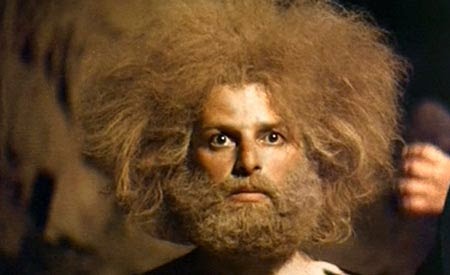
In the opening narration, Varelli writes that "the life experiences of our colleagues should warn us not to upset laymen by imposing our knowledge upon them." Argento's film, too, infects its audience by exposing them to the roots of their fears and desires. In this, Inferno becomes a work where cinema and dreams intersect; there's a purity to this film, as though Argento is projecting his unconscious directly onto the movie screen. As a meditation on the horror genre, Inferno is perfect, a work of pure film; as an example of the genre, it's scary as fuck.

Wednesday, May 02, 2007

The Trim Bin #57


- Alejandro Jodorowsky is one of the most underrated filmmakers, largely because his films are so little-seen. So the arrival of the new Jodorowsky box set, distributed by the good people at Anchor Bay, felt unreal after decades of grainy tenth-generation dubs. But then, it's unreal that these films even exist at all - the three features contained in this set, Fando y Lis, El Topo (one of my all-time favorite movies) and The Holy Mountain, feel as if they were not filmed but conjured out of thin air. I'll review the films once I've adequately processed them, but I can easily say that this set is a must-own. The transfers are stunning, the extras are copious, and the set includes Jodorowsky's haunting scores for El Topo and The Holy Mountain. Anchor Bay has even discovered a long-lost short, La Cravate, filmed in 1957. I can't wait to revisit Jodorowsky's films, and I'm especially happy that they have a chance to receive the sort of widespread appreciation they deserve. Now we just need a good R1 release of Santa Sangre.

- Alex Jackson's epic, provocative review of Grindhouse, which argues that "If you prefer Planet Terror you don’t understand movies and if you prefer Death Proof you don’t really like them. And either way, you aren’t fully experiencing them."

- Jackson also pointed me in the direction of Criticker, a website that allows you to rate movies on a scale of 0-100 and compare your tastes with other users and critics. It's very addictive, yet it also touches upon an insecurity I've long had, namely that I'm too positive. Take that C+ for Vampires, for instance; it's probably much worse than that would suggest, but I always have a big grin on my face when I'm watching it. I've given about twenty percent of the films I've rated 100s, and while I can partly attribute this imbalance to the absence of many Troll IIs, I must ask my readers - am I too easy?

- Greg at Dreamscape has some interesting thoughts on the connections between The Kinks, Hot Fuzz and Kant (contains some spoilers).

- I received the sad news today that Images Cinemas' Focus Arts Monthly is no more. Published by the cinema where I work as a projectionist, Focus provided not only a schedule of upcoming films but also film reviews, opinion pieces and articles on local arts happenings by a diverse slate of writers. The back issues here will give you an idea of how special Focus was; I know that I was given an extraordinary amount of freedom to write about whatever I wanted. While my editors must have often regretted this fact, as I often abused such power to dwell on dork minutia; nevertheless, Focus was a fine little newsletter, and I'm proud to have been a part of it.

- Finally, the extremely mixed reviews for Spider-Man 3 have me very excited to see the film - I love it when the reviews for a movie I've been anticipating are all over the place, as it makes it easier to clear my head and make up my own mind. Part threes are always tricky - for every Return of the King or Alien 3, there are ten Batman Forevers. So it's interesting that both the positive and negative reviews have frequently referenced another second superhero sequel, Superman III. If the comparison is meant to refer to the excellent scene where Superman fights himself, this is a good thing. If it is a comparison to the rest of the film, things look grim. Check out the desparate-feeling and arguably racist (Look! Richard Pryor wants to sell you booze! Ha ha ha!) trailer for Superman III to get an idea of how quickly things can go downhill with any successful series' third chapter. Let's hope Spidey manages to sidestep the proverbial shark.