Friday, September 14, 2007

My Top 101 (2007 Edition)

I've never gotten the point of making a distinction between a "best" and "favorite" movies list. My favorite movies are the best ones I've ever seen, that's why I love them so. Of course, the pleasure of making and sharing such a list is to find out what it (perhaps unwittingly) reveals about oneself. For instance, if Miller's Crossing ranks above Barton Fink this year, it's not because it's suddenly the superior movie - the movies don't change, but we do (this same process of rediscovery is one of the best things about film writing on the internet). So the changes this year are made up of films I'd never seen, films that landed closer to the heart than they had before (Tokyo Story is very different when you're a parent), and films I just plain overlooked last year (how the hell did I forget Touch of Evil?).

The goal every time I revise my list is to create a sort of representative collage of what cinema is to me at this moment. Glancing at the list, I know that I dig monsters, cowboys, ambiguity, sex, aliens and Freedonia. And I sure have a hard-on for the 1970's. Making the list is more and more like Sophie's Choice every year - I've seen at least 150-200 movies I'd consider perfect, and an alternate list of the next 101 would possibly make an interesting side project. But I'll remain disciplined for now; here are my 101 favorite best movies.


1. Blue Velvet (David Lynch, 1986)
2. The Shining (Stanley Kubrick, 1980)
3. Nashville (Robert Altman, 1975)
4. 2001: A Space Odyssey (Stanley Kubrick, 1968)
5. E.T. the Extra-Terrestrial (Steven Spielberg, 1982)
6. Raging Bull (Martin Scorsese, 1980)
7. Vertigo (Alfred Hitchcock, 1958)
8. Apocalypse Now (Francis Ford Coppola, 1979)
9. Carrie (Brian De Palma, 1976)
10. Boogie Nights (Paul Thomas Anderson, 1997)


11. Kill Bill vol. 2 (Quentin Tarantino, 2004)
12. Kill Bill vol. 1 (Quentin Tarantino, 2003)
13. My Own Private Idaho (Gus Van Sant, 1991)
14. Jaws (Steven Spielberg, 1975)
15. Persona (Ingmar Bergman, 1966)
16. Taxi Driver (Martin Scorsese, 1975)
17. Alien (Ridley Scott, 1979)
18. The Elephant Man (David Lynch, 1980)
19. The Man Who Fell to Earth (Nicolas Roeg, 1976)
20. El Topo (Alejandro Jodorowsky, 1970)

21. Barry Lyndon (Stanley Kubrick, 1975)
22. Nosferatu: Phantom der Nacht (Werner Herzog, 1979)
23. Badlands (Terrence Malick, 1973)
24. Children of Men (Alfonso Cuaron, 2006)
25. Psycho (Alfred Hitchcock, 1960)
26. Halloween (John Carpenter, 1978)
27. The Empire Strikes Back (Irvin Kershner, 1980)
28. Inferno (Dario Argento, 1980)
29. A Clockwork Orange (Stanley Kubrick, 1971)
30. Jules and Jim (Francois Truffaut, 1962)

31. Fargo (Joel Coen, 1996)
32. Lawrence of Arabia (David Lean, 1962)
33. Don't Look Now (Nicolas Roeg, 1973)
34. The Fly (David Cronenberg, 1986)
35. The Last Temptation of Christ (Martin Scorsese, 1988)
36. Aguirre the Wrath of God (Werner Herzog, 1972)
37. 8 1/2 (Federico Fellini, 1963)
38. Dead Man (Joel Coen, 1996)
39. Touch of Evil (Orson Welles, 1958)
40. Dawn of the Dead (George A. Romero, 1978)


41. Ran (Akira Kurosawa, 1985)
42. The Third Man (Carol Reed, 1949)
43. Chinatown (Roman Polanski, 1974)
44. Eraserhead (David Lynch, 1977)
45. The Godfather Part II (Francis Ford Coppola, 1974)
46. Schindler's List (Steven Spielberg, 1993)
47. Sid and Nancy (Alex Cox, 1986)
48. Mulholland Drive (David Lynch, 2001)
49. The Thing (John Carpenter, 1982)
50. Goodfellas (Martin Scorsese, 1990)


51. Close Encounters of the Third Kind (Steven Spielberg, 1977)
52. The Conversation (Francis Ford Coppola, 1974)
53. One Flew Over the Cuckoo's Nest (Milos Forman, 1975)
54. Blade Runner (Ridley Scott, 1982)
55. Cries and Whispers (Ingmar Bergman, 1972)
56. Brazil (Terry Gilliam, 1985)
57. Rashomon (Akira Kurosawa, 1950)
58. McCabe and Mrs. Miller (Robert Altman, 1971)
59. Tokyo Story (Yasujiro Ozu, 1953)
60. The Seventh Seal (Ingmar Bergman, 1957)


61. Manhattan (Woody Allen, 1979)
62. The Godfather (Francis Ford Coppola, 1972)
63. City Lights (Charles Chaplin, 1931)
64. American Beauty (Sam Mendes, 1999)
65. The American Friend (Wim Wenders, 1977)
66. Blow Out (Brian De Palma, 1981)
67. Days of Heaven (Terrence Malick, 1978)
68. Once Upon a Time in America (Sergio Leone, 1984)
69. Last Tango in Paris (Bernardo Bertolucci, 1972)
70. Citizen Kane (Orson Welles, 1941)


71. The Searchers (John Ford, 1956)
72. Raiders of the Lost Ark (Steven Spielberg, 1981)
73. Orphee (Jean Cocteau, 1949)
74. Betty Blue (Jean-Jacques Beineix, 1986)
75. Wings of Desire (Wim Wenders, 1987)
76. Dr. Strangelove, or How I Learned to Stop Worrying and Love the Bomb (Stanley Kubrick, 1964)
77. Black Moon (Louis Malle, 1975)
78. Magnolia (Paul Thomas Anderson, 1999)
79. Harold and Maude (Hal Ashby, 1971)
80. Heavenly Creatures (Peter Jackson, 1994)


81. The Cabinet of Dr. Caligari (Robert Wiene, 1920)
82. Rushmore (Wes Anderson, 1998)
83. Miller's Crossing (Joel Coen, 1990)
84. Invasion of the Body Snatchers (Philip Kaufman, 1978)
85. Once Upon a Time in the West (Sergio Leone, 1968)
86. Phantom of the Paradise (Brian De Palma, 1974)
87. Stroszek (Werner Herzog, 1977)
88. Eyes Wide Shut (Stanley Kubrick, 1999)
89. The Fountain (Darren Aronofsky, 2006)
90. Y tu mama tambien (Alfonso Cuaron, 2001)


91. Punch-Drunk Love (Paul Thomas Anderson, 2002)
92. Ed Wood (Tim Burton, 1994)
93. M (Fritz Lang, 1931)
94. Pulp Fiction (Quentin Tarantino, 1994)
95. Macbeth (Roman Polanski, 1971)
96. The Big Lebowski (Joel Coen, 1998)
97. Hedwig and the Angry Inch (John Cameron Mitchell, 2001)
98. Eternal Sunshine of the Spotless Mind (Michel Gondry, 2004)
99. Pat Garrett and Billy the Kid (Sam Peckinpah, 1973)
100. Popeye (Robert Altman, 1980)
101. Duck Soup (Leo McCarey, 1933)

Thursday, September 13, 2007

Gratuitious Nudity #4


Diego Luna, Maribel Verdú and Gael García Bernal, Y tu mama tambien (2001)

Sunday, September 09, 2007

I'm Big Joe Grizzley.


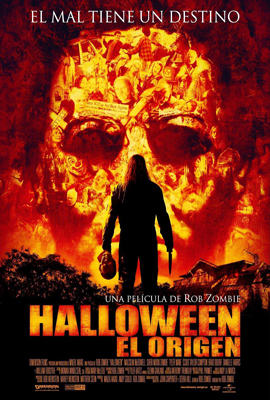
One of the most telling moments in the Rob Zombie canon is the scene in The Devil's Rejects where a grizzled, hypermasculine lawman threatens to beat the snot out of a geeky, trivia-spouting movie critic. Zombie invites us to laugh with the sheriff as he attacks the movie geek, even though he clearly identifies with the latter. This masochism is a trait shared by many die-hard horror fans - those of us who were more likely to spend a summer day reading the newest Fangoria than playing sports or whatever - and it also explains why Zombie prefers to make his monsters the protagonists of his films. Note, for instance, that the cast of Halloween, Zombie's remake of the John Carpenter classic, is filled with famous cinematic killers, as if they'd assembled to pay tribute to iconic slasher Michael Myers. Zombie portrays Myers as a pasty young metalhead who grows up to be a hulking, unstoppable killing machine. It's a huge departure from the original's conception of a blank embodiment of pure nothingness; the resulting tension accounts for the film's worst moments as well as its best ones, but Halloween is never less than fascinating.

The brief backstory Carpenter gave us fills the film's first half, as we're introduced to Michael Myers as a young boy quietly torturing animals in his bedroom as his pole-dancing mom (Sherri Moon Zombie) and bullying stepdad (William Forsythe, just a tad overstated) scream at each other downstairs. Before long, mom is talking to Dr. Loomis (Malcolm McDowell, having a blast) about Michael's puppy-killing activities, which Loomis warns are a sign of "much bigger problems." But it's too late - Michael soon kill half of his family, leaving mom and his beloved baby sister alive. These early scenes, and Michael's subsequent institutionalization under Loomis' care, are sleazily effective; while Zombie cites traditional characteristics of serial killers, the soundtrack, performances and excellent cinematography by Phil Parmet give the film a heightened reality, threatening to veer into camp before hitting us with some spookily well-realized moments of sudden, brutal violence.

In Halloween's most gleefully sick moment, Zombie cuts between mom at work and a dejected young Michael Myers sitting alone with nobody to take him trick-or-treating, scored to Nazareth's "Love Hurts" - it's not supposed to make us empathize with the killer so much as briefly occupy his deeply deranged state of mind. Zombie adapts an agnostic perspective where Carpenter is almost religious, yet both directors at the same conclusion, the idea of evil as something incomprehensible that we attempt to contain on Halloween (and with scary movies) by infantilizing our fears. While Zombie couldn't be more stylistically different from Carpenter, they share an innate understanding of the elements of the genre, namely a romantic concept of horror as a eulogy for all things lost (note the repeated menstrual imagery). In its own way, Zombie's Halloween is as much a postmodern exploration of its predecessor as Gus Van Sant's Psycho. So if you hated Psycho, take that as a warning. But I, for one, admire Zombie's attempt to make Michael Myers representative of more than action figures and cell phone ringtones, and as dramatically different as Halloween 2007 is, it ultimately honors the original far more than another generic retread.

Halloween does stumble in its second half, as Michael escapes from the institution (easily the film's worst scene, although it's redeemed minutes later by an awesome Ken Foree cameo) and stalks his now-grown baby sister and her friends on Halloween night. Here, Zombie mimics scenes and even borrows dialogue from the original, which only serves to remind us of what a perfect film the original is. I began to miss Carpenter's austere compositions and elegant tracking shots, his labyrinthine conception of suburbia. This wouldn't matter as much if Zombie had stuck with the tone and style established in the first half; instead, he can't seem to decide between paying homage or making the material his own. The rushed approach also shortchanges the characters; although Scout Tyler-Compton (in the role that made Jamie Lee Curtis famous) is cute as a button, she and her costars aren't give much of a chance to make an impression (although it's strange to watch the Shape kill a topless, bloodied Danielle Harris).

Ultimately, Halloween sort of falls apart in a series of blaring music cues, property destruction, and bizarre references to Blade Runner. Still, in incorporating the brother-sister twist from Halloween II with a resonance that even Carpenter wasn't able to pull off, Zombie does give his film an unexpected psychological resonance. Halloween 2007 isn't the travesty it's been made out to be - it's a fascinating experiment, not entirely sucessful, but one that takes its boogeyman very seriously. I can't guarantee that you won't hate it, but it's a hell of a lot better than Halloween 6.

You can find more Myers-related goodness over at Final Girl's Film Club.

Thursday, September 06, 2007

Wednesday, September 05, 2007

Like a man dick?


An early highlight of Superbad, an extended montage of a child's drawings of penises, pretty much tells you everything about the heart and soul of the film. A geekier Y tu mama tambien, it's a movie that correctly depicts two teenage boys' desparate quest to get laid as a sublimated expression of their profound love for one another. While the look and soundtrack of Superbad are meant to evoke raunchy teen sex comedies of the 70s and 80s, it's written with a wit and insight that few of its predecessors match. This is a movie where a bomb-riding weiner isn't just funny - it has purpose.


Co-screenwriters Seth Rogen and Evan Goldberg began writing Superbad when they were teens, and I'm sure many aspiring filmmakers wrote a script along these lines with their friends when they were kids (I know I did). The protagonists, Seth (Jonah Hill) and Evan (Michael Cera), are clearly autobiographical, and the film sweetly hinges on their mutual affection. The plot, such as it is, revolves around Seth and Evan's misguided attempts to procure liquor in the hopes of impressing the objects of their unrequited affection before they graduate. It's a well-worn scenario made fresh by the screenplay's emotional honesty - Seth and Evan are headed to different colleges in the fall, and their horniness is complicated by the unspoken fear that actual relationships will shatter their idyllic routine of getting drunk on stolen beer and watching Vagtastic.com. It's while discussing porn early on that Seth describes the sight of vagina not being penetrated by a penis as "not for me," and Superbad mines many laughs from its protagonists' fear of that unknown quantity and retreat into the comfort zone of dick jokes, all the while nudging them into the realm of adulthood. Director Evan Mottola finds the perfect tone for the film, filthy but never leering, and aids his young stars in delivering surprisingly nuanced performances - Hill adds an effective layer of insecurity to the horny fat guy archetype, while Cera, at 19 already a master of deadpan, plays Evan as a nice guy at war with his own libido.


Underscoring the themes is the film's subplot, so hilarious that it nearly upstages the rest of the story, involving Evan and Seth's even nerdier acquaintance Fogell (Christopher Mintz-Plasse), who carries a fake ID bearing the already-infamous pseudonym "McLovin." Almost busted for attempting to buy booze, Fogell ends up riding with two hard-drinking, Yoda-quoting cops (Rogen and Bill Hader) as they tackle drunks, destroy public property and try to educate the young man in the ways of women, all in the name of making cops seem cool. The cops essentially a cautionary tale for the protagonists should they fail to grow up, which gives them some of the film's most wonderfully absurd moments ("I call this the upwards spiral!"). And Mintz-Plasse is a real discovery, totally natural as he grows to embody the McLovin persona - he has the ability to make a throwaway line like "I've got a boner" completely hysterical. Best of all, it's the rare kind of film where one can laugh at boner jokes without hating oneself - lowbrow in a very knowing way, Superbad is hilariously dumb in a way that only very smart people can achieve. When Hill compares his sexual track record to the filmography of Orson Welles, I can't help but applaud not only the smart-alecky reference but the fact that the filmmakers are rewarding their smartest audience members at a time when most comedies aim squarely at the lowest common denominator.


The film ends on an interesting note, with the protagonists left to reevaluate their perception of women, to perhaps grow a little (this would resonate deeper if the film told us anything about its female characters, but still). The Judd Apatow canon seems largely aimed at speaking to overgrown adolescents, gently letting them that growing up isn't such a scary prospect. If, philosophically, I prefer Lindsey Weir getting on a VW bus and leaving town, that probably says more about me than it does the film, and we'll see how I feel in ten years. Still, my heart warms at the thought of 17-year-old boys sneaking into Superbad in the hopes of seeing boobies and perhaps learning a thing or two in the process. At the very least, I learned that, since McLovin is already taken as an alias, Muhammad is probably the next best thing.

Friday, August 31, 2007

Friday Title Card #29

Fuck you, batteries.


The joy of a musical - that is, a good musical, not a bloated Broadway adaptation made not out of passion but for the commercial viability of a familiar property - is discovering the moments when a song reveals emotions that words alone cannot reach. Such a moment occurs early in Once, as a street musician and a woman he's just met (we never learn their names) are hanging around in a music store. He invites her to accompany him on a song he's been working on, and as she joins him on piano, the song's achingly romantic message overwhelms them and us. Once, which follows these characters over the course of a week as they write and record a few songs while an unspoken romance grows between them, is a minor masterpiece of understated feeling. Delicate and insightful where too many musicals are bombastic and obvious, Once is capable of transporting both lovers and haters of the genre with its devastating love story.

Once introduces us to a struggling songwriter (Glen Hansard) who works in his dad's vacuum repair shop and spends his time off singing Van Morrison songs for loose change on the streets of Dublin. One night, while performing one of his own songs, he meets a young Czech woman (Markéta Irglová) who likes his song; the guy is leaving for London in a week to try patching things up with his ex-girlfriend, and she agrees to help him write and record a few songs before he goes. That's about all there is for plot in Once, which is built on the moments where the guy and girl get to know each other. As they work together, it becomes clear they're made for each other. The guy is the type to refer to himself as a cynic, sweetly oblivious to how wrong he is; the girl has a daughter at home and a husband in another country, and is far too serious-minded to realize the obvious. While this story has been told before, from Brief Encounter to Lost in Translation (likely its most direct influence), Once becomes completely unique in its study of two characters who cannot quite fully connect for precisely the reasons that they are perfect for each other. First-time feature director John Carney (formerly a member, like his lead actor, of the band The Frames) has a remarkable talent for revealing worlds about his characters in a moment; he's brave enough, for instance, to have a character deliver the most important line in the film in Czech.

Almost as impressive as the story itself is the way that Carney uses digital video to tell it. Until recently, I was dubious about DV, as most directors who used it raved about its functional ease without commenting much on its aesthetic qualities (mumblecore is commendable in theory, but I have yet to see a DIY film I like). But after last year's Inland Empire and now Once, the possibilites of digital have been blown wide open. In Once, the low-tech images have an intimate quality that matches the story of homegrown artists perfectly. Every shot is beautifully composed in a way I haven't seen in DV before.I was inspired not only by the story but by the filmmaking itself - it's a film that leaves one energized by possibility. There's a confidence in every moment that reminds of how imagination and vision are infinitely more valuable than a huge budget. I'm not always quick to buy into the romance of independent cinema, but Once fulfills this promise better than any film in a long time.

Once isn't a perfect movie - I agree with Todd VanDerWiff, who writes that "While the songs are good, the film requires us to believe that they’re so good that they simply cause everyone around Hansard to realize what an untapped genius he is." Still, its hard to complain about a film with this much soul, particularly since its imperfections become part of its charm. There are few films that contain as much pure warmth as Once; that it's a pretty great movie is all the better.

Monday, August 27, 2007

Tilting at Windmills


It must be weird to be Damian Arlyn right now.

Since so much has been written in the past week about what Mr. Arlyn has come to represent, it might be helpful to begin by talking about who he is (thank you, Google). Damian Arlyn is a 31-year-old resident of Corvallis, Oregon. The manager of DVD World by day, Mr. Arlyn also participates in theatrical productions at the Corvallis Community Theatre (you can read about the recent Arlyn-directed production of Dracula here). Damian is also a born-again Christian who explains on his MySpace page that he decided not to include Jesus on his list of heroes because "the term 'hero' doesn't even begin to describe the place he holds in my life" (as his list of heroes includes both Martin Luther and Denzel Washington, I'd have to agree with his decision). It seems clear that Damian is a sincere, serious-minded man with a genuine love for cinema.

Damian, as many of you know, also has a blog. And last week, in the middle of his ambitious, entertaining "31 Days of Spielberg" project, he became the subject of some very serious accusations. Damian addressed those charges in his blog, and you can read what he had to say for himself here. I believe Damian is genuinely sorry for his mistake, but as of this writing, it seemed that he didn't really understand what people were so angry about. Damian never expected to be famous, and now, he explains, "I never anticipated this project would bring me into contact with actual published authors who have written on Spielberg, even if it's not under the best of circumstances." I understand how Damian feels, and not just because I, too, take a lot of crap for defending Spielberg. I never expected my writing here to be read by anyone other than a few friends, and I'm grateful for my readers and the ideas you share here. In return, I feel a responsibility to give you reading material that is passionate, well-written (to the best of my abilities), and, of course, accurate. And while I like Damian and his writing, I'm troubled by this:

"However, I am not doing--nor have I ever done--this for praise, for esteem, for glory, for fame and certainly not for money. One thing I have never lost sight of is that in the big scheme of things, I am a nobody. I am a thirty-one-year-old video store clerk who lives in Corvallis, Oregon. I make little more than minumim wage a year and I happen to love movies. I never intended for this blog to be anything more than an expression of one little guy's passion and affection for cinema. Thus, I began this 'Spielberg' project because I admire Spielberg and his films and I wanted to share that admiration with other people and maybe--just maybe--even spark a little bit of discussion on him because I personally don't think that enough can ever be said about this great artist."

To use his own term, Damian is the little guy. You can find the little guy across the blogosphere, in colleges, and in any formal or informal film discussion. The little guy uses his relative insignificance to paint himself in favorable terms. The little guy might apologize for having tastes that are way more offbeat or obscure than yours. Or, as in this case, the little guy is just one more incarnation of the little boy who hangs out in the projection booth in Cinema Paradiso. The little guy is a silent apostle of the cinema, unknowlingly engaging in his own form of self-mythologizing behavior. And the moment Damian allows himself to become the little guy, however genuine his intentions may be, he loses all sense of personal accountability.

That said, I'm quite sure that Damian feels a bit differently about it this week. Because Damian is no longer just a thirty-one-year-old video store clerk from Corvalis; he's a living symbol for the divide between print and internet film writing and the question of how journalistic standards differ or remain the same between different mediums. And just as Damian's self-image tells us much about his actions, the same is true of his most rabid detractors, many of whom showed up before scandal broke to anonymously inform Damian that he is a terrible writer. Most telling of all, to me, is the public sermon on Mr. Arlyn performed by D.K. Holm, who dismisses Damian's writing as "pretty much like every other blog in the world" and connects his downfall to something larger:

There is another kind, that is more pervasive and insidious and nearly invisible. That’s the group-think that sweeps across the nation as certain reviews and reviewers set the tone and limit the terms of response to a film."

The irony is that D.K. Holm is Damian Arlyn's spiritual father, having made a living from the summary/trivia format he claims to abhor (the difference being that Holm is paid for his efforts). Damian Arlyn does not realize that he loves himself; D.K. Holm cannot admit that he hates himself. Arlyn's colleagues at The House Next Door have done a better job of more clearly stating their intentions, offering a brief explanation of why Arlyn was removed from their masthead and, like the jurors stepping away from the table in 12 Angry Men, expressing in relative silence what so many supporters and detractors in so many words have not quite been able to communicate.

So, yes, I do wonder what today was like for Damian Arlyn. To have found such massive support (the blogosphere's generosity being its finest quality) only, with one unfortunate error in judgement, to find himself at the center of a debate that is no longer about him. To have inadvertenly tapped such a deep well of buried resentment from elitists and populists alike. To stand behind the counter as angry customers demand their two dollars back because Pan's Labyrinth was in Spanish (and oh, those black bars!). Damian's silence is our loss, and when he's ready, I anxiously await his return. Because, after all, the world needs a passionate defense of The Terminal.

Thursday, August 23, 2007

I had quite a normal childhood.


Roger Ebert has frequently stated that he rates films according to how well the filmmakers succeed at what they were aiming for. By Ebert's logic, Lukas Moodysson's A Hole in My Heart is a smashing success. Moodysson has stated in interviews that he intended his film to be off-putting to audiences, and it's certainly quite repugnant. It's unfortunate for us, however, that Moodysson didn't aim higher, because while A Hole in My Heart is composed almost entirely of images sure to ruin one's appetite, it's never truly disturbing, shocking or even particularly interesting. It's a pointlessly gross and stupid film that tries to say something insightful about porn, television and spiritual decay but, to paraphrase This is Spinal Tap, only treads in a sea of retarded sexuality.


In a cramped apartment, Rickard (Thorsten Flinck) and Geko (Goran Marjanovic) are busy making an amateurish porn starring Geko and Tess (Sanna Brading), a dim-witted young woman with aspirations of starring on Big Brother. The three descend into increasingly grotesque, extreme scenarios while Rickard's teenage son Eric (Bjorn Almroth) sulks in his bedroom with his pet worms and grating industrial music. And that's pretty much it - for 100 or so minutes, Richard and Geko (and Moodysson) do countless degrading things to Tess, who flees at one point only to return bearing junk food for further degradation. I'm not at all against extreme content in cinema; in fact, I'm always excited to discover filmmakers who are willing to examine uncomfortable or grotesque material with a seriousness and purpose, and I appreciate it when a filmmaker doesn't feel the need to block our eyes as if we were children. But A Hole in My Heart is a film composed entirely of extremes, edited in a series of epileptic jump cuts punctuated by screeching noise, that becomes wearyingly monotonous within minutes. I'm currently writing a screenplay set in and around a strip club, and I was at first confused by my instinct to include several moments of the characters performing mundane, everyday tasks (sleeping, watching tv, etc.). As the script has progressed, it's clearer to me that, if my film is to work at all, it needs the contrast between the characters' manufactured sexual personae and their unobserved selves. There's no such contrast in A Hole in My Heart, and in the absence of any genuine attempt at emotional authenticity, the characters are merely vehicles for Moodysson's skeezy, hyperbolic moralism.


The most pathetic thing about A Hole in My Heart is its complete failure even to shock us. It's disgusting in a way that comes off as cheating - it's easy to cut to, say, a close-up of vaginal reconstructive surgery without warning or context and get a reaction from the audience. It's harder to give such images real power or consequence. Directors like Todd Solondz, David Lynch and Michael Haneke give us films infinitely more disturbing than A Hole in My Heart with only a fraction of the overtly shocking imagery. They have the insight and craft to disturb us with the implications of their images - it's the ideas in Happiness or Blue Velvet that make those films so unsettling, not just the quantity of nipples or viscera on display. The irony of Moodysson's use of the confessional style of reality TV is that, while it's meant as a comment on the emptiness of popular culture, his film has even less to say (at least Big Brother is sometimes inadvertently insightful). I really wanted to "get" A Hole in My Heart, to have the geek show I'd endured arrive at the apocalyptic moment of truth it had promised. But by the time the film arrived at the image of a character vomiting into another's mouth with Bach's St. Matthew Passion blaring on the soundtrack, I could only laugh with rage at the purest marriage of pretension and idiocy I've ever seen.

A few days before seeing A Hole in My Heart, I watched Claire Denis' Trouble Every Day. It was the first of her films I'd seen, and while I didn't like it, it was made with an assuredness of tone and style that made me want to check out more of her work. I never, ever want to see another Lukas Moodysson film. I don't care if Together and Fucking Amal are cute, or that Lilja 4-ever was on a bunch of top-10 lists. I think Lukas Moodysson is an ass. I think he hates movies and everything else I hold dear. The fact that he's both a Socialist and a Christian isn't an interesting idiosyncracy, it just helps explain how a film could be so demoralizing and preachy at the same time. A Hole in My Heart is the work of a complete fraud; to arrive after 100 minutes of nihilistic ugliness at a group hug is a sick, insulting joke, and while the film has mostly been panned, it's geniunely baffling to read Reverse Shot's Eric Hynes praise it as "achingly humane." According to the film's IMDb trivia page, Thorsten Flinck had to turn to drugs to make it through the film's more harrowing scenes. I only wish I'd had as much foresight.

Thursday, August 16, 2007

Top 10: Voice-over


"IN A WORLD WHERE..."

Voice-over is often used to gloss over narrative problems or water a challenging film down in the name of accessibility (Blade Runner being the most notable example of the latter). But like any cinematic device, when placed in the hands of talented filmmakers, voice-over can be transformed from something familiar into something we've never quite seen (or heard before).


1. Days of Heaven Terrence Malick's four films have all employed voice-over to great effect, the disconnected thoughts of characters in The Thin Red Line and The New World enhancing those films' meditative tones, and Sissy Spacek's rambling, disconnected thoughts in Badlands achieve a sort of banal poetry. In Days of Heaven, Malick presents the tragic turn-of-the-century love story from the point of view of the protagonist's preteen sister. First-time film actress Linda Manz narrates in a flat, unaffected manner that perfectly compliments her character, who is inarticulate but perceptive about the lives of those far older than her. Malick has been criticized for emotionally distancing his audience from the story; in fact, the narrator's guileless, wide-eyed memories draw us directly into the film's devastatingly ephemeral heart.


2. A Clockwork Orange Stanley Kubrick once called this a "Who do you root for?" movie, and the director frequently used voice-over to confound his audience's expectations. The matter-of-fact, dryly statistical narrator in The Killing reduces the film's heist down to a shopping list of times, amounts, and other quantities, while the cruel storyteller of Barry Lyndon undercuts the characters' actions and dreams with savage irony (a device used in recent films like Dogville and Little Children). In both Lolita and A Clockwork Orange, the protagonists relate their stories with eloquence and wit, confusing our loyalties by causing us to sympathize with characters who do reprehensible things. A Clockwork Orange is particularly brilliant in this respect - Malcolm McDowell is charasmatic and strangely sexy as the young hooligan Alex, who recounts his evenings spent raping and pillaging with great gusto and his subsequent arrest and reconditioning with terrible sorrow. Kubrick asks us to sympathize with the devil in order to convey the film's philosophical message; the technique is no doubt manipulative, but it's also sickly hilarious and frequently imitated (see also: Trainspotting and American Psycho).


3. Taxi Driver Like A Clockwork Orange, the voice-over in Taxi Driver is meant to align us with a difficult character. But where Kubrick's aim was satire, Martin Scorsese and screenwriter Paul Schrader want us to understand Travis Bickle. As he prowls the city streets, seething with contempt for the decaying world around him, Robert DeNiro's narrative gives voice to fears, obsessions, and compulsions that, while extreme, are also all too recognizable. As Travis' inexpressive rage transforms into brutal violence, the scariest implication is that his madness is, somehow, our own.


4. Sunset Boulevard Has there ever been a filmmaker more joyously clever than Billy Wilder? Sunset Boulevard contains his wittiest device, the story of a murder recounted by the corpse. It's a concet that would prove popular - American Beauty, in particular, used it to wonderful effect - but in Sunset Boulevard, it's more than a plot device. Wilder's vision of Hollywood as a cemetary, a place where the long-forgotten dwell, is complimented by poor Joe Gillis' narration from beyond the grave. It's a perfectly acidic vision of the dark side of a city devoted to attaining cinematic immortality.


5. To Kill a Mockingbird The voice-over in Robert Mulligan's adaptation of Harper Lee's book has been frequently imitated over the years to lesser effect. The imitators attempt to mimic the unpretentious Southern charm of an adult Scout's memories of her youth, but they miss the eerier moments, the ghostly intimations of doom, and the bitter nature of an adult's memories of the moment she stepped into a world of absurd intolerance. There's nothing saccharine about the narrative - like the rest of the film, it's possessed with a hauntingly delicate soul that is ultimately heartbreaking.


6. Cries and Whispers One of Ingmar Bergman's best films, Cries and Whispers is bathed in red, a color that Bergman said he imagined the inside of the soul to be. And Cries and Whispers is a film composed of interiors, both literally and through the diary entries of the dying Agnes (Harriet Andersson). Agnes' memories of her life and her emotionally remote sisters are almost impossibly sad, laced with regret, confusion, and fear. All the more stunning that Cries and Whispers ends with Agnes' happiest memory, and Bergman, for once, grants his storyteller a moment of peace (for more on the ending, go here).


7. The Postman Always Rings Twice Film noir is littered with hapless schmoes who become putty in the hands of a smarter, more calculating woman. Never was this more perfectly realized than in the 1946 version of James M. Cain's novel. John Garfield's Frank recounts his torrid, deadly affair with Cora (Lana Turner) in a voice-over filled with uncertainty (Frank's most-used phrase is "I guess"), jealously and insecurity. It's not only good pulp, it's a sharp examination of the tortured male psyche.


8. The Royal Tenenbaums The narration in the story of a family of geniuses has the mannered, matter-of-fact style of a novel one might find in the young-adult section of the library (it's particularly reminiscent of Salinger, whose Franny and Zooey Wes Anderson owes a great debt to). Alec Baldwin's solemn, matter-of-fact delivery is a hilarious compliment to the film's deadpan tone and the eternal adolescence of the Tenenbaums.


9. The Big Lebowski The Coens often have a great deal of fun with voice-over, from Nicolas Cage's hayseed philosopher in Raising Arizona (Ebert panned the film for the narration, but I adore it) to Billy Bob Thorton's apology for his long-windedness ("They're paying me by the word") at the end of The Man Who Wasn't There. Best of all is The Big Lebowski, the story of a burnt-out bowling aficionado-turned-amateur detective as told by a folksy, sarsaparilla-swilling cowboy who may also be God. But there I go, ramblin' again...


10. Adaptation Like many of the films on this list, Adaptation does a fine job of using voice-over to illustrate its characters' unspoken fears and desires. But the moment that really sets Adaptation apart occurs when Charlie Kaufman (Nicolas Cage) is attending one of Robert McKee's famous screenwriting seminars; as Kaufman excoriates himself in voiceover for looking for easy answers, his thoughts are interrupted by McKee (Brian Cox), who warns, "God help you if you ever use voice-over in your work, my friends. God help you! That's flaccid, sloppy writing!" From that point on in the film, Kaufman's inner voice is silent.


Monday, August 13, 2007

Gratuitous Nudity #3


Christine Noonan and Malcolm McDowell, If... (1969)

Sunday, August 12, 2007

The Trim Bin #60


- Damian Arlyn's 31 Days of Spielberg project is well underway over at Windmills of My Mind, and it's been a fascinating, discussion-provoking defense of Spielberg as a real auteur thus far. As an unabashed fan, I particularly enjoyed Arlyn's response to familiar criticisms in his article on E.T., a film that, more than any of my other favorites, I've had to defend on a number of occasions:

"I would never want to bully anybody into liking E.T. (nor would I ever say that someone is devoid of humanity or has “ice” in their veins because they feel nothing when watching it) but neither do I care for the implication that just because I am one of the millions of people who happen to be very moved by the film, that I am somehow a mindless sheep, a deluded fool not sophisticated enough to realize when he’s been “played like a piano” or whatever. To the people that might make this elitist claim, I tend to want to respond in kind with my own personal brand of elitism that asserts I would rather be a "foolish" believer, a sensitive soul, romantic at heart able to see the good in something than a hardened cynic blinded to the immense riches and rewards right in front of them if they would only have the humility and willingness to “open themselves up” to it. I do hope that for such individuals there is something (perhaps even a film) that brings them a comparable degree of joy, sadness and just general affirmation of what they hold dear. I hope there’s something in their lives that they cherish as much as I cherish E.T. because if so, they’re very lucky people."

- Rob Zombie's Halloween is almost upon us, and the newest trailer is wonderfully creepy. On the other hand, Zombie damns himself with some old quotes discovered by Stacie Ponder. Usually I have a pretty good sense of what I'll love or hate, but I have no idea how idea how I'll feel about Halloween, and I can't wait to find out.

- Siskel and Ebert's old reviews have found their way to the internet. For insight, watch their argument over Blue Velvet; for laughs, check out Siskel's faith in cinema shaken by She's Out of Control.

- Dual tributes to Bergman and Antonioni written by Woody Allen and Martin Scorsese, respectively, remind that a great director is first and foremost a great fan (they also serve as a welcome antidote to Jonathan Rosenbaum's contrarian wankery).

- Finally, a grand piece of film writing: Walter Chaw's epic journey through the films of Patrick Swayze.

Thursday, August 09, 2007

Scary German Guy is bitchin'!


I watched The Monster Squad endless times as a preschooler when it was in heavy rotation on HBO - in fact, when my wife mentioned to my mom that I'd picked up the long-overdue DVD release, there was a long silence before my mom responded, "I've seen that movie twenty goddamn times." I assume that The Monster Squad has little appeal for those who didn't first see it when they were between the ages of three and eleven. I don't mean this as a case of nostalgia, as I have enough distance from my earliest movie-watching experience to know that Harry and the Hendersons, for instance, is really quite bad. The Monster Squad, on the other hand, is one of those movies that requires a child's imagination to do some of the heavy lifting; rewatching it, I realized that what I had long remembered as a film of epic scope was actually a fairly low-budget 82-minute B-movie (although makeup effects artist Stan Winston and VFX head Richard Edlund do wonders with what they have). However, this only increased my affection for the film - its modesty is perhaps its greatest charm, its battle between a group of nerdy kids and cinema's most iconic monsters a jolt of smart, unpretentious fun that puts bloated studio product like Van Helsing to shame.


The Monster Squad is one of those great 80's movies (Explorers and The Goonies are two other examples, with Stephen King's book It a masterpiece of the subgenre) that rewards young genre-loving geeks with the promise that their knowledge of aliens, pirates or vampires is preparation for an awfully big adventure. When we first meet Sean (Andre Gower), the leader of the titular gang of kids, he's wearing a homemade t-shirt that reads "Stephen King Rules" and getting chewed out by the school principal for drawing monsters in class. But director Fred Dekker and writer Shane Black know, as we do, that our formative years are better spent learning about Cthulhu than the Magna Carta. Sean's expertise pays off when Dracula arrives in his small suburban town (why is not really clear, except that he owns real estate there) and assembles Frankenstein's monster, the Wolf Man, the Mummy, and Gillman (so named for legal reasons) to carry out his evil plans. The plot involves an amulet, a vortex, and Van Helsing, and it occurs to me that nearly every movie would be improved with these three things (except, of course, Van Helsing). As the kids assemble in their treehouse to plan a once-in-a-century opportunity to stop Dracula and his cohorts, it becomes clear that this is a film borne out of Black and Dekker's (ho ho) childhood dreams and fears - it's a film where the monster in the closet is real, no matter what mom and dad say. As such, it is much more than a calculated attempt to repackage creaky franchises in a slick modern package; it's a labor of love, and goofy as it is, I can't help loving it.


While it's pretty clear that The Monster Squad owes a lot to The Goonies, it's also superior to that film in that, for a film aimed at kids, it's surpisingly rough-edged. Early in the film, schoolyard bullies taunting Fat Kid (Brent Chalem) actually call him a "faggot" - these aren't Disneyfied goons but realistic, nasty little shits. Later in the film, Fat Kid uses a shotgun to blow away one of the monsters; the moment isn't softened at all, the monster bleeding and crying out in a protracted death sort of astonishing in a PG-13. Contrast this with last year's Monster House, a good movie that just missed greatness with an end-credits denouement designed to reassure kids that all is well. The Monster Squad isn't afraid to raise the stakes; there's a genuine possibility that Wolfman could just rip these kids limb from limb, and we become unusually invested in their fates. This extends to the movie's schmaltzier elements - the reformed Frankenstein's monster (Tom Noonan) is one of a long line of 80's-movie ET-surrogates, but Noonan and 5-year-old Ashley Bank play their scenes together with enough authenticity that what could have been cloying elicits a genuine "awww."


The moment that really sets The Monster Squad apart involves Scary German Guy (Leonard Cimino) an elderly local expert on monsters who helps the kids in their mission. As the kids are leaving Scary German Guy's house, one comments that he doesn't seem very afraid of monsters, and Scary German Guy responds that (I'm paraphrasing) he knows there are enough real monsters to be afraid of. As Scary German Guy closes the door, Dekker cuts to a close-up of a concentration camp tattoo on his wrist. It's a real "Whaaa?!!" moment, but questionable taste aside, it gives the movie real weight. The Monster Squad is a celebration of outsiders - seeing a bunch of bookish, strange kids battling a particularly totalitarian Dracula, it gives hope to kids persecuted at school for the very qualities that may someday ennable them to make the world a better place. And just as important, it teaches us that Wolfman has, in fact, got nards.

Thursday, August 02, 2007

Mightn't I be allowed to keep my horse?


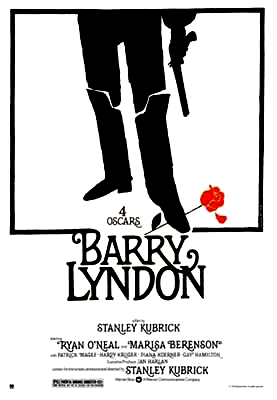
I used to hate Barry Lyndon. I first saw the film when I was fourteen, soon after discovering the dizzying, almost narcotic rush of A Clockwork Orange (the perfect film for sharp-witted teens beginning to develop a distrust of authority), and I was blown away by the cinematography, which remains unparalleled. At the same time, I felt that Stanley Kubrick was using the film's painterly images to tell a rather humdrum story devoid of intrigue or emotional investment, and I resented Kubrick for what I read as a sick joke. I was wrong, but I was also right - Barry Lyndon is a perverse film, one that keeps its audience forever at a distance from its story, constantly undercuts even the slightest chance of suspense, and arrives at a conclusion that dismisses its characters' lives as competely meaningless and forgettable. Yet at the same time that it practically forces us towards indifference, Barry Lyndon unfolds with a sort of beautiful, epic splendor that contradicts the film's own claims of irrelevance. It's a maddening, unforgettable cinematic experience; of all my favorite films, I hate this one most.


Barry Lyndon opens in wide shot - this is not uncommon with Kubrick, but it is used for a drastically different effect. Consider the opening image of 2001, designed to overwhelm our senses; or The Shining, with its labyrinthine helicopter shots teasing our anticipatory sense of dread. But from its first image, which depicts the death of the protagonist's father in a duel, Barry Lyndon keeps us at a distance. Kubrick and cinematographer John Alcott (with the help of a Zeiss lens originally used by NASA) create a period piece with an astounding sense of immediacy, the image of the opening duel composed with such astonishing depth and clarity that we feel present in the action. But rather than using the images to pull us in, Kubrick remains remote, a time traveller observing the alien behaviors and practices of 18th-century Europe. This gives each shot an oppressive weight, as though each moment were a slide examined through the microscope lens; this deterministic approach is perfect for a protagonist who remains almost totally passive in his own fate. We meet Redmond Barry (Ryan O'Neal) as a sullen, lovestruck youth and follow him across the continent as he wins and then loses everything through no fault or effort of his own.


Kubrick uses O'Neal's vacant screen presence brilliantly - Barry is a cipher who is able to deceive his way into wealth and status not through any particular talents of his own but out of sheer luck (indeed, the Thackeray novel upon which the film is based was originally titled The Luck of Barry Lyndon). The scene when Barry romances the wealthy, widowed Lady Lyndon (Marisa Berenson) is a masterpiece of surfaces, both actors photographed like perfectly-made porcelain dolls similarly incapable of demonstrating actual emotion. The narrator (Michael Hordern) assures us they have fallen in love, a fact we might have otherwise missed; throughout, the narration dryly mocks these characters' half-realized aspirations and lays bare their actual motivations (in original editions of the book, occasional notes from the editor served the same purpose). These characters have no apparent inner selves, substituting manners for morals and objects for ideas. The meticulously recreated props and costumes, along with the striking period locations, supply not just the film's style but its meaning - Kubrick simultaneously fetishizes the art and culture of the period while attacking the shallow materialism of his characters. Kubrick's films are frequently about the struggle of the individual; here, the individual has receded into the background, upstaged by the tapestries. It's as sharp a comment about the present as it is the past.


The film builds deliberately, almost to the point of boredom - what would constitute a good 40 minutes' worth of action in other films stretches past the intermission here. We begin to wonder why Kubrick has forced us to endure this endless parade of images that make us feel nothing. It's actually a setup, and Kubrick snares us with the introduction of the adult Lord Bullingdon (Leon Vitali), Barry's stepson, who returns after a childhood of petty torments from his ineffectual stepdad to assert his rightful claim to his family's wealth. The moment when Bullingdon uses his smirking half-brother to interrupt a concert with a clomping pair of boots is a genuine shock; by destroying the sustained audiovisual symmetry, its as if violence has been done to the film itself. Kubrick presents our children as the only beings we must ultimately answer to - this is paralleled, devastatingly, with the death of Barry's own son after his fall from the horse that was the boy's birthday present. We do not see the fall happen at first; then, as the boy recounts it, Kubrick cuts suddenly, jarringly, to an image that represents everything we reach for and fail to attain. Dissonant noise replaces Schubert on the soundtrack for one moment, exposing the underlying chaos that we attempt to overrule by creating our own meaning. In this sense, Barry Lyndon is also a comment on the cinematic apparatus, which cannot help but recreate a reality that it was designed to reproduce.


Barry Lyndon, more than any of Kubrick's other films, invites the oft-repeated criticism of the director as a cold, calculating misanthrope, and it's certainly his chilliest film. However, while Kubrick's evaluation of humanity is unsparing, the film is almost religious in its search for meaning in the meaningless. Late in the film, Barry finally commits a selfless act, for which he is mercilessly punished. Kubrick has no sympathy for overdue introspection; his films attest to his understanding of existence as an ongoing practice that may eventually be perfected, and as the ending of 2001 demonstrated, he was capable of great hope. So while Barry Lyndon is far from Kubrick's cuddliest picture, it is nevertheless a perfect, dazzling example of the search for truth even in the most untruthful of worlds.

Tuesday, July 31, 2007

So anyway...


I've only just started to discover Michaelangelo Antonioni's work - I know Bergman, but Antonioni and I are still just passing acquaintances (I've linked to those more qualified to reflect on the filmmaker below). So I don't feel qualified to write a proper rememberance, and so soon after Bergman, it's just too much. I'll simply urge you to watch (or re-watch) The Passenger, easily my favorite Antonioni film. Revel in the famous final shot and all it implies about existence, nonexistence and our relationship to the world around us.


Two of our greatest filmmakers, gone in a day. And here we are.


Jesus, aren't movies wonderful?


Monday, July 30, 2007

You with your visions and dreams.


News of the death of Ingmar Bergman naturally conjurs images of Bengt Ekerot leading a party of dead souls as they dance across a starkly beautiful countryside; the late director was responsible for the most unforgettable modern representation of death, and he surely knew images of the chess-playing reaper would accompany his passing. Equally eloquent to me is the chimes that signal various transitions in Cries and Whispers. It's a breathtakingly brilliant device, the passage of time towards an inevitable conclusion stripped of all human speculation and reduced to a single, quiet sound that is at both familiar and alien - it is the sound of the unknown.

Bergman's chime rang today; he leaves behind a wealth of great cinema that returns again and again to his preoccupations - the topography of the human face and the mysteries it conceals, the inexplicable power of our sexual desire and our very need to connect, the transcendence of performance (theater being as important to the director as film), the question of how to live in a universe ruled by an unseen or nonexistent God. And, of course, death, and how the knowledge of our mortality informs our existence. His films are alternately passionate and remote, cynical and nostalgic, unsparing and almost unbearably humane. And while his worldview was unflinchingly bleak, I value most greatly his films' capacity for almost supernatural acts of compassion - the scene in Cries and Whispers where Anna cradles the dying Agnes has a transcendent power that cinema has rarely touched. How beautifully ironic that a man who struggled so greatly with the meaning of his own existence would, in his passing, remind us how much one life can mean to the world. And that, as I'm sure Bergman would reluctantly agree, is its own kind of magic.

Wednesday, July 25, 2007

You know, I really hate children.


Harry Potter and the Order of the Phoenix is the first film in its series to surpass the book upon which it is based (Prisoner of Azkaban is the best movie so far, but the book's pretty perfect too). Like Cuaron's film, this newest entry is a real adaptation, made with a unique approach to the material, rather than a slavish recreation of the source material designed to appase hardcore Potterphiles (so often the worst judges of what makes a good movie). Relative newcomer David Yates never folds under what must be the enormous pressure of delivering a film that is also practically a self-contained corporation; Potter 5 is a dark, thematically rich entry in the recently concluded saga of everyone's favorite Limey occultist.

The Harry Potter books have always had meandering plots - this is part of their charm. But with Order of the Phoenix, the narrative asides and protracted internal monologues are repetitive and often maddening (that said, it's my favorite of the books after Azkaban). I feared that Yates and screenwrite Michael Goldenberg would commit the series' all-too-common error of treating film like literature. Thankfully, Order of the Phoenix is surprisingly kinetic; in translating this chapter of Harry's story, which finds the boy wizard assembling an army of his peers to battle Voldemort and clashing with officious, kitten-loving monster Dolores Umbridge, Yates and Goldenberg make very shrewd choices about what to keep and what to cut from the book (the result is occasionally choppy, but only in retrospect). More importantly, Order of the Phoenix demonstrates an innate understanding of how, just as a book can find a thousand words in a single moment, a film can condense a thousand words into a single image. Order of the Phoenix is filled with indelible images, like a character's sudden, surprised disappearance into the abyss, that honor the shivery undertow that will seemingly draw Harry and his friends to an ending that, if happy, won't be easily earned (I'm halfway through Deathly Hallows, so my apologies if everything ends with an ice cream social).

While the climactic battle with Voldemort and his cohorts is splendidly creepy, the most engaging conflict in the film is between Harry and Umbridge. Imelda Staunton is perfect in the role, an insipid, smirking bureaucrat who equates inquiry with insubordination; rarely have I so intensely wanted to kick a fictional character in the teeth. Staunton clearly relishes in her character's hatefulness, and she elevates the rest of the cast - the kids do their best work thus far (I didn't even mind Emma Watson this time around), and it's a delight to watch the always-growing roster of great British thespians play off each other. I remain Michael Gambon's biggest fan, and Gary Oldman reminds even in a brief role why he's one of the greatest actors around. After the generic, smutty CGI-riddled mess that was Goblet of Fire, it's a welcome relief to see a film driven by the characters we've come to know and love.

The most exciting aspect of Order of the Phoenix is the breathtaking production design. Yates and DP Slawomir Idziak demonstrate a remarkable understanding of composition that give locations like the Ministry of Magic, with its seemingly endless tiled corridors, a sense of scale that makes the fantastic completely believable. And the details, like the endless purring in Umbridge's office, have an absurdist quality worthy of Gilliam at his best. Hogwarts once again feels like a real, lived-in place, and the entirety of the film is a treat for the imagination. And hough Order of the Phoenix ends with intimations of darkness, it also winds up on a note that honors its youngest, most faithful audience members for the persistence of their dreams.

Thursday, July 19, 2007

The Game Plan = the next Departed???


I'm beginning to feel like a good luck charm. The first film I worked on as an extra grossed more than $200 million domestic. The second finally got Scorsese the Oscar. And the third, a little picture called The Game Plan, is clearly destined for greatness. Just check out the trailer for all of the "Pacifier meets Any Given Sunday" goodness. Bubbles in the pool? Brilliant! A sequin-studded football? How frightfully piquant! I can practically taste the mirth! Oh, to have been in the presence of such cinematic genius!
And now, I'm going to cry myself to sleep. Enjoy the trailer.

Tuesday, July 17, 2007

He calls it his "tiny chef."


Ratatouille takes place in the restaurant of a famous, deceased chef known for both his culinary innovations and his emphasis on accessiblity, with his motto "Anyone can cook!" In the chef's absence, small-minded vulture capitalists have co-opted his likeness and ideology for maximum profit, churning out cheap, microwavable bastardizations of his work. I found myself thinking about Walt Disney's legacy during Ratatouille, similarly commodified and cheapened over recent years (not that the guy was a saint, but that's beside the point). Disney's saving grace has been their relationship with Pixar, a company with a deep, prodigious grasp of both animation and storytelling that seems dedicated to preserving everything that fodder like Brother Bear Goes Bananas aims to destroy. This is a company that can understand the story of an ambitious little rat who surreptitiously assumes the role of an interspecies cultural attache; Ratatouille's makers know what it's like to be the little guy, armed only with impeccable taste.

The rat in question is Remy (Patton Oswalt), who spends his days with his extended family picking through compost piles. While his father Django (Brian Dennehy) and his brother Emile (Peter Sohn) are content scarfing down junk for sustenance, Remy regards food as an art form. Inspired by the imaginary apperance of his hero, the late chef Gusteau (Brad Garrett), Remy finds himself hiding in Gusteau's restaurant, now struggling to stay afloat thanks to a vicious review by critic Anton Ego (Peter O'Toole). After a series of wacky misunderstandings (I love writing that), Remy is secretly puppeting a clumsy garbage boy named Linguini (Lou Romano). But the plot isn't the main thing - like Bird's other features, Ratatouille is unusual for a cartoon in that it is decidedly character driven. A film that is largely about taste, Ratatouille is as much about personal moments - the delightful visualization of the emotional experience of eating is a high point - as it is about kiddie-film noise. One of the most impressive things about Pixar is its willingness to go small - even an superhero movie like Bird's The Incredibles is at heart a character study. It's refreshing to find a studio that has that sort of faith in pure story, and in the intelligence of its audience.


This sense of intimacy extends to the design of the film. Movies set in France usually rely heavily on repeated shots of the Eiffel Tower, the Louvre, and baguettes; while Ratatouille's Paris is a digital simulacrum, it somehow evokes the real thing better than many films shot in Paris (certainly better than the suprisingly poor Paris, je t'aime). By giving us a rat's-eye view of the city, Bird and the animators capture a detailed, subjective version of Paris that becomes as tangible as Venice in Don't Look Now. One gets a real sense of the city's cultural history, which gives the lighthearted film an unexpected emotional resonance - Ratatouille is a celebration of taste, not just for food but for any form of creative expression (or appreciation; rarely has a film so loved its audience). Thankfully, Pixar's taste is impeccable, and they spare us poorly cast superstar voices, continuing to cast in delightfully unxpected ways (standouts here are Oswalt, Janeane Garofalo as a fierce sous chef, and O'Toole relishing every quintessentially British putdown). No already-dated pop cultural references, smarmy innuendo or Smash Mouth either; the humor here is smart and understated. And best of all, Ratatouille never condescends to its largely young audience, assuming, as the best children's movies do, that kids are capable of getting the joke.


Ratatouille is a fun, sweet movie, and yet I also found it weirdly inspiring. Its simple, wonderful message - that a life devoted to sharing one's appreciation of culture can help make the world a better place - encouraged me deeply on a particularly discouraging day. It's a great message for kids, urging them gently to chase their passions, and it's delivered with a perfect light touch. The ending of the film reminds of Pixar's assumption of creative control at Disney, the little guy now in control of the giant machine. If Ratatouille is any indication, they're just the right people to restore the Magic Kingdom to its former glory. Mouse, meet rat.

Thursday, July 12, 2007

He was...well, he wasn't a good swimmer.

The following is my contribution to Final Girl's Friday the 13th Blog-a-Thon.


"No, what if there is some boy-beast running around Camp Crystal Lake? Let's try to think beyond the legend, put it in real terms. What would it be like today? Some sort of out-of-control psychopath? A frightened retard? A child trapped in a man's body?" - Amy Steel, Friday the 13th Part 2


It's often forgotten that Jason Voorhees is developmentally disabled; indeed, the above quote is the only direct reference to this fact in the ten-film series. This partly owes to the ways that the character changed over the course of a franchise that has little use for narrative coherence, but it's also indicative of the time that the original Friday the 13th was released. That film, and its immediate sequels, literalize the mindless man-child archetype (Boris Karloff's Frankenstein monster and Gunnar Hansen's Leatherface are two predecessors) by confronting us with a villian whose monstrousness is largely defined by his disability. The original Friday the 13th is about our society's fear of the mentally retarded; this is just as evident in the films that don't reference this fact.

It wasn't until I began working with the developmentally disabled that I realized how negative attitudes towards the mentally challenged can go beyond simple mockery to actual fear and animosity. While some of my co-workers are wonderful, a number warned me in hushed tones to watch out for the ways that our clients would try to "manipulate" us. One day I was in the community with an autistic man who attempted to open the door of a parked car; the man inside the car began yelling at our client and informed me that I should "do something about that guy." Retardation makes people genuinely uncomfortable; this was even more true in 1980, less than 20 years after the concept of equal rights for the mentally disabled was introduced into the mainstream and before the developmentally disabled gained the right to equal health care. Residents of asylums and other demoralizing institutions were being released back into society, and people were suddenly confronted with a problem they had long been instructed to lock up and forget about.

The Goonies' Sloth was an attempt to counter negative stereotypes by presenting a physically deformed, brain-damaged man as a lovable E.T.-like figure; later in the decade, Rain Man and Life Goes On were influential in their positive portrayals of mentally challenged characters. But in 1980, there was still nothing unusual about a studio horror release that had as its villain the vengeful mother of a stereotypical mongoloid who appears at the film's end for one last scare. The killer in Friday the 13th is a woman whose disabled son drowned tragically because of the neglect of horny camp counselors (a character for whom the film extends no empathy). If one chooses to read the film as a morality piece - the dead teens punished for their preoccupation with sex, pot and the band Rush (probably) - then Jason is the dark side of the eternal child, pulling Adrienne King into the depths of Crystal Lake, away from adulthood and back to the womb.

The most potent incarnation of Jason is the John Merrick-esque sack-hooded woodsman we meet in Friday the 13th Part 2, his disguise reminding of the exploitation of the disabled and deformed in carnival freak shows. If Jason is out for revenge after the death of his mother (a scenario that doesn't really make any sense, but we'll ignore that for now), he's also assuming the monstrous role assigned to him. Jason's makeshift shack in the woods is a terrific touch, literalizing the theme of rural horror previously seen in The Texas Chain Saw Massacre and The Hills Have Eyes. But unlike those films, Jason wasn't born a villain - he was created, like Caliban, shoved to the fringes of society until he becomes the monster he's always been viewed as. It's a great, rich concept that Friday the 13th Part 2 doesn't do nearly enough with. Unfortunately, it's also the last time that the series even pays lip service to the idea of Jason as a flesh-and-blood character.

The dehumanization of Jason begins with the hockey mask, and reaches fruition with Friday the 13th: A New Beginning. After Jason was killed (suppsedly for good) in the previous film, the producers attempted to revive the franchise by replacing Jason with another mask-wearing killer that is revealed in the final minutes to be a completely different character. It was a cynical move (see also: Halloween III), and the filmmakers wisely chose to reinvent Jason as an undead golem for future films. Over the course of the series, Jason has been a demon's host, a genetically enhanced superbeing, and a worthy adversary for Freddy Kreuger - Jason is pure simulacrum, completely detached from his origins as a "frightened retard."

While this happens with most horror franchises - Freddy's wisecracks watering down his child-molesting backstory, for instance - Jason's evolution is particularly drastic. This has everything to do with the advent of political correctness - when Kelly Rowland calls Freddy a "faggot" in Freddy vs. Jason, the joke is her strange use of the word rather than a comment on Freddy's sexuality. Similarly, it's impossible to imagine a sympathetic protagonist calling Jason a "retard" today. An evil ubermensch Jason allows us to laugh and scream without feeling guilty, and I won't argue that it's a good thing that most people understand that, at the very least, there are some things you just don't say. But part of me misses "special" Jason, who could have only existed at a time when our scares were much thornier.

Monday, July 09, 2007

Sunday, July 08, 2007

too much information

Boy, these memes are flying all over the place. I've been tagged by Dennis with the 8 Simple Things meme, the rules of which are as follows:

1. I share the rules with you.
2. I share eight random facts about myself that you may not know.
3. I tag eight unsuspecting bloggers, who must then share eight facts about themselves (I believe this is legally binding).

So, here goes:


1. My first professional acting audition was for the role of Bobby in The Brady Bunch Movie. I didn't get it.

2. The first time I got paid to act was in a children's musical called Maggie and the Magic Hat. The play, written by New Hampshire songsmith Brownie Macintosh, was about time travel, talking mannequins, and yes, magical hats. It was terrifying. I played an Irish handyman named Mr. O'Toole (get it?). We performed at the Ivoryton Playhouse, a beautiful summer stock theater where actors ranging from Marlon Brando to Groucho Marx had performed. And I appeared there to sing about hammers. I see from Browie's website that the play is still being staged, but only I can say that I originated Mr. O'Toole.

3. I was fired from my first writing gig - the film critic for my seventh-grade newspaper. It was a Christian school, and I offended the faculty by writing about an R-rated movie (Romy and Michelle's High School Reunion).

4. Yes, I was once a born-again Christian. In the years since I've been a near-atheist, a not-really-Taoist, and a sort-of-agnostic. These days, while I'd comfortably call myself spiritual, the closest thing I have to a religious leader is

5. David Bowie. I'm a bleedin' poof for David Bowie. I celebrate his entire catalog.

6. I once performed a puppet show of the Gom Jabbar scene from Dune.

7. I'm deathly, irrationally afraid of snakes - garter snakes, to be precise. I know they won't hurt me; it's a purely Pavlovian thing.

8. My favorite color is brown.

I tag: Doug, Jack, John, Dr. Insermini, Milena, Steve, Michael and Jess.

Monday, July 02, 2007

Man, I'm Big Dick Blaque.


Hardcore opens promisingly, with a montage of Rockwellian scenes of wintry Grand Rapids that introduces us to businessman Jake VanDorn (George C. Scott), his family, and his Calvinist friends and countrymen. As Jake and his guests discuss matters of morality over Christmas dinner, their conversation filled with disdain for the permissive culture perceived as a threat to traditional values, it's unclear whether we should take what we are seeing at face value (Scott's best friend is played by Dick Sargent [?!]). By assuming a detached, Bressonian perspective to these early scenes, writer/director Paul Schrader compels us to question our own moral assumptions; if only the rest of Hardcore provoked the same kind of sickly thrilling ambiguity. Instead, any spell these first scenes weave is quickly broken when VanDorn is shown 8mm evidence of his runaway daughter's disapperance into the world of underground porn. Scott, wails, gnashes his teeth, has an aneurysm and nearly eats his own head while bellowing "THAT'S MY DAUGHTER!" and effectively killing any hope of subtlety or wit. Scott is terrible in Hardcore, and he's a perfect fit for a film that, while born from Schrader's life and personal obsessions, is hamhanded sensationalism masquerading as art.

The plot of Hardcore, Schrader's most thorough appropriation of The Searchers, hinges on the preposterous notion of VanDorn's virginal teenage daughter Kristen (Ilah Davis) disappearing from a youth group trip to L.A. and, within days, found in a hardcore loop by a private investigator (Peter Boyle). Jake takes off to L.A. to save his daughter, and soon finds himself caught in an increasingly sordid sex industry, ranging from storefront sex shops to snuff. There's admittedly a kinky sort of fun to be had in noting the way that Schrader recreates the day-glo, semen-stained surfaces of the porn world, and cinematographer Michael Chapman (who also shot Taxi Driver) gives these scenes the right plastic quality. But Schrader gets in his own way - he pushes us towards identifying with Jake's repulsion, yet he also condescends to the character's middle-American naievete throughout. The result is that while the images may shock us, they're never affecting in a meaningful way. This conflict can make Hardcore seem more exploitative than it was probably intended to be; the women in the film, for instance, are underage-looking, and the camera lingers on their flat chests and skinny bodies in a way that, in the absence of meaningful context, comes off as leering and gratuitous. Schrader tries for horror and only succeeds at gross-out.

The most compelling character in the film is Niki (Season Hubley), a more jaded version of Taxi Driver's Iris. In one of Niki's early scenes, she enters a peepshow booth, naked, planting her feet against the glass in a confident spread-eagle. It's the strongest image in the film, Niki's unapologetic sluttiness confronting our own unspoken voyeurism. As Niki helps Jake find his daughter, the two develop a peculiarly honest relationship, each confessing to the ways they are products of their respective backgrounds - the God-fearing and the godless find they have more in common than they might suspect, and Schrader's obsession with predestination (a holdover from his own Calvinist upbringing) becomes a metaphor for social and economic imprisonment.

These ideas would have resonated more deeply had Schrader pushed his character further; many of the film's problems would immediately be solved if Jake had sex with Niki. But the character remains firmly one-dimensional, a stranger in a strange land immune to temptation, and Schrader cannot seem to take his own protagonist seriously, let alone fully humanize him. And the provocative suggestion that Jake's daughter was seriously kinky to begin with (a porn actor tells Jake, "I don't know what kind of shit she was into, but my dick was red and swollen and chewed up for a week") is quickly brushed aside in favor of a slam-bang ending and a forced resolution. One can feel in Hardcore Schrader's desire to make a movie that would genuinely offend his fundamentalist family; unfortunately, the themes he touches upon but never really explores are far more incendiary than gratuitous T&A (he would return to the central concerns of Hardcore with much greater success in films like American Gigolo, Cat People and Auto Focus).

If there's an element of Hardcore that really works, it's the examination of the Calvinist equivalency of popular culture with sin. Visual references to Star Wars are littered throughout the film, culminating in a nudie lightsabre battle set to "Star Wars Disco." Schrader is not only equating the emerging mainstream cinema of sensation with porn, he's also anticipating the 1980s' borderline-narcotic obsession with pretty surfaces. It's a shaky position to take, and also a hypocritical one in view of Hardcore's own tendency towards titillation, but it's still an effective eulogy for the decade when filmmakers were given free reign to be as audacious and self-indulgent as they wanted to be. If Hardcore is a failure, it's at least a fond reminder of a time when filmmakers were able to fail this big.