2007 was a great year for film, perhaps the finest in my lifetime. To find a year as rich in its cinemtic offerings, one would have to go back to 1980, which saw the release of The Shining, Raging Bull, Bad Timing, Kagemusha, Dressed to Kill, The Empire Strikes Back and Popeye, among many others. It was also the year of Heaven's Gate and the end of that fabled period in American cinema that saw a wealth of classics made with uncompromising personal vision. In a year that saw the studios in a similar state of flux, the artists were again running the show; indeed, my top 10 is loaded with challenging, complex films that, somehow, managed to escape through the system. There was the inevitable junkheap of disposable fodder, but as the year progressed, the movies kept getting better. For a while I feared I'd gone soft like Ebert (but without the understandable excuse of a new lease on life) as I handed out As left and right, but no - the movies were just that good to us this year.
The movies became more challenging, even defiantly so, with abrupt shifts in tone and style and endings that confounded our need for resolution. Even popcorn films worked on levels more complex and intellectually engaging than usual, with children's movies, teen sex comedies and microbudgeted musicals demonstrating an atypical grasp of subtext and character development. The films were once again daring, ambitious and dizzying in scope, with an almost absurd surplus of flawed but visionary works and flat-out masterpieces - any of my top five could be a strong number one in a different year, and while I don't believe in ties, an alternate top 10 made up of films not included would still be a strong representation of the year. Even the okay movies were more okay than usual; as far as male-driven corporate intrigue movies go, Michael Clayton blows anything by John Grisham out of the water, and Juno had more genuine heart than most films in the indie-quirk mold. When they were good they were really good; when they were great, they were unforgettable.
If the best films of 2006 captured that year's sense of resignation, 2007 was infused with - well, optimism isn't the right word, but the hope that comes with seeing things as they are (the resurgence of Westerns partly explained by their matter-of-fact romance). Michael Powell once explained the popularity of The Red Shoes as, after a decade of being told to die for ideology, a call to live and die for art. The films below answer that call, and do so brilliantly.

1. There Will Be Blood To compare Paul Thomas Anderson's strange, sprawling oil epic to its filmic ancestors (I'll see your Kubrick and Malick and raise you a Cimino) overlooks the ways that Anderson transcends imitation to give us a film that is defiantly singular. Anderson gives us a western landscape that takes on the otherness of an alien planet, concentrates the entire violent history of the 20th century in a unbearably tense, decades-long confrontation between an oilman and a faith healer, and has at its center a performance by Daniel Day-Lewis that is (no hyperbole) one for the ages. I'm still struggling to articulate my feelings about There Will Be Blood, particularly its demented final reel, a glimpse into the darkest recesses of human nature that haunts long after the film's end. You have to see this movie.

2. The Assassination of Jesse James by the Coward Robert Ford I can't wait for February 5, when Andrew Dominik's elegaic western hits DVD and begins its inevitable journey towards rediscovery and eventual canonization. At once a sun-dappled tone poem and a hugely entertaining Western, it's a film for both fans and haters of the genre, its stunning images and nobly pathetic central character investing each moment with a stunningly observed melancholy.

3. No Country for Old Men Watching this movie several times at work, it occured to me that, with its understated, handsome style, it could have just as easily been directed by Clint Eastwood at his best as by the Coens. I say this not to echo the common claim that their Cormac McCarthy adaptation announces their newfound maturity - they were always old souls, even when they were goofing off - but to highlight the understatement and economy they bring to every frame of the film. It's an approach that befits their trio of laconic main characters, and grounds the film's apocalyptic vision with a sharp, unsentimental eye.
 4. Zodiac As detail-oriented and obsessive as its protagonists, Zodiac is a procedural that revels in the minutia, loose ends and even the tedium of the search for a killer - or, by extension, an answer. Fincher introduces new, existential concerns into his work while grounding the film in a restrained, unobtrusive but totally snazzy visual and narrative strategy. Stay away if you hate ambiguity (as AMPAS apparently does), but for everyone else, Zodiac is a fascinatingly creepy and elusive whodunit.

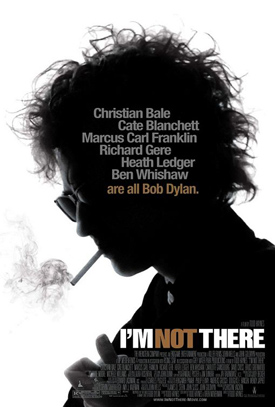
5. I'm Not There Perhaps the greatest example on this list of pure film, a kaleidoscopic biopic whose impact lies entirely in its mesmerizing images. Other rock movies dutifully catalog the iconic moments of their subject's life and times; I'm Not There blows them to smitheeens and reassembles them into something beautifully elusive.

6. Sweeney Todd: The Demon Barber of Fleet Street A near-perfect translation of Sondheim's masterpiece to the screen, aided immeasurably by performances that find just the right note and a director expanding his Goth fetishes and Hammer love to new, chilling areas. If only Dreamgirls had this much arterial spray.
 7 . Harry Potter and the Order of the Phoenix An unproven director takes over the wizard franchise with the most difficult-to-adapt of the books (until the last one) and gives us only the second Harry Potter film that can stand on its own terms. Filled with moments of visual inspiration and sacrificing none of the book's emotional heft, it's imaginative in a way that too few kids' movies are. Bonus points for Imelda Staunton's deliciously hateful Professor Umbridge.

8. Grindhouse I thought long and hard about whether to rank Planet Terror and Death Proof together or separately (in which case Tarantino's film would have ranked quite a bit higher). Ultimately, it just feels wrong, as the thrill of Grindhouse, no matter what your preference, is the overall experience (to those catching up on DVD - sorry, you missed it). A feast for cinema lovers - how do you explain to the non-cinephile why a title card can be funny? - its also the purest, most uncomplicated fun I've had in years. Sidenote: Death Proof seems way less popular with men (who largely hate Tarantino's apparently reductive sexual politics) than with women (my friends, my wife, even my mom all cheered on the film's vengeful denouement), but everyone loves Stuntman Mike.

9. The Darjeeling Limited Wes Anderson's India-set travelogue sees his typically meticulous visual style expand to include a lightness of feeling and a subtle social consciousness. Beautifully photographed and featuring Anderson's strongest soundtrack yet, the film also benefits immeasurably from its prologue, the heartbreaking mini-masterpiece Hotel Chevalier.

10. Ratatouille Thank God for Brad Bird. In a time when so much children's entertainment is pandering and even offensive, Bird releases cartoons that honor children's emotions and intelligence. The message of his beautiful Ratatouille is a powerful one not only for children but also their parents, reminding with the lightest thouch how no life is absent of meaning or the potential for beauty. Anyone can cook, indeed - and after a year like this past one, I can't wait to see what's on the menu for 2008.