Wednesday, September 01, 2010

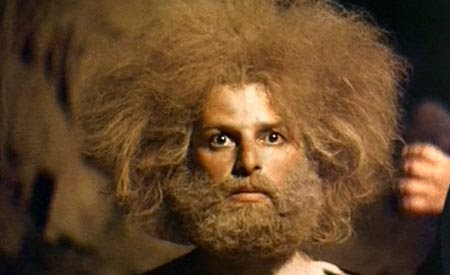
Battle of the Aughts Round 1 - Spock vs. Frodo


I matched up the films in round 1 randomly, which makes the super-geeky titular battle much funnier. I'm happy that there are a number of offbeat pairs below - everyone who sent me their top 10 helped make this a very eclectic contest. Thanks, guys. Each round will last approximately 72 96 hours. I can't wait to see how it all pans out.
In the Mood For Love (5 votes)
Happy-Go-Lucky (4)


Punch-Drunk Love (10)
A Christmas Tale (0)


Pulse (4)
Reprise (0)


Dancer in the Dark (8)
Half Nelson (0)


The New World (8)
Run, Fatboy, Run (2)

Mulholland Drive (10)
Irreversible (1)


Jackass Number Two (4)
The Consequences of Love (1)

Dogville (5)
The Diving Bell and the Butterfly (1)

Flight of the Red Balloon (3)
Electric Dragon 80.000 V (1)

Up (6)
Silent Light (1)


American Psycho/Primer (tie - 3 each)

No Country For Old Men (10)
Talk to Her (1)

Memento (8)
Secretary (4)

8 Women (4)
Shotgun Stories (1)
American Splendor (5)
In Praise of Love (1)

Almost Famous (4)
Blissfully Yours (1)

Kill Bill vol. 2
(6)
Synecdoche, New York (4)

A Prairie Home Companion (5)
Running on Karma (0)


I'm Not There/Y tu mama tambien (tie -3)

Spirited Away (4)
Hamlet (1)

No Direction Home (2)
The Best of Youth (0)

Pan's Labyrinth (5)

Adaptation (4)

Sideways (3)
Werckmeister Harmonies (2)

Ratatouille (5)
Exiled (0)

The Royal Tenenbaums (7)
Waking Life (2)

Amelie (5)
Gerry (2)

The Assassination of Jesse James by the Coward Robert Ford (4)
The Devil's Rejects (2)

The Beat That My Heart Skipped (2)
Old Joy (1)

Before Sunset (4)
Zombieland (3)

WALL*E (6)
24 Hour Party People (2)

Inside Man (4)
Audition (3)

Children of Men (9)
Burn After Reading (1)

The Dark Knight (4)
The Son (2)

Zodiac (7)
In the Bedroom (2)

There Will Be Blood (5)
Bad Santa (3)

Beau Travail (1)
Survive Style 5+ (0)

Eternal Sunshine of the Spotless Mind (8)
The Brown Bunny (1)

Inglourious Basterds (8)
The World (0)

Time Out (2)
Black Hawk Down (0)

The Lord of the Rings: The Two Towers (5)
Star Trek (4)

Yi Yi (3)
Southland Tales (0)

28 Days Later (6)
The Aura (0)

Tuesday, August 17, 2010

An end to inertia.

I recently did some research on a self-help program that will go unnamed to help a friend determine if a family member had joined a cult (alas, no). In reading about this program's tenets - basically, a grab bag of Eastern and Western philosophy backed by an aggressive marketing strategy - I was struck by the distinction the program makes between "change" (bad) and "transformation" (good), words that I had believed to be synonyms. The difference, according to this program, is that change is defined in contrast to the past (like Mant), whereas transformation is a present-tense decision to start a new way of being independent of the past (like Brundlefly). Fascinating. So in an effort to transform, I've decided to skip the part explaining the reasons why I've let the blog stagnate (mostly mundane) and get on with one of the many ideas I've been procrasinating on.

So now then.

I wanted to wait on one idea until the flood of end-of-decade lists had slowed down and give time to some of my readers who, like me, needed the DVD window to fully absorb last year's movies. Those of you who have been visiting the blog for a long time might remember the tournament-style voting competition a few years back to determine the readers' choice for Best Movie Ever (the winner was 2001). I'd like to try to same thing to determine Cinevistaramascope's Best of the Aughts. As with the previous contest, a pool of films will be created from readers' top 10 lists, with more points awarded by ranking (unranked lists = equal points for each movie). The highest-scoring films - up to 128 - will face off over the course of five or six rounds until a winner is named. Hopefully, as with any "best of" list worth its salt, lively debate will ensue.

The only rule is that movies submitted must have made their non-festival (or commercial, if you prefer) theatrical debut between January 1, 2000 and December 31, 2009. The more diverse the selection of competing films, the more fun the contest will be (and with 128 slots open, it's very possible that one vote is all a film will need). So whether you wish to bring attention to the work of Pedro Costa or argue that Kangraroo Jack is ripe for rediscovery, please e-mail your top 10 to cvrscope@gmail.com. Please also indicate if you'd be interested in contributing a brief write-up of a film from your list, which I hope to run during the contest as well (I'd also appreciate suggestions for a contest title). Top 10s will be accepted until 12PM EST on August 29; the contest will start on September 1. Those of you looking for ideas should check out my friend Paul Clark's ongoing Top 25 of the Aughts, or the submissions from last year's Muriel Awards.

Speaking of the Muriels, the recently launched blog Our Science is Too Tight looks to serve as a sort of meeting place for the many talented film writers and bloggers who contribute to the awards every year. Nearly every day there are new links to Muriel voters' work as well as original content. I'm looking forward to writing for the blog - I'm looking forward to writing, period.

Monday, May 31, 2010

I gotta get off this rock, Chuck.

At first I thought I was putting off writing about Shutter Island because it's impossible to really discuss without talking about its ending (consider that a spoiler warning). But after a few weeks, I realized I've never written about Scorsese; I managed to sidestep in-depth responses to The Departed and Shine a Light when they were released, and I've never written a proper review of any of his previous films. Writing about Scorsese is daunting, not so much because he is possibly my favorite filmmaker - he, Kubrick and Lynch are constantly battling for the top spot - but because, as Godard said of Nicholas Ray, Scorsese is cinema.

This is not to say that Scorsese is beyond criticism, but each new film, good or bad, is the sum of not only every film he's made but possibly every film he's ever seen. Shutter Island evokes and sometimes directly acknowledges Hitchcock, Kubrick, Powell and Pressburger, Val Lewton, Mario Bava and others I'm sure I missed on one viewing. This isn't just homage, it's flat-out worship of the entire history of cinema even as he expands the language of filmmaking in ways big and small with each new movie. The problem, then, is where to begin - whether I start by connecting Shutter Island to to Scorsese's body of work, the ongoing tension between his American and European sensibilities, his Catholicism, his ongoing exploration of violence, or his continued collaboration with Leonardo DiCaprio, I'm risking worse than finding I don't have Scorsese's breath support. At best I'm telling you what you already know; at worst I'm diagramming, grasping the words but missing the music, reducing Scorsese to a fucking mix tape. I'd better have something to say, in other words, and as there is no clear starting point, let's start at the ending.

More than any of the other filmmakers I mentioned before, Shutter Island explicitly quotes Kubrick and specifically The Shining, complete with Penderecki on the soundtrack and a cameo by the Grady twins (triplets here). Kubrick's film is an important reference point in understanding Scorsese's intentions here, beyond the surface similarities of two films set in creepy, isolated locations. Since The Shining's release, the most common criticism of the film is that it is obvious from the beginning that Jack Torrance is crazy, which deprives the film of any suspense. For fans of The Shining, however, it is Kubrick's decision to foreground his character's psychological instability that is the source of the film's almost unbearable tension - as Scorsese commented, "It's holding back this extraordinary, emotional, powerful dramatic punchline. You know it's going to come somehow, at some time, and it just creates such suspense." Similarly, Shutter Island has been partly criticized for the predictability of a "twist" that I don't think is meant to be a twist - it's obvious early on that the protagonist, U.S. Marshal Teddy Daniels (Leonardo DiCaprio), is insane. This will be obvious to anyone with a basic recognition of film language from the first scene; as Teddy and his new partner Chuck Aule (Mark Ruffalo) approach the titular island by ferry, the blatant rear projection of the backgrounds signals a level of unreality reminiscent of Hitchcock's use of the technique (which, in his later films, was on the verge of anachronistic even 40 years ago). Scorsese has always embraced a tension between realism and cinematic artifice; with Shutter Island, he emphasizes the medium's unreality to clue us in, early on, that we cannot trust what we are seeing.

Teddy and Chuck are headed to Ashecliff, a hospital for the criminally insane located on the island, to investigate the disappearance of Rachel Solando (Emily Mortimer), a patient hospitalized after drowning her children. As Teddy interviews the hospital staff, including compassionate head psychiatrist Dr. John Cawley (Ben Kingsley) and his more pragmatic colleague Dr. Naehring (Max Von Sydow), Scorsese and editor Thelma Schoonmaker employ deliberate continuity errors and off-balance editing rhythms to subtly disorient us. By the time Teddy confides his real motives for taking the case to Chuck, it's clear that we cannot take Teddy or his investigation at face value - the mystery Scorsese withholds is why an insane man is being given free reign of the asylum. DiCaprio is excellent as the tormented, justice-seeking Daniels, but the supporting performances are perhaps more important, as much of the film's success depends on the sustained feeling that everyone around Teddy knows something he doesn't (Ruffalo is particularly wonderful, playing the second banana role on the surface while revealing subtle hints of the compassion he feels for his "partner"). Few films have evoked the perspective of a deeply paranoid man as effectively; each scene of Teddy's investigation plays well as either a literal manifestation of the mystery unfolding in Teddy's head or, upon reflection, as the elaborate role-playing game it actually is. This is complimented marvellously by Dante Ferretti's production design, a neverending labyrinth of corridors, spirals and shadows that manifest Teddy's search for the truth just out of his grasp.

Though Shutter Island is, quite deliberately, one of Scorsese's pulpier efforts, it continues his ongoing investigation into the nature of violence. Teddy is a war hero, and his memories of the liberation of Dachau are borne directly out of a '50s pulp magazine - however, these sequences are marked by historical inaccuracies that suggest they may be a part of Teddy's delusion (I must admit I would have missed this were it not for Glenn Kenny's response to complaints from Bernard Henri-Levy). Characters throughout the film ruminate on the nature of violence with varying degrees of success (I found the dialogue between Teddy and a guard played by Ted Levine* a bit too on-the-nose). The film's strongest impact comes when we see the reality Teddy has buried. The film has some stunningly stylized moments, including the gorgeous dream sequences involving his dead wife Dolores (Michelle Williams) and the unforgettable shot of rats swarming a cliffside; however, when we see what Dolores did in the Berkshires, the scene is shot flatly, from a distance. It's one of the most chilling cinematic examples of the banality of evil, a horror born out of good intentions and human frailty.

This is not to overlook the awkwardness of the film's denoument - I must admit that I was a bit disappointed that the film's reveal requires Ben Kingsley pointing at anagrams on a whiteboard. I want to say that Scorsese elevates the material (Laeta Kalogridis is no Paul Schrader), but part of the reason the film works is that he never condescends to the B-movie origins of Lehane's novel. Shutter Island is a master chef making cheeseburgers and clearly having a lot of fun doing it; it's entertaining as hell, and yet it clearly merits discussion alongside his more "serious" efforts (to Scorsese's credit, I don't think he makes this distinction with his work). Teddy, like almost every Scorsese protagonist from Travis Bickle to Rupert Pupkin to Jesus Christ, is another incarnation of "God's lonely man," obsessives driven to repeat their psychic traumas over and over. As Kenny pointed out, "Even more than Raging Bull, Shutter Island can be read as a feature-length remake of Scorsese's harrowing 1969 short The Big Shave: it's a chronicle of a man who simply cannot stop hurting himself, cutting himself open." For this reason, the film lingered in my memory long after the closing credits (with their haunting mash-up of Dinah Washington and Max Richter). While hopefully none of us will ever be in Teddy's position, I'm sure many of us have risked destruction trying to solve an unsolvable problem; it's often our desire to be heroic that brings out our monsters. Why are you all wet, baby?

Friday, April 09, 2010

Home Entertainment


I keep forgetting to mention here that the Black Light DVD is available for sale now at CreateSpace and Amazon. It's not Blu-ray, and I doubt it will be your new home theater demo. But it's got heart, dammit, and that has to count for something these days ($20, hopefully). I've included some stills below, along with the trailer for those of you who missed it the first time.


Sunday, March 21, 2010

A Nightmare in Cherry Hill

Is the sight of Malcolm McDowell, Dario Argento, Tom Atkins and Eric Roberts occupying the same space a sign of the end times? I can't say for sure, but I saw exactly that at Monster Mania 14. Held in Cherry Hill, New Jersey, the horror convention featured an astounding lineup of horror, cult and B-movie actors (including both Jake AND Gary Busey) signing autographs and meeting fans. It was my first horror convention, though it won't be my last - for a lifelong horror movie geek, Monster Mania is better than Christmas.

After a six-hour drive to Cherry Hill, a shower and room service, my travelling companion Annabelle and I headed down to check out the many vendors selling horror collectibles. There were out-of-print, R2 and bootleg DVDs, lobby cards, posters and stills, t-shirts and other apparel, and back issues of Fangoria as far as the eye could see. I was particularly impressed by the vendors selling horror-inspired art of their own, from paintings of Pinhead to horror-themed jewelry to my personal favorite, a Barbie redesigned to look like Laura Palmer wrapped in plastic (those in the Philly area should check out the Twin Peaks-inspired show, featuring work by 20 artists, at Piranha Betty's). Working on a limited budget for the weekend, I grabbed a Night Breed DVD for Annabelle but decided to think some more about what needed to come home with me. The best part of the night was the visible excitement on the faces of Annabelle's young cousins, who couldn't wait to tell their classmates they'd met Michael Myers. Indeed, witnessing Myers posing for pictures with Freddy Kreuger, the Predator and a Na'vi ranks high on the list of the most surreal things I've ever seen.

On Saturday morning I returned to the vendors, snagging a region-free DVD of Santa Sangre and two t-shirts from Fright Rags - a Wicker Man tee (Christopher Lee, not Nicolas Cage) and an absolutely gorgeous Let the Right One In shirt. I chatted for a few minutes with the Fright Rags crew; they're supercool and, in my opinion, way better than Rotten Cotton.

Then we headed to our first panel, a reunion of A Nightmare on Elm Street 2 stars Mark Patton and Kim Myers. The Q&A actually led me to reevaluate my feelings about Freddy's Revenge; while I'd always assumed the film's blatant homoeroticism was unintentional and assumed the questions would dance around this, I was surprised that Patton was eager to explain why, as he put it, "Nightmare 2 is the gayest horror movie ever." The openly gay actor, who was out when he played Jesse (a rarity among young actors in 1980s Hollywood), was very aware of the film's gay subtext and insists screenwriter David Chaskin was as well. Patton talked candidly about his decision to leave acting, motivated by the pain of losing many of his friends to AIDS and frustration with the homophobia (often from closeted actors and executives) that closed doors for him in Hollywood. As he talked of tiring of the "fag-bashing" he found in many Nightmare 2 reviews on the internet and the increasingly positive response his performance has received from gay and straight horror fans in recent years, I found myself reflecting on how strange it must be for an actor primarily identified with one role in a genre movie to have his life defined and identified by that role. Patton, who owns an art gallery in Mexico and hasn't done any convention appearances or Elm Street interviews before this year, decided to meet his fans after a positive experience being interviewed for the upcoming series retrospective documentary Never Sleep Again: The Elm Street Legacy (the footage we were shown by the producers looked very promising). He expressed sincere gratitude for his fans, particularly those who told him that Freddy's Revenge helped them come to terms with their sexuality. I never expected to be genuinely movied by a Freddy's Revenge Q&A. You rock, Jesse Walsh.

After the Q&A I got in line to have my Inferno one-sheet signed by Dario Argento. The prospect of meeting one of my favorite directors, horror or otherwise, had me a bit nervous; luckily, Argento was extremely kind and, if anything, a bit shy himself. He was curious about my poster, asking what country it was from. I told him I wasn't really sure; he examined it again and said in his pronounced Italian accent, "Ah, Turkey, I think," he said, pointing to the image of a snake slithering through a skull's eye sockets. "In Turkey, they add snake. This not enough. They need snake. Yes, Turkey." I thanked him, told him Inferno is one of my favorite films - original, I know, but as Inferno is his most underrated film, he seemed to appreciate it. My limited budget kept me from meeting more people directly, so special mention must be made of Bill Mosely, who enthusiastically chatted up fans regardless of whether they were buying anything or not. That Chop Top is a class act.

More room service and cable, than the Malcom McDowell Q&A, who started off by requesting intelligent questions only; when the first was "What was it like to work with Stanley Kubrick," he groaned "Christ, here we go..." Luckily, after getting the usual anecdotes about "Singin' in the Rain" and eye torture out of the way, McDowell was filled with hilarious stories about filming the William Tell orgy scene (he kept giving one actress the ol' in-out to after Kubrick called "cut" to irritate the perfectionist director), hijinks on the set of Caligula (I had no idea Peter O'Toole was [is?] a pothead!), and injuries sustained while filming the nude wrestling scene in if... When asked about working with Rob Zombie, he referred to the director as "brilliant" and insisted he could be a successful director of non-horror movies (I hold out hope for Zombie - Halloween II was often ridiculous but somehow difficult to dismiss completely). McDowell had the audience cracking up and seemed to really enjoy talking directly with fans, particularly a young woman dressed as a Droog - "Look at you there, all dressed up as Alex and with your bosoms out! That's great."

Next was Argento, aided by an interpreter, who apologized early on that "I am not as funny as [McDowell]." He started by telling the audience that he'd travelled with his brother to the American premiere of Suspiria in Philadelphia (near Cherry Hill), where it got a very enthusiastic response, and the city has been dear to him ever since. When asked where he studied film, he responded "I studied in the cinema. Godard is my teacher. Bergman is my teacher." While his recent films have been disappointing, it was clear that Argento hasn't lost touch with his love of cinema, leaving me with hope that he still has more great movies left to make. The best moment was when a fan asked about the monstrous title character of Argento's Masters of Horror episode Jenifer, Argento said "I love Jenifer. I want to make love to Jenifer."

We took another quick look at the vendors the next morning before leaving; I thought about how good it felt to be among so many fellow horror fans. While I love all cinema, horror was definitely my gateway into film appreciation, and I'll always feel loyal to the movies that gave me nightmares when I was a kid, forever burning themselves into my frame of reference. While I don't want to overanalyze it, I suspect that horror fans are bonded by a more macabre outlook on life than most people have. For all the times I've been asked why I could possibly enjoy such grotesque movies, it felt good to be surrounded by people for whom the question was obvious. Also, after three days of being surrounded by alternachicks in clingy horror apparel (including the one by my side), I must say that horror fans are generally sexier than the average geek. I can't wait for my next con, and after seeing how kid-friendly the con actually was, it's safe to say that Luna and Tommy will be attending their first Monster Mania pretty soon.


Saturday, February 20, 2010

Top 10: 2009


I saw fewer films in 2009 than usual, which made me more appreciative of the good ones and more resentful of the bad ones. If there are more big-budget genre movies on my list than usual, it's more reflective of a shift in film distribution than in a newfound aversion to art films - as the studio indie divisions continued to fold and niche distributors relied more on Netflix and On Demand services, films like The Road and Bad Lieutenant: Port of Call New Orleans never made it to my neck of the woods (although the latter is playing at Images this week - thanks, guys!). It was also an unusually strong year for comedy, horror and children's movies, and even big-budget studio tentpoles - for every Trannys 2, there was a genuinely offbeat or superior crowd pleaser. While there are definitely some bleak films on my top 10, 2009 was possibly the most fun moviegoing year of the decade - the best movies of the year (it was practically a coin toss between the top two) inspired the kind of excitement I always felt as a movie-loving kid but is all too rare these days.

1. Where the Wild Things Are One of my favorite memories from working at Images is the letters we received from the local elementary school thanking us for showing Spike Jonze's brilliant adaptation of the classic Maurice Sendak book. Where the Wild Things Are is not an easy film for kids to digest, and thank God for that - when most "family entertainment" is designed to pacify kids, a film that speaks to a child's understanding of the world is something of a revalation. Surpassing even his collaborations with Charlie Kaufman, Where the Wild Things Are is the grandest expression yet of Jonze's playful, endlessly imaginative approach to filmmaking. At once wondrous and haunting, Where the Wild Things Are is the most fully realized vision of the world through a child's eyes since E.T. I can't wait to watch it with my kids.

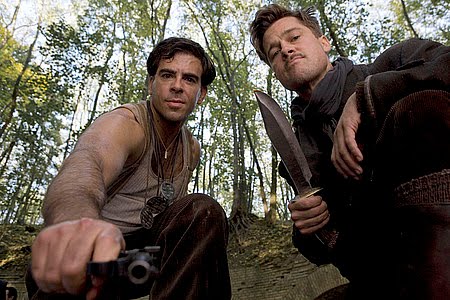
2. Inglourious Basterds By now, the experience of having a new Quentin Tarantino movie kick my ass is so routine that I feel spoiled. I must admit that it's a bit mystifying to me why Inglourious Basterds brought Tarantino the critical and commercial acclaim that has eluded him since Pulp Fiction, especially since his latest is very much a continuation of the cinematic ideas explored in Kill Bill and the much-maligned Death Proof. If anything, I would have guessed that a nearly three-hour WWII movie with no battles, lots of subtitles and a star that is offscreen for half the running time would have appealed mostly to cinephiles. Its popularity is attributable, I think, to two things - the joy of watching Nazis get brutally killed (something Tarantino subtly comments on throughout the movie) and the enduring power of well-done classical filmmaking. The film is a masterpiece of sustained tension - the audience I saw it with was dead silent during the opening chapter and the brilliant tavern scene, which almost drove me to frustration before delivering brilliantly. A cinematic orgy of great performances and already-classic images, Inglourious Basterds is going to be discussed and celebrated for many years to come.

3. Antichrist John Waters described Lars Von Trier's movie best, writing in Artforum that "If Ingmar Bergman had committed suicide, gone to hell, and come back to earth to direct an exploitation/art film for drive-ins, this is the movie he would have made." Equal parts Evil Dead and Hour of the Wolf, the film's mixture of psychosexual allegory and X-rated splatter was met with derision by many at its Cannes premiere, where the closing dedication to Andrei Tarkovsky was met with laughter. Yet Von Trier, who made the film while struggling with severe depression, shares with Tarkovsky a preoccupation with the struggle between the spirit and the flesh. Though Antichrist is employs many of the same Brechtian devices as the director's recent work, it's his most emotionally direct film since Breaking the Waves. As the conflict between the unnamed couple played by Willem Dafoe and Charlotte Gainsbourg (frighteningly great here) turns shockingly visceral, Von Trier demonstrates a seriousness about the consequences of violence rarely seen in contemporary movies. Always the provocateur, Von Trier baits his critics' charges of misogyny with the ultimate example of the monstrous feminine, but the film is perhaps his attempt to either exorcise or (as the final scene suggests) make peace with his own chaos. Beautifully photographed by Anthony Dod Mantle, Antichrist is a difficult but important film that, love it or hate it, is bound to get under your skin.

4. Observe and Report Jody Hill is what Martin Scorsese calls a "cinematic smuggler." In his debut film The Foot Fist Way, the amazing TV series Eastbound and Down and this, his criminally underrated second movie, Hill uses the cover of deadpan slacker irony to deliver a pitch-black critique of the spiritually empty existence of his characters. For mall cop Ronnie (Seth Rogen, also underestimated here), a paranoid, reactionary ethos cobbled together from action movies and reruns of COPS is his only escape from his hellish life. If that sounds about as funny as Antichrist, the miracle is that Hill, like Todd Solondz before him, gives his protagonist a weird integrity; in his own misguided way, Ronnie is trying to make the world a better place. Hill and Rogen have both described Observe and Report as "Taxi Driver as a comedy," and like De Niro and Scorsese's own comic version of Taxi Driver (The King of Comedy), the movie is a barrel of nervous laughs.

5. A Serious Man A movie that gets funnier and more threatening the more I think about it. The way the film's impending sense of doom creeps up on you is astonishing; there's not a wasted moment in the film, every scene quietly building to the ending's final gut punch. The Coens have become possibly our greatest absurdists; while I admit I'm still working through the film's meaning, it seems to posit the idea that there is something governing our lives, but that something's nature is so unknowable to us that perhaps it's best too, as character suggests, "Accept the mystery." The Coens have never been more merciless, but any charges of misanthropy fall apart in the face of their obvious affection for their characters and the actors playing them; in its obvious sympathy for the little guy, A Serious Man gives me that Barton Fink feeling.

6. Watchmen I like this movie for all the reasons it was never going to connect with a mainstream audience. I like that it's cold and precise in its stubborn adherence to the source novel; I like that it's longer, more violent and nerdier than it needs to be, that its makers cared more about giving the fans the movie they wanted then in appealing to the widest possible audience. Of course, everyone who fell in love with the book can't help comparing Zack Snyder's movie against the one they'd imagined, so there's something noble in Snyder's swinging for the fences. The film isn't perfect - after Revenge of the Sith, no movie should feature a costumed character howling "Nooooo!" - but Watchmen stands next to Hulk and Superman Returns as a cerebral take on the comic book movie that I'll gladly defend in vain anytime. If he sees it, Alan Moore may lift his curse on Snyder; I know I did.

7. Adventureland Greg Mottola's coming-of-age tale is the warmest movie I saw this year. Mottola demonstrates real affection for his characters as they try to navigate their first adult relationships. Jesse Eisenberg (also good this year in Zombieland) and Kristen Stewart are endearingly awkward as co-workers at the titular amusement park struggling to say what they mean. Adventureland is bound to inspire laughs of recognition from anyone who remembers what it was like to be 20 and completely unprepared for the real world. Plus, the soundtrack kicks ass.

8. Public Enemies With each film, Michael Mann is driven more and more by an obsessive attention to the nuts-and-bolts minutia of his characters' lives that is frustrating to some audience members and mesmerizing to others. As with Altman's McCabe and Mrs. Miller, the contrast between the striking cinematography and the muddy sound design emphasizes the disconnect between historical mythmaking and verisimilitude. We're drawn to the seductive cool of John Dillinger (Johnny Depp, willing as ever to subvert his iconic screen presence) even as the movie constantly paints towards his inevitable downfall. It's the most subversive gangster movie since Bonnie and Clyde, and while it never quite touches the greatness of that film (it's surprising how bad Christian Bale is here), it's nevertheless a fascinating film, particularly in its stunning final scenes.

9. Star Trek A movie that shouldn't work but does. A year ago, I was mocking Star Trek's trailer, which threatened what Paul Clark dubbed "Star Trek Babies." But while I remain opposed to building starships on earth, I was otherwise surprised by how director J.J. Abrams manages the balancing act of honoring fans' memories of these characters while also, impossibly, making Star Trek cool. The time-travel plot is completely ridiculous, but no matter; Abrams' understands that the key to Star Trek's success is the interplay between the characters, particularly the coolly logical Spock and cocky man of action Kirk (they, and the rest of the characters, are perfectly cast). With the Abrams-created Lost (series co-runner Damon Lindelof is one of Star Trek's producers) taking sci-fi to new levels on the small screen, the same love of genre storytelling has breathed new life into a dying franchise; it's sort of astonishing, after slogging through the last few Next Generation movies, to be genuinely excited for the next Star Trek.

10. Drag Me to Hell
Quentin Tarantino pointed out in an interview that Sam Raimi's latest horror comedy shares with A Serious Man a gleeful willingness to torture its protagonist (Raimi and the Coens have collaborated in the past). Made in the macabre tradition of EC Comics, Drag Me to Hell is Raimi returning to his splatstick roots - this movie may be the closest thing we ever get to a big-budget Evil Dead 4. The film's laughs and screams are held together by its central sick joke - that its tormented protagonist Christine (Allison Lohman) deserves what's coming to her. It's a blast to witness Raimi get back in touch with the demented Looney Tunes style of filmmaking only seen in moments of the Spider-Man movies, while also revealing a near-Hitchcockian sense of timing. It's the rare mainstream horror movie that pulls no punches, and would be a much more bitter pill to swallow were Raimi not clearly having a fiendishly fun time making us jump out of our seats.


Speaking of top 10s, it's also time for the 2009 Muriel Awards; as always, the results promise to be better than the Oscars. This year has seen some best-of-the-decade awards as well as the usual anniversary awards - I never realized 1984 was such a great year for movies, but I couldn't even find room for much-deserved winner This is Spinal Tap in my top 5. The awards once again feature commentary by the eclectic group of film bloggers and writers who participated, including my notes on Best Screenplay winner Inglourious Basterds (so far, it's looking like an Inglourious sweep at the Muriels this year). To see the winners posted every day through February 28, head over to Steve Carlson's blog Down Inside You're Dirty.

Thursday, January 28, 2010

Top 10: 1999


1. Eyes Wide Shut (Kubrick)
2. Magnolia (Anderson)
3. American Beauty (Mendes)
4. Being John Malkovich (Jonze)
5. The Straight Story (Lynch)
6. Fight Club (Fincher)
7. The Iron Giant (Bird)
8. Election (Payne)
9. Bringing Out the Dead (Scorsese)
10. Boys Don't Cry (Peirce)

Wednesday, January 27, 2010

I think, really, the Jolly Roger is the appropriate course of action.

In the past three years, Joel and Ethan Coen have given us three completely unpredictable movies, each drastically different from the last. The existentalist thriller No Country For Old Men was followed by the misanthropic slapstick of Burn After Reading, the latter as much an absurdist companion to the former as The Big Lebowski is to Fargo. Both films (along with their 2004 misfire The Ladykillers) suggested that the Coens had adapted a more cynical worldview; it's hard to imagine the Coens of today directing the scene in Raising Arizona where Ed breaks up with Hi without ironic Kubrickian distance. If their newest movie, A Serious Man, combines the comic and somber elements of their previous two films, it's also, surprisingly, their most personal movie in years. Set in Minnesota (their home state) in 1970 (when the Coens were teens), A Serious Man is at once their bleakest and most sincere film yet.

A prologue relates a Jewish folktale about a dybbuk, a roaming demon who takes the form of a dead person, before cutting to 1970 and 13-year-old Danny Gopnik (Aaron Wolff) listening to Jefferson Airplane through an earbud in his Hebrew School class. It is Danny's dad Larry (Michael Stuhlbarg) for whom the truth is found to be lies; a math professor and a strictly rational man who admits he doesn't really understand Schrodinger's cat, Larry's world is rocked when his wife (Sari Lennick) announces that she is leaving him for Sy Ableman (Fred Melamed), a widower regarded in the community as a "serious man." Sy's attempts to console Larry through his own betrayal, as well as false allegations from a student (David Kang) and Larry's brother, who stays on Larry's couch and alternates his time between draining a cyst and working on an all-encompassing probability model called The Mentaculous, as well as other assorted peripheral lunacies, have spun Larry into an existential crisis. We're encouraged to both laugh at Larry's spiralling misfortune and recognize it as our own; it's telling that the Coens admitted Larry was partly inspired by their father, even as they also confess they loved coming up with new ways to torture Larry.

Larry's plight has been frequently compared by critics to Job, although the Coens have pointed out that it's Larry's rational assumptions, rather than his faith, that are being challenged. But there's no question that Larry's story is deeply rooted in Jewish philosophy and humor; if Barton Fink is a horror movie about anti-Semitism, A Serious Man is the Coens' most reflective look at their religion. When Larry asks two rabbis for spiritual counsel, the first pontificates about the wonder of parking lots while the second shares a long parable that only serves to further confuse Larry; the rabbis are the latet in a long line of authority figures sitting behind big desks that the Coens regard warily. At the same time, they're among our most morally serious filmmakers - their films demonstrate over and over that crime doesn't pay. As Matt Zoller Seitz pointed out, the Coens have a pragmatic approach to morality - to do good brings "freedom from fear of loneliness and the nagging suspicion your existence is meaningless" (or, as a rabbi in the film puts it, "A sign from Hashem? Don't know. Helping others? Couldn't hurt"). But Larry's fate doesn't seem connected to his actions. He faces constant challenges to his assumptions about the way the world works, from the sexy neighbor (Amy Landecker) who sunbathes nude and asks Larry if he enjoys "the new freedoms" to the Columbia House representative who insists Larry purchased Santana's Abraxas (Stuhlbarg is hilarious as a man in a constant state of freefall). More so even than No Country For Old Men, A Serious Man wrestles with the seeming arbitrariness of existence - it's equal parts hilarious and deeply unsettling.

As with most of the Coens' films, A Serious Man recreates an extremely specific time and place in meticulous detail. Here, Minnesota in 1970 is populated by stage and character actors we have few, if any, prior associations with; the characters feel as if they're born directly from the Coens' memories of their adolescence. Melamed is a particular standout, his sonorous tones the perfect voice for a well-respected man who urges others to do the right thing even as the "right thing" frequently lines up with his own self-interest. If Sy Ableman embodies the contradictions of early-70s suburbia - equal parts amoral and beholden to tradition - they Danny points towards an uncertain future. Presumably the Coens' stand-in, Danny is inarticulate and constantly stoned, his small-scale problems upstaged, finally, by a growing awareness of the chaotic world around him. What finally connects A Serious Man to the previous two films is an ending that refuses to wrap up the inexplicable, and a wary respect for things that cannot be dreamt up in our philosophy.