Tuesday, October 15, 2013

Top 100: '80s Horror! (#70-61)


I'm battling a cold but determined to stay on course to finish this list by Halloween - as I'm a bit drowsy and unfocused, feel free to let me know in the comments if you catch any typos or unfinished thoughts. As for the next ten, they do a great job of representing the eclectic nature of the genre, with gory popcorn movies sitting next to art films and subtler fare. Writing about #68, in particular, made me realize how overdue I am to revisit it.


70. The Beyond (Lucio Fulci, 1981)

The Beyond is my favorite Fulci, as the movie's supernatural premise allows for some wildly surreal images that go beyond (heh) Fulci's usual knack for gross-out. There's plenty of that of course, with man-eating spiders, bodies dissolved by acid and so forth. But the movie's thin plot, concerning a woman who inherits a New Orleans hotel built on one of the seven gates of hell, allows for some very striking images of the afterlife and its residents. It's incoherent, but coherence wasn't a priority for Fulci - inspired by the surrealists, he wanted to shock and provoke a visceral response from his audience, and he definitely succeeded, particularly in a child-shooting scene that trumps Assault on Precinct 13 in its brutality.

 
69. The Blob (Chuck Russell, 1988)

A Nightmare on Elm Street 3 director and co-writer Chuck Russell and Frank Darabont re-teamed for this remake of the Steve McQueen starring original. While I have a lot of affection for the earlier film, this is a case of a remake besting the original. Russell and Darabont's screenplay finds the right balance between a comic tone and, once the blob starts consuming its victims, some genuinely repulsive and creepy death scenes. The Blob takes its seemingly ridiculous monster and finds a number of inventive ways to make the pink goop seem threatening. The special effects are top-notch for their time, but it's Russell and Darabont's obvious appreciation for the previous movie and monster movies in general that make it a treat for horror buffs. Bonus points for Eraserhead's Jack Nance in a bit part.

 
68. Lady in White (Frank LaLoggia, 1988)

Another childhood favorite, set in upstate New York in the early '60s, about a boy named Frankie (Lukas Haas) who, after being accidentally locked in a school closet on Halloween, is almost killed by a mysterious attacker before having a vision of a murder that took place in the same spot ten years earlier. The movie has a great deal of fun alternating between the mystery of the unsolved murder and Frankie being visited by spooky but harmless ghosts who want his help. The internet informs me that the titular ghost is based on an urban legend from Rochester, NY, where writer/director Frank LaLoggia grew up. The movie was shot on location near Rochester, and it captures that Northeastern late autumn vibe perfectly. The identity of the killer is predictable, but other than that, Lady in White a subtle, effective ghost story in the vein of The Haunting and The Innocents.
 

67. A Nightmare on Elm Street Part 2: Freddy's Revenge (Jack Sholder, 1985)

I had a professor in college that was big on the intentional fallacy, the pitfall of basing one's interpretation of a text on knowledge of its makers or the creative process that aren't found in the text itself. A movie like A Nightmare on Elm Street Part 2 reveals the limitations of adhering to this approach too strictly. I used to think this first sequel to A Nightmare on Elm Street was enjoyable in a so-bad-it's-good way, largely because of the homoerotic barely-subtext that I assumed was accidental (I wrote about it several years ago here). That changed for me when I attended the Monster Mania convention in Cherry Hill, NJ three years ago, featuring a Q&A with the film's stars Mark Patton and Kim Meyers. Patton quit acting shortly after A Nightmare on Elm Street Part 2, and this was his first appearance at a con, and he was disarmingly frank, making it clear that he was more than happy to discuss the aspect of A Nightmare on Elm Street Part 2 that was one everyone's minds. According to him, the gay subtext of the movie was completely intentional, at least in his performance, and he had obvious pride in being the rare male scream queen and in the e-mails he'd received from gay men who told him how much the movie and his performance meant to them when they were teens. It was fascinating hearing about Patton's experiences as a gay man in Hollywood in the '80s, about the homophobia and hypocrisy that drove him away from the industry, and about how he'd wanted to forget about the movie for a long time because of the many homophobic internet reviews of the movie from horror geeks, a primarily young, male group (though our ranks seem to be growing more diverse, thankfully). Knowing all this, and knowing that A Nightmare on Elm Street Part 2 was made by people who knew exactly what they were doing (except for, according to the documentary Never Sleep Again, director Jack Sholder) has made the film a whole new experience to me - what used to seem campy now seems worthy of celebration, a mainstream horror movie with a gay protagonist that is about the fear of coming out. If Mark hadn't told his story, I'd still think it was a guilty pleasure, so whether it succeeds on its own terms is debatable. It still tries to make an exploding parakeet scary, after all. In any case, I love it completely unironically. Also, it has the best Freddy makeup design in the series. Also, this.


66. Friday the 13th: The Final Chapter (Joseph Zito, 1984)

The best of the Friday the 13th sequels, which are, for the most part, variations on the original's stalk-and-slash format. This one is the best because director Joseph Zito actually has a sense of how to use light and shadow, framing and editing to build suspense, tools that had been mostly forgotten since the first film. It also works thanks to two characters and performances. The "final girl" is Tommy Jarvis (Corey Feldman), a young horror buff who makes his own monster masks and low-tech effects - he's a surrogate not only for makeup artist Tom Savini, who returned for what was supposed to be the last in the series, but for any young horror geeks in the audience. And then, of course, there's Crispin Glover, who takes the role of an undersexed "dead fuck" and makes something special out of it with his already-offbeat line deliveries and character choices (this will never not crack me up). And though the subtitle was proven to be bullshit in less than a year, Savini's work on Jason's would-be sendoff is suitably grisly.

 
65. The Changeling (Peter Medak, 1980)

A teacher once told me that The Changeling was the scariest movie ever made. The first time I saw it, I was a little disappointed that I didn't love it as much as my teacher or the movie's general reputation would suggest. I was mostly disappointed by the mystery aspect of the plot, which never really grabbed me (though it was a likely influence on The Sixth Sense). Freed of those high expectations, though, The Changeling is an effective little thriller. Starring George C. Scott as a composer who moves into an old house following the death of his wife and daughter, only to discover that something else is residing in the house, the film has some great scares built entirely on the power of suggestion. Put another way, I didn't know it was possible to make a red rubber ball this frightening.

 
64. The Hitcher (Robert Harmon, 1986)

It's all about Rutger Hauer. The Hitcher has other strong elements - Robert Harmon's economical direction, the stark cinematography, C. Thomas Howell's believably terrified performance, and the gruesome setpiece involving two semis. But even if the rest of the movie didn't work, the demented twinkle in Hauer's eye as the hitcher describes to his captive what a knife can do to the human eye would be enough to make the movie terrifying and memorable. I'm not usually crazy about these schematic thriller screenplays where the arbitrariness of the killer's motives is meant to be inherently scary. But Hauer is good enough that I buy it with The Hitcher, and the film is one of those cases that proves that, as fun as monsters and special effects can be, one strong performance is enough to make for a terrifying experience.

 
63. Lifeforce (Tobe Hooper, 1985)

I first saw Lifeforce during one of my late-night insomniac stretches as a young kid, channel surfing and discovering fascinatingly inappropriate movies. Though Lifeforce's reputation has improved, especially after Scream Factory's recent Blu-ray release, when I was growing up it was one of those films that I'd pretend to enjoy as a guilty pleasure before I realized that it is okay and defensible to just love this stuff for what it is. It's a big-budget movie about naked space vampires, and it's every bit as ridiculous, entertaining and ridiculously entertaining as it sounds. This was the first of Tobe Hooper's three-film deal with Cannon, and the failure of this and his entertaining remake of Invaders From Mars pretty much killed his career as an A-list director. It's a shame, because watching Lifeforce, flawed though it is, one can find all of the character, personality and batshit inventiveness that its too often sorely missing from blockbusters today.

 
62. Paperhouse (Bernard Rose, 1988)

Before he directed the outstanding Candyman, Bernard Rose made this quirky, unsettling psychological thriller that sticks in the imagination. Its hallucinatory images tempt the overused term "fever dream," but here it's actually apt, as the protagonist is a young girl named Anna (Charlotte Burke), who is bedridden by glandular fever. Sketching a house on a piece of paper, she finds that she's able to visit the house in her dreams. When she draws a face staring out the window, she returns to meet a boy (Elliot Spiers) living in the room. As Anna inadvertently creates monsters and has to save the boy, the movie becomes a fascinating exploration of childhood anxieties, particularly for anyone who is prone to revisiting the same imagined places in their dreams. I watched Paperhouse many times back when Bravo would air it a lot (this is when Bravo was actually awesome), but it has never gotten an R1 DVD release and is mostly forgotten today. Hopefully Scream Factory or another label will get around to it sooner rather than later, as it's a fascinating, unique film that is ripe for rediscovery.

 
61. Halloween III: Season of the Witch (Tommy Lee Wallace, 1982)

I used to dislike Halloween III for the same reason a lot of people do - it's a Halloween sequel in name only, ditching Michael Myers and Laurie Strode in favor of a Twilight Zone-esque tale about an evil toymaker and his plan to kill thousands of kids on Halloween night. The turning point was when I realized that I actually preferred watching it to most of the sequels that followed, that a bonkers movie involving Stonehenge, evil masks and killer robots is always preferable to a flat, formulaic photocopy of a classic film. Plus, the movie stars genre great Tom Atkins, who gets the most awesomely abrupt seduction scene in film history and makes it completely believable. I marvel at how, in the 1980s, a middle-aged, not particularly attractive, boozing, doofy guy could be a hero and sleep with the young lead actress (Stacey Nelkin), even as I have to admit to myself that there is something strangely attractive about the guy. Probably best not to dig too deep there. In any case, I really fell in love with the film when I saw a good 35mm print of it a few years ago. The movie was shot by Dean Cundey, who was also the DP on the previous two, and it has a great, sickly color palette that plays off Halloween iconography - it looks like poison candy corn. Halloween III may not be a great movie, and I can't fault anyone who still finds the idea of a non-sequel perverse, but it's more interesting and entertaining than any of the others in the series until Rob Zombie's remake and its sequel (but that's an argument for another day).

Friday, October 11, 2013

Top 100: '80s Horror! (#80-71)

 
We're a fifth of the way through the list, and while we haven't hit the canonical titles yet, we're past the movies I have to qualify with "I loved them as a kid" or "This is more awesome than great." The movies listed below are good, solid entertainment for Halloween or any time.


80. Critters (Stephen Herek, 1986) 

Critters is one of those rare cases where a movie made to exploit the success of a recent hit (Gremlins in this case) is actually pretty great in its own right. The key may be that Critters, like Gremlins director Joe Dante's Jaws riff Piranha, has a sense of humor that is tongue-in-cheek without ever quite veering into self-parody. Critters doesn't share Piranha's satirical bent, but it does have moments like this that demonstrate the filmmakers are in on the joke without tipping their hat too much. But the stars of the Critters are the Chiodo brothers, who designed the creature effects and succeed in making the Crites - a renegade alien species that escapes captivity, crashes on Earth and proceeds to eat everything in sight - hilarious and strangely endearing. Supporting performances from great characters actors M. Emmett Walsh, Dee Wallace and Terrence Mann (Javert in the original Broadway production of Les Miserables, appearing here as an intergalactic bounty hunter) also help make Critters better than it needed to be. The sequels are mostly disposable, but Critters 2 does feature a scene where the Crites form a giant, rolling Criteball that instantly devours people and livestock it rolls over. I'm looking forward to Mark Cousins discussing the scene's influence once The Story of Film reaches the 1980s.


79. The Hidden (Jack Sholder, 1987)

This sci-fi/action hybrid about a body-jumping alien earns its place on this list thanks to the alien's uniquely horrific method of travel, a dying host passes the slimy creature mouth-to-mouth to its new host. It's a memorably queasy images that has influenced countless genre movies since (Jason Goes to Hell was particularly shameless in borrowing from The Hidden). Jack Sholder's tense, economical direction and Kyle MacLachlan's performance as a peculiar FBI agent (his work here feels like a dry run for Agent Cooper) also help make The Hidden an unassuming but surprisingly rewarding low-budget classic.


78. Something Wicked This Way Comes (Jack Clayton, 1983)

The most effective of Disney's late-'70s/early-'80s attempts at attracting older audiences, this adaptation of Ray Bradbury's novel (one of my favorite books) creeped me out something fierce as a kid. When I rewatched it as an adult, I was pleasantly surprised to discover that it mostly holds up. Jack Clayton also directed The Innocents, and this movie shares some of that outstanding film's ability to subtly get under our skin. The story of two boys, Will and Jim, who discover that the travelling carnival in town has a very dark secret, Something Wicked This Way Comes is the rare Disney movie featuring kids in peril that makes us feel as if something bad might actually happen to the kids. As the Mephistophelian carnival barker Mr. Dark, Jonathan Pryce is an impressively menacing presence even though we hardly see him do anything horrible - he can be chilling just by entering a scene. Jason Robards, as Will's dad, is credible and moving as a guy who envies his son's youthful adventures enough to believe him when other parents wouldn't. The film has a chilly, autumnal atmosphere that makes it perfect viewing for this time of year, especially if you're looking for one that will spook the whole family.


77. Phenomena (Dario Argento, 1985)

This one has a loopy plot even for Argento, with Jennifer Connelly playing a girl who can communicate with insects investigating a series of murders at her Swiss boarding school with the help of an entomologist played by Donald Pleasance. The movie features some of Argento's greatest surreal images and inventive death scenes, and a haunting soundtrack. It veers from hypnotic to kind of a mess, sometimes in the same scene, foreshadowing the director's sad decline. But it also has a monkey wielding a razor, and that always forgives a lot.


76. Pet Sematary (Mary Lambert, 1989)

Stephen King's novel is one of his best, and certainly his most frightening; King was famously reluctant to publish the book at first, thinking it to be too mean-spirited. The plot hinges on the death of protagonist Louis Creed's three-year-old son and his attempt to bring the boy back to life, which turns into a particularly disturbing variation on The Monkey's Paw. The movie isn't quite as strong as the book - some of the performances are stilted, and while Mary Lambert does a pretty good job of translating King's screenplay to the screen, I can't help wondering what original director George A. Romero's version would have been like. But it's a strong enough story that it still works, and two performances in particular - Fred Gwynne as a neighbor who tries to warn Louis to no avail and Miko Hughes as his undead tot - are pretty terrific. And for anyone who's seen the movie, the memory of Louise's wife's sister Zelda is bound to be particularly squirm-inducing. Bonus points for the awesome Ramones song that plays over the end credits.


75. Motel Hell (Kevin Connor, 1980)
Motel Hell is like a stepping stone between the stark gallows humor of The Texas Chain Saw Massacre and the more overt dark comedy of its first sequel. Starring Rory Calhoun and Nancy Parsons as Farmer Vincent and his wife Ida, who kidnap travelers to "farm" and slaughter them before selling them at his roadside stand (the motto: "It takes all kinds of critters to make Farmer Vincent's Fritters"), Motel Hell has an endearingly cornball sense of gallows humor. But the image of Farmer Vincent's captives buried up to their necks, their vocal cords cut, is grim enough to color our reaction to the sillier bits. Motel Hell's grimy and unsettling enough that the jokes only make the experience feel more menacing. Like The Texas Chainsaw Massacre 2, it's an alternately gross and hilarious parable about the plight of the small businessman.


74. Silver Bullet (Daniel Attias, 1985)

I must defer to an excerpt from Roger Ebert's review, one of my favorites:

"I know that a case can be made for how bad "Silver Bullet" is. I agree. It's bad. But it's not routinely bad. It is bad in its own awesomely tasteless and bubble-brained way--so bad, I think every laugh was put in lovingly, by hand. Most horror movies are exercises in unrelieved vulgarity, occasionally interrupted by perfunctory murders. This movie, to borrow an immortal comment by Mel Brooks, 'rises below vulgarity.' If you are sick up to here of horror movies in general and Steven King in particular, this is the movie for you. If you have impeccable taste and high artistic standards, why have you read this far in the first place?"

To this I'll just add my affection for Silver Bullet's narrative framing device, an homage to To Kill a Mockingbird. Of course it is.


73. Phantasm II (Don Coscarelli, 1988)

Coscarelli's sequel picks up exactly where the original Phantasm ended, and I love how, over the course of this and the next two sequels, he builds the original's collection of surreal, Dune-influenced imagery into an elaborate mythology for the Tall Man and his minions. It's also a great showcase for a series of wildly imaginative practical effects that grow more and more disgusting, from the Tall Man growing like a tumor out of a character's back to the famous silver ball tearing a character apart from the inside. Coscarelli has the imagination of a twelve-year-old who sits in class scribbling gory scenes for an imagined sequel to his favorite scary movie, only Coscarelli literally made those movies, and I love him for it.


72. Mr. Vampire (Ricky Lau, 1985)
The most memorable thing about Mr. Vampire is the way that the titular vampire and his transformed victims literally hop like bunnies because, apparently, the ground hurts their feet. The sight is as agreeably goofy as it sounds, and this Chinese vampire movie is memorable for this and its other unique twists on the vampire mythos (vampires can be harmed by sticky rise, and they cannot see anyone who holds their breath). Mr. Vampire is three movies - a slapstick comedy, a straightforward supernatural fantasy and a martial arts movie - in one, and all three are pretty terrific.


71. Maniac (William Lustig, 1980)

One of the best horror movies I'm in no hurry to see a second time, Maniac follows sweaty loner Frank Zito (Joe Spinnell) as he prowls NYC for female victims, looking for scalps to dress his collection of mannequins. The sight of Spinnell (who appeared in The Godfather, Rocky and other '70s classics) talking to his bloody mannequins and his dead mother in his tiny, squalid apartment is as off-putting as it sounds, and that's not even taking the movie's disturbing violence (with splatter effects courtesy of Tom Savini) into account. But Maniac did earn my grudging respect the one time I watched it - while it's about a character who hates women, it's not a misogynistic film. The movie's violence is purposefully depressing and bleak, and there's no attempt to turn Zito into a charismatic slasher - he's thoroughly pathetic and frighteningly human, and Lustig and Spinnell both know it. Spinnell deserves a lot of credit for his commitment to such a completely repulsive character, even using his paunchy physique and, er, unconventional looks to great effect. We'll call a performance "brave" because an actor goes without makeup or gains 30 pounds, but it takes real guts to portray a character that is intended to alienate the audience. And Lustig uses the movie's old, dirty NYC locations to great effect, particularly in an extended chase scene through a subway stop. The remake, featuring Elijah Wood, has gotten good reviews, and I'll check it out eventually, but it's hard to imagine why a remake of Maniac was deemed at all necessary. The original is a singular experience, and I mean that as a high compliment, though perhaps a backhanded one.

Monday, October 07, 2013

Top 100: '80s Horror! (#90-81)


Before we get into the next ten, I wanted to share a top 50 list that Alex Jackson, whose writing on movies at Film Freak Central and his blog I Vidded It On the Screen largely inspired me to start this blog, assembled in response to this one. While I mentioned in my first post that I've expanded my definition of horror to include movies that blend genres, Alex's is truly expansive, including movies like Blood Simple, Blue Velvet and River's Edge. As I love all of those movies and they're all frightening in their way, it got me thinking about why I didn't think to expand my definition of horror to include those. I think it's partly because the way I define genre - and why I usually don't bother trying to categorize movies in that way - has more to do with how they make me feel than anything else. All of those movies are frightening, but either they're a more cerebral kind of fear or, in the case of Blue Velvet, the horror is put in a sensual context that (quite brilliantly) confuses my emotional response to it, making me feel less afraid than exhilarated. But Alex's list is a welcome reminder of how far horror can extend beyond ghosts and goblins, and I have to give Alex particular credit for including The 'burbs, a movie I love and nearly included but decided that, even for a horror-comedy, it was a bit too gentle to include. But its place on Alex's list makes me want to rewatch it through the lens of horror and see what I find.

Anyway, on to the next ten:


90. The Gate (Tibor Takacs, 1987)

The Gate was in heavy rotation on HBO just as I was old enough to be channel surfing and sitting through whole movies on my own. Though it's a PG-13, mostly kid-friendly movie, some of its more grotesque moments - young protagonist Glen (Stephen Dorff) discovering an eyeball in the palm of his hand, creepily cute pint-sized demons, a scene where demons disguise themselves as Glen's parents - showed up in my nightmares for years after. But I found a new appreciation for The Gate when I saw a screening of a 35mm print that was part of a horror festival organized and mostly attended by metalheads. It was clearly a childhood favorite of theirs, and the way the kids in the movie learn about the demonic curse in Glen's backyard through the lyrics of a metal album made me realize that the audience probably got into metal for much the same reason they (and I) loved horror movies - the preoccupation with dark subject matter was probably both cathartic and, in finding other people who liked the same stuff, gave them a sense of community in sharing and celebrating the things that frightened them. It made me wish I'd been a metalhead in high school - I'd have had a great time drinking beer in the woods, and I would have looked great in denim.


89. Halloween 4: The Return of Michael Myers (Dwight H. Little)

I hesistated to include Halloween 4 because it represents a retreat from the more adventurous direction John Carpenter and Debra Hill intended to take the series before Halloween III bombed. If you'd asked me when I was younger, I'd have said this was a better movie than its predecessor; I'm smarter now, and we'll get back to Halloween III soon enough. However, Halloween 4 is the last really effective movie in the series until the two Rob Zombie movies (I have a soft spot for H20, but it's not at all scary). Director Dwight H. Little learned the right lessons from Carpenter's original, and the movie captures a chilly autumnal tone better than any other film in the series. And I saw it at the right age that young Danielle Harris was both an ideal identification figure and an early crush. Hers is still one of the best performances by a child in a horror movie. I had the chance to meet her a few years back, but I heard myself saying "I had the biggest crush on you when you were nine" and decided it was best to skip it.


88. Fatal Attraction (Adrian Lyne, 1987)
If the producers of Fatal Attraction hadn't bowed to test screenings and switched the original, darker ending with a crowd-pleasing one, it would be one of the all-time great thrillers (indeed, director Adrian Lyne's next movie Jacob's Ladder, gets better every time I watch it). As it is, it's an exceptionally well-made movie that, even if I wasn't aware of the behind-the-scenes story, feels like it loses its nerve in its final minutes. Still, it did for infidelity what Jaws did for the ocean - even now, I'm sure that many men who feel even the slightest flicker of temptation when presented with an opportunity that seems easy to get away with remember Fatal Attraction somewhere in the backs of their minds and decide they'd better not.


87. Monkey Shines (George A. Romero, 1988)
My friend Rob worked with Helping Hands and knew Ella, the co-star of Monkey Shines; I always found it amusing that, as he explained, the organization worked closely with the filmmakers because they thought the movie would be great publicity. The great thing about Romero is that, no matter how absurd the premise, he takes the time to make the characters and their feelings credible; Monkey Shines is a quite effective drama about a man learning to live again after a devastating accident before one of the most one-of-a-kind, batshit horror movie premises ever takes over. If you see one movie about a man's psychic link with a genetically enhanced super-intelligent monkey whose romantic jealousy drives her to murder, see Monkey Shines.


86. A Nightmare on Elm Street 4: The Dream Master (Renny Harlin, 1988)
The documentary Never Sleep Again, an exhaustive account of the making of the Nightmare on Elm Street series, made me appreciate the fact that, no matter which movies in the series work or don't, they were always sincerely working their hardest to avoid formula and make every movie a unique crowd-pleaser for its teenage audience. The original New Line team could come up with something as laughably dumb as the "Power Glove" bit in Freddy's Dead, but they'd never make a movie as soulless and boring as the recent remake. So while A Nightmare on Elm Street 4, which was a huge hit in its day, has a few bits that don't work (I'm mostly thinking of the scene where an invisible Freddy does karate), it's a crowd-pleaser in the most honorable sense of the term. You can feel the filmmakers working overtime to make the most entertaining movie possible, and while the strain is sometimes obvious, I appreciate the effort.

And the key to the Nightmare series popularity is that they understood the teen audiences' anxieties far better than the Friday the 13th or (besides the first one) Halloween movies. The affluent suburban parents who are too much products of the Me Generation to acknowledge that their kids are in danger, or that they created the monster that they're now ignoring, are as much the villains of these films as Freddy. Combine that barely-subtext with Renny Harlin's effectively slick visual style and a soundtrack filled with weirdly evocative tunes by artists like Dramarama and Sinead O'Connor, and A Nightmare on Elm Street 4 is a better time capsule of middle-class teen life in the '80s than any of the John Hughes knockoffs. When I wrote about A Nightmare on Elm Street 4 years ago, I suggested that it felt like a predecessor to Donnie Darko, and I'll stand by that out-of-left-field comparison.


85. Friday the 13th Part VI: Jason Lives (Tom McLoughlin, 1986)

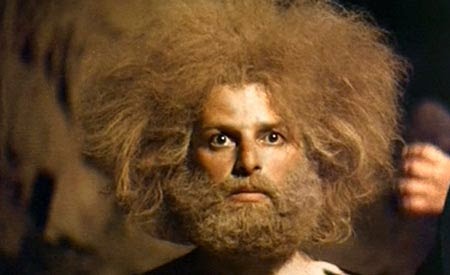
I used to not be that crazy about the jokey sixth entry in the Friday the 13th series, and I still think that the American Express gag makes no sense. But I appreciated the movie more after seeing it in a double bill with The Final Chapter last year. Watched with an appreciative audience, the movie's sense of humor seems more like good-natured spook show humor than a case of the screenwriters and director condescending to the material and audience. It's also the best-looking Friday the 13th, and contains surprisingly pretty good performances and dialogue. Director Tom McLaughlin's previous film, One Dark Night, is one that a few of my friends would tell me deserves to be on this list, but I haven't seen it yet (sorry, guys!). So Jason Lives, which also gave the world this, will have to do instead.


84. City of the Living Dead (Lucio Fulci, 1980)

Pure gross-out isn't usually my cup of tea, but I have to acknowledge that Lucio Fulci is pretty much the all time best at what he does. Which, in the case of City of the Living Dead, means lovingly shot closeups of an actress puking her guts out and a drill penetrating an actor's temple. Fulci never passed up the opportunity for a repulsive sight gag, but if gross-out was his only talent, I doubt he'd have as large a fan base. It's his ability to sustain a sickly, almost unbearably tense atmosphere even when there's no gore onscreen that makes his movies work; the disgusting moments are most important for the effect they have in these in-between scenes, as we know Fulci is capable of anything and can't trust even the most seemingly calm moments. In City of the Living Dead, a very loose plot - the gates of Hell have opened beneath the town of Dunwich, Massachusetts - is a clothesline for a potent collection of surreal, disturbing and, yes, often sickening images. If you're hung up on such bourgeois concerns as "story" and "logic," City of the Living Dead is likely to be frustrating (especially since Fulci, to be fair, never quite had Argento's knack for dream logic). But as a particularly queasy kind of nightmare, City of the Living Dead sticks in the imagination, particularly one of the all-time "WTF??" endings.


83. April Fool's Day (Fred Walton, 1986)

I revisited April Fool's Day a few months ago, and I'm glad I did. It's a very unique slasher that disarms the audience's expectations in a somewhat confounding way; on a second viewing, knowing where the movie is headed, it's easier to appreciate the qualities that set it apart from its peers. And it's also one of the best examples on one of the finest pleasures of the slasher genre, watching unlikable yuppie teens in polo shirts die. I wouldn't be surprised if April Fool's Day was an influence on Simon Barrett and Adam Wingard when they were thinking up You're Next, as the two films share a lot of DNA.


82. Scanners (David Cronenberg, 1981)

Scanners was a surprise hit that was number one at the box office the weekend it opened. How can it not warm my heart to know that, in the dead of winter 1981, millions of Americans experienced Louis Del Grande's head exploding into a million red sticky bits together?


81. Dead and Buried (Gary Sherman, 1981)

Gary Sherman's career runs the gamut from the classic Red Meat to the terrible Poltergeist III (though that one still has some interesting ideas). Dead and Buried is closer to the former than the latter, a grisly little supernatural story that sticks in the imagination. The screenplay by Alien's Dan O'Bannon and Ron Shusett is set in a tiny coastal town where a group of residents commit a series of murders with no apparent motive; stranger still, the deceased start coming back to life. I'll admit that I saw the central twist of Dead and Buried coming long before the reveal, which took me out of the movie a bit the first time I saw it. But now, thinking back on the movie's gloomy gray atmosphere, inventively gruesome setpieces and terrific early effects work by Stan Winston, I find myself wanting to revisit Dead and Buried in the near future.

Wednesday, October 02, 2013

Top 100: '80s Horror! (Introduction/#100-91)


The best month of the year is finally here! I have to admit that I'd been toying with a few more ambitious ideas for my annual October writing project, and I'm sure I'll revisit them in the future. But I had to admit to myself that, as I'm working through the first draft of a screenplay and will be contributing some Halloween-themed writing elsewhere (more on that soon enough), attempting to post here every day would soon prove to be more of a chore than it should be. I'm not complaining, as not having time to write because I have a lot to write is a great problem to have, but as I've really come to enjoy writing here every year as a way of getting into the spirit of my favorite holiday, I've come up with a different project. It was suggested by this piece by Richard Harland Smith, an attempt to define the generation gap between horror fans who came of age in the '60s and '70s and those whose formative years were post-Halloween (or post-Buffy). It's a fair, well-written and thought-provoking piece, and I've found my thoughts returning to this paragraph since I first read it:

"It seems to me that people who were born ten years after I was, who were impressionable young children in the early to mid 80s, and for whom movies like HALLOWEEN, FRIDAY THE 13TH, POLTERGEIST, PSYCHO 2, and FRIGHT NIGHT represent the first generation of horror fans to have it all handed to them. When I was a kid, horror films were made by studio contractees, by hacks, journeymen, and lifers — they banged out the work as best they could without a real passion for the idiom; ten years later and horror movies were being made by horror fans who grew up wanting to make horror movies: John Landis, Joe Dante, Sam Raimi, Don Coscarelli, Tom Holland, Tobe Hooper. Horror movies in the 80s stopped being so personal and specific to character and became all about the filmmaker, stopped drawing from our shared fund of mythical and folkloric archetypes and started referring to the genre itself in an attempt to be “ultimate.” To be spectacular. To go big. There may be no better illustration of this tendency than the elevators cannoning blood in Stanley Kubrick’s THE SHINING, a movie I’ve never loved, though many of my friends (and some more than others) could not live without it. But there’s also a comfort factor. 80s horror movies were saying, in effect, it’s okay that you like what you like — which is a lovely sentiment, really — but the empowerment factor, the narcissism, became too much for me. When horror movies started saying “Know what I’m talkin’ about?” as if to say “We’re on the same page here, right?” I looked the other way."

Richard, if you're reading this, I thank you for obviously trying to avoid a "You damn millenials get of my lawn!" tone, and there's only the slightest trace of it here. And, as I consider the '70s to be a high point for horror movies as much as the decade was for American filmmaking in general, I envy you for growing up in the best possible decade to be a young horror fan. But you lose me when you claim, I think, that the shift to horror movies largely being directed by lifelong fans of the genre is somehow responsible for characters being less important than the filmmakers. While it's true that horror movies largely became more self-referential in the '80s, to say that they "stopped drawing from our shared fund of mythical and folkloric archetypes" just doesn't make any sense to me, especially when your main example, The Shining - while, yes, perhaps the ultimate auteur-driven movie  - is immersed in the archetypes of myths and fairy tales.

Look, I'm a child of the '80s, and my love for horror and, consequently, film grew out of the dusty VHS boxes lining video store shelves and late night broadcasts from WLVI's "Creature Features" and TV-38's "Movie Watch" (with Dana Hersey!) in the same way that triple bills and "Shock Theatre" shaped Richard's imagination. The idea that horror fans older than I could be so turned off by movies that helped make me who I am is an interesting one; but then, will I be writing someday about the divide between myself and younger horror fans who cite pretty good recent horror movies like Insidious and Sinister as hallmarks of the genre? I suppose these things are inevitable. In any case, I've made a list of my 100 favorite horror movies from the decade. Not all of them are great movies - actually, the first ten I'll be writing about today probably help Richard's case more than they help mine - but they all made me who I am in some way. I'll probably just be writing a little bit to accompany each movie on the list, but hopefully I'll be able to give you an idea or two to fill out your own Halloween viewing schedule.
 

Also, please note that a few of these are genre hybrids that very much stretch the definition of a horror movie. I originally had a more specific criteria for what could be included on the list, but when only a few movies were left off as a result, I decided to leave them on - what the heck, it's Halloween!


100. Maximum Overdrive (Stephen King, 1986)This is a pretty bad movie, and I proudly display its original one-sheet on the wall of my office. Stephen King's sole directorial effort is an adaptation of "Trucks," which is not one of his more memorable short stories to begin with. King has openly admitted that he was coked up throughout its production and, once he realized he wasn't capable of making a good movie, decided to make the most vulgar, ridiculously entertaining big-budget B-movie he could. This is no guilty pleasure - it's a joy to watch from beginning to end, with arcade games electrocuting Giancarlo Esposito, profane ATMs and child-crushing steamrollers, all scored by AC/DC (the song they wrote for the opening credits, "Who Made Who," is probably my favorite of theirs). I've never tried cocaine, but knowing it can result in the creation of a film like Maximum Overdrive makes it a little bit tempting.


99. Sleepaway Camp (Robert Hitlzik, 1983)I'll admit that I'm including Sleepaway Camp because my first (and only, actually) boyfriend, who I'm still friendly with, loves this movie, and I know that, if he's reading, he'd be very disappointed in me if it was excluded. For much of the film, it's a pretty routine variation on Friday the 13th; however, when it reaches its famous final reveal about the, um, identity of the killer, it's genuinely unsettling in a "Wait, was that - ?" way. I won't spoil it here, but if you've never seen the movie, it's definitely worth checking out for that inexpicable, unsettling final twist.


98. Cat's Eye (Lewis Teague, 1985)

Another Stephen King adaptation, this one an anthology movie with three stories connected by a very resourceful stray kitty. The first, starring James Woods as a guy who hires a mysterious company run by Alan King to help him quit smoking, only to discover their methods are very unconventional, is darkly funny; the second, in which Robert Hays is forced by a cuckolded husband (Kenneth MacMillan) to walk around the entirety of a ledge on the top floor of MacMillan's skyscraper, is just so-so. But the third story, which King wrote for the film, is terrific. The titular feline, who is adopted by a young girl (Drew Barrymore), soon learns that there's a tiny, murderous troll living in the walls of the girl's house who is attempting to steal her breath. The last fifteen minutes of Cat's Eye are a protracted battle between the cat and the troll - a little person in a costume designed by Carlo Rambaldi - and it's every bit as awesome as it sounds. I watched Cat's Eye countless times as a kid, though I haven't seen it in several years; I assume it's mild fare for any adults watching it today, but if you have a child who's interested in spooky stuff, Cat's Eye is a fun introduction.


97. Q: The Winged Serpent (Larry Cohen, 1982)

The Aztec god Quetzalcoatl, a giant winged lizard, makes a nest atop the Chrysler building, occasionally swooping down to dine on New Yorkers. Meanwhile, a pair of detectives (David Carradine and Richard Roundtree) attempt to solve a series of ritualistic murders that, they eventually learn, are being committed by Quetzalcoatl's followers. It's a fantastic premise for a monster movie, and while Q is sometimes hampered by its charmingly low-tech special effects, it works thanks to a cast that, somehow, manages to keep a straight face as things grow increasingly ridiculous (Michael Moriarty, as a thief that discovers Q's nest, is particularly good). I'm not a huge fan of B-movie auteur Larry Cohen, but there's no denying the awesomeness of that premise, and for the most part, Q delivers. Newly available on a Scream Factory Blu-ray, Q is ripe for rediscovery.


96. House (Steve Miner, 1986)

A horror writer (William Katt), traumatized by his experiences in Vietnam and the disappearance of his son, moves into a big, eerie old house left to him by his aunt. Before long, the house itself appears to be coming to life, and he's attacked by horrible ghouls that may or may not be hallucinations. While the script for House is nothing special, the movie sticks in the memory thanks to an array of impressively ugly phantoms achieved via practical effects, and the movie is another great introduction to the genre for young viewers - its spooky moments are leavened with agreeably goofy comic bits. And where else are you going to see Richard Moll (Bull from Night Court) as a zombie?


95. Poltergeist II: The Other Side (Brian Gibson, 1986)

From a story point of view, a sequel to Poltergeist is completely unnecessary, and the often-meandering Poltergeist II never succeeds at convincing us otherwise. But it's a pretty good and sometimes very creepy movie on its own terms, featuring outstanding practical and optical effects (including one memorable creature, dubbed the "Vomit Monster" by the crew, that was designed by H.R. Giger), as well solid performances from the original cast and One Flew Over the Cuckoo's Nest's Will Sampson as a car-stealing shaman. But it's Julian Beck's performance as the sinister Reverend Kane, the ghost of a cult leader who has come to steal back Carol Anne, that anyone who has seen Poltergeist II surely remembers. Beck, one of the founders of the avant-garde Living Theatre, was dying of stomach cancer when the film was shot, and he utilized his shrunken, skeletal appearance to terrifying effect. The movie's okay, but Beck's performance is one of the all-time greats of the genre.


94. The Lair of the White Worm (Ken Russell, 1988)

My friend Jason Alley recently wrote about the strange, vaguely kinky one-sheet for The Lair of the White Worm that, when he was a kid, made the movie seem too uncomfortably adult to consider checking out, which made me recall that I had the same reaction to the poster when I saw it hanging in a local video store. The movie, a loose adaptation of a Bram Stoker novel, is never quite as perverse as the poster promises, but it benefits from Ken Russell's trademark over-the-top hallucinatory images; this was probably the last Russell film that works, actually. And while I haven't seen the movie in several years, I'll never quite get this goddamn song out of my head. 


93. Killer Klowns from Outer Space (Stephen Chiodo, 1988)I have to admit that this beloved cult classic has never been as much of a favorite for me as it is for many of my peers. Perhaps if I was afraid of clowns, it'd mean more to me; as it is, I've always found clowns merely annoying. That said, it'd feel wrong to exclude it here, and it does have an undeniable charm, mostly thanks to the awesome creature design and special effects by the Chiodo brothers, who'd previously worked on Critters and the Large Marge scene in Pee-Wee's Big Adventure, among others. Killer Klowns from Outer Space was their magnum opus, and you can feel the obvious love and care that went into every cotton candy attack and balloon trap. Plus, the theme song rocks (I'm discovering that awesome soundtracks are going to be a recurring theme with this list).


92. Twilight Zone: The Movie (John Landis, Steven Spielberg, Joe Dante and George Miller, 1983)

One of the rare cases where general critical consensus of a film is 100% on the money. John Landis' first segment is so-so, and impossible to watch without thinking about the on-set tragedy. The second, Steven Spielberg's "Kick the Can," about a magical Negro (Scatman Crothers) who returns the residents of a retirement home to their youth, is the worst thing Spielberg has ever made, painfully syrupy even for a lifelong Spielberg fan like me who can defend most of his other films against charges of sentimentality. But Joe Dante's "It's a Good Life," based on one of the best of the original series' episodes, is among the director's best work - about a boy with the power to alter reality with his mind, it's like watching Dante's Looney Tunes-influenced imagination brought to nightmarishly surreal life thanks to Rob Bottin's excellent practical effects. And the last, "Nightmare at 20,000 Feet," is a great ride thanks to the rollercoaster camerawork and editing that George Miller perfected on the Mad Max trilogy; with Miller's terrific direction and a great, hysterical John Lithgow performance, it's a mini-classic. It's an uneven movie, but the high points (including the funny, spooky wraparound scenes with Dan Aykroyd and Albert Brooks) are completely worth it.


91. Pumpkinhead (Stan Winston, 1988)

Stan Winston's directorial debut features Lance Henriksen, a swamp witch and a seven-foot-tall vengeance demon. What more do you need? 


Monday, August 05, 2013

She billy goated me!

R.I.P.D. was almost definitely pitched as "Men in Black with ghosts.” Both movies are based on niche comic book titles, revolve around supernatural police forces and feature a grizzled older detective partnered with a young, wisecracking rookie. Even the title of the newer film is clearly meant to remind of M.I.B. However, the movie R.I.P.D. reminded me of was Howard the Duck, another big-budget, effects-driven comedy that had a strong cast and a seemingly can’t-miss commercial premise but flopped because, like R.I.P.D., it couldn’t decide whether it wanted to be a hip, offbeat cult movie, a credible fantasy or a broad comedy aimed at young kids that relied on funny voices and slapstick. I must admit, though, that I’ve always had a soft spot for Howard the Duck; as bad as it is, there’s something endearing about such a talented cast and crew clearly doing everything they can to make a fundamentally misguided premise work. I can’t say the same for R.I.P.D., which is not just poorly made but also cynical, lazy and irritatingly smug; I’d have to go back to The Happening for an example of another big-budget summer movie as catastrophically self-assured, and at least M. Night Shyamalan knows how to compose a shot.
You can feel the screenwriters checking off every plot and character beat they need to hit as the movie goes through the motions introducing us to our lead, cocky young detective Nick (Ryan Reynolds), before he’s soon killed by his corrupt partner (Kevin Bacon) and ends up in the offices of R.I.P.D., a police department that yadda yadda yadda. Nick is soon partnered with Roy (Jeff Bridges), and together they’re soon investigating Nick’s partner and a case involving pieces of stolen gold that blah blah blah. The filmmakers don’t care, so why should you or I? The best example of everything that’s wrong with R.I.P.D. is the moment when Roy makes a reference to “When I’m from” and Nick asks, “When exactly are you from, Roy?” Yes, Ryan Reynolds asks the guy who is dressed like a cowboy, talks like a cowboy and looks like Jeff Bridges in True Grit what time period he’s from. Either this movie is stone cold stupid or it thinks you are. Or both.
The movie relies a lot on CGI spectacle, which is some of the worst I’ve ever seen. The action sequences are not only incoherent but weirdly cartoonish (in a bad way), and the production design of the afterlife is a really poor attempt to mimic the large-scale whimsy of Tim Burton or Terry Gilliam. Worse are the creature designs; the idea is that the undead, in their natural states, are in various stages of deformity and decomposition, but for reasons known only to director Robert Schwentke and his crew, this translates to cartoonish voices, gross plastic-y features that reminded me of The Garbage Pail Kids Movie, lots of burps and farts and, in one case, really terrible Elvis Presley impressions. The movie’s concept of the undead is basically what my 4-year-old son would have come up with if he’d been tasked to write this script (Tom’s a sharp kid, but he’s not ready to launch franchises yet). Consider that, in a $150 million movie with wall-to-wall special effects, the most amusing moment consists of Jeff Bridges eating Indian food. Bridges, incidentally, tries his best to make the material work, but it’s a tall order. Reynolds half-asses it, as he usually does.
If R.I.P.D.’s crimes were limited to a failed, lazy premise and poor execution, it would merely be a bad movie. What makes it a truly terrible movie is how obnoxiously self-assured it is; it’s obvious that the filmmakers thought they had a winner on their hands, even as it’s hard to imagine how any draft of this screenplay could have inspired such confidence. A joke like Roy mentioning that his body was eaten by coyotes isn’t really funny the first time; by the time the movie calls back the joke for the fourth or fifth time, it’s really goddamn annoying. About 50% of the jokes in the movie are like that. It’s like being trapped in a room with Sam MacMurray’s character from Raising Arizona as he struggles to tell a Polish joke. Meanwhile, the idea that Bridges and Reynolds are in disguise and look, to the living, like a tall, attractive woman and James Hong is a setup without a punchline. The idea of Ryan Reynolds looking like an old Chinese man was apparently thought to be so gut-bustingly hilarious that no further jokes were needed. Hong’s presence in the movie reminded me of Big Trouble in Little China, which I rewatched a few nights ago. There was a movie that understood that its fantastic effects and creature designs were nothing without well-drawn characters to bring them to life; Carpenter’s film demonstrates that you can go as absurd and over-the-top with the story as you like, as long as you’ve created a context through the characters and the world of the film that gives the audience a reason to stay invested. The makers of R.I.P.D. would have done well to study Big Trouble in Little China, or Ghostbusters or, yes, Men in Black, or any of the supernatural comedies that got it right. That’s probably too much to ask from a movie that thinks we don’t know that cowboys are from the Old West. This movie is horseshit.

Monday, July 01, 2013

Can't you feel the vibes in your own house, man? Bad, sport, real bad.

Phantom of the Pardise was released a year before The Rocky Horror Picture Show; both films initially bombed, but while Rocky Horror has become the biggest cult movie of all time, Phantom of the Paradise has always had a much smaller fan base, outside of its massive and enduring popularity in Winnipeg (seriously). Phantom of the Paradise is also a better movie than Rocky Horror; having once attended a live show of Rocky Horror wearing a lovely velvet dress and a pair of enormous fake breasts, I don't say this lightly. While both movies feature awesome soundtracks and smashing glam-era eye candy, Phantom of the Paradise is smarter, sadder and more rewarding; a tour-de-force for Brian De Palma's playfully flamboyant direction, it's also one of his most deeply felt films.

I first heard of Phantom of the Paradise in a brief mention in a forward to the novel Phantom of the Opera, where it was described as unconventional adaptation of the book whose Phantom was disfigured after his head was trapped in a record press. The movie instantly became a must-see for me, but it was hard to find in the pre-DVD, pre-YouTube days, and it was several years later that I found a copy in a video store. I was surprised to find the movie is true to the spirit of Gaston Leroux's book, as well as incorporating Faust in the relationship between the Phantom - brilliant but severely unlucky Winslow Leach (the late, deeply underrated William Finley) - and Swan (Paul Williams), the record producer who exploits and tries to destroy Leach throughout the film. As with so many of De Palma's protagonists, Leach is seemingly doomed from the start, and while the movie has a lot of fun with the opulence of glam rock and its horror-movie take on the music industry, there's a strong undercurrent of real sadness at the destruction of the artist by the industry. Swan is a spot-on satire of megalomaniac music superproducers, but also, given that De Palma was fired from his first studio film, it's hard not to assume that he's not also getting his own revenge on Hollywood.

The movie is also unusually romantic for De Palma, in his own way, with Leach's doomed, unrequited love for Phoenix (Jessica Harper, never more radiant) forming the surprisingly affecting heart of the film. De Palma's reputation as a cold, calculating filmmaker is constantly contradicted by his empathetic treatment of his characters - just because terrible things happen to them doesn't mean he doesn't care about them. As Phantom goes to murderous lengths to ensure that Phoenix will sing his music, it'd be hard for anyone who has written lyrics or dialogue and found themselves falling a bit in love with the performers who make those words sing to not see where Winslow is coming from. The movie is De Palma's love letter to his actresses - he's fond of saying that he prefers female protagonists because it's more fun to see a woman in peril than a man, and Phantom of the Paradise suggests that explanation is sweeter than it initially sounds.

The movie is also a playground for De Palma's directorial fetishes, with nods to Hitchcock and Welles, one of his best split screen sequences and visual quotes of everything from The Godfather to Valley of the Dolls. But it's also looser and funnier than the director has been in a long time; while De Palma is satirizing the shallowness of early '70s rock, with mincing howler Beef (Gerrit Graham, hilarious) standing in for every bad T. Rex wannabe, it's also one of the best rock 'n' roll movies ever. Watching it again, I found myself wishing that, since De Palma doesn't have the same stature in the industry that he used to anyway, he might be inclined to make a movie that has more in common with the exuberance of Phantom of the Paradise than the somber moralizing of Redacted.

And a lot of the film's success is due to Williams' outstanding songs, which have the same bittersweet, strangely innocent quality as "We've Only Just Begun," "The Rainbow Connecton" and the many other classic songs he's responsible for writing. Williams is having a bit of a resurgence this year thangs to his collaboration with Daft Punk on couple of songs on their new album; when I listen to his robotic vocals on "Touch," I like to imagine they're being sung by the Phantom while plugged into his recording studio. I have a bit of hope that the renewed interest in Williams might lead to a few more people discovering Phantom of the Paradise. We might still prove to be as hip as Winnipeg.

Tuesday, June 25, 2013

Mother Nature is a serial killer.

A few weeks ago, World War Z was barely on my radar. I had no interest in a gore-free, PG-13 zombie movie, and the reports that the movie was basically an adaptation of Max Brooks' book in name only, as well as the much-publicized decision to scrap and reshoot the third act, did little to change my mind. That the film's director is Marc Forster - a director I consider not just bad but incompetent and bizarrely overpraised - was also not an encouraging sign. After reading a good deal of positive reviews and, especially, hearing good things from horror-loving friends, I decided to give World War Z a try. After about ten minutes, I was very surprised to find that, not only was World War Z not bad, I was actually loving it. The rest of the movie never disappointed me; it's not perfect, but if you can put aside your expectations, it's consistently thrilling, clever and often very creepy. I never expected to say this, but World War Z is the best popcorn movie I've seen so far this summer.
After a great opening credits sequence, with news clips about real-life fears like climate change and overpopulation set to a Carpenter-esque synth score (credited to Marco Beltrami and Muse - this piece sounds more like Muse), World War Z introduces us to our hero, Gerry Lane (Brad Pitt). We quickly learn that Lane used to work as an envoy for the United Nations, but retired to become a stay-at-home dad to his two daughters. As in Spielberg's version of War of the Worlds, just as much time as needed is spent on establishing the characters before we're hurtled into the action; the escalating sense of chaos as Philadelphia is quickly overtaken by zombies is very well staged, especially when Forster cuts away from the standard shaky-cam, rapid-cut coverage of the action to wide aerial shots that survey the scope of the rapidly spreading epidemic. There's never been a zombie movie with the budget of World War Z, and while the narrative doesn't reinvent the wheel, to see the a zombie movie unfold on a literally global scale is a treat for anyone who ever imagined what the original version of Day of the Dead might have been like if Romero had the money.
While World War Z doesn't match Romero's level of, er, biting social commentary, it works because it treats zombies as a credible real-world threat - even if it's not a faithful adaptation of the book, it's true to Brooks' straightfaced take on a seemingly ridiculous hypothetical situation, not to mention his emphasis on the importance of commonplace but essential components of survival like staying hydrated and preventing infection (the everyday kind, not just the zombie kind). The movie's also a nice antidote to the hypermasculine, increasingly dumb redneck soldier bullshit of The Walking Dead. It's not inconsequential that Lane works for the U.N., and as the film takes him to South Korea, Jerusalem and a W.H.O. office in Cardiff, meeting soldiers, scientists, and government officials attempting to deal with the zombie crisis, there's a subtle but surely not accidental emphasis on the importance of nations working together to solve problems that threaten all of humanity. Better yet, the movie consistently creates situations where resourceful thinking is a better survival tool than blasting one's way through a zombie horde. I'm not saying World War Z is An Inconvenient Truth, but with the voice of progressive activism represented by a badass, machete-wielding Brad Pitt instead of Jeffrey DeMunn in a Hawaiian shirt, a few zombie-loving kids might be inspired to learn a thing or two about the World Health Organization or the U.N., and that ain't bad.
Admittedly, the PG-13 rating and general lack of zombie carnage is noticeable, and the way the movie is carefully cut to pull its punches is distracting and sometimes irksome. On the other hand, what the movie lacks in viscera, it makes up for in intensity - there are action sequences in this, like the scene in Jerusalem or one set aboard a commercial airplane, that are among the most suspenseful and expertly staged I've seen in recent years (this doesn't make up for Monster's Ball, Marc Forster, but keep up the good work). And the movie doesn't shy away from its pulpy antecedents - I was pleasantly surprised that the word "zombie" is used frequently instead of "walkers" or some other dumb euphemism, and the movie isn't above classic B-movie scare tactics. I can't lie, I'd probably give the movie an extra half-star if it was rated R, but I also appreciate that this is a zombie movie I can share with my young, horror movie-obsessed son when it comes out on Blu-ray.
And, surprisingly, the redone third act works, focusing on a pretty clever solution to the problem and the emotional through-line of Pitt getting back to his family - as Damon Lindelof actually managed to save a screenplay, I hope the internet gives him a break for a while. The family stuff, in particular, rings very true, largely thanks to Mireille Enos as Gerry's wife Karen, who does a lot in her handful of scenes to build a convincing relationship with Pitt. And I also absolutely loved Daniella Kertesz as Segen, an Israeli solder who is a total badass even, or especially, after she's badly wounded. I can't explain why - we learn basically nothing about the character - but after one big action sequence, I was actively worried that Segen hadn't survived and very relieved when it was revealed that she did. Of course, a lot of the credit for World War Z working as well as it did goes to Pitt, who produced the movie and who stuck with it through its troubled production - if I hadn't read so beforehand, I'd have never guessed that the movie went through such drastic changes. And I have to assume Pitt is also largely responsible for the movie's humanitarian streak - the movie urges us to take care of each other and not lose hope, not just with zombies but whatever might be coming, which would feel trite if it weren't clear that its star and producer believes it. When most of the summer's movies have made a lot of noise but very little on their minds, it's refreshing to see a blockbuster that not only delivers on the spectacle but is actually about something that matters.

Monday, June 17, 2013

It's still there. It's still there. It's still there. It's gone.

(A warning: While I'm not going to get into overt spoilers, stop reading if you'd prefer to go into Before Midnight without knowing anything that happened to Jesse and Céline after Before Sunset faded to black.)

In my review of Before Sunset, I mentioned how I originally saw it and Before Sunrise when I was younger and less experienced in relationships and life than the characters, and I wondered what Before Midnight would tell me about what life might be like in a few years. So I was surprised to find that, though Jesse (Ethan Hawke) and Céline (Julie Delpy) are now in their early forties and I'm 29, I related to Before Midnight far more immediately than I expected. Perhaps it's true that, as some of my friends have suggested, I'm in the throes of an early mid-life crisis. Where the first film was about a perfect moment and the second was about whether it's possible to recapture the connection Jesse and Céline shared that night, Before Midnight is about the choice between fighting to preserve a romantic ideal of love alive through all of life's mundane and dramatic obstacles, loving a long-term relationship for what it is, or leaving. For anyone with a certain amount of relationship experience and general life baggage, Before Midnight will cut deep, but in the best way possible.

The movie begins at the end of a summer vacation in Greece, as Jesse says goodbye to Henry (Seamus Davey-Fitzpatrick), his son from his first marriage. Jesse did miss his plane nine years earlier, leaving his wife for Céline and eventually moving to Paris with her after the birth of their twin daughters. Director Richard Linklater and his two lead actors once again wrote the screenplay, and they smartly allow us to gradually fill in the important details of the past nine years, rather than forcing a lot of awkward exposition at the start. The characters have grown as we might have guessed, with Céline still the activist who feels despair at her self-described Sisyphean attempts to make the world a better place, and Jesse still the charming, if self-satisfied, romantic. It's true that, as the characters observed in the last film and again in this one, we basically stay the same throughout our lives; what has changed are the characters' circumstances, the responsibilities of raising two children and, in Céline's case, the struggle to balance her own self-identity with her roles as a wife and mother, not to mention the idealized version of her that Jesse has written into two novels. While most relationship movies rely on affairs or other contrivances to create drama, it's a pleasure to watch these two fully developed characters grapple with the simpler, more universal problem of continuing to learn how to grow together.

By now, it's clear that Hawke and Delpy know their characters inside and out, and their easy chemistry as Jesse and Céline flirt and bicker (often at the same time) is a joy. The physical familiarity between the two characters, the way they hold and sometimes lean on each other, rang true; this is the first of the films with a love scene, and it feels like they know each others' bodies well, which can't have been easy for the actors to fake. There's a scene involving nudity that is probably the least gratuitous nude scene I've ever seen; it perfectly gets the point in a relationship where partners can hang out in the buff in the most casual, unerotic way possible. The scene fits perfectly with the main question Linklater and his actors pose, namely, how do we keep a romance alive when we're no longer falling in love but are in the thick of it, when we think we know everything about the other person there is to know? There's a great scene where Céline and Jesse are having dinner with their fellow guests at an elderly writer's summer estate where each guest offers their perspective on love. Linklater gives equal voice to sentimental and pragmatic notions of love; the film repeatedly returns to the idea that with love, as with all of life, all things are uncertain and possibly fleeting. Existential doubt has rarely been presented with such warmth and generosity of spirit.

The movie builds to a protracted argument, which is triggered by Jesse's suggestion that he should live closer to his son but, as with most relationship arguments, is really about a dozen other things. I generally resist using this term, but it's one of the most realistic blowouts between a couple that I've ever seen, perfectly capturing how a person can express a profound truth about the relationship in one breath and make a completely off-base, defensive accusation in the next. It's often hilariously relatable - as I've been known to make a dramatic exit only to return a minute later, I cracked up both times Céline did. At the same time, it gets pretty brutal, largely because each actor is willing to strain our affection for these characters we've fallen in love with - it's painful to watch Céline purposefully insult Jesse to get a rise out of him, or to watch Jesse turn self-righteous in order to evade the hardest questions. At the same time, if one were to film any of us having an argument with our partners, I can't imagine the results would be flattering. Some of the reviews I read of Before Midnight in advance made it sound like the movie built towards Bad Timing levels of emotional violence, but it's not nearly that raw. Frankly, I feel bad for anyone who is that disturbed by the reality that couples, even great couples, sometimes have painful arguments; they've got some rough times ahead.

Though Linklater and his cast don't pull any punches about how hard it can be to make even the best relationships work, Before Midnight still ends on a note of hope. I suspect that these movies are the work of a director and two actors who, with each new chapter, try harder but continually fail at hiding the fact that they're unabashed romantics. These films are clear-eyed but never cynical. I suspect that we'll find Jesse and Céline still together in nine years, but even if they aren't, the movie suggests, that doesn't take anything away from what they've shared (and shared with us). And if this turns out to be the last chapter in the story, it ends on a perfect note. These characters once agreed to make the most of the one moment they'd share; now, having built a life together, they're left with the hope that they're still living in that moment.

Broke into the wrong goddamn rec room, didn't ya, you bastard!

When I asked my friends recently to vote for a horror series for me to review, Tremors (can one call it a trilogy?)* won by a decent margin. After rewatching it, I have to insist that, while Tremors is very good and one of the best giant monster movies, it's barely a horror movie. Perhaps it's because I watched movies like Alien and Jaws when I was very young, but even as a kid, when I saw Tremors after those movies, I never found it scary. I suspect that director Ron Underwood and screenwriters S.S. Wilson and Brent Maddock weren't really trying to frighten audiences; for a movie about giant worms attacking the residents of a small desert town, Tremors is actually very lighthearted, even gentle.

What Tremors is is a Hawksian siege movie in the vein of Rio Bravo, El Dorado and Rio Lobo, movies about unlikely heroes banding together to protect their towns from outlaws; Tremors simply substitutes "Graboids," as one character dubs them, for outlaws. Our heroes are Earl (Fred Ward) and Val (Kevin Bacon), two hired hands who are attacked by the Graboids on a work site and try to warn, then protect, the nearby town of Perfection, Nevada. Earl and Val are the kind of male protagonists we don't see much of any more in studio movies, even genre movies; they're grizzled, vulgar, unshaven and a bit dim. If Tremors were made today, it might star The Rock and Vin Diesel, who, despite their impressive physiques, can't compare with a chainsmoking Fred Ward for pure manliness. This was the same year Ward played Henry Miller, making Ward's 1990 about as good a year as any actor has had. Bacon is good too, even though Tremors is one of the least useful tools in Six Degrees of Kevin Bacon, unless you like to go through Reba McEntire just to make things interesting. But I digress. The point is, Val and Earl sleep in their truck and eat baloney and beans for breakfast, and they embody a long-absent and much-needed representation of masculinity in film - shit kickers who rise to the occasion.

I'm stretching here to get about a thousand words out of Tremors, but bear with me. John Carpenter also used the Rio Bravo template, most famously in Assault on Precinct 13 but also in genre movies like Prince of Darkness and, of course, his remake of Hawks' The Thing From Another World. Tremors owes a lot to Carpenter in the way that it blends a Western aesthetic with Creature Feature thrills (it also features Victor Wong, who was in Prince of Darkness and Big Trouble in Little China). Where Tremors departs from Carpenter is also why I don't consider it a horror movie. In Carpenter's movies, the progragonists isolated together against an external threat causes them to gradually (or, in the case of The Thing, rapidly) turn against each other. There's very little interpersonal conflict in the town of Perfection, Nevada, even after the shit hits the fan. Everybody cooperates on plans to defeat the Graboids and escape, and unlike, say, the characters in Night of the Living Dead, nobody is jockeying for alpha male status. In another movie, the survivalist gun nuts played by McEntire and Michael Gross would be in conflict with the other characters, but aside from some mild teasing and one brief standoff between Gross and Bacon, everybody gets along famously. It seems antithetical to the entire history of post-1960s horror movies to not use that setup and, especially, two very conservative supporting characters to interject sociopolitical subtext into the movie. Underwood doesn't seem to have any interest in that; indeed, Tremors seems to be completely free of subtext. The Graboids represent Graboids.

If that weren't reason enough to not classify Tremors as a horror movie, there's the also the very low body count to consider - only one of the main characters is killed, along with a handful of peripheral characters in the first 20 minutes. While a movie like Jaws, even after countless viewings, can still make my heart race from Chief Brody just barely defeating the shark in the nick of time, there's very little suspense as to whether Earl, Val and the rest of Perfection will defeat the Graboids - at one pont, Val actually punches one in the face. The filmmakers clearly didn't have any desire to wring suspense out of the possible deaths of its characters.

However, they do clearly have a blast showing off their huge, animatronic sandworm effects, and even 23 years later, the Graboids still look pretty slick. The effects team included two of KNB's co-founders, Howard Berger and Robert Kurtzman, and the creatures were designed by Tom Woodruff and Alec Gillis, who worked on Aliens and all of the subsequent movies in that series. Their work on Tremors, which was released a year before T2 and the practical-to-CGI paradigm shift, represents one of the last great all-practical productions. Both the large Graboids and the smaller heads that emerge, like the xenomorph, from the creatures' gaping maws are surprisingly believable - amazing how helpful dirt and K-Y Jelly are in selling a creature effect. While Tremors was a throwback even in 1990, its low-key pleasures are even easier to appreciate today, as the "bigger = better" mentality dominates megabudget popcorn movies more than ever. What Tremors lacks in scale, it makes up for tenfold in character. Replayed constantly on cable in the early '90s, it's a nostalgia staple for many, many people my age; luckily, unlike too many of the movies we loved as kids, Tremors holds up.

*I've learned that Tremors cannot be called a trilogy because of the existence of Tremors 4, which I was not aware of until now. God help me.