Tuesday, October 29, 2013

Top 100: '80s Horror! (#30-21)


I've been looking forward to writing about this section of the list since I started. Without purposefully assembling it this way, it's a great cross-section of supernatural and real-life horror, classics and more obscure titles (as well as a few that are well-known but deserve more discussion). If I were ever programming a 24-hour horror movie marathon, these ten movies would make a pretty solid lineup.


30. From Beyond (Stuart Gordon, 1986)

Two of the lead actors and most of the crew of Re-Animator reunited the following year for another H.P. Lovecraft adaptation, this one loosely based on his short story of the same name. The movie keeps the device of a scientist's assistant recounting his boss' experiments with a device that allows him to see into alternate dimensions. The assistant, Dr. Crawford Tillinghast (Jeffrey Combs), sees creatures from another world eat his boss' (Ted Sorel) head off in the first scene. Suspected of murder, Crawford returns Dr. McMichaels (Barbara Crampton) and a detective named Bubba (Ken Foree) to show them the dimension-crossing machine. What follows is a terrific showcase for all sorts of weird otherworldly creatures and gory, slimy practical effects. There's also plenty of dark humor and a weird, kinky but strangely fitting subplot about how the machine's energy alters the characters' personalities, particularly Dr. McMichaels, who finds herself suddenly interested in the dead doctor's S&M gear - one wouldn't expect a movie that also features characters' heads being chewed off to be kind of sexy, but there it is. And if S&M isn't your thing, there's also a scene of Foree running and tackling Combs while wearing nothing but a Speedo. You're welcome, ladies.


29. Henry: Portrait of a Serial Killer (John McNaughton, 1986)

Perhaps the best movie ever made about the banality of evil, Henry: Portrait of a Serial Killer was a difficult movie for me to get into the first time I watched it. It merely follows the title character, loosely based on real-life serial killer Henry Lee Lucas, for a while as he stops for a while in Chicago, kills some people, briefly has a partner in crime named Otis (Tom Towles), almost has a relationship with Otis' sister Becky (Tracy Arnold), then eventually moves on. There's no attempt to explain Henry, and the movie has no sense of closure - it's just one grim chapter in a long, repetitive story. Seeing it again on 35mm years later, the movie became almost unbearably frightening, largely because it withholds any attempt at explaining Henry - he's an unknowable monster, human but completely unrelatable. All three leads are excellent, the deliberately flat visual style works perfectly for the disturbing subject matter, and even though the film isn't particularly gory, one can see why it was given an X rating, as its look at the darkest aspects of human nature are strictly adults-only stuff (though Siskel and Ebert made a persuasive case for why the movie should be available for teens). Although the movie premiered in 1986, it didn't actually get a commercial release in the U.S. until 1990. I included it here, however, because it feels like one of the indispensable horror movies of the decade and completely, frighteningly of its time.


28. Hellbound: Hellraiser II (Tony Randel, 1988)

Made soon after the first film, Hellbound: Hellraiser II is the rare sequel that actually improves on the original. A lot of this has to do with the film's setting, a hospital psych ward where heroine Kirsty (Ashley Laurence) is sent after the events of the first film; when she tells the ward's director, Dr. Channard (Kenneth Cranham) about what happened, the doctor, who has long been fascinated with opening the doorway to Hell (and why not), resurrects Kirsty's now-skinless stepmom (Claire Higgins). I've scene the movie several times, and I still have to look away during the aforementioned scene - Hellbound was originally rated X, and the uncut version is still quite extreme 25 years later. Clive Barker, who produced but didn't direct the sequel, has said that the asylum setting was a vehicle for a grand guignol approach to the film, which is evident in the many scenes of gruesome, theatrical bloodletting. The film also expands the Cenobite mythos in fascinating ways, and the climax takes place in their world, which looks like '80s metal album cover art in the best possible way. The series took a quick nosedive after Hellraiser II, but the first two moves remain a satisfyingly cringe-inducing double feature.


27. Prince of Darkness (John Carpenter, 1987)

I watched Prince of Darkness this month for the first time in several years, and I had to admit to myself that the things about it that don't work - the two leads (especially Jameson Parker [especially Jameson Parker's moustache]) and a climax that feels too small for the apocalyptic setup of the first two-thirds - hurt the movie more than I remembered. Otherwise, Prince of Darkness is fantastic, ranking with John Carpenter's best work. The plot, about a team of grad students recruited by their professor to investigate a cannister of glowing green evil discovered in the basement of a church, is at once an homage to '60s British sci-fi (Carpenter used the pseudonym "Martin Quartermass" for his screenplay) and supernatural horror. I love the movie's blend of religious and metaphysical horror - it's pulpy but thought-provoking, and the sickly, bug-infested atmosphere Carpenter builds through most of the film is very unnerving. The movie was Carpenter's deliberate return to lower-budget filmmaking after Big Trouble in Little China flopped, and it makes up for what it loses in scale with Carpenter having the freedom to use genre conventions to explore some of his more esoteric interests. It's admittedly a bit uneven, but it's still a blast, perhaps the director's most underrated movie, with extra points for Alice Cooper as an evil bum and Donald Pleasance as an axe-wielding priest.


26. Manhunter (Michael Mann, 1986)

I resisted Michael Mann's adaptation of Manhunter for a long time because, come on, Francis Dolarhyde would never decorate his house that way. For the most part, though, Mann's slick, modernist style makes for an unexpected but fascinating approach to adapting Thomas Harris' novel (featuring Brian Cox's supporting turn as Hannibal Lecter [spelled "Lecktor" here], colder and less charismatic than Anthony Hopkins). Mann's methodical visual style and his obsessive focus on process is a match for his protagonist, FBI agent Will Graham (William Peterson), whose obsessive attention to detail and ability to get inside a serial killer's head make him the perfect person to catch the Tooth Fairy (Tom Noonan, whose terrific performance I wrote about two Halloweens ago), who is methodically killing off families in different parts of the country with no apparent connection. Many thrillers have been made that explore a link between the killer and his pursuer, but few are as compelling as Manhunter, possibly because it's less interested than the usual cliche of the detective being as messed up as the culprit as it is with the idea that both men are masters of their chosen trades (a theme Mann would explore again in Heat). And, since it's Mann, it's a technically astounding film, the cinematography, editing, art direction and, especially, sound design working in concert to create a stark, menacing atmosphere. And this is also a given for a Mann film, but yeah, the soundtrack is terrific.


25. Parents (Bob Balaban, 1989)

The most underrated movie on this list, Parents is a great pitch-black comedy about a boy (Bryan Madorsky) growing up in '50s suburbia who begins to suspect there's something odd about the meat his parents (Randy Quaid and Mary Beth Hurt) serve with dinner every night. When he asks them what their dinner, which they always identify as "leftovers," was before it was left over, they chuckle and respond, "Leftovers to be!" Parents feels a lot like early Tim Burton, having a lot of fun with the kitschy period production design, and Quaid and Hurt play their roles like sinister versions of the Cleavers. But it's also surprisingly unnerving - it's basically a movie about the loss of innocence we all experience the first time we think about where the food on our plate comes from, and the unsettling experience of spying on your parents doing the things they do when they think you're not around. Balaban takes the same understated approach to directing that he does to acting, which works to wonderfully creepy effect. Parents has never gotten a proper R1 DVD release and barely airs on TV, so it's woefully underseen. I haven't actually seen it in over ten years, so the fact that I can recall specific images and lines of dialogue speaks well of the movie's impact.


24. Videodrome (David Cronenberg, 1983)

Videodrome remians incredibly popular, almost a touchstone movie, among dudes my age. And while it is indeed a great movie, I can't help wondering why it's this one, out of all the great movies Cronenberg has made, that has come to define him as a filmmaker. I suppose a lot of it has to do with the way that, by the nature of the subject matter and characters, the movie's ideas are explicitly delivered in the dialogue (though I do think people can confuse, say, Brian O'Blivion's thesis statements with Cronenberg's). For me, though, the film's ruminations on media, technology, sex and ideology are most interestingly expressed in the hallucinatory images. Perhaps I'm fundamentally shallow, because I'll listen to a whole monologue about the television of the mind's eye, but if you just show me James Woods having sex with a TV, I've got it. On the other hand, that I respond more strongly to the story told by the images than the words, when for most people it's the other way around, sort of proves the movie's point about the potency of ideas expressed through a perfectly provocative image. Videodrome is every bit as trippy as Altered States, but it's a little better than Altered States because, while that movie is filled with fascinating but ultimately incoherent ideas, the ideas Videodrome expresses through its images are as potent as the images themselves. As one of the characters in the movie says, it's dangerous because it has a philosophy.


23. A Nightmare on Elm Street 3: Dream Warriors (Chuck Russell, 1987)

My internal dialogue when putting the list ranking together:

"Andrew, you can't put Dream Warriors ahead of Videodrome."

"But I love Dream Warriors! Best characters in the entire Nightmare on Elm Street series, funny without getting too schticky, great dream sequences - 'Welcome to prime time, bitch!' - awesome pre-CGI effects - it has just about everything I love about the genre!"

"Andrew, Videodrome is smart. It's an objectively better movie. They'll know you're a dum dum, Andrew. Remember how they mocked you on Tom Sutpen's Facebook page? You're destroying your own credibility."

"But but but but THE WIZARD MASTER!"

"I've done all I can here."

"Woohoo! Dream Warriors 4eva! Dokken power!"


22. Dressed to Kill (Brian De Palma, 1980)

My favorite moment in Dressed to Kill happens right after the famous elevator scene, as Nancy Allen's character Liz picks up a murder weapon and is mistaken by a freaked out cleaning lady for the killer. It's the moment when we realize the movie is going to focus on a completely different character and subject than we thought. It's a riff on a similar moment in Psycho, of course, as is most of Dressed to Kill - there's that great moment in Psycho, after the shower scene, when the camera reorients us with the newspaper concealing the money that we thought was so important a minute earlier. The moment in Dressed to Kill, though, one-ups Hitchcock - in the earlier movie it's a pause, but here, the momentum never stops. As Pino Donaggio's shrieking score kicks back in and the camera dollies up the hallway, I never feel to crack up and feel a strange sense of exhilaration at De Palma's audacity.

And while Psycho is the better movie, De Palma's post-murder second half is actually more interesting. At the very least, Allen's hooker/stock trader is more entertaining than Vera Miles, and if Allen's performance doesn't transcend the "tough but with a heart of gold" template, she's at least strong and empathetic (same goes for Allen in Blow Out, but more so). And the older I get, the more I find the oddly innocent (or is it?) teenage fantasy of Keith Gordon's junior detective looking after Allen strangely endearing. Dressed to Kill is one of De Palma's best movies, and maybe his funniest (I love the over-the-shoulder reaction shots of the woman in the restaurant listening to Allen explain a sex change operation to Gordon). Also, everything that's currently much discussed in gender-oriented culture studies about cisgenderism, rape culture, slut shaming, etc. is explored brilliantly and at length by De Palma; it's hip about these things in a way that puts most contemporary, serious-minded movies to shame.


21. Poltergeist (Tobe Hooper, 1982)

It says a lot about Poltergeist that, while I saw a lot of age-inappropriate stuff as a young kid, I was too freaked out to make it through this PG-rated Spielberg production until I was older. For a movie as Spielbergian as any that he (officially) directed, it has its share of dark and even sadistic moments that remind both of Spielberg's gifted mean streak and of the darker sensibility that Tobe Hooper brought to the movie. Any discussion of Poltergeist always comes back around to speculation over who's the movie's true auteur - I'll just say that, whether moments like the face-ripping scene were Hooper's idea, or if it's just that Hooper's directorial credit freed up Spielberg (who has a co-writing credit) to go for the gross-out, those moments still work like gangbusters. I like to think that both men brought out the best in each other, with Hooper bringing his merciless ability to scare to a bigger canvas (aided by a team of A-list technicians) and Spielberg indulging his alternate universe existence as an expert schlockmeister (I love it when he feels free to do this - see also Temple of Doom, the Amblin-produced Gremlins movies and the last 30 minutes of The Lost World). Whoever deserves authorial credit, Poltergeist is as great as any big-budget horror movie will ever be, with as much style, atmosphere and pure craftsmanship as every wannabe blockbuster should aspire to.

Monday, October 28, 2013

Top 100: '80s Horror! (#40-31)


This part of the list includes the first appearances of two horror icons and a few other cult classics and favorites among horror fans, and it's arguably more challenging to write about the genre's heavy hitters then some of the more niche-y titles I've covered so far. I can remember first renting (and, in some cases, repeatedly renting) a few of these movies when I was very young, or making sure to catch them whenever they ran on TV; these were the building blocks of my love of horror, as I assume they were for many fellow horror fans. We've lived with these movies for most of our lives, and you don't need me to tell me why they're great. The temptation is to be like Chris Farley on the sketches on SNL where he interviews celebrities - "Remember that part in Child's Play when the mom realizes Chucky doesn't have any batteries, and she's trying to make him talk, so she tells him she's going to throw him in the fireplace if he doesn't say something, and he calls her a dirty slut? That was awesome." I'll try to do a bit better than that.


40. Night of the Creeps (Fred Dekker, 1986)

Until Night of the Creeps finally made its DVD debut a few years ago, it was one of those long out-of-print movies that horror fans would bond over their shared memories of. You'd ask someone if they remembered a movie with alien slugs and Tom Atkins saying "It's Miller time" as he blows one of the slugs away, and they'd generally remember and be happy to have been reminded. The Monster Squad, Fred Dekker's second movie, had a similar reputation, but as it was basically a kids movie (and it seemed to run all the time on cable back in the late '80s), it was a little less forgotten. With Night of the Creeps, if someone had an old VHS copy, it immediately became must-see viewing, one of those movies that even friends who don't usually go for horror would be quoting in casual conversation after watching it. Now that it's readily available, it's a relief to see the movie holds up - Slither famously owes a lot to Night of the Creeps, and Slither is very good, but it can't match the earlier movie's endearingly offbeat tone - it's strangely lighthearded for a movie about alien slugs that control the minds of their human hosts. It's enjoyably icky, less interested in grotesque body horror than in playing around with '50s B-movie staples (even throwing a variation on the urban legend about a killer on lover's lane, because why not). And Tom Atkins, who is, of course, great in so many genre movies (whether the movie is good or not), might do his best work here. As a cynical Phillip Marlowe-esque gumshoe seemingly transported in from another time to investigate the alien menace, Atkins is hilarious and, at points, even a little bit affecting. He makes me hope that, someday, I'll be man enough to answer the phone with "Thrill me" instead of "Hello."


39. Christine (John Carpenter, 1983)

John Carpenter is quick to dismiss Christine as one of his lesser movies in interviews; he made it after The Thing flopped, and he's been frank about the fact that he was less motivated by love for the material than the chance to direct a likely hit and rehabilitate his career. It's a shame he feels that way, because Christine certainly doesn't feel like a phoned-in movie. It takes a premise that could have been laughable onscreen - a supernatural car and the teenage boy who loves her - and makes it work, largely thanks to the lead performance by Keith Gordon, who does a great job of selling his character's transformation from a bullied nerd to a cocky, arrogant jerk who is completely under Christine's spell. The movie actually cuts out the most horror movie-friendly aspect of King's book, the rotting ghost of Christine's previous owner sitting in the back seat, but it translates King's fun satire on the teenage male fetishization of cool cars intact. Shot in gorgeous anamorphic widescreen, the movie contains some of Carpenter's most elegant visual compositions, having the red Plymouth Fury occupy the distant background of the frame like Michael Myers as she stalks her prey. And the scenes of a near-destroyed Christine healing herself, achieved largely with reverse photography, are some of the niftiest examples of pre-CGI effects trickery. Christine might not be a personal movie for Carpenter, but it's still distinctly and enjoyably his.


38. Child's Play (Tom Holland, 1988)

I've never been creeped out by dolls, so Child's Play never traumatized me the way it did for many people my age who saw it as kids. However, even a non-pediophobe like me can have a lot of fun with the first entry in the long-running series. It's fun to revisit now and remember that much of the first film plays on the ambiguity of whether the doll is possessed or young Andy is mentally ill and blaming the murder's he's committing on Chucky. There had been killer doll movies before, which makes it more impressive that Child's Play managed to become the definitive one, largely thanks to Brad Dourif's excellent vocal performance as Chucky.

It's also the first horror series I shared with my five-year-old son, who is extremely interested in so many of the scary movies on the shelves that he's not quite old enough to see yet (even if I really want to let him). I started with Child's Play 2, which is a little milder, then moved on to the first; even I was surprised that Tommy never got freaked out or had a nightmare about Chucky. For a while, he even carried our Chucky doll everywhere with him and slept with it at night. I put off the gorier Bride of Chucky and Seed of Chucky for a long time, then let him watch them with his eyes closed during the R-rated bits; he soon started ignoring me and enjoyed those parts too. He likes pretending to do the voodoo curse on his action figures, and his older sister is a big fan of Jennifer Tilly. Maybe I should be concerned, but what I actually feel is pride. Although Tom did tell me Curse of Chucky looks too scary, and he'll watch it when he's six.


37. Tenebre (Dario Argento, 1982)

One of Argento's best giallos is about a killer who patterns his murders after the work of a famous mystery author (Anthony Franciosca). The writer dismisses the idea, in an interview early in the film, that art can inspire real-life violence; Argento goes on to have a lot of fun exploring the possibility that it could, deliberately toying with his detractors (as with most of his films, Argento uses his hands as the gloved hands of the unseen killer). The movie contains some of the most technically astounding shots in Argento's filmography, particularly a complex tracking shot, several minutes long, that moves up, over and down the other side of an apartment building - it's Argento showing off and having a lot of fun doing it. Shot by frequent collaborator Luciano Tovoli, the entire movie avoids shadows and expressionistic lighting in favor of brilliantly lit sets and locations, the copious bloodletting shot in vivid detail (Tenebre was originally one of the UK's banned "video nasties," which lumped in crude exploitation with more artistically ambitious films). Barely theatrically released in the U.S. (heavily cut and retitled Unsane), it's gained a deserved cult following over the years; while most of Argento's movies value style and visceral effect over a coherent plot, Tenebre is actually a solid whodunit, with a twist that actually works. Plus, it has a typically terrific Goblin soundtrack.


36. The Company of Wolves (Neil Jordan, 1984)

One of the most unusual takes on the werewolf mythos, The Company of Wolves isn't for everyone - I actually know someone who considers it the worst movie he's ever seen. The film, one of Neil Jordan's first, doesn't satisfy the audience's expectations for what a werewolf movie should be, avoiding big scares or state-of-the-art transformation sequences. Instead, Jordan and co-writer Angela Carter (loosely adapting her short story of the same title) use the framing device of a present-day adolescent girl's (Sarah Patterson) dreams to explore fairy tale archetypes and their subtextual meanings, particularly the underlying fear and attraction of budding female sexuality that drives Little Red Riding Hood. The movie returns repeatedly to Charles Perrault's moral "Beware of charming strangers," with stories of women (and a man, in one case) seduced by men (played by Terence Stamp and Stephen Rea, among others) who ultimately reveal their monstrous true selves. The final story, about a female werewolf, finds sympathy for the beast, and the film ends with a sense of ambivalence towards its monsters. Featuring beautiful art direction and striking makeup effects, The Company of Wolves is an uncommonly cerebral horror movie, challenging but ultimately rewarding. Jordan would continue to explore fairy-tale logic in both his horror and other films, including Interview with the Vampire, In Dreams and Ondine, but never more successfully than in The Company of Wolves.


35. Hellraiser (Clive Barker, 1987)

If the Clive Barker-helmed remake of Hellraiser becomes a reality and remains close to the plot of the original, I hope it takes more time to examine the relationship between brothers Larry and Frank. There's the slightest suggestion, here and there in the movie, that Larry is the masochist to Frank's sadist and is as screwed up as his brother in his own way. Whether it's because of the writing or Andrew Robinson's shaky performance as Larry (though he's a lot better as Frank), the idea of their family home as depraved from the start is a fascinatingly thorny one that, hopefully, will be explored in more depth.

Even if the plot does deviate from the original, I hope Barker hasn't forgotten that, as fearsome and incredible as the Cenobites are, it's the horrible things the human characters get off on doing to each other that makes the original Hellraiser so effective. Pinhead and his associates work best when, like the shark in Jaws, their appearances are so brief and striking that we're still thinking about them when they're offscreen. When I was a kid, as much as I loved horror movies, I could never bring myself to rent Hellraiser because the cover art (the same as the poster) was way too frightening to me. So I was surprised when I caught up with the movie as a teen and discovered that Pinhead is, arguably, not even the villain of the first film. Barker described Pinhead as the administrator of a hospital made up entirely of operating theaters, and that's exactly right - he's just doing his job, going where he's been called and giving people what they've asked for, and he's the rare horror movie monster that is willing to negotiate. This is why I lost interest after Part III, where Pinhead is cackling like Freddy as he murders a bunch of people - he's scariest when he's dispassionate, a representative for a terrible place that, nonetheless, only comes calling when someone makes an inquiry. That the real horror of Hellraiser is what it says about the darker aspects of human desire goes a long way to explain why, whatever flaws the movie might have as a result of Barker's first shot at directing or budgetary limitations (though I'm generally forgiving of those), it's still a very frightening film.


34. The Return of the Living Dead (Dan O'Bannon, 1985)

I was glad that Jason Zinoman's Shock Value, a sort of Easy Riders Raging Bulls for the great horror directors of the '70s, devoted a lot of space to Dan O'Bannon, an often-forgotten but crucial figure in the narrative of those filmmakers. O'Bannon co-wrote and was involved in almost every aspect of the production of Dark Star, John Carpenter's first feature; a few years later, after writing for Heavy Metal and working on Jodorowsky's never-filmed adaptation of Dune, O'Bannon co-wrote Alien with Ron Shusett, coming up with the idea for the chestburster because of his struggles with Crohn's disease (he eventually passed away from the disease in 2009). O'Bannon only directed two movies, but the first was the classic horror-comedy The Return of the Living Dead. A riff on Night of the Living Dead, produced by that movie's co-writer, O'Bannons film starts with the idea that a few barrels the chemical that created that movie's walking dead have been sitting, forgotten in the basement of a medical supply center for two decades. The movie has a lot of fun with pretending Romero's film was a true story, but it's not a parody - instead, it's equal parts funny and scary, with inventive undead effects (particularly the rapidly rotting Tarman, who I wrote about last year), as many jabs as punk culture as Repo Man (which allows for a great soundtrack) and O'Bannon's deadpan, nihilistic sense of humor.

It was also the film that was single-handedly responsible for popularizing the idea that zombies prefer to eat brains - any time someone pretends to be a zombie and exclaims "Braaaains!", they're referencing The Return of the Living Dead whether they know it or not. I knew a guy who was seriously angry at this movie for spreading the misconception that zombies only eat brains, as though zombies were real and could be targets of misrepresentation. He was a very annoying person, so his irritation with The Return of the Living Dead makes me love the movie a little bit more.


33. Re-Animator (Stuart Gordon, 1985)

The other great 1985 horror-comedy is Stuart Gordon's Re-Animator, a very loose adaptation of the H.P. Lovecraft story "Herbert West - Reanimator." It's also considerably darker than The Return of the Living Dead - I saw a 35mm screening earlier this year and was struck by how, as funny as it is, it's pretty grim stuff, as unflinching about the physical reality of mortality and decay as Fulci or Romero. Its humor comes from Herbert West's completely single-minded focusing on achieving his goal of reversing death, as well as his complete lack of social skills - as the movie grows more and more grotesque, Jeffrey Combs's deadpan determination grows increasingly hysterical. The movie also makes the most of its low-budget splatter effects, culminating in the infamous "giving head" scene that achieves a sort of twisted brilliance. We throw around the term "brave" liberally when discussing onscreen performances, but Barbara Crampton in Re-Animator truly earns it.


32. The Vanishing (George Sluzier, 1988)

I have to admit that I've always had a slight skepticism about The Vanishing's greatness, which has always struck me as a bit mechanistic. Perhaps this is unfair, but a lot of this has to do with its horrible remake, which Sluzier also directed, willingly changing the original's famously bleak ending at the studio's request - if he considers the most famous aspect of the original movie malleable, than how personal or profound an artistic statement was it in the first place? That said, there's no denying that The Vanishing is a brilliantly nerve-racking experience. About a man (Gene Bervoets) desperately searching for his girlfriend (Johanna ter Steege), who went missing when the two stopped at a gas station, The Vanishing is unusual in that it introduces us to her abductor (Bernard-Pierre Donnardieu) early in the film but waits much longer to reveal what happened to her. The most disturbing aspect of The Vanishing is that the kidnapper is completely unassuming, even banal, as are his motives. And whether the ending is overcalculated or not, it sure is a hell of a gut punch.


31. Altered States (Ken Russell, 1980)

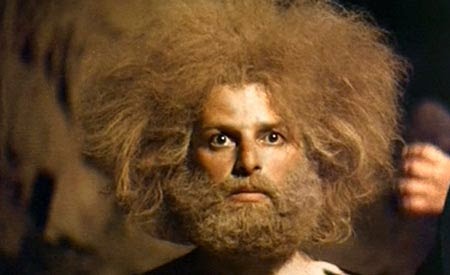
Altered States is one of the movies on this list that stretches the definition of a horror movie - it doesn't play like one, except for the sequence where William Hurt transforms into a primitive man and runs amok. It's an adaptation of Paddy Chayefsky's book, loosely based on Dr. John Lily's real-life experiments with hallucinogens and sensory deprivation in the hopes of experiencing a pre-human consciousness. It's heady stuff, and though Chayefsky wrote the script, he opted to use a pseudonym because of his displeasure with Ken Russell's direction. Russell's film is faithful to the screenplay (he was contractually obligated), but he had the actors race through the metaphysical dialogue at a breakneck pace, favoring the opportunity to pack the film with his trademark hallucinatory images. Filled with bodily horror (transformation effects courtesy of Dick Smith) and mind-boggling hallucination sequences (accompanied by still-amazing sound design) that seemingly depict heaven, hell, nothingness and everything in between, Altered States plays like a stoned remake of Dr. Jekyll and Mr. Hyde. If that doesn't qualify as horror, I don't know what does.

Friday, October 25, 2013

Top 10: '80s Horror! (#50-41)


We're halfway through the list with a week to go until Halloween, meaning I'm going to be racing to finish on time. It's funny how I started this as a less time-consuming project with the intention of writing a few sentences for each film. I guess once you get me started talking about, say, A Nightmare on Elm Street Part 2 or The Lost Boys, it's hard for me to stop.

Anyway, on to the next ten:


50. Cujo (Lewis Teague, 1983)

Stephen King mentions Cujo as often as The Shawshank Redemption or Stand by Me when asked to name his favorite adaptations of his work. This seems odd at first, both because Cujo isn't a particular fan favorite and because this is coming from the guy who insists that Kubrick's The Shining sucks. But I can understand King's affection for Cujo, a brutally efficient and unpretentious adaptation of one of his darker books (though, in opting not to kill a major character, the movie's considerably less grim). If the rabid St. Bernard in the book could be read as either a metaphorical manifestation of familial angst or a literal reincarnation of The Dead Zone's Frank Dodd, in the movie he's as much a force of nature as the shark in Jaws. The filmmakers do a great job of making a wet dog fearsome, which can't have been easy in the pre-CGI days, as well as getting the maximum claustrophobic effect out of the Ford Pinto that Donna Trenton (Dee Wallace) and her son Tad (Danny Pintauro) are trapped in for much of the film's second half. Wallace's believably terrified, desperate performance is a huge part of the film's effectiveness is well. Cujo is essentially a subtext-free scare delivery machine, but when it's done this well, sometimes that's more than enough.


49. The Monster Squad (Fred Dekker, 1987)

A childhood favorite for many of us that actually holds up. It's funny how, when I was a kid, The Monster Squad seemed like an epic-scale movie, only to discover as an adult that it's 80 minutes long, modestly budgeted and briskly paced. Such is the way a movie like this can play on a kid's imagination. It's basically The Goonies with monsters, but unlike The Goonies, it's enjoyable for people who didn't see it when they were five years old. It helps that the kids in The Monster Squad aren't constantly talking over each other, but I think a lot of it has to do with the offbeat details that director Fred Dekker and co-writer Shane Black sprinkle into the film. Dracula calls a four-year-old girl a "bitch," Frankenstein's monster becomes an E.T.-like friend to the kids (with Tom Noonan giving a typically committed performance), and there's an out-of-nowhere but weirdly fitting reference to the Holocaust. I also love how straightfaced and weirdly credible the movie's approach to the concept of kids fighting an all-star team of monsters is - when the main character assembles the others and basically says "Guys, here's the deal. Dracula's back, and we've got to stop him," you believe the kid. Stan Winston's creature effects and the gorgeous scope cinematography also help a great deal - Dekker and his crew never condescend to their subject, making a potential B-movie feel like an A-movie. If you've been reading my list so far, you probably don't need me to tell you why The Monster Squad is awesome; if you haven't seen it, it's ideal Halloween viewing, a great Valentine to any horror-loving kid (or kid at heart).


48. Possession (Andrzej Zulawski, 1981)

Possibly the most disturbing movie on this list, one that I wasn't actually sure if I liked or not for a long time after seeing it. Possession is about a man (Sam Neill) who learns that his wife (Isabelle Adjani) has abruptly fallen out of love with him and is abandoning him and their son. Trying to find out what happened, he first discovers that she had an affair with another man, then discovers her ongoing affair with a slimy, tentacled creature (designed by Carlo Rambaldi, who would next create the titular character in E.T.) who lives in a loft where she brings other men for the creature to feed on. Subtract the fact that this movie involves Isabelle Adjani having sex with an octopus monster, and it's still very unsettling, from the bleak Cold War-era Berlin locations to Adjani's frightening, full-tilt performance to the horrifying scene where her character experiences a sort of alien miscarriage in a subway station. Now add on top of that the fact that this movie features ISABELLE ADJANI HAVING SEX WITH AN OCTOPUS MONSTER. There's more involving doubles and identity shifts, and the movie gets more and more frighteningly absurd as it reaches its climax. Zulawski wrote the movie during a very painful divorce, and this movie does touch a nerve in how it uses genre tropes to depict the experience of realizing you do not really know the person you thought you knew best. It's abrasive and even alienating at points, but for the brave soul who sticks with it, it's a rewarding experience.


47. Strange Behavior (Michael Laughlin, 1981)

I first saw Strange Behavior as the second half of a double bill, with Dawn of the Dead, at the Harvard Film Archive. I knew almost nothing about the movie, which turned out to be a great way to experience it. What starts as a slasher, with a masked killer knocking off kids in a small town, turns into bizarro sci-fi/horror involving secret experiments and mind control. It's a hybrid of '80s and older horror movie tropes, and it works wonderfully. First-time director Michael Loughlin and co-writer Bill Condon achieve a very unique tone - it's funny without ever veering completely into horror-comedy, made funnier because everyone involved keeps a straight face. That the movie was shot in New Zealand but with a mostly American cast gives it a surreal quality, like a dream of small town America, as does the typically hypnotic Tangerine Dream score. And how can I not love a movie that makes such great use of Lou Christie's "Lightning Strikes"?


46. Cat People (Paul Schrader, 1982)

I read a book a few years ago, the name of which escapes me now, which was a collection of essays about horror movies by various prolific writers in the genre. One thing that stood out was that several different writers cited Jacques Tourneur's Cat People as a high point of the genre, discussing the bus scene and the swimming pool scene at length. Most of these writers slammed Paul Schrader's remake for showing what Tourneur and Val Lewton suggested, referring to the old adage that, in a horror movie, what you don't see is more frightening than what you do see. Putting aside the excellence of the original Cat People and the fact that the aformentioned adage is often true, this traditionalist bias has always irked me, as if there were one correct way to make a horror movie (or any kind of movie). It's true that Schrader's Cat People isn't much interested in the kind of subtle scares that made the original work, but what it loses in subtlety, it makes up for in pure batshit insanity. This is a movie where Nastassja Kinski periodically wanders through what appears to be a prog rock album cover depicting a world ruled by leopards, impeccably designed and accompanied by a Giorgio Moroder score. Kinski is a descendant of these leopards who, she discovers, must mate with her brother (Malcolm McDowell) in order to further the race. Kinski would rather sleep with a zoologist played by John Heard, but risks turning into a leopard and ripping him to pieces if she does. As this is directed by Paul Schrader, it's all caked in sex, sleaze, cocaine and Calvinist guilt, with lots of gratuitous nudity and an S&M-tinged ending that is both enjoyably kinky and extremely problematic in what it seems to be saying about post-women's movement gender roles. The whole movie's problematic, but in a good (or at least extremely entertaining) way; Tourneur's film remains a masterpiece, but Schrader's reminds us that there's a lot to be gained by showing everything. And, of course, it gave us this.


45. The Texas Chainsaw Massacre 2 (Tobe Hooper, 1986)

My best friend and I rented The Texas Chainsaw Massacre 2 the day after we'd both watched The Texas Chain Saw Massacre for the first time, and we both agreed that it was pretty terrible. I imagine (and the letters to the editor pages of late-1986 issues of Fangoria back this up) that it must have been alienating and disappointing to most fans of the original when it was released. Instead of the first film's unbearable tension and snuff film-like atmosphere is a dark comedy about the perils of the small businessman that trades horrifying implied violence for cartoonish amounts of gore. When I watched it again knowing what to expect, however, I got a huge kick out of it and realized why Hooper decided to go in that direction. There was no point in trying to replicate the intensity of the first film, as he was never going to match the shock of the new, so why not cast Dennis Hopper as a chainsaw-wielding Texas Ranger and Bill Mosely as Leatherface's brother, who has a partly exposed steel plate in his head and rants about opening a theme park called Namland? If that doesn't amuse you, stay far away from TCM2, because there's a lot more of that. It's also surprisingly smart and ahead of its time in its understanding of the sexual politics of slasher movies. There's a scene in this that is the likely origin of the line "Fuck me gently with a chainsaw" in Heathers, a scene that I laughed at in disbelief when I saw it but, upon revisiting it, realized the laughs were a lot more deliberate and pointed than I first realized. And I know this is a familiar refrain at this point, but the soundtrack kicks ass.


44. The Howling (Joe Dante, 1981)

1981 produced two great werewolf movies (possibly three - I barely remember seeing Wolfen, but it has its fans). We'll get to the other one eventually, but while The Howling is, for me, the less scary of the two, there's still plenty to love about it. Based on Gary Brandner's novel about a small town populated by werewolves, John Sayles' screenplay turns the town into a colony for devotees of a self-help guru who urges his patients to overcome repression; using lycanthropy as a substitute for Me Generation narcissism allows Sayles to score some satirical points, as does making the lead character a news anchor (Dee Wallace) traumatized while going undercover on a sensationalistic story. The Howling, like most of Dante's films, is peppered with affectionate references to classic horror, and some of the best gags are as indebted to Chuck Jones as they are to Hammer Studios. But it's also the one straight horror film of Dante's, and a quite frightening one, largely thanks to Rob Bottin's terrific makeup effects. And Wallace is as good here as in Cujo - it's fitting that she mostly appears in supporting roles in movies by the next generation of horror filmmakers these days, as she's one of the best actresses in the genre. The sequels are varying degrees of awful, but the original remains terrific.


43. The Stepfather (Joseph Ruben, 1987)

It's a hoot imagining John Locke as the murderous stepfather in Joseph Ruben's original, but even if you've never seen Lost, Terry O'Quinn is terrific here, switching from Ward Cleaver-esque geniality to homicidal rage and back again at the drop of a hat. The opening scene is masterpiece of subtly mounting dread, as we see O'Quinn calmly preparing for his day; as he goes about his house, we see details that suggest something horrible has happened until, finally the camera pans over to the bodies of the family he's murdered. This is the stepfather, who reappears as "Jerry Blake" and marries a widow with a teenage daughter, who, for reasons that remain unexplained, has changed his identity and remarried several times, attempting to create a picture-perfect family, then killing them all and starting over when reality intrudes on his ideal. He's the perfect '80s villain, a guy who will murder in the name of family values, and The Stepfather is a modest but very successful domestic horror movie. I chuckled when I remembered that it was actually my dad, who doesn't usually like horror movies, who insisted I needed to see this one when I was a kid, saying it was great. He also loves The Great Santini, insisted I watch it with him and cracked up during the scene where Robert Duvall throws a basketball at his son's head. I hope he was purposefully fucking with me, because that makes me love the old man more.


42. The Funhouse (Tobe Hooper, 1981)

The Funhouse is perhaps the most classically made of all the slashers, a movie about teens being picked off by a masked (and deformed, in this case) madmen that, at points, feels old-fashioned in the best way. There's the extended buildup, as the four teen characters smoke pot and wander around the attractions (including the terrific William Finley as a magician), that perfectly captures all the ways that travelling carnivals are at once fun and unnervingly shifty, creating a sense of both nostalgia and dread (it'd make a terrific double bill with Something Wicked This Way Comes). When the teens decide to hide in the funhouse for the night and are subsequently stalked by the killer, Hooper and his crew get as much atmosphere and production value out of the cardboard ghouls and garish lighting of their set as possible. While The Funhouse isn't as self-reflexive as The Texas Chainsaw Massacre 2, it's very smart about the fundamental appeal of being frightened.


41. Basket Case (Frank Henenlotter, 1982)

The saga of a young man that keeps his horribly deformed Siamese twin in a big basket as they set out to murder the doctors responsible for separating them is one of the most beloved low-budget horror movies of its era, and for good reason. It's a perfect mix of dark humor and over-the-top gore, the relationship between Duane (Kevin Van Hentenryck) and his brother Belial is strangely credible, and it's the rare horror movie that feels like a true original. But am I the only one who finds Belial kind of adorable? Maybe it's the combination of puppetry and stop motion effects that makes the little guy endearing, or maybe it's the sympathetic nature of his motives - the poor guy just wants to be closer to his brother. Either way, whenever I watch this scene, in addition to laughing until I'm out of breath, I just want to give Belial a hug.

Monday, October 21, 2013

Top 100: '80s Horror! (#60-51)


I realized I haven't really placed the movies I'm writing about in the context of the decade they were made during. I was reminded, when assembling this section of the list, about the time I was reading a book about 1980s films (if I remember correctly, it was titled The Films of the 1980s), and there was a passing reference to The Lost Boys as a metaphor for the AIDS epidemic. I was nine or ten years old at the time, and it might have been the first time I was introduced to the idea that movies are shaped by the time they were made. Thinking about it now, it's possible that the AIDS epidemic might have been one of the things in the backs of the filmmakers' minds when they made the movie, but I find it doubtful that a contemporary viewer would make that connection. Reading a movie in the context of the zeitgeist that produced it can be as useful as it is a pitfall. The movies listed below are very much products of their decade, and the idea of a correlation between more conservative moments in American history and particularly prolific times for the horror genre seems to hold a lot of water. But it was also a decade that heavily favored escapism, so the question of whether any one of these movies is in opposition to or harmony with its time is a slippery one.

I'm not sure what exactly what I'm getting at - I'm still getting over that cold - but if you've been wondering why my approach to this list is less analytical than celebratory, I guess I'm just in more of a celebrating mood.


60. Angel Heart (Alan Parker, 1987)

It's amusing that this movie was so controversial when it was released because of the blood-drenched sex scene between Mickey Rourke and Lisa Bonet that originally earned the movie an X rating. Now it seems more overheated than erotic - the VMAs are more provocative. Otherwise, though, Angel Heart is a very effective, twisty thriller. While the identity of Robert De Niro's character is predictable from the start (Louis Cyphre? Really??), I've always assumed that this is intentional, a joke that we're in on far before Rourke's detective puts two and two together. And the way that detective Angel's (again, really?) search for a missing singer unfolds does have some quite disturbing surprises. When a movie relies as heavily on plot twists as Angel Heart does, the key to whether or not it's worth revisiting is how interesting the accumulation of details that foreshadow the conclusion are in their own right. In this sense, Angel Heart is probably more fun the second time around. Director Alan Parker's smokey, heavy-handed style suits this movie perfectly; when he directs respectable material, the result can be deadly, but he's a perfect fit for pulpier material (or Pink Floyd). The marriage of noir and horror tropes makes for a fun but surprisingly unsettling ride - the final shots, intercut with the end credits, give me a chill just thinking about them. Also, I love that Bonet's participation apparently made Bill Cosby furious.


59. The Hunger (Tony Scott, 1983)

The first time I saw The Hunger, I thought it was just about the dumbest movie I'd ever seen. Seeing it again a few years later was one of the most dramatic examples I can remember of what a difference the correct aspect ratio can make. On DVD, with Tony Scott's widescreen compositions intact, I realized how much of the story is told purely through the images rather than the very thin screenplay. Having seen most of Scott's movies now, I understand how often this was the case, and while his best movies generally did have strong scripts (True Romance being his best by far), it's clear that he was as gifted a visual storyteller as his brother - while Sir Ridley's highs are higher, Tony's movies are more consistently entertaining. This is not to say that I suddenly realized The Hunger is an unsung masterpiece - there are sections that remain completely ridiculous. But if you can accept that going into the film, then its doomy Goth atmosphere casts quite a spell. As a rapidly aging vampire being rejected by the lover who made him what he is, David Bowie's performance plays on his iconography and alien persona almost as effectively as The Man Who Fell to Earth. And while the famed sex scene between Catherine Deneuve (as Bowie's lover) and Susan Sarandon (as Deneuve's new potential mate) is, like Angel Heart, a bit tame when compared to the buzz around it when it was released, the two actresses have great chemistry that helps give The Hunger the lurid, sexually charged atmosphere that Scott is reaching for. A few moments of sudden violence and some excellent makeup effects by Dick Smith aside, The Hunger is less driven by conventional scares than by existential anxieties - aging, being left behind, being forgotten. At times, it's like Let the Right One In with more jump cuts, Bauhaus and diffused light.


58. Halloween II (Rick Rosenthal, 1981)

While I can't ignore the fact that sidelining Jamie Lee Curtis and Donald Pleasance for much of the movie was a huge mistake, I still have a lot of love for Halloween II. The summer after second grade, I rented it every week; at the time, my mom would take me along to her part-time job cleaning houses, and I have vague, funny memories of her explaining to older ladies that I had her permission to watch it on their TVs. Seen as an adult, I'm more conscious of the movie's problems - a cast of mostly uninteresting supporting characters and, especially, a plot twist that came to define the rest of the series but retroactively took away from the purity of the original film's premise. John Carpenter has admitted that the twist was the result of writer's block, a late-night drinking binge and having recently seen The Empire Strikes Back, and it shows. But for whatever problems it has, very few slasher movies were made with this level of style and craft, and cinematographer Dean Cundey deserves a lot of credit for making the film feel of a piece with its predecessor. It's a pleasure to seeing the distinctive style of the original film expanded to the scope of a studio production. And the last 20 minutes are still perfect; no matter how many times I see it, I still tense up a little at the same moment (an elevator door that takes an uncomfortably long time to close) every time.


57. A Chinese Ghost Story (Siu-Tung Ching, 1987)

A confession: I saw A Chinese Ghost Story once, about 20 years ago, and my memories of it are very sketchy. As I imagine must be the case with any cinephile who grew up in a small town with one or two video stores nearby in the pre-streaming days, there are a handful of movies that I once saw and enjoyed a great deal but, due to their unavailability, mostly forgot about them. I was reminded of it when looking at lists of 1980s movies to assemble this one, and immediately remembered a few of the things I loved about it - the eerily beautiful look of the tragic female ghost, dynamic cinematography that rivals the early work of Sam Raimi or the Coens, terrific fight scenes and a giant tree demon with a huge tongue. The reviews I've read of the film suggest my memories are accurate, but also that there's a whole lot about the movie that I don't remember. So I don't have a lot to say about A Chinese Ghost Story right now, but I still wanted to include it because, if my memories are indeed correct, it's definitely worth checking out - I intend to track down a copy of it to revisit very soon.


56. Friday the 13th (Sean S. Cunningham, 1980)
I never really got why Friday the 13th was such a big hit until I saw a 35mm midnight screening several years ago. As much as director Sean S. Cunningham shamelessly steals from Halloween (and, indirectly, Mario Bava), it works. The movie's famous for its gore (which is pretty tame now), but a lot of the credit should go to cinematographer Barry Abrams, who creates a spooky atmosphere; the daytime scenes all feel grimly overcast, and while I'm sure the night scenes are underlit largely because of the movie's low budget, Abrams did wonders with what he had to work with. For a movie that was decried as a travesty when it was released, Friday the 13th's scares now seem almost classical, even austere. There's plenty of blood and gore, but also moments, like the one where a female camp counselor descibes a dream where the sky started raining blood, that subtly - okay, relatively subtly - play on our knowledge of the characters' impending doom. And while Betsy Palmer's performance as Mrs. Voorhees can fairly be described as campy, camp can be unnerving in its own way. As over the top as the Friday the 13th series quickly went, the original has the appeal of a really good small town haunted house - freaky in its own homemade way, with an underlying fear that you can't quite trust the people who put it together.


55. Psycho II (Richard Franklin, 1983)

A sequel to Psycho seems like such an inherently awful idea, but Psycho II is both a fun homage to Hitchcock's original and a surprisingly effective story in its own right. The sequel picks up with Norman Bates as he's released from an institution due to "budget cuts" (curse you, Reaganomics!). Norman returns to his childhood home, is helped by a sympathetic case worker (Robert Loggia), and even makes a special lady friend (Meg Tilly) that doesn't seem to trigger any homicidal impulses. But before long, he starts finding notes from Mother - is Norman's sanity unravelling, or are others purposefully messing with his head, or both? The screenplay by Tom Holland, who would go on to direct Fright Night and Child's Play, is smart enough to understand that Norman is an essentially sympathetic character; after all, the true villain of the original Psycho is already long dead before the movie begins. Perkins' performance is an underrated part of the original film's success, and it's a pleasure to see him return to and expand on the character (the Perkins-directed Psycho III isn't as strong, but it's often enjoyably kooky). And director Richard Franklin, whose previous film was the fun, Hitchcockian outback thriller Road Games, does a great job of alluding to Hitchcock's visual style without making a carbon copy. There are even moments that have the blunt, arbitrary shock value of the shower scene, which Franklin is confident enough to open his movie with.


54. The Serpent and the Rainbow (Wes Craven, 1988)

Wade Davis's book The Serpent and the Rainbow is a riveting account of the author and ethnobotanist's time spent in Haiti researching real-life zombies - people poisoned with a potent combination of tetrodotoxin hallucinogens and buried alive, so that they appear to be and believe they are undead. Davis has written that he sold the movie rights with the belief that the film would be a straightforward adaptation directed by Peter Weir, and was upset that the final product was a horror movie directed by Wes Craven instead. Davis' disappointment is completely understandable - the movie has as much relationship to his book as Outbreak does to The Hot Zone - but Craven's movie isn't straight exploitation either. Despite his knack for shock value, Craven is a much more intelligent filmmaker than he usually gets credit for, and the film uses the political climate of Haiti during the fall of the "Baby Dog" Duvalier regime as its backdrop, with the a captain of the Tonton Macoute, played by Zakes Mokae, as its villain. The film was actually shot in Haiti and the Dominican Republic, giving it a strong sense of verisimilitude even as it turns into a straight horror movie. As Davis' fictionalized counterpart (Bill Pullman), sent by a pharmaceutical company to discover the zombie drug's formula, is captured, tortured and, eventually, given the drug and buried alive, The Serpent and the Rainbow is a very scary (and welcome) return to the pre-Romero zombie genre. It may not be as subtle as Jacques Tourneur's I Walked With a Zombie, but it contains Craven's most effective dream/hallucination sequences outside of the first A Nightmare on Elm Street, a scene that is almost unbearable for anyone with claustrophobia, and another that is equally hard to watch for anyone who has a penis.


53. Santa Sangre (Alejandro Jodorowsky, 1989)

One of the most laziest cliches in film criticism is to describe a movie as another movie "on acid." Instead, we'll say that Santa Sangre is Psycho on two tabs of mescaline and a Guatemalan insanity pepper after a trip to mass. While the movie, about the son of a circus performer (Jodorowsky's son Axel) who escapes and is compelled to murder by his armless mother, isn't scary in the sense of being built around suspense or fright sequences, it is scary in the sense that it's a recklessly imaginative descent into the darker recesses of Jodorowsky's subconscious. Produced and co-written by Claudio Argento, it's as bloody and driven by dream logic as any of his brother Dario's films, with shocking scenes side-by-side with moments, such as a funeral for an elephant, that have a strange sort of beauty. Like David Lynch or Luis Bunuel, Jodorowsky has a gift for making us see things we consider horrifying or repulsive in a differnet context, forcing us to question our own assumptions. He's also a more id-driven director than either, with an unapologetically puerile preoccupation with sex and all manners of perversity. Santa Sangre does for horror what El Topo did with the western, turning it upside down and altering our understanding of the genre.


52. Opera (Dario Argento, 1987)

Argento's last very good movie was also the last films in one of the greatest streaks, starting with 1975's Deep Red, that any filmmaker has ever had. It's about an opera singer named Betty (Cristina Marsillach) who, just as she's given her big break in a production of Verdi's Macbeth, is stalked and terrorized by a sadistic killer who forces her to watch has he kills his prey. The way the mystery plot folds is occasionally clunky, but thorny psychosexual subtext more than makes up for it; as we learn why the killer has chosen Betty, there's a question of whether she's complicit in, or perhaps even turned on by, the elaborate and deadly game-playing, complicated further by a final scene that is goofy if taken at face value but has other, thornier, implications. The movie also features the most technically astounding moments in Argento's career, including the famous bullet-through-the-keyhole scene and a dizzying bird's-eye view of the opera house. I do hope that Argento has at least one more great movie in him, but Mother of Tears, Giallo and the trailer for Dracula 3-D aren't very encouraging. Either way, we'll always have his amazing '70s and '80s output, and Opera is a high point among them.


51. The Lost Boys (Joel Schumacher, 1987)

I love that this movie was shot by Michael Chapman, who was also the cinematographer on Taxi Driver, Raging Bull and other '70s classics. It's a great-looking movie, which isn't surprising coming from Joel Schumacher, but this movie is the one time Schumacher's slick visual style resulted in a movie that works from beginning to end. I love how the scope of the cinematography, the bombastic soundtrack and the lush production design combine to great a heightened, overheated atmosphere; that the story is actually quite silly only makes me love it more. It's like a kid's projection of everything that's scary and attractive about being a teenager turned into an R-rated but basically kid-friendly horror movie. And it's aided a great deal by Edward Herrmann and, especially, Diane Wiest, who give the movie surprising credibility. But really, it's all about Grandpa (Barnard Hughes). Every moment that Grandpa is onscreen is solid gold. When my best friend got a DVD player for Christmas, the first DVD he bought with his own money was The Lost Boys, because he wanted to hear the triumphant, "La Cucaracha"-scored final scene in crystal clear surround sound. If they're going to keep cranking out shitty Lost Boys sequels, they should really make a prequel about Grandpa. Also, a spinoff movie about the shirtless saxophone guy.

Wednesday, October 16, 2013

I've never said a prayer in my life. Nobody ever taught me how.

A few months ago, my girlfriend told me that, when she's feeling anxious or overwhelmed, she looks at the stars in the sky as a way of feeling calm and centered. I was reluctant to admit to her, for fear of sounding crazy, that as astonishing as the dark, starry sky can be, stopping to take in the vastness of space is more likely to make me reflect on my relative insignificance (and our planet's as well). The universe is both amazing and seemingly indifferent to us, and it's filled with a million different ways to kill us as casually as we'd swat a fly. As much as I'd like to say that I know what it feels like to be one with the universe, I feel like there's a power imbalance in our relationship. All of this is a long way of saying that, for much of the first half of Gravity, the film played more like horror than science fiction. The opening scene of Alfonso Cuaron's latest film, an extended unbroken shot of the crew of the Space Shuttle Explorer (according to Wikipedia, the movie takes place in an alternate near future) working on the Hubble telescope, is as disorienting and scary as it is technically astounding, and that's before debris from an exploded Russian satellite pummel the Explorer, killing most of the crew and setting its lone survivors - veteran astronaut Matt Kowalski (George Clooney) and doctor and mission specialist Ryan Stone (Sandra Bullock) - on a mission to find a viable way to return to Earth. I'm still processing much of Gravity, but I can confidently say that there won't be a more nerve-racking moviegoing experience this year. When a friend expressed surprise that the movie is only 90 minutes long, my girlfriend responded that any longer would have been unbearable, and I'm inclined to agree.
Much of the what makes Gravity such a gripping experience is due to the excellent work of its special effects artists, cinematographer Emmanuel Lubezki (who, between this and To the Wonder, has had a hell of a year), editors Cuaron and Mark Sanger, composer Steven Price and everyone else - I don't usually bother with Oscar talk, but Gravity will and should win a lot of technical awards in February. There are moments in Gravity that equal the unbroken shots in Cuaron's Children of Men in terms of their jaw-dropping "How did they do it?" effect. But special effects that stand the test of time are about more than photorealism, as our ability to recognize an effect moves as fast as their technological advancement. What matters here is that the effects are entirely at the service of the story, creating a believable vision of space not as its subject but as the setting for one character, Ryan, to confront her own fear and pain and find strength that she didn't believe she was capable of. The scenes where Ryan's attempts to survive repeatedly turn catastrophic rely on the work of the many artists and craftsman bringing them to life, but it's Bullock's believably terrified performance that brings them to life. Ryan's journey from terror to despair to, with a little help from Matt, a renewed will to live is as compelling a character study as any I've seen in any movie this year. Bullock is better in this movie than I thought she was capable of, and I don't mean that as a backhanded compliment - this role would ask a lot of any actor, and she rises to the occasion beautifully.
Because so much of Gravity relies on visceral effect to tell its story, it's been labeled a thrill ride by its handful of detractors. They're not wrong, exactly - the story is very simple, disarmingly so, and Cuaron, a filmmaker who has always reminded me of Spielberg in terms of his visual style and his emotional directness, has topped Children of Men as far as emotionally wrenching moviegoing experiences go. The early raves for the film repeatedly compared the movie to 2001, which is a misleading comparison. Both films are technological landmarks, and both are a feast for the eyes and ears. But 2001 is a cerebral film, focused on the epic-scale narrative of humanity's intellectual and spiritual evolution. Gravity is a personal journey of emotional catharsis; it reminded me far more of E.T. and, of all things, It's a Wonderful Life (Clooney makes for a handsome Clarence). Like Children of Men, it's about finding reason to hope in a seemingly hopeless situation, echoing the final lines of Samuel Beckett's The Unnameable:
"Perhaps it's done already, perhaps they have said me already, perhaps they have carried me to the threshold of my story, before the door that opens on my story, that would surprise me, if it opens, it will be I, it will be the silence, where I am, I don't know, I'll never know, in the silence you don't know, you must go on, I can't go on, I'll go on."
As for the simplicity of the story, it's true that the script, by Cuaron and his son Jonas, pares the characters' motivations and back stories down to their barest essentials. Some have complained that the movie tells instead of showing, but a cut away to Ryan's life on Earth would have taken away from the film's aesthetic impact. The simplicity of the story is essential to its power - Cuaron, his actors and crew achieve an emotional clarity that is bracing. One could argue that, say, cutting to a Buddha figurine on the dashboard of a landing capsule is a shortcut, but I love the way the film is about faith without ever becoming didactic - it simply speaks to things we all feel and wonder while leaving enough room to bring our own experience and perspective to it. After I knew where Gravity was headed, I found myself thinking back to seemingly trivial bits of dialogue that were actually pointing the way to the movie's deeper thematic concerns and the several different ways it can be interpreted - it's far more complex than it seems. I love the fact that Gravity is a blockbuster - while, yes, it can be enjoyed as a ride, it's also as intimate and contemplative as any of Cuaron's arthouse or lower-budget movies. Whether you love Gravity or not - and though I'm still processing it, I'm pretty sure I love it - that an unqualified work of art is a huge hit is good news any way you cut it.