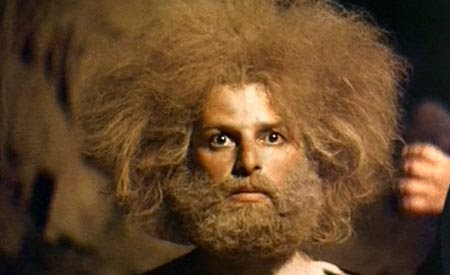
I'll be posting one spooky trailer every day for the month of October. First up, a movie that always just misses my top 100. I love it so.
Monday, October 01, 2007


Thursday, September 27, 2007
31 Films for Halloween

Halloween is by far my favorite holiday. I went trick-or-treating way beyond the appropriate age, and I can't wait to put a confused Luna in a pumpkin costume. Most of all, I love the excuse to watch a mind-numbing amount of horror movies - it's largely through horror that I fell in love with cinema, the genre by design liberating filmmakers to follow their most imaginative, stylish and unrestrained instincts. So I was thrilled when Ed Hardy, Jr. of Shoot the Projectionist invited me to participate in his survey of the 31 greatest horror films. Sure, I'd been overlooked for the Online Film Community and Satyajit Ray lists, but no matter - this is the one I've been waiting for (and you can participate too, if you like - head over to Ed's blog for details).
The first question, of course, is what defines a horror movie. For me, a film crosses into the realm of horror when it bypasses our intellectual concerns to touch our primal, irrational fears. This does not mean that a movie must feature ghosts or goblins to qualify as horror; horror is a genre, like comedy or porn, defined not by what the film's content but by what it does to us. It's horror if you jump, it's good horror if you scream, and it's great horror if you can't stop thinking about what it is that made you scream. Here are 31 movies (in chronological order) that go for the jugular:
The Cabinet of Dr. Caligari (1920)
Nosferatu, eine Symphonie des Grauens (1922)
Black Sunday (1960)
Peeping Tom (1960)
Psycho (1960)
The Birds (1963)
The Haunting (1963)
Onibaba (1964)
Repulsion (1965)
Rosemary's Baby (1968)
Don't Look Now (1973)
The Exorcist (1973)
The Texas Chain Saw Massacre (1974)
Jaws (1975)
Carrie (1976)
Suspiria (1977)
Dawn of the Dead (1978)
Halloween (1978)
Invasion of the Body Snatchers (1978)
Alien (1979)
Nosferatu: Phantom der Nacht (1979)
Inferno (1980)
The Shining (1980)
An American Werewolf in London (1981)
Creepshow (1982)
The Thing (1982)
A Nightmare on Elm Street (1984)
The Fly (1986)
Evil Dead 2 (1987)
The Silence of the Lambs (1991)
Session 9 (2001)
Also, since we're temporarily away from home and our computer, the title card series is taking a break for the month - instead, look for a series of horror-themed top tens and other Halloween goodies. Look out - the boogeyman is coming!
Monday, September 24, 2007
Anybody ever tell you you look dead, man?

Alien is the rare horror film that terrifies from its opening credits, its title fading in like a cryptogram over a tracking shot depicting a remote, ominous corner of space that could be the scariest prog rock record art never used. While Star Wars opens with bombast, Alien, with its brilliant Jerry Goldsmith score almost inaudible on the soundtrack, opts for an eerily elusive note. And while Ridley Scott's genre-bending masterpiece was greenlit in the wake of the massive success of the earlier film, its universe is not populated by explosive interstellar dogfights and smart-alecky robots. A direct descendant of 2001's creepy zero-gravity homicide, Alien gives us space as the ultimate old dark house, an existential void where monsters lurk, waiting to be discovered. I wanted to be an astronaut until I saw Alien.
A sci-fi/horror hybrid revolving around a seemingly unstoppable extraterrestrial monster, Dan O'Bannon's screenplay is a direct descendent of 50's B-movies like The Thing From Another World and It! The Terror From Beyond Space, and is often derided as such. Putting anti-genre pretensions aside, Alien stands out from its predecessors in a number of ways, the first being its remarkable use of silence. The quiet journey of the space freighter Nostromo (its Conrad reference a none-too-subtle corporate jab) is suddenly interrupted by the electronic squak of the intercepted SOS message that wakes the film's blue-collar protagonists from their cryogenic slumber and propels them towards their doom. Scott's elegant tracking shots mirror the seeming precision of the craft and underline the symbiotic relationship between humans and technology (personified by an on-board computer named Mother that, alas, does not sing "Daisy"). As the crew of the Nostromo stumbles upon, is invaded and picked off by titular beast, Alien is propelled not only by a fear of the monster but of the machine, and the film blurs these distinctions in interesting ways.
As Ash (Ian Holm), the film's on-board robot says of the alien, "I admire its purity. A survivor, unclouded by conscience, remorse, or delusions of morality." But just as Ash represents something terribly wrong about the fusion of the organic and the artificial, the alien is a horrible marriage of animal instinct and mechanical precision, its acid blood and second mouth making it appear more manufactured than born. H.R. Giger's designs for the monster, and particularly his even more sexually charged Necronomicon, depict a life cycle carried out with impeccable symmetry but, as Ash indicates, absent of any humanity, at once perfect and totally monstrous. Scott repeatedly disguises the full-grown alien in plain sight amidst the Nostromo's nooks and crannies; it is as if the craft itself is a traitor against its crew. When Ash is revealed to be precisely that, his strange near-rape of Ripley (Sigourney Weaver) and subsequent breakdown are the result of a computer's inability to understand or express the human desire it sees all around. While any discussion of Alien will inevitably include a use of the term "vagina dentata," the alien's sexualized design is more than a rape metaphor - it's a perversion of the healthy carnality that Scott will repeatedly idealize in his ouevre (unsurprising that, on the most recent DVD release, Scott cites Francis Bacon as an influence). The classic demise of poor Kane (John Hurt) is shocking not just for its gore but as a distortion of childbirth, the screaming and viscera both reminiscent of the real thing and a corruption of femininity (another of Scott's ideals). It's a moment of physical but also psychic violence, its power amplified by Hurt's confused anguish and the palpable disorientation of the crew. If ever there was a moment in cinema that defines chaos, this is it.
Indeed, while Alien's design team is frequently and rightly praised, the cast is even more important to the film's success. There are eight actors in the film (including Bolaji Badejo in the rubber suit), and they make up a perfect ensemble, their early casual interplay as authentic as the best of Altman. Rather than overhwelming with exposition, the actors convey worlds about the characters' backgrounds, camaraderie and power struggles. Each represents a distinctly human opposition to the alien, whether it's Captain Dallas' (Tom Skerrit) cool logic, Lambert's (Veronica Cartwright) vulnerability or the pragmatism of Parker (Yaphet Kotto) and Brett (Harry Dean Stanton), whose friendship becomes more oddly endearing with each successive viewing. The film celebrates these average characters for their respective strengths, yet none ar saved from the monster. Only Ripley, hard-headed and at first unlikable for her stubborn adherence to the rules, outwits the alien thanks to her resourcefulness and superior survival instinct. Ironically, this places her closer to Ash's ideal of a survivor; what separates Ripley from the machine and the creature is her humanity. Weaver is remarkable in the film's last reel, conveying with little dialogue an almost paralyzing fear and the inner strength needed to prevail (plus, she's a cat lover). Ripley is never a stock damsel in distress; sporting only undies in the film's last minutes, she projects a completely self-posessed sexuality that even the nastiest of monsters is unable to penetrate. As she blasts the alien into space, the film turns suddenly triumphant - it is the triumph of humanity, a restoration in the form of one nubile panty-clad warrior. Score one for Earth.
Released in 1979, Alien is very much a film of its decade - cynical towards corporate thinking, distrustful of authority, very much in favor of sex, drugs and rock and roll. As the series progresses, both its hero and its monster will change and evolve to suit the ideas of each film's zeitgeist. And while I love its sequels to varying degrees (and plan to discuss them in the weeks to come), it's the original that retains an iconic perfection. Alien is a singular concept, rich with subtext and masterfully executed. I admire its purity.
Friday, September 21, 2007

The Trim Bin #61

- Is anyone else deeply conflicted over the Death Proof DVD? I could never get enough Stuntman Mike, but I can't get over the cynicism of chopping them in half in advance of an inevitable double feature release (plus, no HD). Also, my initial enthusiasm about an extended cut faded when Alex Jackson referred to it as "worse than the Star Wars special editions." For those who have seen it, is this truth or hyperbole? Should I accept a compromised version of the best movie I've seen so far this year in a presentation that completely misses the point? Or is this a job for Netflix?
- We recently moved to a new, cozy hillside apartment, and we decided to switch from cable to satellite. The occasional static is well worth the variety of hi-def, OAR movie channels (also the show Weeds, which is contrived but still pretty hilarious). But the channel I've really developed an unhealthy addiction to is Monsters HD, which specializes in favorite and forgotten monster, slasher and classic horror movies in razor-sharp 1080i. If you're stuck with Time Warner or some other similarly faceless, clunky cable provider, know this: until you've seen Sleepaway Camp in HD, you just haven't lived.
- Speaking of monsters, the trailer for Frank Darabont's film version of Stephen King's short story The Mist is online, and I must say that it really surprised me. The casting looks pitch-perfect (particularly Marcia Gay Harden as the bible-thumping Mrs. Carmody) and the look of the film is surprisingly stark (especially coming from the director of The Green Mile). Plus, I love the use of Clint Mansell's score for The Fountain. After the surprisingly okay 1408, the prospect of the first good, genuinely creepy Stephen King adaptation in years is terrific. My irrational fear of Toby Jones aside, I can't wait for this one.
- Edward Copeland recently posted The Satyajit Ray Memorial Anything-But-Definitive List of Non-English Language Films, a survey designed to exclude The Shawshank Redemption and American History X. 174 film buffs submitted their choices, and the result is a fine and (despite the title) comprehensive selection of world cinema, complete with pretty pictures.
- Finally (courtesy of Nerve), just because it's Friday, here's the greatest thing you'll ever see:
Saturday, September 15, 2007

Friday, September 14, 2007
My Top 101 (2007 Edition)
I've never gotten the point of making a distinction between a "best" and "favorite" movies list. My favorite movies are the best ones I've ever seen, that's why I love them so. Of course, the pleasure of making and sharing such a list is to find out what it (perhaps unwittingly) reveals about oneself. For instance, if Miller's Crossing ranks above Barton Fink this year, it's not because it's suddenly the superior movie - the movies don't change, but we do (this same process of rediscovery is one of the best things about film writing on the internet). So the changes this year are made up of films I'd never seen, films that landed closer to the heart than they had before (Tokyo Story is very different when you're a parent), and films I just plain overlooked last year (how the hell did I forget Touch of Evil?).
The goal every time I revise my list is to create a sort of representative collage of what cinema is to me at this moment. Glancing at the list, I know that I dig monsters, cowboys, ambiguity, sex, aliens and Freedonia. And I sure have a hard-on for the 1970's. Making the list is more and more like Sophie's Choice every year - I've seen at least 150-200 movies I'd consider perfect, and an alternate list of the next 101 would possibly make an interesting side project. But I'll remain disciplined for now; here are my 101 favorite best movies.
1. Blue Velvet (David Lynch, 1986)
2. The Shining (Stanley Kubrick, 1980)
3. Nashville (Robert Altman, 1975)
4. 2001: A Space Odyssey (Stanley Kubrick, 1968)
5. E.T. the Extra-Terrestrial (Steven Spielberg, 1982)
6. Raging Bull (Martin Scorsese, 1980)
7. Vertigo (Alfred Hitchcock, 1958)
8. Apocalypse Now (Francis Ford Coppola, 1979)
9. Carrie (Brian De Palma, 1976)
10. Boogie Nights (Paul Thomas Anderson, 1997)
11. Kill Bill vol. 2 (Quentin Tarantino, 2004)
12. Kill Bill vol. 1 (Quentin Tarantino, 2003)
13. My Own Private Idaho (Gus Van Sant, 1991)
14. Jaws (Steven Spielberg, 1975)
15. Persona (Ingmar Bergman, 1966)
16. Taxi Driver (Martin Scorsese, 1975)
17. Alien (Ridley Scott, 1979)
18. The Elephant Man (David Lynch, 1980)
19. The Man Who Fell to Earth (Nicolas Roeg, 1976)
20. El Topo (Alejandro Jodorowsky, 1970)
22. Nosferatu: Phantom der Nacht (Werner Herzog, 1979)
23. Badlands (Terrence Malick, 1973)
24. Children of Men (Alfonso Cuaron, 2006)
25. Psycho (Alfred Hitchcock, 1960)
26. Halloween (John Carpenter, 1978)
27. The Empire Strikes Back (Irvin Kershner, 1980)
28. Inferno (Dario Argento, 1980)
29. A Clockwork Orange (Stanley Kubrick, 1971)
30. Jules and Jim (Francois Truffaut, 1962)
32. Lawrence of Arabia (David Lean, 1962)
33. Don't Look Now (Nicolas Roeg, 1973)
34. The Fly (David Cronenberg, 1986)
35. The Last Temptation of Christ (Martin Scorsese, 1988)
36. Aguirre the Wrath of God (Werner Herzog, 1972)
37. 8 1/2 (Federico Fellini, 1963)
38. Dead Man (Joel Coen, 1996)
39. Touch of Evil (Orson Welles, 1958)
40. Dawn of the Dead (George A. Romero, 1978)
41. Ran (Akira Kurosawa, 1985)
42. The Third Man (Carol Reed, 1949)
43. Chinatown (Roman Polanski, 1974)
44. Eraserhead (David Lynch, 1977)
45. The Godfather Part II (Francis Ford Coppola, 1974)
46. Schindler's List (Steven Spielberg, 1993)
47. Sid and Nancy (Alex Cox, 1986)
48. Mulholland Drive (David Lynch, 2001)
49. The Thing (John Carpenter, 1982)
50. Goodfellas (Martin Scorsese, 1990)
51. Close Encounters of the Third Kind (Steven Spielberg, 1977)
52. The Conversation (Francis Ford Coppola, 1974)
53. One Flew Over the Cuckoo's Nest (Milos Forman, 1975)
54. Blade Runner (Ridley Scott, 1982)
55. Cries and Whispers (Ingmar Bergman, 1972)
56. Brazil (Terry Gilliam, 1985)
57. Rashomon (Akira Kurosawa, 1950)
58. McCabe and Mrs. Miller (Robert Altman, 1971)
59. Tokyo Story (Yasujiro Ozu, 1953)
60. The Seventh Seal (Ingmar Bergman, 1957)
61. Manhattan (Woody Allen, 1979)
62. The Godfather (Francis Ford Coppola, 1972)
63. City Lights (Charles Chaplin, 1931)
64. American Beauty (Sam Mendes, 1999)
65. The American Friend (Wim Wenders, 1977)
66. Blow Out (Brian De Palma, 1981)
67. Days of Heaven (Terrence Malick, 1978)
68. Once Upon a Time in America (Sergio Leone, 1984)
69. Last Tango in Paris (Bernardo Bertolucci, 1972)
70. Citizen Kane (Orson Welles, 1941)
71. The Searchers (John Ford, 1956)
72. Raiders of the Lost Ark (Steven Spielberg, 1981)
73. Orphee (Jean Cocteau, 1949)
74. Betty Blue (Jean-Jacques Beineix, 1986)
75. Wings of Desire (Wim Wenders, 1987)
76. Dr. Strangelove, or How I Learned to Stop Worrying and Love the Bomb (Stanley Kubrick, 1964)
77. Black Moon (Louis Malle, 1975)
78. Magnolia (Paul Thomas Anderson, 1999)
79. Harold and Maude (Hal Ashby, 1971)
80. Heavenly Creatures (Peter Jackson, 1994)
81. The Cabinet of Dr. Caligari (Robert Wiene, 1920)
82. Rushmore (Wes Anderson, 1998)
83. Miller's Crossing (Joel Coen, 1990)
84. Invasion of the Body Snatchers (Philip Kaufman, 1978)
85. Once Upon a Time in the West (Sergio Leone, 1968)
86. Phantom of the Paradise (Brian De Palma, 1974)
87. Stroszek (Werner Herzog, 1977)
88. Eyes Wide Shut (Stanley Kubrick, 1999)
89. The Fountain (Darren Aronofsky, 2006)
90. Y tu mama tambien (Alfonso Cuaron, 2001)
91. Punch-Drunk Love (Paul Thomas Anderson, 2002)
92. Ed Wood (Tim Burton, 1994)
93. M (Fritz Lang, 1931)
94. Pulp Fiction (Quentin Tarantino, 1994)
95. Macbeth (Roman Polanski, 1971)
96. The Big Lebowski (Joel Coen, 1998)
97. Hedwig and the Angry Inch (John Cameron Mitchell, 2001)
98. Eternal Sunshine of the Spotless Mind (Michel Gondry, 2004)
99. Pat Garrett and Billy the Kid (Sam Peckinpah, 1973)
100. Popeye (Robert Altman, 1980)
101. Duck Soup (Leo McCarey, 1933)
The goal every time I revise my list is to create a sort of representative collage of what cinema is to me at this moment. Glancing at the list, I know that I dig monsters, cowboys, ambiguity, sex, aliens and Freedonia. And I sure have a hard-on for the 1970's. Making the list is more and more like Sophie's Choice every year - I've seen at least 150-200 movies I'd consider perfect, and an alternate list of the next 101 would possibly make an interesting side project. But I'll remain disciplined for now; here are my 101 favorite best movies.

1. Blue Velvet (David Lynch, 1986)
2. The Shining (Stanley Kubrick, 1980)
3. Nashville (Robert Altman, 1975)
4. 2001: A Space Odyssey (Stanley Kubrick, 1968)
5. E.T. the Extra-Terrestrial (Steven Spielberg, 1982)
6. Raging Bull (Martin Scorsese, 1980)
7. Vertigo (Alfred Hitchcock, 1958)
8. Apocalypse Now (Francis Ford Coppola, 1979)
9. Carrie (Brian De Palma, 1976)
10. Boogie Nights (Paul Thomas Anderson, 1997)

11. Kill Bill vol. 2 (Quentin Tarantino, 2004)
12. Kill Bill vol. 1 (Quentin Tarantino, 2003)
13. My Own Private Idaho (Gus Van Sant, 1991)
14. Jaws (Steven Spielberg, 1975)
15. Persona (Ingmar Bergman, 1966)
16. Taxi Driver (Martin Scorsese, 1975)
17. Alien (Ridley Scott, 1979)
18. The Elephant Man (David Lynch, 1980)
19. The Man Who Fell to Earth (Nicolas Roeg, 1976)
20. El Topo (Alejandro Jodorowsky, 1970)

22. Nosferatu: Phantom der Nacht (Werner Herzog, 1979)
23. Badlands (Terrence Malick, 1973)
24. Children of Men (Alfonso Cuaron, 2006)
25. Psycho (Alfred Hitchcock, 1960)
26. Halloween (John Carpenter, 1978)
27. The Empire Strikes Back (Irvin Kershner, 1980)
28. Inferno (Dario Argento, 1980)
29. A Clockwork Orange (Stanley Kubrick, 1971)
30. Jules and Jim (Francois Truffaut, 1962)

32. Lawrence of Arabia (David Lean, 1962)
33. Don't Look Now (Nicolas Roeg, 1973)
34. The Fly (David Cronenberg, 1986)
35. The Last Temptation of Christ (Martin Scorsese, 1988)
36. Aguirre the Wrath of God (Werner Herzog, 1972)
37. 8 1/2 (Federico Fellini, 1963)
38. Dead Man (Joel Coen, 1996)
39. Touch of Evil (Orson Welles, 1958)
40. Dawn of the Dead (George A. Romero, 1978)

41. Ran (Akira Kurosawa, 1985)
42. The Third Man (Carol Reed, 1949)
43. Chinatown (Roman Polanski, 1974)
44. Eraserhead (David Lynch, 1977)
45. The Godfather Part II (Francis Ford Coppola, 1974)
46. Schindler's List (Steven Spielberg, 1993)
47. Sid and Nancy (Alex Cox, 1986)
48. Mulholland Drive (David Lynch, 2001)
49. The Thing (John Carpenter, 1982)
50. Goodfellas (Martin Scorsese, 1990)

51. Close Encounters of the Third Kind (Steven Spielberg, 1977)
52. The Conversation (Francis Ford Coppola, 1974)
53. One Flew Over the Cuckoo's Nest (Milos Forman, 1975)
54. Blade Runner (Ridley Scott, 1982)
55. Cries and Whispers (Ingmar Bergman, 1972)
56. Brazil (Terry Gilliam, 1985)
57. Rashomon (Akira Kurosawa, 1950)
58. McCabe and Mrs. Miller (Robert Altman, 1971)
59. Tokyo Story (Yasujiro Ozu, 1953)
60. The Seventh Seal (Ingmar Bergman, 1957)

61. Manhattan (Woody Allen, 1979)
62. The Godfather (Francis Ford Coppola, 1972)
63. City Lights (Charles Chaplin, 1931)
64. American Beauty (Sam Mendes, 1999)
65. The American Friend (Wim Wenders, 1977)
66. Blow Out (Brian De Palma, 1981)
67. Days of Heaven (Terrence Malick, 1978)
68. Once Upon a Time in America (Sergio Leone, 1984)
69. Last Tango in Paris (Bernardo Bertolucci, 1972)
70. Citizen Kane (Orson Welles, 1941)

71. The Searchers (John Ford, 1956)
72. Raiders of the Lost Ark (Steven Spielberg, 1981)
73. Orphee (Jean Cocteau, 1949)
74. Betty Blue (Jean-Jacques Beineix, 1986)
75. Wings of Desire (Wim Wenders, 1987)
76. Dr. Strangelove, or How I Learned to Stop Worrying and Love the Bomb (Stanley Kubrick, 1964)
77. Black Moon (Louis Malle, 1975)
78. Magnolia (Paul Thomas Anderson, 1999)
79. Harold and Maude (Hal Ashby, 1971)
80. Heavenly Creatures (Peter Jackson, 1994)

81. The Cabinet of Dr. Caligari (Robert Wiene, 1920)
82. Rushmore (Wes Anderson, 1998)
83. Miller's Crossing (Joel Coen, 1990)
84. Invasion of the Body Snatchers (Philip Kaufman, 1978)
85. Once Upon a Time in the West (Sergio Leone, 1968)
86. Phantom of the Paradise (Brian De Palma, 1974)
87. Stroszek (Werner Herzog, 1977)
88. Eyes Wide Shut (Stanley Kubrick, 1999)
89. The Fountain (Darren Aronofsky, 2006)
90. Y tu mama tambien (Alfonso Cuaron, 2001)

91. Punch-Drunk Love (Paul Thomas Anderson, 2002)
92. Ed Wood (Tim Burton, 1994)
93. M (Fritz Lang, 1931)
94. Pulp Fiction (Quentin Tarantino, 1994)
95. Macbeth (Roman Polanski, 1971)
96. The Big Lebowski (Joel Coen, 1998)
97. Hedwig and the Angry Inch (John Cameron Mitchell, 2001)
98. Eternal Sunshine of the Spotless Mind (Michel Gondry, 2004)
99. Pat Garrett and Billy the Kid (Sam Peckinpah, 1973)
100. Popeye (Robert Altman, 1980)
101. Duck Soup (Leo McCarey, 1933)
Thursday, September 13, 2007

Sunday, September 09, 2007
I'm Big Joe Grizzley.
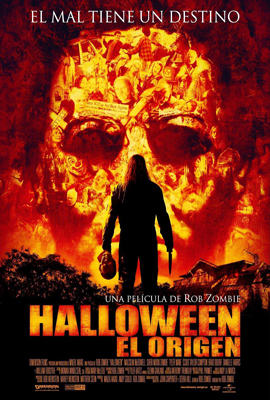
One of the most telling moments in the Rob Zombie canon is the scene in The Devil's Rejects where a grizzled, hypermasculine lawman threatens to beat the snot out of a geeky, trivia-spouting movie critic. Zombie invites us to laugh with the sheriff as he attacks the movie geek, even though he clearly identifies with the latter. This masochism is a trait shared by many die-hard horror fans - those of us who were more likely to spend a summer day reading the newest Fangoria than playing sports or whatever - and it also explains why Zombie prefers to make his monsters the protagonists of his films. Note, for instance, that the cast of Halloween, Zombie's remake of the John Carpenter classic, is filled with famous cinematic killers, as if they'd assembled to pay tribute to iconic slasher Michael Myers. Zombie portrays Myers as a pasty young metalhead who grows up to be a hulking, unstoppable killing machine. It's a huge departure from the original's conception of a blank embodiment of pure nothingness; the resulting tension accounts for the film's worst moments as well as its best ones, but Halloween is never less than fascinating.
The brief backstory Carpenter gave us fills the film's first half, as we're introduced to Michael Myers as a young boy quietly torturing animals in his bedroom as his pole-dancing mom (Sherri Moon Zombie) and bullying stepdad (William Forsythe, just a tad overstated) scream at each other downstairs. Before long, mom is talking to Dr. Loomis (Malcolm McDowell, having a blast) about Michael's puppy-killing activities, which Loomis warns are a sign of "much bigger problems." But it's too late - Michael soon kill half of his family, leaving mom and his beloved baby sister alive. These early scenes, and Michael's subsequent institutionalization under Loomis' care, are sleazily effective; while Zombie cites traditional characteristics of serial killers, the soundtrack, performances and excellent cinematography by Phil Parmet give the film a heightened reality, threatening to veer into camp before hitting us with some spookily well-realized moments of sudden, brutal violence.
In Halloween's most gleefully sick moment, Zombie cuts between mom at work and a dejected young Michael Myers sitting alone with nobody to take him trick-or-treating, scored to Nazareth's "Love Hurts" - it's not supposed to make us empathize with the killer so much as briefly occupy his deeply deranged state of mind. Zombie adapts an agnostic perspective where Carpenter is almost religious, yet both directors at the same conclusion, the idea of evil as something incomprehensible that we attempt to contain on Halloween (and with scary movies) by infantilizing our fears. While Zombie couldn't be more stylistically different from Carpenter, they share an innate understanding of the elements of the genre, namely a romantic concept of horror as a eulogy for all things lost (note the repeated menstrual imagery). In its own way, Zombie's Halloween is as much a postmodern exploration of its predecessor as Gus Van Sant's Psycho. So if you hated Psycho, take that as a warning. But I, for one, admire Zombie's attempt to make Michael Myers representative of more than action figures and cell phone ringtones, and as dramatically different as Halloween 2007 is, it ultimately honors the original far more than another generic retread.
Halloween does stumble in its second half, as Michael escapes from the institution (easily the film's worst scene, although it's redeemed minutes later by an awesome Ken Foree cameo) and stalks his now-grown baby sister and her friends on Halloween night. Here, Zombie mimics scenes and even borrows dialogue from the original, which only serves to remind us of what a perfect film the original is. I began to miss Carpenter's austere compositions and elegant tracking shots, his labyrinthine conception of suburbia. This wouldn't matter as much if Zombie had stuck with the tone and style established in the first half; instead, he can't seem to decide between paying homage or making the material his own. The rushed approach also shortchanges the characters; although Scout Tyler-Compton (in the role that made Jamie Lee Curtis famous) is cute as a button, she and her costars aren't give much of a chance to make an impression (although it's strange to watch the Shape kill a topless, bloodied Danielle Harris).
Ultimately, Halloween sort of falls apart in a series of blaring music cues, property destruction, and bizarre references to Blade Runner. Still, in incorporating the brother-sister twist from Halloween II with a resonance that even Carpenter wasn't able to pull off, Zombie does give his film an unexpected psychological resonance. Halloween 2007 isn't the travesty it's been made out to be - it's a fascinating experiment, not entirely sucessful, but one that takes its boogeyman very seriously. I can't guarantee that you won't hate it, but it's a hell of a lot better than Halloween 6.
You can find more Myers-related goodness over at Final Girl's Film Club.
Ultimately, Halloween sort of falls apart in a series of blaring music cues, property destruction, and bizarre references to Blade Runner. Still, in incorporating the brother-sister twist from Halloween II with a resonance that even Carpenter wasn't able to pull off, Zombie does give his film an unexpected psychological resonance. Halloween 2007 isn't the travesty it's been made out to be - it's a fascinating experiment, not entirely sucessful, but one that takes its boogeyman very seriously. I can't guarantee that you won't hate it, but it's a hell of a lot better than Halloween 6.
You can find more Myers-related goodness over at Final Girl's Film Club.
Thursday, September 06, 2007

Wednesday, September 05, 2007
Like a man dick?

An early highlight of Superbad, an extended montage of a child's drawings of penises, pretty much tells you everything about the heart and soul of the film. A geekier Y tu mama tambien, it's a movie that correctly depicts two teenage boys' desparate quest to get laid as a sublimated expression of their profound love for one another. While the look and soundtrack of Superbad are meant to evoke raunchy teen sex comedies of the 70s and 80s, it's written with a wit and insight that few of its predecessors match. This is a movie where a bomb-riding weiner isn't just funny - it has purpose.
Co-screenwriters Seth Rogen and Evan Goldberg began writing Superbad when they were teens, and I'm sure many aspiring filmmakers wrote a script along these lines with their friends when they were kids (I know I did). The protagonists, Seth (Jonah Hill) and Evan (Michael Cera), are clearly autobiographical, and the film sweetly hinges on their mutual affection. The plot, such as it is, revolves around Seth and Evan's misguided attempts to procure liquor in the hopes of impressing the objects of their unrequited affection before they graduate. It's a well-worn scenario made fresh by the screenplay's emotional honesty - Seth and Evan are headed to different colleges in the fall, and their horniness is complicated by the unspoken fear that actual relationships will shatter their idyllic routine of getting drunk on stolen beer and watching Vagtastic.com. It's while discussing porn early on that Seth describes the sight of vagina not being penetrated by a penis as "not for me," and Superbad mines many laughs from its protagonists' fear of that unknown quantity and retreat into the comfort zone of dick jokes, all the while nudging them into the realm of adulthood. Director Evan Mottola finds the perfect tone for the film, filthy but never leering, and aids his young stars in delivering surprisingly nuanced performances - Hill adds an effective layer of insecurity to the horny fat guy archetype, while Cera, at 19 already a master of deadpan, plays Evan as a nice guy at war with his own libido.
Underscoring the themes is the film's subplot, so hilarious that it nearly upstages the rest of the story, involving Evan and Seth's even nerdier acquaintance Fogell (Christopher Mintz-Plasse), who carries a fake ID bearing the already-infamous pseudonym "McLovin." Almost busted for attempting to buy booze, Fogell ends up riding with two hard-drinking, Yoda-quoting cops (Rogen and Bill Hader) as they tackle drunks, destroy public property and try to educate the young man in the ways of women, all in the name of making cops seem cool. The cops essentially a cautionary tale for the protagonists should they fail to grow up, which gives them some of the film's most wonderfully absurd moments ("I call this the upwards spiral!"). And Mintz-Plasse is a real discovery, totally natural as he grows to embody the McLovin persona - he has the ability to make a throwaway line like "I've got a boner" completely hysterical. Best of all, it's the rare kind of film where one can laugh at boner jokes without hating oneself - lowbrow in a very knowing way, Superbad is hilariously dumb in a way that only very smart people can achieve. When Hill compares his sexual track record to the filmography of Orson Welles, I can't help but applaud not only the smart-alecky reference but the fact that the filmmakers are rewarding their smartest audience members at a time when most comedies aim squarely at the lowest common denominator.
The film ends on an interesting note, with the protagonists left to reevaluate their perception of women, to perhaps grow a little (this would resonate deeper if the film told us anything about its female characters, but still). The Judd Apatow canon seems largely aimed at speaking to overgrown adolescents, gently letting them that growing up isn't such a scary prospect. If, philosophically, I prefer Lindsey Weir getting on a VW bus and leaving town, that probably says more about me than it does the film, and we'll see how I feel in ten years. Still, my heart warms at the thought of 17-year-old boys sneaking into Superbad in the hopes of seeing boobies and perhaps learning a thing or two in the process. At the very least, I learned that, since McLovin is already taken as an alias, Muhammad is probably the next best thing.
Friday, August 31, 2007

Fuck you, batteries.

The joy of a musical - that is, a good musical, not a bloated Broadway adaptation made not out of passion but for the commercial viability of a familiar property - is discovering the moments when a song reveals emotions that words alone cannot reach. Such a moment occurs early in Once, as a street musician and a woman he's just met (we never learn their names) are hanging around in a music store. He invites her to accompany him on a song he's been working on, and as she joins him on piano, the song's achingly romantic message overwhelms them and us. Once, which follows these characters over the course of a week as they write and record a few songs while an unspoken romance grows between them, is a minor masterpiece of understated feeling. Delicate and insightful where too many musicals are bombastic and obvious, Once is capable of transporting both lovers and haters of the genre with its devastating love story.
Once introduces us to a struggling songwriter (Glen Hansard) who works in his dad's vacuum repair shop and spends his time off singing Van Morrison songs for loose change on the streets of Dublin. One night, while performing one of his own songs, he meets a young Czech woman (Markéta Irglová) who likes his song; the guy is leaving for London in a week to try patching things up with his ex-girlfriend, and she agrees to help him write and record a few songs before he goes. That's about all there is for plot in Once, which is built on the moments where the guy and girl get to know each other. As they work together, it becomes clear they're made for each other. The guy is the type to refer to himself as a cynic, sweetly oblivious to how wrong he is; the girl has a daughter at home and a husband in another country, and is far too serious-minded to realize the obvious. While this story has been told before, from Brief Encounter to Lost in Translation (likely its most direct influence), Once becomes completely unique in its study of two characters who cannot quite fully connect for precisely the reasons that they are perfect for each other. First-time feature director John Carney (formerly a member, like his lead actor, of the band The Frames) has a remarkable talent for revealing worlds about his characters in a moment; he's brave enough, for instance, to have a character deliver the most important line in the film in Czech.
Almost as impressive as the story itself is the way that Carney uses digital video to tell it. Until recently, I was dubious about DV, as most directors who used it raved about its functional ease without commenting much on its aesthetic qualities (mumblecore is commendable in theory, but I have yet to see a DIY film I like). But after last year's Inland Empire and now Once, the possibilites of digital have been blown wide open. In Once, the low-tech images have an intimate quality that matches the story of homegrown artists perfectly. Every shot is beautifully composed in a way I haven't seen in DV before.I was inspired not only by the story but by the filmmaking itself - it's a film that leaves one energized by possibility. There's a confidence in every moment that reminds of how imagination and vision are infinitely more valuable than a huge budget. I'm not always quick to buy into the romance of independent cinema, but Once fulfills this promise better than any film in a long time.
Once isn't a perfect movie - I agree with Todd VanDerWiff, who writes that "While the songs are good, the film requires us to believe that they’re so good that they simply cause everyone around Hansard to realize what an untapped genius he is." Still, its hard to complain about a film with this much soul, particularly since its imperfections become part of its charm. There are few films that contain as much pure warmth as Once; that it's a pretty great movie is all the better.
Once introduces us to a struggling songwriter (Glen Hansard) who works in his dad's vacuum repair shop and spends his time off singing Van Morrison songs for loose change on the streets of Dublin. One night, while performing one of his own songs, he meets a young Czech woman (Markéta Irglová) who likes his song; the guy is leaving for London in a week to try patching things up with his ex-girlfriend, and she agrees to help him write and record a few songs before he goes. That's about all there is for plot in Once, which is built on the moments where the guy and girl get to know each other. As they work together, it becomes clear they're made for each other. The guy is the type to refer to himself as a cynic, sweetly oblivious to how wrong he is; the girl has a daughter at home and a husband in another country, and is far too serious-minded to realize the obvious. While this story has been told before, from Brief Encounter to Lost in Translation (likely its most direct influence), Once becomes completely unique in its study of two characters who cannot quite fully connect for precisely the reasons that they are perfect for each other. First-time feature director John Carney (formerly a member, like his lead actor, of the band The Frames) has a remarkable talent for revealing worlds about his characters in a moment; he's brave enough, for instance, to have a character deliver the most important line in the film in Czech.
Almost as impressive as the story itself is the way that Carney uses digital video to tell it. Until recently, I was dubious about DV, as most directors who used it raved about its functional ease without commenting much on its aesthetic qualities (mumblecore is commendable in theory, but I have yet to see a DIY film I like). But after last year's Inland Empire and now Once, the possibilites of digital have been blown wide open. In Once, the low-tech images have an intimate quality that matches the story of homegrown artists perfectly. Every shot is beautifully composed in a way I haven't seen in DV before.I was inspired not only by the story but by the filmmaking itself - it's a film that leaves one energized by possibility. There's a confidence in every moment that reminds of how imagination and vision are infinitely more valuable than a huge budget. I'm not always quick to buy into the romance of independent cinema, but Once fulfills this promise better than any film in a long time.
Once isn't a perfect movie - I agree with Todd VanDerWiff, who writes that "While the songs are good, the film requires us to believe that they’re so good that they simply cause everyone around Hansard to realize what an untapped genius he is." Still, its hard to complain about a film with this much soul, particularly since its imperfections become part of its charm. There are few films that contain as much pure warmth as Once; that it's a pretty great movie is all the better.
Monday, August 27, 2007
Tilting at Windmills

It must be weird to be Damian Arlyn right now.
Since so much has been written in the past week about what Mr. Arlyn has come to represent, it might be helpful to begin by talking about who he is (thank you, Google). Damian Arlyn is a 31-year-old resident of Corvallis, Oregon. The manager of DVD World by day, Mr. Arlyn also participates in theatrical productions at the Corvallis Community Theatre (you can read about the recent Arlyn-directed production of Dracula here). Damian is also a born-again Christian who explains on his MySpace page that he decided not to include Jesus on his list of heroes because "the term 'hero' doesn't even begin to describe the place he holds in my life" (as his list of heroes includes both Martin Luther and Denzel Washington, I'd have to agree with his decision). It seems clear that Damian is a sincere, serious-minded man with a genuine love for cinema.
Damian, as many of you know, also has a blog. And last week, in the middle of his ambitious, entertaining "31 Days of Spielberg" project, he became the subject of some very serious accusations. Damian addressed those charges in his blog, and you can read what he had to say for himself here. I believe Damian is genuinely sorry for his mistake, but as of this writing, it seemed that he didn't really understand what people were so angry about. Damian never expected to be famous, and now, he explains, "I never anticipated this project would bring me into contact with actual published authors who have written on Spielberg, even if it's not under the best of circumstances." I understand how Damian feels, and not just because I, too, take a lot of crap for defending Spielberg. I never expected my writing here to be read by anyone other than a few friends, and I'm grateful for my readers and the ideas you share here. In return, I feel a responsibility to give you reading material that is passionate, well-written (to the best of my abilities), and, of course, accurate. And while I like Damian and his writing, I'm troubled by this:
"However, I am not doing--nor have I ever done--this for praise, for esteem, for glory, for fame and certainly not for money. One thing I have never lost sight of is that in the big scheme of things, I am a nobody. I am a thirty-one-year-old video store clerk who lives in Corvallis, Oregon. I make little more than minumim wage a year and I happen to love movies. I never intended for this blog to be anything more than an expression of one little guy's passion and affection for cinema. Thus, I began this 'Spielberg' project because I admire Spielberg and his films and I wanted to share that admiration with other people and maybe--just maybe--even spark a little bit of discussion on him because I personally don't think that enough can ever be said about this great artist."
Since so much has been written in the past week about what Mr. Arlyn has come to represent, it might be helpful to begin by talking about who he is (thank you, Google). Damian Arlyn is a 31-year-old resident of Corvallis, Oregon. The manager of DVD World by day, Mr. Arlyn also participates in theatrical productions at the Corvallis Community Theatre (you can read about the recent Arlyn-directed production of Dracula here). Damian is also a born-again Christian who explains on his MySpace page that he decided not to include Jesus on his list of heroes because "the term 'hero' doesn't even begin to describe the place he holds in my life" (as his list of heroes includes both Martin Luther and Denzel Washington, I'd have to agree with his decision). It seems clear that Damian is a sincere, serious-minded man with a genuine love for cinema.
Damian, as many of you know, also has a blog. And last week, in the middle of his ambitious, entertaining "31 Days of Spielberg" project, he became the subject of some very serious accusations. Damian
 addressed those charges in his blog, and you can read what he had to say for himself here. I believe Damian is genuinely sorry for his mistake, but as of this writing, it seemed that he didn't really understand what people were so angry about. Damian never expected to be famous, and now, he explains, "I never anticipated this project would bring me into contact with actual published authors who have written on Spielberg, even if it's not under the best of circumstances." I understand how Damian feels, and not just because I, too, take a lot of crap for defending Spielberg. I never expected my writing here to be read by anyone other than a few friends, and I'm grateful for my readers and the ideas you share here. In return, I feel a responsibility to give you reading material that is passionate, well-written (to the best of my abilities), and, of course, accurate. And while I like Damian and his writing, I'm troubled by this:
"However, I am not doing--nor have I ever done--this for praise, for esteem, for glory, for fame and certainly not for money. One thing I have never lost sight of is that in the big scheme of things, I am a nobody. I am a thirty-one-year-old video store clerk who lives in Corvallis, Oregon. I make little more than minumim wage a year and I happen to love movies. I never intended for this blog to be anything more than an expression of one little guy's passion and affection for cinema. Thus, I began this 'Spielberg' project because I admire Spielberg and his films and I wanted to share that admiration with other people and maybe--just maybe--even spark a little bit of discussion on him because I personally don't think that enough can ever be said about this great artist."
To use his own term, Damian is the little guy. You can find the little guy across the blogosphere, in colleges, and in any formal or informal film discussion. The little guy uses his relative insignificance to paint himself in favorable terms. The little guy might apologize for having tastes that are way more offbeat or obscure than yours. Or, as in this case, the little guy is just one more incarnation of the little boy who hangs out in the projection booth in Cinema Paradiso. The little guy is a silent apostle of the cinema, unknowlingly engaging in his own form of self-mythologizing behavior. And the moment Damian allows himself to become the little guy, however genuine his intentions may be, he loses all sense of personal accountability.
That said, I'm quite sure that Damian feels a bit differently about it this week. Because Damian is no longer just a thirty-one-year-old video store clerk from Corvalis; he's a living symbol for the divide between print and internet film writing and the question of how journalistic standards differ or remain the same between different mediums. And just as Damian's self-image tells us much about his actions, the same is true of his most rabid detractors, many of whom showed up before scandal broke to anonymously inform Damian that he is a terrible writer. Most telling of all, to me, is the public sermon on Mr. Arlyn performed by D.K. Holm, who dismisses Damian's writing as "pretty much like every other blog in the world" and connects his downfall to something larger:
There is another kind, that is more pervasive and insidious and nearly invisible. That’s the group-think that sweeps across the nation as certain reviews and reviewers set the tone and limit the terms of response to a film."
The irony is that D.K. Holm is Damian Arlyn's spiritual father, having made a living from the summary/trivia format he claims to abhor (the difference being that Holm is paid for his efforts). Damian Arlyn does not realize that he loves himself; D.K. Holm cannot admit that he hates himself. Arlyn's colleagues at The House Next Door have done a better job of more clearly stating their intentions, offering a brief explanation of why Arlyn was removed from their masthead and, like the jurors stepping away from the table in 12 Angry Men, expressing in relative silence what so many supporters and detractors in so many words have not quite been able to communicate.
So, yes, I do wonder what today was like for Damian Arlyn. To have found such massive support (the blogosphere's generosity being its finest quality) only, with one unfortunate error in judgement, to find himself at the center of a debate that is no longer about him. To have inadvertenly tapped such a deep well of buried resentment from elitists and populists alike. To stand behind the counter as angry customers demand their two dollars back because Pan's Labyrinth was in Spanish (and oh, those black bars!). Damian's silence is our loss, and when he's ready, I anxiously await his return. Because, after all, the world needs a passionate defense of The Terminal.
Friday, August 24, 2007

Thursday, August 23, 2007
I had quite a normal childhood.

Roger Ebert has frequently stated that he rates films according to how well the filmmakers succeed at what they were aiming for. By Ebert's logic, Lukas Moodysson's A Hole in My Heart is a smashing success. Moodysson has stated in interviews that he intended his film to be off-putting to audiences, and it's certainly quite repugnant. It's unfortunate for us, however, that Moodysson didn't aim higher, because while A Hole in My Heart is composed almost entirely of images sure to ruin one's appetite, it's never truly disturbing, shocking or even particularly interesting. It's a pointlessly gross and stupid film that tries to say something insightful about porn, television and spiritual decay but, to paraphrase This is Spinal Tap, only treads in a sea of retarded sexuality.
In a cramped apartment, Rickard (Thorsten Flinck) and Geko (Goran Marjanovic) are busy making an amateurish porn starring Geko and Tess (Sanna Brading), a dim-witted young woman with aspirations of starring on Big Brother. The three descend into increasingly grotesque, extreme scenarios while Rickard's teenage son Eric (Bjorn Almroth) sulks in his bedroom with his pet worms and grating industrial music. And that's pretty much it - for 100 or so minutes, Richard and Geko (and Moodysson) do countless degrading things to Tess, who flees at one point only to return bearing junk food for further degradation. I'm not at all against extreme content in cinema; in fact, I'm always excited to discover filmmakers who are willing to examine uncomfortable or grotesque material with a seriousness and purpose, and I appreciate it when a filmmaker doesn't feel the need to block our eyes as if we were children. But A Hole in My Heart is a film composed entirely of extremes, edited in a series of epileptic jump cuts punctuated by screeching noise, that becomes wearyingly monotonous within minutes. I'm currently writing a screenplay set in and around a strip club, and I was at first confused by my instinct to include several moments of the characters performing mundane, everyday tasks (sleeping, watching tv, etc.). As the script has progressed, it's clearer to me that, if my film is to work at all, it needs the contrast between the characters' manufactured sexual personae and their unobserved selves. There's no such contrast in A Hole in My Heart, and in the absence of any genuine attempt at emotional authenticity, the characters are merely vehicles for Moodysson's skeezy, hyperbolic moralism.
The most pathetic thing about A Hole in My Heart is its complete failure even to shock us. It's disgusting in a way that comes off as cheating - it's easy to cut to, say, a close-up of vaginal reconstructive surgery without warning or context and get a reaction from the audience. It's harder to give such images real power or consequence. Directors like Todd Solondz, David Lynch and Michael Haneke give us films infinitely more disturbing than A Hole in My Heart with only a fraction of the overtly shocking imagery. They have the insight and craft to disturb us with the implications of their images - it's the ideas in Happiness or Blue Velvet that make those films so unsettling, not just the quantity of nipples or viscera on display. The irony of Moodysson's use of the confessional style of reality TV is that, while it's meant as a comment on the emptiness of popular culture, his film has even less to say (at least Big Brother is sometimes inadvertently insightful). I really wanted to "get" A Hole in My Heart, to have the geek show I'd endured arrive at the apocalyptic moment of truth it had promised. But by the time the film arrived at the image of a character vomiting into another's mouth with Bach's St. Matthew Passion blaring on the soundtrack, I could only laugh with rage at the purest marriage of pretension and idiocy I've ever seen.
A few days before seeing A Hole in My Heart, I watched Claire Denis' Trouble Every Day. It was the first of her films I'd seen, and while I didn't like it, it was made with an assuredness of tone and style that made me want to check out more of her work. I never, ever want to see another Lukas Moodysson film. I don't care if Together and Fucking Amal are cute, or that Lilja 4-ever was on a bunch of top-10 lists. I think Lukas Moodysson is an ass. I think he hates movies and everything else I hold dear. The fact that he's both a Socialist and a Christian isn't an interesting idiosyncracy, it just helps explain how a film could be so demoralizing and preachy at the same time. A Hole in My Heart is the work of a complete fraud; to arrive after 100 minutes of nihilistic ugliness at a group hug is a sick, insulting joke, and while the film has mostly been panned, it's geniunely baffling to read Reverse Shot's Eric Hynes praise it as "achingly humane." According to the film's IMDb trivia page, Thorsten Flinck had to turn to drugs to make it through the film's more harrowing scenes. I only wish I'd had as much foresight.
Friday, August 17, 2007

Thursday, August 16, 2007
Top 10: Voice-over

"IN A WORLD WHERE..."
Voice-over is often used to gloss over narrative problems or water a challenging film down in the name of accessibility (Blade Runner being the most notable example of the latter). But like any cinematic device, when placed in the hands of talented filmmakers, voice-over can be transformed from something familiar into something we've never quite seen (or heard before).
1. Days of Heaven Terrence Malick's four films have all employed voice-over to great effect, the disconnected thoughts of characters in The Thin Red Line and The New World enhancing those films' meditative tones, and Sissy Spacek's rambling, disconnected thoughts in Badlands achieve a sort of banal poetry. In Days of Heaven, Malick presents the tragic turn-of-the-century love story from the point of view of the protagonist's preteen sister. First-time film actress Linda Manz narrates in a flat, unaffected manner that perfectly compliments her character, who is inarticulate but perceptive about the lives of those far older than her. Malick has been criticized for emotionally distancing his audience from the story; in fact, the narrator's guileless, wide-eyed memories draw us directly into the film's devastatingly ephemeral heart.
2. A Clockwork Orange Stanley Kubrick once called this a "Who do you root for?" movie, and the director frequently used voice-over to confound his audience's expectations. The matter-of-fact, dryly statistical narrator in The Killing reduces the film's heist down to a shopping list of times, amounts, and other quantities, while the cruel storyteller of Barry Lyndon undercuts the characters' actions and dreams with savage irony (a device used in recent films like Dogville and Little Children). In both Lolita and A Clockwork Orange, the protagonists relate their stories with eloquence and wit, confusing our loyalties by causing us to sympathize with characters who do reprehensible things. A Clockwork Orange is particularly brilliant in this respect - Malcolm McDowell is charasmatic and strangely sexy as the young hooligan Alex, who recounts his evenings spent raping and pillaging with great gusto and his subsequent arrest and reconditioning with terrible sorrow. Kubrick asks us to sympathize with the devil in order to convey the film's philosophical message; the technique is no doubt manipulative, but it's also sickly hilarious and frequently imitated (see also: Trainspotting and American Psycho).
3. Taxi Driver Like A Clockwork Orange, the voice-over in Taxi Driver is meant to align us with a difficult character. But where Kubrick's aim was satire, Martin Scorsese and screenwriter Paul Schrader want us to understand Travis Bickle. As he prowls the city streets, seething with contempt for the decaying world around him, Robert DeNiro's narrative gives voice to fears, obsessions, and compulsions that, while extreme, are also all too recognizable. As Travis' inexpressive rage transforms into brutal violence, the scariest implication is that his madness is, somehow, our own.
4. Sunset Boulevard Has there ever been a filmmaker more joyously clever than Billy Wilder? Sunset Boulevard contains his wittiest device, the story of a murder recounted by the corpse. It's a concet that would prove popular - American Beauty, in particular, used it to wonderful effect - but in Sunset Boulevard, it's more than a plot device. Wilder's vision of Hollywood as a cemetary, a place where the long-forgotten dwell, is complimented by poor Joe Gillis' narration from beyond the grave. It's a perfectly acidic vision of the dark side of a city devoted to attaining cinematic immortality.
5. To Kill a Mockingbird The voice-over in Robert Mulligan's adaptation of Harper Lee's book has been frequently imitated over the years to lesser effect. The imitators attempt to mimic the unpretentious Southern charm of an adult Scout's memories of her youth, but they miss the eerier moments, the ghostly intimations of doom, and the bitter nature of an adult's memories of the moment she stepped into a world of absurd intolerance. There's nothing saccharine about the narrative - like the rest of the film, it's possessed with a hauntingly delicate soul that is ultimately heartbreaking.
6. Cries and Whispers One of Ingmar Bergman's best films, Cries and Whispers is bathed in red, a color that Bergman said he imagined the inside of the soul to be. And Cries and Whispers is a film composed of interiors, both literally and through the diary entries of the dying Agnes (Harriet Andersson). Agnes' memories of her life and her emotionally remote sisters are almost impossibly sad, laced with regret, confusion, and fear. All the more stunning that Cries and Whispers ends with Agnes' happiest memory, and Bergman, for once, grants his storyteller a moment of peace (for more on the ending, go here).

7. The Postman Always Rings Twice Film noir is littered with hapless schmoes who become putty in the hands of a smarter, more calculating woman. Never was this more perfectly realized than in the 1946 version of James M. Cain's novel. John Garfield's Frank recounts his torrid, deadly affair with Cora (Lana Turner) in a voice-over filled with uncertainty (Frank's most-used phrase is "I guess"), jealously and insecurity. It's not only good pulp, it's a sharp examination of the tortured male psyche.
8. The Royal Tenenbaums The narration in the story of a family of geniuses has the mannered, matter-of-fact style of a novel one might find in the young-adult section of the library (it's particularly reminiscent of Salinger, whose Franny and Zooey Wes Anderson owes a great debt to). Alec Baldwin's solemn, matter-of-fact delivery is a hilarious compliment to the film's deadpan tone and the eternal adolescence of the Tenenbaums.
9. The Big Lebowski The Coens often have a great deal of fun with voice-over, from Nicolas Cage's hayseed philosopher in Raising Arizona (Ebert panned the film for the narration, but I adore it) to Billy Bob Thorton's apology for his long-windedness ("They're paying me by the word") at the end of The Man Who Wasn't There. Best of all is The Big Lebowski, the story of a burnt-out bowling aficionado-turned-amateur detective as told by a folksy, sarsaparilla-swilling cowboy who may also be God. But there I go, ramblin' again...
10. Adaptation Like many of the films on this list, Adaptation does a fine job of using voice-over to illustrate its characters' unspoken fears and desires. But the moment that really sets Adaptation apart occurs when Charlie Kaufman (Nicolas Cage) is attending one of Robert McKee's famous screenwriting seminars; as Kaufman excoriates himself in voiceover for looking for easy answers, his thoughts are interrupted by McKee (Brian Cox), who warns, "God help you if you ever use voice-over in your work, my friends. God help you! That's flaccid, sloppy writing!" From that point on in the film, Kaufman's inner voice is silent.
Monday, August 13, 2007

Sunday, August 12, 2007
The Trim Bin #60

- Damian Arlyn's 31 Days of Spielberg project is well underway over at Windmills of My Mind, and it's been a fascinating, discussion-provoking defense of Spielberg as a real auteur thus far. As an unabashed fan, I particularly enjoyed Arlyn's response to familiar criticisms in his article on E.T., a film that, more than any of my other favorites, I've had to defend on a number of occasions:
"I would never want to bully anybody into liking E.T. (nor would I ever say that someone is devoid of humanity or has “ice” in their veins because they feel nothing when watching it) but neither do I care for the implication that just because I am one of the millions of people who happen to be very moved by the film, that I am somehow a mindless sheep, a deluded fool not sophisticated enough to realize when he’s been “played like a piano” or whatever. To the people that might make this elitist claim, I tend to want to respond in kind with my own personal brand of elitism that asserts I would rather be a "foolish" believer, a sensitive soul, romantic at heart able to see the good in something than a hardened cynic blinded to the immense riches and rewards right in front of them if they would only have the humility and willingness to “open themselves up” to it. I do hope that for such individuals there is something (perhaps even a film) that brings them a comparable degree of joy, sadness and just general affirmation of what they hold dear. I hope there’s something in their lives that they cherish as much as I cherish E.T. because if so, they’re very lucky people."
- Rob Zombie's Halloween is almost upon us, and the newest trailer is wonderfully creepy. On the other hand, Zombie damns himself with some old quotes discovered by Stacie Ponder. Usually I have a pretty good sense of what I'll love or hate, but I have no idea how idea how I'll feel about Halloween, and I can't wait to find out.
- Siskel and Ebert's old reviews have found their way to the internet. For insight, watch their argument over Blue Velvet; for laughs, check out Siskel's faith in cinema shaken by She's Out of Control.
- Dual tributes to Bergman and Antonioni written by Woody Allen and Martin Scorsese, respectively, remind that a great director is first and foremost a great fan (they also serve as a welcome antidote to Jonathan Rosenbaum's contrarian wankery).
- Finally, a grand piece of film writing: Walter Chaw's epic journey through the films of Patrick Swayze.
"I would never want to bully anybody into liking E.T. (nor would I ever say that someone is devoid of humanity or has “ice” in their veins because they feel nothing when watching it) but neither do I care for the implication that just because I am one of the millions of people who happen to be very moved by the film, that I am somehow a mindless sheep, a deluded fool not sophisticated enough to realize when he’s been “played like a piano” or whatever. To the people that might make this elitist claim, I tend to want to respond in kind with my own personal brand of elitism that asserts I would rather be a "foolish" believer, a sensitive soul, romantic at heart able to see the good in something than a hardened cynic blinded to the immense riches and rewards right in front of them if they would only have the humility and willingness to “open themselves up” to it. I do hope that for such individuals there is something (perhaps even a film) that brings them a comparable degree of joy, sadness and just general affirmation of what they hold dear. I hope there’s something in their lives that they cherish as much as I cherish E.T. because if so, they’re very lucky people."
- Rob Zombie's Halloween is almost upon us, and the newest trailer is wonderfully creepy. On the other hand, Zombie damns himself with some old quotes discovered by Stacie Ponder. Usually I have a pretty good sense of what I'll love or hate, but I have no idea how idea how I'll feel about Halloween, and I can't wait to find out.
- Siskel and Ebert's old reviews have found their way to the internet. For insight, watch their argument over Blue Velvet; for laughs, check out Siskel's faith in cinema shaken by She's Out of Control.
- Dual tributes to Bergman and Antonioni written by Woody Allen and Martin Scorsese, respectively, remind that a great director is first and foremost a great fan (they also serve as a welcome antidote to Jonathan Rosenbaum's contrarian wankery).
- Finally, a grand piece of film writing: Walter Chaw's epic journey through the films of Patrick Swayze.
Subscribe to:
Comments (Atom)