Saturday, December 29, 2007


Wednesday, December 26, 2007
Chevalier. Fidelio. Ratatouille.

Just in time for the New Year, Dennis at Sergio Leone and the Infield Fly rule presents us with the latest quiz (by one Bertram Potts) certain to encourage much cinematic and personal reflection. Head over to SLIFR to share your answers, peruse others', argue or celebrate. Here are my answers:
1) Your favorite opening shot
Boogie Nights. It's audacious, seductive, and arrogant in the best way.
2) Tuesday Weld or Mia Farrow?
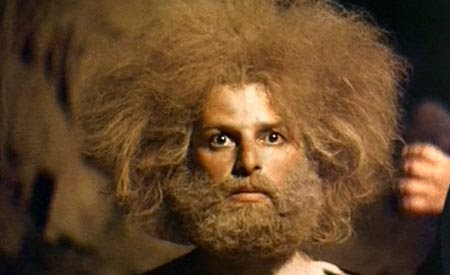
"WHAT HAVE YOU DONE TO HIS EYES?!"
3) Name a comedy you’re embarrassed to admit made you laugh
Around the tenth time I watched Heavyweights, I realized with horror that my laughter wasn't ironic.
4) Best Movie of 1947
Black Narcissus
5) Burt Reynolds was the Bandit. Jerry Reed was the Snowman. Paul LeMat was Spider. Candy Clark was Electra. What’s your movie handle?
Killer.
6) Robert Vaughn or David McCallum?
Both have strong jaws, but only one ambushed Superman with carcinogenic Kryptonite.
7) Most exotic/unusual place/location in which you've seen a movie
My wife and I saw The Darjeeling Limited at the Majestic in North Conway, NH. The theatre was in a cafe - we bought our tickets from a waitress, got snacks at the bar and discovered a 50-seat auditorium at the end of a long, winding red corridor.
8) Favorite Errol Morris movie
Gates of Heaven, because it's haunting and funny, and because without it, my answer to #17 wouldn't exist. But I must admit some difficulty embracing Morris since his petulant Oscar speech.
9) Best Movie of 1967
Bonnie and Clyde
10) Describe a profoundly (or not-so-profoundly) disturbing moment you’ve had courtesy of the movies
During the trailers before Juno, the entire audience laughed at and mocked the premise of the border-crossing drama Under the Same Moon. Ah, those wacky Mexicans - when will they learn?
11) Anne Francis or Julie Newmar?
Don't feel strongly one way or the other, but Forbidden Planet is pretty great.
12) Describe your favorite one sheet (include a link if possible)
The Alien one-sheet is so simple and suggestive, but even when I was a small child and knew nothing about the film, it (and the tagline) were genuinely unsettling.
13) Best Movie of 1987
Wings of Desire
14) Favorite movie about obsession
Looking at my 100 list, there are a startling amount of movies about obsession. But yeah, Vertigo is almost inarguably the ultimate statement on the subject.
15) Your ideal Christmas movie triple feature
Gremlins, Eyes Wide Shut and Black Christmas (the original - duh).
16) Montgomery Clift or James Dean?
James Dean, but they both kick Ryan Gosling's ass.
17) Favorite Les Blank Movie
Werner Herzog Eats His Shoe
18) This past summer food critic Anton Ego made the following statement: “In many ways, the work of a critic is easy. We risk very little yet enjoy a position over those who offer up their work and their selves to our judgment. We thrive on negative criticism, which is fun to write and to read. But the bitter truth we critics must face is that, in the grand scheme of things, the average piece of junk is more meaningful than our criticism designating it so. But there are times when a critic truly risks something, and that is in the discovery and defense of the new. Last night, I experienced something new, an extraordinary meal from a singularly unexpected source. To say that both the meal and its maker have challenged my preconceptions is a gross understatement. They have rocked me to my core. In the past, I have made no secret of my disdain for Chef Gusteau's famous motto: Anyone can cook. But I realize that only now do I truly understand what he meant. Not everyone can become a great artist, but a great artist can come from anywhere.” Your thoughts?
I can't wait to show Ratatouille to my daughter.
19) The last movie you watched on DVD? In a theater?
On DVD, Two-Lane Blacktop, a movie I've been dying to see for a while that lived up to its reputation. The latter is Margot at the Wedding, a movie I liked a good deal more than most (I dig Harris Savides, and I'm sort of mean).
20) Best Movie of 2007
I have yet to see at least one film that I suspect will be high on this list (I'm referring, of course, to The Bucket List). As of now, it's The Assassination of Jesse James by the Coward Robert Ford.
21) Worst Movie of 2007
The Number 23 is the worst movie Joel Schumacher's ever made. Really think about that.
22) Describe the stages of your cinephilia
3-10 - Pure, unqualified adoration. Anything horror or sci-fi. Lots of Spielberg, Tim Burton, Terry Gilliam. Anything muppet. A complete lack of critical discernment (2001 is awesome, so is Hook).
10-12 - Onanism. Anxiety. Self-loathing. Movies that validate my pubescent existential crisis (Brazil, Apocalypse Now, Taxi Driver, Vertigo). Anything with boobs. Pulp Fiction is a potent gateway drug to a new way of looking at cinema.
13-15 - Loss of religion dovetails with the concept of cinema as transgression. Boogie Nights. A Clockwork Orange. Blue Velvet. The Rocky Horror Picture Show. Anything with weiners. Anything that would piss off dad.
15-18 - Intro to world cinema - Herzog, Truffaut, Bergman, Argento. Expressionism. Anything with brains. A soft spot for earnest, overwrought emotionalism (American Beauty and Magnolia).
18-22 - College. Forgetting how to just watch a movie. Lots of posturing and one-upmanship. "Hey, you know what would be an awesome way to watch Tron?" Lynch, Altman, De Palma, Malick. I'm starting to get the hang of this.
Now - The blog. Liking what I like. "Hey, you know what would be an awesome way to watch Barry Lyndon?" Roeg, Bertolucci and Malle all touch a nerve. Romanticism. Uncertainty. Watching my daughter freak out with delight whenever Superman, Willy Wonka or robots are onscreen.
23) What is the one film you’ve had more difficulty than any other in convincing people to see or appreciate?
Right now, pretty much anything. My generation is bombarded by hype and infotainment into complete indifference. If my friends would rather see Smoking Aces than The Assassination of Jesse James by the Coward Robert Ford, it's because the latter is an unknowable challenge while the former is reassuringly familiar. The movies become comfort food, a sensory snack with the same value as a video game or a viral video played on a cell phone. In such a climate, how can I convince anyone that cinema has the ability to be beautiful, even transcendent?
24) Gene Tierney or Rita Hayworth?
Rita Hayworth
25) The Japanese word wabi denotes simplicity and quietude, but it can also mean an accidental or happenstance element (or perhaps even a small flaw) which gives elegance and uniqueness to the whole. What film or moment from a film best represents wabi to you?
The dog crossing the path in the opening shot of Birth, unknowingly violating the images' symmetry and creating a pleasurable dissonance.
26) Favorite Documentary
Gates of Heaven again.
27) Favorite opening credit sequence
While I love elaborate, Saul Bass-style opening collages, I've always admired the plain yellow titles of McCabe and Mrs. Miller silently, craftily snaking in and out of the gloomy landscape like McCabe himself.
28) Is there a film that has influenced your lifestyle in a significant or notable way? If so, what was it and how did it do so?
Eyes Wide Shut not only changed the way I thought about film, it challenged my 15-year-old assumptions about relationships, fidelity and even identity. I think it had a strong effect on my friend Tara as well (happy birthday, Tara!), as she took a classmate to see it again the next night and was shocked when the girl complained of boredom. Truly a case of "Did you see the same movie I did?"
29) Glenn Ford or Dana Andrews?
Glenn Ford
30) Make a single prediction, cynical or hopeful, regarding the upcoming Academy Awards
In honor of No Country for Old Men, a Chuck Workman-edited montage of the greatest head shots in film history.
31) Best Actor of 2007
Viggo Mortensen, Eastern Promises
32) Best Actress of 2007
Carice van Houten, Black Book
33) Best Director of 2007
Andrew Dominik
34) Best Screenplay of 2007
No Country for Old Men
35) Favorite single movie moment of 2007
Jason Schwartzman showing Natalie Portman the view from his suite in the Hotel Chevalier. It touched a nerve more deeply than any moment this year.
36) What’s your wish/hope for the movies in 2008?
For the happy surprises. The other day I saw Sweeney Todd, a movie I wasn't really dying to see, and I loved it - there's no better feeling than that. 2007 was a year of one movie after another exceeding my expectations; let's hope it's the start of something.
2) Tuesday Weld or Mia Farrow?
"WHAT HAVE YOU DONE TO HIS EYES?!"
3) Name a comedy you’re embarrassed to admit made you laugh
Around the tenth time I watched Heavyweights, I realized with horror that my laughter wasn't ironic.
4) Best Movie of 1947
Black Narcissus
5) Burt Reynolds was the Bandit. Jerry Reed was the Snowman. Paul LeMat was Spider. Candy Clark was Electra. What’s your movie handle?
Killer.
6) Robert Vaughn or David McCallum?
Both have strong jaws, but only one ambushed Superman with carcinogenic Kryptonite.
7) Most exotic/unusual place/location in which you've seen a movie
My wife and I saw The Darjeeling Limited at the Majestic in North Conway, NH. The theatre was in a cafe - we bought our tickets from a waitress, got snacks at the bar and discovered a 50-seat auditorium at the end of a long, winding red corridor.
8) Favorite Errol Morris movie
Gates of Heaven, because it's haunting and funny, and because without it, my answer to #17 wouldn't exist. But I must admit some difficulty embracing Morris since his petulant Oscar speech.
9) Best Movie of 1967
Bonnie and Clyde
10) Describe a profoundly (or not-so-profoundly) disturbing moment you’ve had courtesy of the movies
During the trailers before Juno, the entire audience laughed at and mocked the premise of the border-crossing drama Under the Same Moon. Ah, those wacky Mexicans - when will they learn?
11) Anne Francis or Julie Newmar?
Don't feel strongly one way or the other, but Forbidden Planet is pretty great.
12) Describe your favorite one sheet (include a link if possible)
The Alien one-sheet is so simple and suggestive, but even when I was a small child and knew nothing about the film, it (and the tagline) were genuinely unsettling.
13) Best Movie of 1987
Wings of Desire
14) Favorite movie about obsession
Looking at my 100 list, there are a startling amount of movies about obsession. But yeah, Vertigo is almost inarguably the ultimate statement on the subject.
15) Your ideal Christmas movie triple feature
Gremlins, Eyes Wide Shut and Black Christmas (the original - duh).
16) Montgomery Clift or James Dean?
James Dean, but they both kick Ryan Gosling's ass.
17) Favorite Les Blank Movie
Werner Herzog Eats His Shoe
18) This past summer food critic Anton Ego made the following statement: “In many ways, the work of a critic is easy. We risk very little yet enjoy a position over those who offer up their work and their selves to our judgment. We thrive on negative criticism, which is fun to write and to read. But the bitter truth we critics must face is that, in the grand scheme of things, the average piece of junk is more meaningful than our criticism designating it so. But there are times when a critic truly risks something, and that is in the discovery and defense of the new. Last night, I experienced something new, an extraordinary meal from a singularly unexpected source. To say that both the meal and its maker have challenged my preconceptions is a gross understatement. They have rocked me to my core. In the past, I have made no secret of my disdain for Chef Gusteau's famous motto: Anyone can cook. But I realize that only now do I truly understand what he meant. Not everyone can become a great artist, but a great artist can come from anywhere.” Your thoughts?
I can't wait to show Ratatouille to my daughter.
19) The last movie you watched on DVD? In a theater?
On DVD, Two-Lane Blacktop, a movie I've been dying to see for a while that lived up to its reputation. The latter is Margot at the Wedding, a movie I liked a good deal more than most (I dig Harris Savides, and I'm sort of mean).
20) Best Movie of 2007
I have yet to see at least one film that I suspect will be high on this list (I'm referring, of course, to The Bucket List). As of now, it's The Assassination of Jesse James by the Coward Robert Ford.
21) Worst Movie of 2007
The Number 23 is the worst movie Joel Schumacher's ever made. Really think about that.
22) Describe the stages of your cinephilia
3-10 - Pure, unqualified adoration. Anything horror or sci-fi. Lots of Spielberg, Tim Burton, Terry Gilliam. Anything muppet. A complete lack of critical discernment (2001 is awesome, so is Hook).
10-12 - Onanism. Anxiety. Self-loathing. Movies that validate my pubescent existential crisis (Brazil, Apocalypse Now, Taxi Driver, Vertigo). Anything with boobs. Pulp Fiction is a potent gateway drug to a new way of looking at cinema.
13-15 - Loss of religion dovetails with the concept of cinema as transgression. Boogie Nights. A Clockwork Orange. Blue Velvet. The Rocky Horror Picture Show. Anything with weiners. Anything that would piss off dad.
15-18 - Intro to world cinema - Herzog, Truffaut, Bergman, Argento. Expressionism. Anything with brains. A soft spot for earnest, overwrought emotionalism (American Beauty and Magnolia).
18-22 - College. Forgetting how to just watch a movie. Lots of posturing and one-upmanship. "Hey, you know what would be an awesome way to watch Tron?" Lynch, Altman, De Palma, Malick. I'm starting to get the hang of this.
Now - The blog. Liking what I like. "Hey, you know what would be an awesome way to watch Barry Lyndon?" Roeg, Bertolucci and Malle all touch a nerve. Romanticism. Uncertainty. Watching my daughter freak out with delight whenever Superman, Willy Wonka or robots are onscreen.
23) What is the one film you’ve had more difficulty than any other in convincing people to see or appreciate?
Right now, pretty much anything. My generation is bombarded by hype and infotainment into complete indifference. If my friends would rather see Smoking Aces than The Assassination of Jesse James by the Coward Robert Ford, it's because the latter is an unknowable challenge while the former is reassuringly familiar. The movies become comfort food, a sensory snack with the same value as a video game or a viral video played on a cell phone. In such a climate, how can I convince anyone that cinema has the ability to be beautiful, even transcendent?
24) Gene Tierney or Rita Hayworth?
Rita Hayworth
25) The Japanese word wabi denotes simplicity and quietude, but it can also mean an accidental or happenstance element (or perhaps even a small flaw) which gives elegance and uniqueness to the whole. What film or moment from a film best represents wabi to you?
The dog crossing the path in the opening shot of Birth, unknowingly violating the images' symmetry and creating a pleasurable dissonance.
26) Favorite Documentary
Gates of Heaven again.
27) Favorite opening credit sequence
While I love elaborate, Saul Bass-style opening collages, I've always admired the plain yellow titles of McCabe and Mrs. Miller silently, craftily snaking in and out of the gloomy landscape like McCabe himself.
28) Is there a film that has influenced your lifestyle in a significant or notable way? If so, what was it and how did it do so?
Eyes Wide Shut not only changed the way I thought about film, it challenged my 15-year-old assumptions about relationships, fidelity and even identity. I think it had a strong effect on my friend Tara as well (happy birthday, Tara!), as she took a classmate to see it again the next night and was shocked when the girl complained of boredom. Truly a case of "Did you see the same movie I did?"
29) Glenn Ford or Dana Andrews?
Glenn Ford
30) Make a single prediction, cynical or hopeful, regarding the upcoming Academy Awards
In honor of No Country for Old Men, a Chuck Workman-edited montage of the greatest head shots in film history.
31) Best Actor of 2007
Viggo Mortensen, Eastern Promises
32) Best Actress of 2007
Carice van Houten, Black Book
33) Best Director of 2007
Andrew Dominik
34) Best Screenplay of 2007
No Country for Old Men
35) Favorite single movie moment of 2007
Jason Schwartzman showing Natalie Portman the view from his suite in the Hotel Chevalier. It touched a nerve more deeply than any moment this year.
36) What’s your wish/hope for the movies in 2008?
For the happy surprises. The other day I saw Sweeney Todd, a movie I wasn't really dying to see, and I loved it - there's no better feeling than that. 2007 was a year of one movie after another exceeding my expectations; let's hope it's the start of something.
Friday, December 21, 2007

The Trim Bin #65

- Between the badass Drew Struzan poster above (please don't suck please don't suck please don't suck...) and this trailer (which, clearly, will not suck), 2008 looks to be 1989 all over again. But without the New Kids on the Block, so, y'know, better.
- Speaking of blockbusters, Vol. 1, No. 3 of the International Journal of Zizek Studies, titled "Zizek and Cinema," focuses on the Slovenian philosopher's film writing. It's must-read stuff, particuarly if this is your introduction to Zizek.
- Speaking of blockbusters, Vol. 1, No. 3 of the International Journal of Zizek Studies, titled "Zizek and Cinema," focuses on the Slovenian philosopher's film writing. It's must-read stuff, particuarly if this is your introduction to Zizek.
- I saw the terrific, underrated Two-Lane Blacktop for the first time, so it was a pleasure to find Kim Morgan's ode to the film waiting for me (she's right - it's a seriously sexy movie).
- I thought I was the only one!
- An interesting discussion is forming over at SLIFR with the debut of Andrew Blackwood's short film Slap, a film that has invited both praise and scorn. Alex Jackson hated it so much that he posted his own film over at the Film Freak Central blog, though Hieronymous Bosch's HECK shares more spiritual DNA with Slap than Mr. Jackson would probably care to admit. But as for the question "Who's more pretentious?," the answer is me.
- Happy holidays!
- I thought I was the only one!
- An interesting discussion is forming over at SLIFR with the debut of Andrew Blackwood's short film Slap, a film that has invited both praise and scorn. Alex Jackson hated it so much that he posted his own film over at the Film Freak Central blog, though Hieronymous Bosch's HECK shares more spiritual DNA with Slap than Mr. Jackson would probably care to admit. But as for the question "Who's more pretentious?," the answer is me.
- Happy holidays!
Tuesday, December 18, 2007
What business is it of yours where I'm from, friendo?

First, about the coin toss. Nearly every review of No Country for Old Men has discussed the method of judgement preferred by the fearfully principled killer Anton Chigurh (Javier Barden) as symbolic of some ancient morality, or a comment on the absence of a greater intercessory figure. These things are both true, but the metaphysical reading also sidesteps the coin's literal role as currency - as Chigurh reminds a frightened gas station attendant, it's just another coin. That the moral and philosophical quandaries of Cormac McCarthy's novel hinge on a narrative driven by money makes it a natural fit for the Coens. Their America is one where commerce is the immobile reality behind status, identity, ethics, culture, nearly everything - a country run by powerful men barking orders from behind large desks, where both the decent and the corrupt imagine the American dream as a large sum of found money (or, at least, a rug that really ties the room together). The Coens perpetually return to their pithy, deadpan reminder that crime does not pay while teasing our desire to witness the attendant chaos; No Country for Old Men, their best film in a decade, is their most honest and mature exploration of this endless cycle of man's fall, perdition and rebirth - it's the Coens at their bleakest and most humane.
A western that romanticizes the genre's poetics even as it demolishes them, No Country for Old Men gives us as its progatonists three distinct masculine archetypes. There is Llewelyn Moss (Josh Brolin), the stoic everyman who, stumbling upon a violent crime scene and two million dollars in cash, acts as most of us would. There is Chigurh, Moss' pursuer, a villian of elemental violence who cuts a bloody path towards his prey with a dogged, businesslike precision. And there is Sheriff Ed Tom Bell (Tommy Lee Jones), a man of old-fashioned integrity devoted to a moral code and, ultimately, the mourning of that code's percieved passing. All three actors do excellent work here - Brolin is able to convey with a glance or quick aside his character's inner turmoil, Jones finds new insight in what is, for him, familiar territory (my friend Rory pointed out that Jones played basically the same character in Man of the House). But it's Bardem's implacable killer who sticks with you long after the film is over, his pale, crooked visage worthy of Conrad Veidt as he pronounces Moss' (and our) impending doom, sotto voce, at once monstrous and chillingly logical - he's one of the great screen villains.
As Moss barely evades his pursuers, the Coens stage the action with a subtle mastery of filmmaking craft that reminds how comedy and suspense require the same understanding of perfect timing. Small details - the crinkle of a discarded cellophane wrapper, a plume of smoke on the horizon - take on the same power as moments of unflinching violence. The cinematography by Roger Deakins gives the film's western landscapes a stark, mythic grandeur (Deakins also shot the similarly elegaic The Assassination of Jesse James by the Coward Robert Ford). The Coens excel at this sort of thing, which is why, when they suddenly abandon the story's genre's trapping, the effect is unforgivably jarring for many (a large portion of the audience I saw the film with visibly turned on the film in its last third). I think this effect is entirely intentional, both in the McCarthy book and in the film, forced to examine both our own complacent expectations and, by extension, our own assumptions about our relationship to a country that, impossibly, claims protection from entropy.
But while the film is extremely faithful to its source, in its telling there is a slight but important difference in its emotional impact. Upon finishing McCarthy's book, I was drained, depressed, persuaded of the author's message of constant hopelessness. While the film does not compromise on the story's unrelenting darkness, a sort of dialogue between McCarthy and the Coens' unsentimental yet basically amiable outlook emerges, reminding of Sartre's summary of our relationship to God (whether he doesn't exist or is merely hidden, we've got to take care of ourselves). Consider the fate of Moss' wife, Carla Jean (Kelly Macdonald, heartbreakingly sweet), whose defeat in the book becomes a uniquely cinematic pardon, an acknowledgment of her refusal to participate in any of the story's masculine games (another recurring message of the Coens: listen to your wife). And Bell's sad resignation, so final and definitive in the book, lingers here like an open question. It's in his admission of defeat against the tides of change that, paradoxically, renders him immortal - an old man sailing towards the artifice of eternity.
Friday, December 14, 2007

Tuesday, December 11, 2007
Expiation!

Of all the meat-and-potatoes journeymen Stephen King prefers to adapt his work, Frank Darabont is the best. His previous King adaptations were smart, well-crafted crowd-pleasers, even if they suffered from the sort of bloat (particularly with The Green Mile) that came with Darabont's religious fidelity to King's books. But The Mist owes less to those films than to the Darabont-scripted A Nightmare on Elm Street 3 and The Blob, B-movies that never pandered to their core audience even as they delivered the required buckets of viscera. King's novella was originally written in the 80's, and Darabont's film (CGI aside) could have been released in that heyday of Fangoria-endorsed creature features. The Mist is brooding and merciless, and, for all its very contemporary thematic concerns, works best as a proudly old-fashioned "Boo!" movie.
A poster of The Thing visible early on in the studio of poster artist David Drayton (Thomas Jane) indicates the film's biggest influence. Like Carpenter's film, The Mist is a Hawksian narrative that traps a cross-section of residents of a small Maine town in a grocery store enveloped in the titular weather activity. Darabont succeeds in mounting tension both with the threat of mysterious, Lovecraftian creatures hiding in the mist, waiting to attack and in the conflicts between people in the store over real and perceived class and cultural differences. This is familiar genre territory, but the cast, largely made up of veteran character actors, succeeds in creating a fresh variation on old themes. A particular standout is Marcia Gay Harden as Mrs. Carmody, a zealous evangelical Christian who uses the crowd's fear to preach her apocalyptic message. King is fond of these broad portraits of the devout, and a less skilled actor could have easily reduced Mrs. Carmody to a hammy, one-dimensional caricature. But Harden delivers her doomsaying prophecies with quiet certainty, making the characte more human, more recognizable and more disturbing (especially if you've met women like her).
A poster of The Thing visible early on in the studio of poster artist David Drayton (Thomas Jane) indicates the film's biggest influence. Like Carpenter's film, The Mist is a Hawksian narrative that traps a cross-section of residents of a small Maine town in a grocery store enveloped in the titular weather activity. Darabont succeeds in mounting tension both with the threat of mysterious, Lovecraftian creatures hiding in the mist, waiting to attack and in the conflicts between people in the store over real and perceived class and cultural differences. This is familiar genre territory, but the cast, largely made up of veteran character actors, succeeds in creating a fresh variation on old themes. A particular standout is Marcia Gay Harden as Mrs. Carmody, a zealous evangelical Christian who uses the crowd's fear to preach her apocalyptic message. King is fond of these broad portraits of the devout, and a less skilled actor could have easily reduced Mrs. Carmody to a hammy, one-dimensional caricature. But Harden delivers her doomsaying prophecies with quiet certainty, making the characte more human, more recognizable and more disturbing (especially if you've met women like her).
The emphasis of human conflict at the forefront of the drama gives The Mist an unusual seriousness, and it's hard not to draw analogies between the faith vs. reason conflict in the film and our own cultural divide. If there's a flaw with the film, it's that Darabont stacks the deck too far in favor of the lefties - a moment of action by a pragmatic grocer (Toby Jones) late in the story invited applause from the audience that felt uncomfortably close to the bloodlust experienced by the characters. Luckily, the ending (taken straight from the Twilight Zone playbook) makes this more complicated, forcing us to question our own reponse to the horror the sudden, violent paradigm shift we're a part of. The final moments play like the dark side of The Shawshank Redemption, depicting loss of hope as the ultimate, irreversible horror. It's heavyhanded stuff, but it works.
If I'm forgiving of The Mist's flaws, it's because I can't remember feeling so pleasurably creeped out by a movie in a long time. King's greatest strength has always been his unsparing, treament of the gory details (matched only by Lovecraft), and one of the biggest failures of most films adapted from his work is that they keep the genre conventions but never get sick enough. The monsters here (designed by Berni Wrightson!) live up to the book - they're truly otherworldly beasts that have seemingly emerged straight from the characters' (and my) nightmares. In other words, they're mean, nasty and disgusting, just the way monsters should be. King once wrote that "If I cannot horrify, I'll go for the gross-out. I'm not proud." Darabont goes for the gross-out, and he should be proud.
Friday, December 07, 2007

Thursday, December 06, 2007
Top 10: 80s Fantasy

Even with its newfangled three-dimensional gimmickry, Beowulf is a drag. A pair of wonderfully strange, kinky performances from Crispin Glover and Angelina Jolie aside, Robert Zemeckis' film is a leaden affair, bogged down by Zemeckis' misguided allegiance to motion capture. The CG is so consistently plastic-fantastic that Zemeckis sacrifices texture, scale and depth in favor of instantly-dated kitsch - by the end, all I wanted was to look at a real sky, real faces, perhaps even a real nipple (or two).
The sad thing is, the script by Neil Gaiman and Roger Avary could have made a hell of a movie were it made in a leaner, more practical fashion - in Ireland, say, on overcast days, with actors knee-deep in mud, blood and viscera. My hypothetical version of Beowulf would probably make about twelve dollars, but it would have more integrity. This got me thinking about the 1980s, that wonderful period in fantasy filmmaking, when the success of Star Wars led studios to throw enormous amounts of money at lavish, tremendousy geeky epics. These films took place in meticulously designed fantasy worlds built at places with fantastic names like Shepperton and Pinewood. They were usually earnest and self-important, and sometimes completely laughable. But for every Yor: The Hunter From the Future, there were a wealth of sword-and-sorcery tales that captured the imagination of many a young geek (present company included, of course). They were tangible in a way that most fantasy films today are mostly synthetic, and the list below could double as a primer for any of today's indoor kids who think that The Chronicles of Narnia is as good as it gets. It's not their fault.
2. The Dark Crystal I'm only half-joking when I tell people that this movie is closer than any religion to my belief system. Directors Jim Henson and Frank Oz, along with artist Brian Froud, succeed in creating a world as fully realized as George Lucas', complete with a more developed philosophy - that it stars Muppets is all the more remarkable. Also, this movie scares the bejesus out of my wife.
3. The Adventures of Baron Munchausen Criticized unfairly for its massive budget and dumped upon its release, Terry Gilliam's lavish tall tale transported me and many other small children who discovered it, unheralded, on video or cable (it's amazing to me how many of my friends can extensively quote an unqualified flop). The Baron's fabrications and delusions become the basis for a wildly ambitious farce that literally journeys to the farthest reaches of heaven and earth. Plus, Gilliam gives Robin Williams a role (king of the moon) that he cannot possibly overact.
4. The Neverending Story Revisiting this as an adult, I was shocked at how dark it really is. The villian is nothingness, the conflict a race against the death of imagination in the face of childhood's end. It's a must-see for any kid who'd prefer to hide in a book than put away childish things. Fantasia, the film's imaginary world, retains its immersive beauty even as the effects date, demonstrating that photorealism is not nearly as important as artistry. Plus, Falcor is soooo cool.
5. The Princess Bride A satire of sorts, but one that retains an affection for the stories (and movies) it pokes fun at. Plus, no list of sword-and-sorcery movies is complete without one of the very best swordfights in cinema (isn't it weird that Mandy Patinkin was once briefly cool?)
6. Conan the Barbarian An unapologetic display of pure phallic might directed by the inspiration for John Goodman's character in The Big Lebowski (indeed, I imagine that Walter Sobchak's wet dreams are something like this). The Terminator is the better movie, but Arnold was never more Arnold than he is here. The tits are ripe, the decapitations are plentiful, Thulsa Doom is present and accounted for - few films make total idiocy feel so good. Also, Ron Cobb rules!
7. Labyrinth A little more kid-oriented than The Dark Crystal. But The Dark Crystal didn't have a spandex-clad, Goblin-ruling David Bowie (thus began my latency period).
8. Legend Strictly the Jerry Goldsmith-scored director's cut, not the choppy, incoherent theatrical version (though that Tangerine Dream score is pretty boss). Ridley Scott creates another world as fully realized as Blade Runner's future. It's embarassingly earnest at points, but is ultimately unforgettable thanks to Tim Curry's terrifying, sexy performance as Darkness (aided by Rob Bottin's excellent makeup work).
9. Dragonslayer The most direct ancestor of Beowulf, one that more enthusiastically embraces its unapologetic paganism. Made during Disney's attempt to change its kiddie-movie image, it's at points shockingly dark and gory - the baby dragons munching on a virgin is not only nightmare territory for youngsters, it also raises the stakes of the young hero's quest immeasurably. Deeply derivative of Star Wars, but in a good way.
10. Fire and Ice Frank Frazetta is the ultimate geek, and his jaw-droppingly insane illustrations come to life thanks to Ralph Bakshi's rotoscoping (a predecessor of mo-cap). And while the hand-drawn animation is often crude, particuarly compared to its 2007 incarnation, it has one thing that Zemeckis' film doesn't: balls.
Friday, November 30, 2007

Sorry, Morgan Freeman, I already ate.
 Ah, synchronicity: five minutes after I stumbled upon the trailer for 21, I got a phone call asking if I wanted to do background work on this. I spent most of the day in Boston Common with Morgan Freeman, Christopher Walken and William H. Macy (sporting an awesome Harry Caul-esque mustache). I even managed to make Morgan Freeman laugh (after staring coldly at me for several uncomfortable seconds) when he asked if he could have some of my imaginary prop take-out. With four or five different productions in Boston this fall and winter, it appears that all the talk about the city as a new filmmaking hub may be more than just fleeting hype. Time will tell, but right now, it feels great to be a film geek in New England.
As for 21, judging by the trailer, it looks like a decent teen flick, certainly more promising that Robert Luketic's previous output. As I wrote before, he really does know how to run a set, so I'm rooting for him to improve. There are two scenes I worked on that appear briefly at :30 and 2:15, but the emphasis (wisely from a marketing perspective) is on Vegas, sex and money over MIT and math. There are a few warning signs, to be fair - I don't think being better than average at addition is proof of mathematical genius, and the Doors cue is a stale choice. No matter what, though, I can say with absolute certainty that this is going to be way better than The Game Plan.
Thursday, November 29, 2007

Sunday, November 25, 2007
We rollin'!

A few weekends back, my wife and I decided to catch up on some of the movies that, in the months before and after the birth of our daughter, weren't worth the trip to the multiplex. After a quick trip to the local Redbox, we sat through three of the worst films of the year. Oddly enough, they were mostly bad in the same way - all three were self-important, toothless, and derivative of better films from the 1990s. As the sidebar to your right indicates, 2007 is shaping up to be a memorable year, with many very good films thus far (including a few masterpieces), and several more promising titles coming before the new year. I look forward to discussing them soon; but first, the schmutz.
Easily the worst of the bunch (and the only one we were certain would suck) is The Number 23, Joel Schumacher's feeble attempt to be David Lynch. Screeenwriter Fernley Phillips' steals shamelessly from Lynch's infinitely superior Lost Highway - not only do both movies feature a murderous saxophonist, they both revolve around actors portraying characters with seemingly dual identities. Any Lynchian ambiguity is rendered thuddingly literal with the device of the titular novel, given to dogcatcher Walter Sparrow (Jim Carrey) by his wife Agatha (Virginia Madsen, wasted yet again). Sparrow is quickly wrapped up in the story of a detective (also Carrey) investigating the mystery of a number that has driven people mad with its synchronicities - as he gets deeper into the book, it appears that the story is meant to tell him something about his own life. None of this makes any sense, of course - Sparrow's search for the truth involves his family, his friends and Bud Cort before arriving at a thuddingly obvious conclusion.
Phillips and Schumacher emulate the Lynchian weirdness while abandoning the ambiguity and layered meanings that make Lynch's works so rich and emotionally cohesive even as his narratives become increasingly less representational. Strung together by its useless numerological conceit (π this is not), it's tabloid filmmaking that could only be enjoyed by audiences who prefer bullshit speculation to real inquiry into the nature of things (this is perhaps the line that divides good mysteries from lousy ones). Worse still is the idiotic, morally repugnant ending, one that cynically discards the questons it has attempted to raise in favor of a pat resoultion for its protagonist that defies all understanding of human nature. The Number 23 is so bad that it's alien, confirming that Joel Schumacher's films have become must-sees in that they just keep getting worse (he's become Uwe Boll with better lighting). And its biggest mystery is how Jim Carrey, a star who, with the right director, can do great, multilayered work, could have possibly thought this movie was the right departure from his comedic work. Did it even occur to him that he's playing a pet detective again? Eternal sunshine of the spotless mind, indeed.
Not nearly as awful - just mediocre and boring - is Vacancy, a siege thriller that would have fit comfortably am ong the early-90's cycle of Silence of the Lambs ripoffs. The premise is faithful to the trailer, as a young married couple (Luke Wilson and Kate Beckinsale) recovering from the loss of a child check into a seedy roadside motel where they soon find themselves the prey of the A/V-savvy manager (Frank Whaley) and a gang of knife-wielding maniacs. The premise is enough for an effective, sophisticated thriller built around very prescient fears (surveillance, torture) or a stylish, unapologetically grimy slasher in the vein of High Tension; unfortunately, it's neither. While the trailer promised suspense, we are only given a series of blunt, obvious shocks as Vacancy becomes a hilarious example of Danny DeVito's aspiring writer's plot summary in Throw Momma From the Train ("one guy kills the other guy"). Not so bad if this film were a direct-to-video quickie, but director Nimrod Attal gives the film a horrible air of self-importance - even the credits are pretentious. With no character development to latch onto, we can only focus on the film's condescending attitude towards rural life (even I Spit on Your Grave was more honest) and its unlikable yuppie protagonists. Beckisale looks bored and Wilson looks uncomfortable; only Frank Whaley plays the material at the right pitch, acknowledging the film as the high-toned junk that it is.
Neither The Number 23 nor Vacancy made much of a dent at the box office; Transformers, on the other hand, is one of the highest-grossing movies of the year, proof that one can never underestimate the unstoppable combination of nostalgia and hipster detachment. The s udden acceptance of Michael Bay now that he's bracketing his misanthropic cock cheese in so-ironic quotation marks (one extra: "This is way cooler than Armageddon!") is definitive proof of my generation's soul-killing apathy. The script is a straight ripoff of the better and funnier Small Soldiers, minus the shrewd social commentary, and I spent most of the movie imagining how kickass a Joe Dante Transformers would have been. Young Sam Witwicky (Shia LeBouf, the biggest question mark of Indy 4) buys a car that is actually a robot from space, and the good robots fight bad robots while a lot of other stuff happens and Witwicky tries to titfuck a witless, dead-eyed trout (Megan Fox). It doesn't matter. It's hateful, materialistic crap, keeping the sales-pitch cynicism of the original cartoon minus the endearing kitsch. True, the writers try to bracket everything in wink-wink sarcasm, making this crap that knows it is crap. The effects are flawless but pointless, as Transformers is never remotely fun . Try to defend it as meant for kids and I'll ask you to recall the indefensible dreck we liked as kids; try to defend it as shut-your-brain-off fodder and I'll ask why I should shut my brain off; defend it at all and I'll remind you of the scene where a robot pisses on Barton Fink. The Number 23 and Vacancy are bad, but Transformers is actually dangerous, its massive success paving the way for another decade of Bay's Teutonic brand of anti-art. The biggest question, then, is who Michael Bay hates more - us or himself.
 ong the early-90's cycle of Silence of the Lambs ripoffs. The premise is faithful to the trailer, as a young married couple (Luke Wilson and Kate Beckinsale) recovering from the loss of a child check into a seedy roadside motel where they soon find themselves the prey of the A/V-savvy manager (Frank Whaley) and a gang of knife-wielding maniacs. The premise is enough for an effective, sophisticated thriller built around very prescient fears (surveillance, torture) or a stylish, unapologetically grimy slasher in the vein of High Tension; unfortunately, it's neither. While the trailer promised suspense, we are only given a series of blunt, obvious shocks as Vacancy becomes a hilarious example of Danny DeVito's aspiring writer's plot summary in Throw Momma From the Train ("one guy kills the other guy"). Not so bad if this film were a direct-to-video quickie, but director Nimrod Attal gives the film a horrible air of self-importance - even the credits are pretentious. With no character development to latch onto, we can only focus on the film's condescending attitude towards rural life (even I Spit on Your Grave was more honest) and its unlikable yuppie protagonists. Beckisale looks bored and Wilson looks uncomfortable; only Frank Whaley plays the material at the right pitch, acknowledging the film as the high-toned junk that it is.
Neither The Number 23 nor Vacancy made much of a dent at the box office; Transformers, on the other hand, is one of the highest-grossing movies of the year, proof that one can never underestimate the unstoppable combination of nostalgia and hipster detachment. The s
 udden acceptance of Michael Bay now that he's bracketing his misanthropic cock cheese in so-ironic quotation marks (one extra: "This is way cooler than Armageddon!") is definitive proof of my generation's soul-killing apathy. The script is a straight ripoff of the better and funnier Small Soldiers, minus the shrewd social commentary, and I spent most of the movie imagining how kickass a Joe Dante Transformers would have been. Young Sam Witwicky (Shia LeBouf, the biggest question mark of Indy 4) buys a car that is actually a robot from space, and the good robots fight bad robots while a lot of other stuff happens and Witwicky tries to titfuck a witless, dead-eyed trout (Megan Fox). It doesn't matter. It's hateful, materialistic crap, keeping the sales-pitch cynicism of the original cartoon minus the endearing kitsch. True, the writers try to bracket everything in wink-wink sarcasm, making this crap that knows it is crap. The effects are flawless but pointless, as Transformers is never remotely fun . Try to defend it as meant for kids and I'll ask you to recall the indefensible dreck we liked as kids; try to defend it as shut-your-brain-off fodder and I'll ask why I should shut my brain off; defend it at all and I'll remind you of the scene where a robot pisses on Barton Fink. The Number 23 and Vacancy are bad, but Transformers is actually dangerous, its massive success paving the way for another decade of Bay's Teutonic brand of anti-art. The biggest question, then, is who Michael Bay hates more - us or himself.
Saturday, November 24, 2007

Wednesday, November 21, 2007
The Trim Bin #64

- A great YouTube find: Track 29, a 1988 thriller (for lack of a better term) directed by Nicolas Roeg, written by Dennis Potter and starring Theresa Russell, Gary Oldman and Christopher Lloyd. Long out-of-print in any format in the US, it's a strange, excessive film that, while far from perfect, deserves a look. Due to the ephemeral nature of YouTube, I recommend checking it out before it's gone.
- Ah, the Chaw. He's an angry, angry man, but when he sees something he likes, there's no better champion of cinema. For evidence of this, see his stunning review of American Gangster, I'm Not There and No Country For Old Men. An excerpt:
"I used to like to condense Modernism as the search for God that culminates in the discovery that God is a series of broken monuments and chaos and that Post-Modernism was therefore the gradual acceptance of God as a manufactured construct. Facile, but good in a pinch; apply it to Todd Haynes' fascinating I'm Not There and suddenly there's the thought that the film is an autopsy of film-as-history to this moment--an analysis of how the moving image has become in this century the only real way we access history as a people, as well as of how the image, eternally malleable within the image-maker, has now become malleable within a mainframe."
- What exactly is There Will Be Blood? Each trailer has improved on the last - the newest suggests a period piece that is equal parts western and horror film. It looks weird, dark as hell, and the last thing I expected from P.T. Anderson after the beautifully daffy Punch-Drunk Love. The early reviews have been rapturous, and if the movie lives up to this trailer (which I've been watching at least once a day), then Anderson may have outdone himself.
- I've been sort of busy these past few weeks, so I had to let a few fascinating blog-a-thons pass me by. Between the Queer Film Blog-a-Thon and the Kurosawa Blog-a-Thon, you should have plenty of reading material for the long weekend.
- Over at The House Next Door, Dan Callahan writes about Bibi Andersson's appearance at a screening of Persona at BAM. Best detail: Andersson's admission that she filmed her character's stunning confessional monologue while half-cocked.
- Happy Thanksgiving.
- Ah, the Chaw. He's an angry, angry man, but when he sees something he likes, there's no better champion of cinema. For evidence of this, see his stunning review of American Gangster, I'm Not There and No Country For Old Men. An excerpt:
"I used to like to condense Modernism as the search for God that culminates in the discovery that God is a series of broken monuments and chaos and that Post-Modernism was therefore the gradual acceptance of God as a manufactured construct. Facile, but good in a pinch; apply it to Todd Haynes' fascinating I'm Not There and suddenly there's the thought that the film is an autopsy of film-as-history to this moment--an analysis of how the moving image has become in this century the only real way we access history as a people, as well as of how the image, eternally malleable within the image-maker, has now become malleable within a mainframe."
- What exactly is There Will Be Blood? Each trailer has improved on the last - the newest suggests a period piece that is equal parts western and horror film. It looks weird, dark as hell, and the last thing I expected from P.T. Anderson after the beautifully daffy Punch-Drunk Love. The early reviews have been rapturous, and if the movie lives up to this trailer (which I've been watching at least once a day), then Anderson may have outdone himself.
- I've been sort of busy these past few weeks, so I had to let a few fascinating blog-a-thons pass me by. Between the Queer Film Blog-a-Thon and the Kurosawa Blog-a-Thon, you should have plenty of reading material for the long weekend.
- Over at The House Next Door, Dan Callahan writes about Bibi Andersson's appearance at a screening of Persona at BAM. Best detail: Andersson's admission that she filmed her character's stunning confessional monologue while half-cocked.
- Happy Thanksgiving.
Friday, November 16, 2007

Thursday, November 15, 2007
Poetry doesn't work on whores.

The thing that separates Andrew Dominik's strange, magnificent The Assassination of Jesse James by the Coward Robert Ford from the 70's classics it descends from (the revisionist Westerns of Terrence Malick and Robert Altman chief among them) is its unapologetic romanticism. It would be a mistake to describe the film's visual grit and stark narrative as realistic; rather, the film is tinged with a bittersweet nostalgia, as though it were told through the eyes of James' dewey-eyed, adoring assassin. A requiem for a time that never was, The Assassination practically demands the sort of ecstatic, purple praise usually reserved for tent revivals. Suffice to say that The Assassination is film as an ephemeral series of moments made indelible through the prism of memory. It's alien in a way that only a truly modern work is, elegaic and confounding and, for all its obvious cinematic ancestors, a complete original.
"I honestly believe I'm destined for great things," Ford (Casey Affleck) tells us early on, and there's a fatalistic undertow to the narrative. Framed by a Barry Lyndon-esque narrator, the film takes the well-known moments of James' life and stages them through a soft-focus haze, as though the images are emerging straight from our collective unconscious. Out of this fog emerges a Jesse James that, as played by Brad Pitt, is paranoid and haunted in the way that giants are. The notorious outlaw is obsessed with signs and totems, constantly on the watch for possible traitors in his gang of malcontents, struggling with the inevitable. The dewey-eyed Ford, whose worship of James borders on lust, joins the James gang for their last train robbery (eerily staged under cover of night), has his illusions of his hero shattered, and ultimately conspires against him. Dominik presents these two figures as locked in an inevitable twist of fate, James' outsize persona dooming him to a public execution by his most loyal sycophant. This relatively simple story unfolds at a leisurely, meditative pace, yet Dominik's authority over the material is remarkable (particularly since this is his second feature). The god's-eye persepective of the story travels over painterly landscapes that transform almost imperceptably with the seasons as the sounds of wildlife form a constant, indifferent chorus. Rarely has a story of even our grandest icons' insignificance in the face of time unfolded with such unabashed romance.
But for all its high aspirations (it was gratifying to hear Domnik reference Barton Fink, calling his film "a fruity movie about suffering"), The Assassination more than honors its dime-store origins. The violence isn't the operatic bloodshed of Leone and Peckinpah, but Dominik and cinematographer Roger Deakins (brilliant as always) never shy away from the red red kroovy of a well-placed headshot either. While this is not a movie filled with DTS-charged shootouts, the constant threat of violence creates a superbly sustained tension. This is largely thanks to the two leads - Pitt makes almost imperceptable shifts from folksy humor to animalistic rage, and Affleck (in a revelatory performance) creates an assassin as sympathetic as he is creepy, constantly keeping us off-balance. The entire film is equally well-cast - Sam Rockwell is alternately funny and moving as Ford's brother Charlie, Sam Shepard's brief appearance as Frank James is a smart nod to Malick, and Mary-Louise Parker is stunning in a near-silent turn as Jesse's oft-neglected wife. The irony of the film's immediate reputation as a strange, overlong art movie is that, more than anything, it recalls the grand, outsize entertainments of a bygone era of moviemaking. Like the songs of Nick Cave (who, with Warren Ellis, wrote the film's score), the film is at once sweeping and delicate, lingering in the grey area between pulp and myth.
The Assassination cements its classic status in the stunning denouement, which follows Ford as he makes a living recounting the murder for a rapt audience. Preserved as a coward, Ford repeats the deed over and over, at one point challenging his audience's hypocrisy in attending to judge him. His destruction becomes his immortality, a point Dominik drives home in a breathtaking final freeze-frame. If Ford's cowardice ensures his story's retelling (and commodification), Dominik ackowledges his own role in Ford's fate, and ends with remarkable empathy for a man destined to become the villain in the story he so adores. Awful marketing and the public's preference for the more straightforward 3:10 to Yuma have resulted in Ford's continued marginalization. But, upon viewing the film in a near-empty theater, I found myself transported by The Assassination's visual grace and aching humanity. It's a masterpiece, one that Robert Ford himself would have surely been proud to be a part of.
But for all its high aspirations (it was gratifying to hear Domnik reference Barton Fink, calling his film "a fruity movie about suffering"), The Assassination more than honors its dime-store origins. The violence isn't the operatic bloodshed of Leone and Peckinpah, but Dominik and cinematographer Roger Deakins (brilliant as always) never shy away from the red red kroovy of a well-placed headshot either. While this is not a movie filled with DTS-charged shootouts, the constant threat of violence creates a superbly sustained tension. This is largely thanks to the two leads - Pitt makes almost imperceptable shifts from folksy humor to animalistic rage, and Affleck (in a revelatory performance) creates an assassin as sympathetic as he is creepy, constantly keeping us off-balance. The entire film is equally well-cast - Sam Rockwell is alternately funny and moving as Ford's brother Charlie, Sam Shepard's brief appearance as Frank James is a smart nod to Malick, and Mary-Louise Parker is stunning in a near-silent turn as Jesse's oft-neglected wife. The irony of the film's immediate reputation as a strange, overlong art movie is that, more than anything, it recalls the grand, outsize entertainments of a bygone era of moviemaking. Like the songs of Nick Cave (who, with Warren Ellis, wrote the film's score), the film is at once sweeping and delicate, lingering in the grey area between pulp and myth.
The Assassination cements its classic status in the stunning denouement, which follows Ford as he makes a living recounting the murder for a rapt audience. Preserved as a coward, Ford repeats the deed over and over, at one point challenging his audience's hypocrisy in attending to judge him. His destruction becomes his immortality, a point Dominik drives home in a breathtaking final freeze-frame. If Ford's cowardice ensures his story's retelling (and commodification), Dominik ackowledges his own role in Ford's fate, and ends with remarkable empathy for a man destined to become the villain in the story he so adores. Awful marketing and the public's preference for the more straightforward 3:10 to Yuma have resulted in Ford's continued marginalization. But, upon viewing the film in a near-empty theater, I found myself transported by The Assassination's visual grace and aching humanity. It's a masterpiece, one that Robert Ford himself would have surely been proud to be a part of.
Tuesday, November 06, 2007
He is no driver, he is the undertaker.

Eastern Promises is the first film by David Cronenberg shot entirely outside of Canada, but this dislocation is not as prominent as one might expect. Cronenberg's films are primarily composed of interiors, both literally (the spaces his characters inhabit and, sometimes, their insides) and emotionally. So while a thriller set against the backdrop of London's criminal underworld is a narrative departure for the director (a stunning early gore effect aside), it also represents a logical step in Cronenberg's thematic evolution, which has moved from physical to existential horrors. Though there are no telepods on display, Eastern Promises is another chapter in Cronenberg's ongoing study of what it is to be human.
As with his previous film, A History of Violence, the "mob" is an abstract, a pulpy representation of the ways that family at once defines and assimilates one's self. When a fourteen-year-old girl dies during childbirth, leaving only a diary and a business card behind as identification, midwife Anna Khitrova (Naomi Watts) sets out to find the baby's family. Her search leads her to Semyon (Armin Mueller-Stahl), a grandfatherly restauranteur who is also the head of a powerful crime family specializing in sex trafficking. Implicated in the diary is Semyon's son Kiril (Vincent Cassel), a hothead accompanied by Nikolai (Viggo Mortensen), his driver, a cool, calculating figure who, early on, dismembers a corpse as casually as if he were cleaning a turkey. I referred to Eastern Promises as a sort-of thriller because the the plot does not to be Cronenberg's main point of interest. Instead, it's the characters that drive the story, particuarly Nikolai; as part of an initiation ceremony, the driver renounces his parents and origins in favor of the criminal history tattooed on his body. Here, criminality becomes a way to transform, or even destroy, one's identity, and screenwriter Steven Knight suggests, as he did in his previous Dirty Pretty Things, that this is a mirror of the global economy's push towards homogenization. But Cronenberg isn't a political filmmaker, at least not in such black-and-white terms. In Nikolai he finds a true hollow man - a character that is representative of nothing except his actions, a smirking blank slate brought to life by Mortensen's pitch-perfect performance (also a mirror image of Tom Stall).
As with his previous film, A History of Violence, the "mob" is an abstract, a pulpy representation of the ways that family at once defines and assimilates one's self. When a fourteen-year-old girl dies during childbirth, leaving only a diary and a business card behind as identification, midwife Anna Khitrova (Naomi Watts) sets out to find the baby's family. Her search leads her to Semyon (Armin Mueller-Stahl), a grandfatherly restauranteur who is also the head of a powerful crime family specializing in sex trafficking. Implicated in the diary is Semyon's son Kiril (Vincent Cassel), a hothead accompanied by Nikolai (Viggo Mortensen), his driver, a cool, calculating figure who, early on, dismembers a corpse as casually as if he were cleaning a turkey. I referred to Eastern Promises as a sort-of thriller because the the plot does not to be Cronenberg's main point of interest. Instead, it's the characters that drive the story, particuarly Nikolai; as part of an initiation ceremony, the driver renounces his parents and origins in favor of the criminal history tattooed on his body. Here, criminality becomes a way to transform, or even destroy, one's identity, and screenwriter Steven Knight suggests, as he did in his previous Dirty Pretty Things, that this is a mirror of the global economy's push towards homogenization. But Cronenberg isn't a political filmmaker, at least not in such black-and-white terms. In Nikolai he finds a true hollow man - a character that is representative of nothing except his actions, a smirking blank slate brought to life by Mortensen's pitch-perfect performance (also a mirror image of Tom Stall).
Cronenberg's identification with Nikolai, which borders on the fetishization previously reserved for eXistenZ's Allegra Geller, threatens at points to drown out his other characters. The leads all do strong work, and Jerzy Skolimowski and Josef Atlin are memorable in supporting roles, but their characters are somewhat shortchanged as Nikolai takes the film's center stage in the second half (though Watts gets to ride one of Cronenberg's beloved Urals). Also, while Cronenberg's trademark brevity is usually refreshing, here the 100-minute running time feels rushed. I hesitate to reduce things to such simplistic terms, but an extra reel would have given the film enough breathing room to give the final twists more impact. Cronenberg's detached approach results in a film of surfaces, at some points chillingly ambiguous, at others vague and impenetrable.
Still, these are minor complaints in a film filled with surfaces this rich. Nikolai's world has a crimson, classical elegance that at first seems a seductive departure from the film's desolate vision of London. But Cronenberg avoids Godfather-esque romanticism, quietly linking this old world's decay with that of its adopted city. The dead girl's ever-present narration presents a familiar vision of "the city" as a place to reinvent oneself; in Nikolai's tattooed body, Cronenberg presents the dark flip side of this fantasy. And the film reaches a brilliant apex in the already-famous bathouse fight scene, which is unforgettable not just for the matter-of-fact nudity but as a visceral explication of the film's homoerotic undertones - read the assailants' knives as phallic objects, and each blow and thrust carries a greater psychosexual weight. If this seems like a heady approach to a mob movie, it's because Cronenberg's films demand to be read on many levels. Even when they're not completely successful, they stick to the ribs, and for more than just the spectacle of Viggo Mortensen's furious balls.
Wednesday, October 31, 2007

Halloween Trailerfest #31: The Boogeyman!
Sidenote: I've had Michael Myers nightmares since I was four (less frequently now). In each, I move to a new town, change my name and start a new identity, but eventually the Shape shows up and the dream becomes an extended chase. But it appears that as the series progresses, it continues to shape my unconscious, because in the last dream, I was accompanied by Danny Trejo.
Happy halloween.
Happy halloween.
Subscribe to:
Comments (Atom)