Monday, August 20, 2012

All-Time Top 100 (2012 Edition)

I was invited to contribute my list of 20 favorite movies to a Muriels/Skandies best films poll, the results of which will be unveiled tomorrow. I intended to share my top 20 here, but of course my thoughts turned to the many movies that didn't quite make the final cut, so naturally, here's my updated 100 list. I've bolded the movies that would make up my top 10 (and look for some thoughts on my favorite movie, The Shining, courtesy of the Skuriels), but I decided to alphabetize the list this time; these are the movies at the very top of the heap, and at that point, it doesn't really matter whether a film is 36th or 74th; I love them all the same. According to Flickchart, I've seen close to 4500 movies, and it wouldn't take me very much effort to make a list of 500 or 1000 that I love; I think most of my fellow movie geeks could easily do the same. But we'll stick with 100, as the whole point of making a list is to make hard choices, boil things down to the movies I really can't imagine life without and, hopefully, start a conversation (hey, did you hear Sight and Sound ranked Vertigo above Citizen Kane?). So here it is, and you can check out the Skuriels' results here tomorrow.


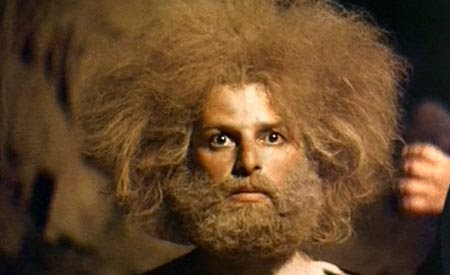
Aguirre, the Wrath of God (Werner Herzog, 1972)
Alien (Ridley Scott, 1979)
All That Jazz (Bob Fosse, 1979)
Annie Hall (Woody Allen, 1977)
Apocalypse Now (Francis Ford Coppola, 1979)
The Assassination of Jesse James by the Coward Robert Ford (Andrew Dominik, 2007)
Badlands (Terrence Malick, 1973)
Barry Lyndon (Stanley Kubrick, 1975)
Belle de Jour (Luis Bunuel, 1967)
The Big Lebowski (Joel and Ethan Coen, 1998)

Blade Runner (Ridley Scott, 1982)
Blow Out (Brian De Palma, 1981)
Blue Velvet (David Lynch, 1986)
Boogie Nights (Paul Thomas Anderson, 1997)
Brazil (Terry Gilliam, 1985)
Carrie (Brian De Palma, 1976)
Children of Men (Alfonso Cuaron, 2006)
Chinatown (Roman Polanski, 1974)
Citizen Kane (Orson Welles, 1941)
City Lights (Charles Chaplin, 1931)

A Clockwork Orange (Stanley Kubrick, 1971)
Close Encounters of the Third Kind (Steven Spielberg, 1977)
The Conversation (Francis Ford Coppola, 1974)
Creepshow (George A. Romero, 1982)
Cries and Whispers (Ingmar Bergman, 1972)
The Dark Knight (Christopher Nolan, 2008)
Dawn of the Dead (George A. Romero, 1978)
Days of Heaven (Terrence Malick, 1978)
Dead Man (Jim Jarmusch, 1996)
Don’t Look Now (Nicolas Roeg, 1973)

E.T. the Extra-Terrestrial (Steven Spielberg, 1982)
Ed Wood (Tim Burton, 1994)
8 ½ (Federico Fellini, 1963)
El Topo (Alejandro Jodorowsky, 1970)
The Elephant Man (David Lynch, 1980)
The Empire Strikes Back (Irvin Kershner, 1980)
Eraserhead (David Lynch, 1977)
Eternal Sunshine of the Spotless Mind (Michel Gondry, 2004)
Eyes Wide Shut (Stanley Kubrick, 1999)
Fargo (Joel and Ethan Coen, 1996)

The Fly (David Cronenberg, 1986)
The Fountain (Darren Aronofsky, 2006)
The Godfather Part II (Francis Ford Coppola, 1974)
Goodfellas (Martin Scorsese, 1990)
Halloween (John Carpenter, 1978)
Harold and Maude (Hal Ashby, 1971)
Inferno (Dario Argento, 1980)
Inglourious Basterds (Quentin Tarantino, 2009)
Jaws (Steven Spielberg, 1975)
Jules and Jim (Francois Truffaut, 1962)

Kill Bill vol. 1 (Quentin Tarantino, 2003)
Kill Bill vol. 2 (Quentin Tarantino, 2004)
Last Tango in Paris (Bernardo Bertolucci, 1972)
The Last Temptation of Christ (Martin Scorsese, 1988)
Lawrence of Arabia (David Lean, 1962)
Let the Right One In (Tomas Alfredson, 2008)
Lolita (Stanley Kubrick, 1962)
Macbeth (Roman Polanski, 1971)
Magnolia (Paul Thomas Anderson, 1999)
The Man Who Fell to Earth (Nicolas Roeg, 1976)

Manhattan (Woody Allen, 1979)
McCabe and Mrs. Miller (Robert Altman, 1971)
Miller’s Crossing (Joel and Ethan Coen, 1990)
Mulholland Drive (David Lynch, 2001)
My Own Private Idaho (Gus Van Sant, 1991)
Nashville (Robert Altman, 1975)
No Country For Old Men (Joel and Ethan Coen, 2007)
Nosferatu, Phantom der Nacht (Werner Herzog, 1979)
Once Upon a Time in America (Sergio Leone, 1968)
One Flew Over the Cuckoo’s Nest (Milos Forman, 1975)

Orpheus (Jean Cocteau, 1950)
Pat Garrett and Billy the Kid (Sam Peckinpah, 1973)
Persona (Ingmar Bergman, 1966)
Phantom of the Paradise (Brian De Palma, 1974)
Psycho (Alfred Hitchcock, 1960)
Raging Bull (Martin Scorsese, 1980)
Ran (Akira Kurosawa, 1985)
Rashomon (Akira Kurosawa, 1950)
Repulsion (Roman Polanski, 1965)
Rushmore (Wes Anderson, 1998)
 
 Schindler’s List (Steven Spielberg, 1993)
The Searchers (John Ford, 1956)
Secretary (Steven Shainberg, 2002)
The Seventh Seal (Ingmar Bergman, 1957)
The Shining (Stanley Kubrick, 1980)
Sid and Nancy (Alex Cox, 1986)
Sideways (Alexander Payne, 2004)
Synecdoche, New York (Charlie Kaufman, 2008)
Taxi Driver (Martin Scorsese, 1976)
There Will Be Blood (Paul Thomas Anderson, 2007)

The Thin Red Line (Terrence Malick, 1998)
The Thing (John Carpenter, 1982)
The Third Man (Carol Reed, 1949)
Touch of Evil (Orson Welles, 1958)
True Romance (Tony Scott, 1993)
2001: A Space Odyssey (Stanley Kubrick, 1968)
Vertigo (Alfred Hitchcock, 1958)
Wings of Desire (Wim Wenders, 1987)
Y tu mama tambien (Alfonso Cuaron, 2006)
Zodiac (David Fincher, 2007)

Sunday, July 22, 2012

It's what we do that defines us.

"I believe movies are one of the great American art forms and the shared experience of watching a story unfold on screen is an important and joyful pastime. The movie theatre is my home, and the idea that someone would violate that innocent and hopeful place in such an unbearably savage way is devastating to me." - Christopher Nolan

"Fiction's about what it is to be a fucking human being." - David Foster Wallace

Many of you have likely seen the memes such as the one above that incorporate the profile and iconography of Batman in images meant as a show of solidarity with the people of Aurora, Colorado. I've read several complaints that invoking a comic book character in relation to a real-life tragedy is in poor taste, and that's arguably true, but I can also understand where these images' creators are coming from, and I believe their intentions are earnest and not meant to trivialize what happened. As a country, we grieve for the unimaginable loss the people of Aurora have suffered, but one very disturbed young man's abhorrent actions have touched a nerve in another way. The shooting spree at the Century Aurora 16 was an assault on moviegoing, a basic experience that we all share; it was an assault on one of the few communal experiences we still participate in on a regular basis, our wish simply to get lost in a story and dream together for a couple of hours. Whether James Holmes chose a local screening of The Dark Knight Rises because of some warped identification or because of the promise of a large crowd is beside the point; what happened was a grotesque desecration of one of our most enduring heroic icons. Twelve people are dead, and the news is filled with stories questioning whether it's safe to go to the movies. So whether or not it's appropriate to create images of a grieving Batman, I understand and sympathize with the impulse; as our hearts go out to the victims of this terrible crimes, our collective imagination grieves just as strongly.

I was going to write something very different this weekend. I was going to write about why I haven't written anything about The Avengers and Prometheus, and why the prospect of writing about The Dark Knight Rises is daunting. About the tendency of fanboy culture towards group-think, how quickly one set of reactions to a highly-anticipated genre movie becomes the last word, drowning out any differing views. If one thinks that The Avengers is very entertaining but a bit shallow, or that, for all its problems, Prometheus works as a sort of abstract nightmare precisely because the world it imagines is so illogical, one should be prepared for a fair amount of bullying from a vocal section of the geek community. And I was going to write about our obsession with opening weekend records and Rotten Tomatoes scores, and how these things have contributed to fans' hostility to critics who voice dissent and the general deterioration of film culture. Those things are still true, but none of them matter all that much at the moment. I do hope, though, that the fans who were so furious that Christy Lemire failed to validate their enthusiasm understand now that a negative review is not an attack on the things we love. A damaged human being with an AR-15 - that's an attack on the things we love.

The thing is, all of us that were seemingly born with a love of the movies in our DNA will obsess over, argue about and demonstrate the intensity of our affection for cinema, and we've probably all taken it too far sometimes. This is an important moment to remember how lucky we are to be alive right now - to have the opportunity to experience movies, to share our experiences, to argue and obsess and act like silly fanboys if that's how we want to be, because at the bottom of it, we're all bound by our love for the possibilities of storytelling in the form of flickering images on a big-ass screen. Movie geeks are a big, loud, dysfunctional family, but in moments like this, we can count on each other. And this is obvious but it has to be said - we're not only lucky to be alive right now, we're lucky to be alive, period. Nobody can really make sense of what happened, though it's probably inevitable that movies will be used as a scapegoat for a little while rather than addressing the availability of assault weapons or the state of mental health services or anything that actually matters. We just need to wait it out; it'll blow over as it has before. In the mean time, let's be excellent to one another and celebrate everything we share. It's hippy-dippyish to say that, but fuck it, it's true, and wouldn't it be great if we really learned something from a horrible tragedy for once?

Other film writers and bloggers have said this already, but it's true - please go see a movie soon. Let's not allow fear to corrupt one of the purest pleasures we have in this life, not even for a moment. Buy a grotesquely large popcorn and a vat of soda and have a great time. And if the movie sucks, write a thousand words bitching about it on the internet, because being opinionated snobs is our goddamn right. The next movie you see will probably be better! I'm seeing The Dark Knight Rises Sunday afternoon; it's the first time in my life that buying a movie ticket feels like an act of defiance. Movies are my church, and as another iconic cinematic hero once said, nobody steps on a church in my town. And I know as well as anyone that these are tight times, but after you've gone to the movies, why not donate the cost of a movie ticket to help out the victims and their families? After all, in their excitement to be the first ones to see Batman versus Bane, they could have just as easily been us. We're all in this together, and for all our collective flaws, the ways we show decency to each other in moments pain are what make us great.

Thursday, July 19, 2012

Headless eels, gay Marxists and the last temptation of Popeye.

 
I've finally found the time to complete my answers to the most recent movie quiz at Sergio Leone and the Infield Fly Rule, this one administered by Sister Superior Clodagh. Who could forget Deborah Kerr's indelible performance as a repressed nun whose world is turned upside down when two crooks on the run from the mob (Eric Idle and Robbie Coltrane) dress in drag and hide out in the convent? Good times. As always, if you've never heard of SLIFR or Dennis' terrific quizzes, I highly recommend checking out both.

1) Favorite movie featuring nuns

The Devils

2) Second favorite John Frankenheimer movie

Seconds (har dee har har)

3) William Bendix or Scott Brady?

Having just been reminded of Kill the Umpire the other day, I'll go with William Bendix.

4) What movie, real or imagined, would you stand in line six hours to see? Have you ever done so in real life?

I've never waited more than an hour or so to see a movie, though I have driven four hours to get to a horror marathon. I might wait six hours for a world premiere, but one of the silver linings of the dominance of multiplexes is that you don't really have to wait very long to see anything these days.

5) Favorite Mitchell Leisen movie

N/A

6) Ann Savage or Peggy Cummins?

Ann Savage

7) First movie you remember seeing as a child

Annie

8) What moment in a movie that is not a horror movie made you want to bolt from the theater screaming?

 The scene in The Tin Drum where a severed horse's head is used to catch eels, then we watch in close-up as a character shakes the eels free and cuts off their heads. Eeaugh. It's a great movie, but I've never felt like revisiting it.

9) Richard Widmark or Robert Mitchum?

Robert Mitchum, of course.

10) Best movie Jesus

Willem Dafoe

11) Silliest straight horror film that you’re still fond of

Prometheus comes to mind.

12) Emily Blunt or Sally Gray?

I like Emily Blunt, but I'm not familiar enough with Sally Gray's filmography to give a fair answer.

13) Favorite cinematic Biblical spectacular

The Ten Commandments. It's sillier than Prometheus, but the visual effects still thrill me.

14) Favorite cinematic moment of unintentional humor


15) Michael Fassbender or David Farrar?

Fassbender. He's probably my favorite actor to break through in the last decade.

16) Most effective faith-affirming movie

The Thin Red Line. Jim Caviezel is a more persuasive messiah in this than when he actually played Jesus.

17) Movie that makes the best case for agnosticism

Birth. We're presented with a rational answer for the film's central mystery, but a lot of questions remain unresolved when the credits roll. It's a great exploration of why we turn to the supernatural in the face of the unknown and how, though reason usually prevails, there are still far more things in heaven and earth than are dreamt up in our philosophy.

18) Favorite song and/or dance sequence from a musical

The Air-otica number from All That Jazz.

19) Third favorite Howard Hawks movie

His Girl Friday

20) Clara Bow or Jean Harlow?

Clara Bow

21) Movie most recently seen in the theater? On DVD/Blu-ray/Streaming?

Theater: The Amazing Spider Man (zzzzz...) On Blu-ray: Kiss Kiss Bang Bang. Still hilarious.

22) Most unlikely good movie about religion

The Gospel According to Saint Matthew. One of the most compelling movies about Jesus, written and directed by a gay, Marxist atheist.

23) Phil Silvers or Red Skelton?

Phil Silvers

24) “Favorite” Hollywood scandal

The cocaine bust on the set of Popeye.

25) Best religious movie (non-Christian)

The Wicker Man

26) The King of Cinema: King Vidor, King Hu or Henry King? (Thanks, Peter)

I haven't seen enough of Henry King's movies to say.

27) Name something modern movies need to relearn how to do that American or foreign classics had down pat

When making a movie about an iconic character, concentrate on making that movie the best self-contained experience it can be, not on setting up the next installment in the franchise.

28) Least favorite Federico Fellini movie

If I were to rank the Fellini movies I've seen, Roma would be at the bottom of the list. But I like Roma.

29) The Three Stooges (2012)—yes or no?

Haven't seen it yet.

30) Mary Wickes or Patsy Kelly?

Patsy Kelly

31) Best movie-related conspiracy theory

The Shining is Kubrick's admission that he helped fake the moon landing.

32) Your candidate for most misunderstood or misinterpreted movie

The Fountain. A lot of critics dismissed its archetypal narrative and visual motifs as "New Agey," when it's actually quite the opposite.

33) Movie that made you question your own belief system (religious or otherwise)

The Last Temptation of Christ. I saw it when I was 12 and found it to be the most moving depiction of Jesus, and the closest to the Jesus I imagined and believed in - torn between his human and divine selves, tempted by nothing more than to live as a humble husband and father, filled with compassion and love for all people. When I thought about how much anger Christians had directed at the film (and how bad most church-approved movies about faith are), I realized that my fellow churchgoers and I were praying to a completely different guy. Between that and the church's positions on sex, gay people and whether man coexisted with dinosaurs, I stopped calling myself a Christian soon after, though I'm still cool with the Jesus that Kazantzakis and Scorsese believed in and brought to life so beautifully.

Sunday, June 10, 2012

Yeah, I had to dismember that guy with a trowel. What have you been up to?


 The night before I saw The Cabin in the Woods, I went to a double feature of Friday the 13th: The Final Chapter and Friday the 13th Part VI: Jason Lives at the Brattle. While The Final Chapter has always been my favorite (largely thanks to Tom Savini's makeup work and Crispin Glover's dancing), I was surprised by how much fun I had with Jason Lives. I'd always found its attempt at self-parody lame and overly amused with itself; this was compounded by the way every bonus feature on the DVD underlined the brilliance of the movie's American Express gag, which always struck me as kind of a non sequitur. But seeing Jason Lives with an appreciative audience, especially after the unironic pleasures of The Final Chapter, I realized that the laughs are good natured - the audience's relationship with the slasher formula was knowing but not condescending, and I realized writer/director Tom McLoughlin's jokier version of Jason was basically affectionate. It's a movie about characters that have seen a lot of horror movies but don't know they're in one; as with the characters in Scream, their media literacy makes them no less doomed. Jason Lives isn't the most sophisticated attempt to subvert the genre, but its broadness is part of its charm; I can see now why it seemed like a breath of fresh air in 1986.

I bring up Jason Lives as a roundabout way of saying that metatextuality has long been a part of the horror genre, going back as least as far as Bride of Frankenstein; in recent years, the Scream ripoffs, torture porn and found footage horror have all commented on their own artifice even as they try to sell their "Inspired by Actual Events" faux-verisimilitude to gullible teen audiences. It's in the nature of horror to examine itself; just about every successful scary movie, in one way or another, needs to override our rational resistance to boogeymen in order to work (movies about real-life monsters, serial killers and killer animals and such, are obviously their own thing). So if anyone tells you that The Cabin in the Woods is revolutionary or redefines the genre in any way, don't listen to them. It's not groundbreaking, nor does it have to be; what it is is a very smart, unpredictable and affectionate take on the genre and its many possibilities.

A riff on the "gang of horny teens partying in the woods" premise that has been the basis of countless slashers, The Cabin in the Woods begins, unexpectedly, with office drones Sitterson and Hadley (Richard Jenkins and Bradley Whitford, both excellent) in a nondescript break room, chatting about child-proof locks. Without revealing much more, the initial pleasure of The Cabin in the Woods is seeing what Sitterson and Hadley have to do with the collection of slasher archetypes - jock Curt (Chris Hemsworth) and his girlfriend Jules (Anna Hutchison), the virginal (kind of) Dana (Kristen Connolly) and her nice-guy potential love interest Holden (Jesse Williams) and likeable stoner Marty (Fran Krantz) - who ignore the warnings of the kind of creepy old filling station attendant that tends to live near cursed cabins like the one they're headed to for the weekend. Director Drew Goddard (a producer on Lost who wrote some of that show's strongest episodes) and his co-writer, geek icon Joss Whedon, have a great deal of fun playing with the slasher format, simultaneously demolishing and celebrating horror archetypes. Though they're poking fun (via their surrogates Sitterson and Hadley) at the repetitive nature of the genre, their obvious enthusiasm for the way horror movies give the imagination free reign is what makes The Cabin in the Woods special. While the movie is frequently hilarious (Jenkins' explosive outburst towards ten-year-old Japanese schoolgirls is a highlight), Goddard and Whedon give the story an ominous foundation that underscores the very primal motivation behind our desire to be frightened.

While The Cabin in the Woods mostly avoids the self-congratulatory cuteness that plagues Whedon's other (admittedly quite clever) work, it does feel a bit like the work of two very smart kids who just took apart their parents' phone to look inside and can't quite put it back together. The undead monsters lurking outside the cabin are framed as one of many interchangable possible threats to the leads; we're never invested in them on more than a conceptual level, and so The Cabin in the Woods is enormously entertaining without ever being truly scary. Goddard and Whedon try to tie the main characters together late in the film in a sweeping statement about the nature of the genre that ignores the many, many horror stories that don't fit the formula it proposes as absolute. And their know-it-all attitude makes the movie's occasional lapses in logic more egregious than they would be in an unironic slasher, particularly the plot device of a big red button that absolutely should and would not exist in the world of this film. It's forgivable, though, especially since what happens when a character pushes said button leads to a climax that is sure to leave any horror fan feeling giddy - I can't wait for the Blu-ray so I can pause specific moments and fully appreciate the level of mayhem on display. The Cabin in the Woods is ultimately the movie many young horror geeks with hyperactive imaginations dreamed up at one point or another, magnificently brought to life. The only question is, who or what is Kevin?


If The Cabin in the Woods tinkers with horror formulas, John Dies at the End blows them to smithereens. I saw Don Coscarelli's adaptation of David Wong's book at the Boston Underground Film Festival (also at the Brattle), where Coscarelli introduced it as "a movie about drugs." That's true, but it's not even the half of it - while John Dies at the End often plays like Ghostbusters as imagined by Hunter S. Thompson, it possesses the same boundless, wildly unpredictable nightmare logic as Coscarelli's Phantasm series, coupled with the straightfaced absurdist humor of his adaptation of Joe Lansdale's Bubba Ho-Tep. Twenty-something slacker David Wong (Chase Williamson) tells journalist Arnie (Paul Giamatti) how an accidental injection of a mind-bending drug known as "soy sauce" set him off on a journey involving ghosts, Lovecraftian monsters, alternate realities and all kinds of weirdness. As David and his best friend John (Rob Mayes) battle meat monsters and attempt to bring peace to a parallel dimension, the movie constantly threatens to turn into an incoherent drug-and-horror mashup, and yet miraculously, it all works wonderfully, managing to say a few insightful things about why people take drugs along the way.

That the movie works is largely thanks to its performances - newcomers Williamson and Mayes are believable as directionless best friends thrown into a bizarre story, and the strong supporting cast includes Clancy Brown as a celebrity paranormal expert and Glynn Turman as a detective who delivers the priceless line "You're wondering why I'm out here today committing felonies." And it's also due to Coscarelli, an unsung auteur who finds in Wong's book a perfect match for his morbid preoccupation. At one point David is trying to make Arnie see one of the film's many creepy creatures; telling him to concentrate, he prompts him to focus on the fact that someday he'll die and either become nothing or cross over to the unknown. With his mind focused on this fact, Arnie is able to see the creature. It's a deeply resonant scene, and it grounds an often very outlandish film. When I asked Coscarelli if the question of what happens (if anything) after death, which is at the center of most of his films, was something he was consciously exploring, he told me that he'd realized after looking back on his filmography that it was a question he was and is always asking before adding, "Hey, aren't we all?" John Dies at the End is still in search of a distributor, but be sure to check it out when it gets a proper release - it's well worth your time.


And then there's Ti West, who is busy proving that there's still a lot of life left in classical horror narratives. West's previous film, 2009's The House of the Devil, transformed a simple concept (Satanists threatening a college-age babysitter in a creepy old house) into a loving homage to '80s horror movies that captured not just the style but the soul of classics from that period. At the same time, West proved that he was capable of sustaining tension to an unbearable degree, displaying the same kind of potential that Roman Polanski showed in his early films. West's latest film, The Innkeepers, is an elegant slow burn, a ghost story made special by its patient, assured direction. Based on the spooky experiences of The House of the Devil's cast and crew when they stayed at the supposedly haunted Yankee Pedlar Inn (where The Innkeepers was shot), the film follows co-workers and amateur ghost hunters Claire and Luke (Sara Paxton and Pat Healy) on the last weekend before the mostly vacant inn closes for good as they try to find proof of a haunting. West takes his time letting us get to know Claire and Luke - they're both endearingly geeky, socially awkward and a little withdrawn, and it's easy to imagine them living happily ever after in a different movie.

It's hard not to love Claire in particular, and when she's embarassed by one of the few guests, an actress and clairvoyant (Kelly McGillis), for her lack of direction in life, we feel for her. West quietly underlines the connection between Claire and Luke's sad situation - about to lose the jobs they're overqualified for, facing an uncertain future, both unable to express their loneliness - and the tragic nature of the inn's permanent inhabitants. It's amazing how we become so invested in the characters that the ghost story creeps up on us; West and cinematographer Eliot Rocket get the most out of the Yankee Pedlar, the inn's empty hallways and dark corners teasing our expectations. West chooses the film's supernatural reveals carefully, but they're delivered with a prankish attitude towards revealing terrifying details in the background or a reverse shot that is worthy of John Carpenter. And the film's most effective sequence, as Claire and Luke explore the inn's basement, creates an overwhelming feeling of dread from a close-up of Claire's face as she describes what she's seeing offscreen. Some horror fans have complained that the payoff is week compared to the setup, but while I'm not opposed to gore or creature effects, it's heartening to know there's at least one horror filmmaker who hasn't forgotten about the power of suggestion. The Innkeepers scared the hell out of me; I can't wait to see what West does next.

Sunday, April 01, 2012

Buddy, you're in the wrong place at the wrong time.

This is my contribution to this year's White Elephant Blogathon.

To Live and Die in L.A.
announces itself as the quintessential ‘80s action movie in its first five minutes. Secret Service agents Richard Chance and Jimmy Hart (William Petersen and Michael Greene) have just foiled a terrorist attack in a hotel where President Reagan is giving a speech. After throwing a suicide bomber off the hotel’s roof, Hart remarks that “I’m getting too old for this shit.” I don’t know if this is the first use of this line, but it predates Lethal Weapon by over a year. So it may not surprise you to learn that Hart, on the trail of counterfeiter Eric Masters (Willem Dafoe), is killed two days before his retirement, or that Chance becomes obsessed with catching Masters and avenging his partner. This is the stuff of every action movie parody of the last 25 years, but much of the fun of To Live and Die in L.A. is that it doesn’t know how much of a product of its time it is. The film’s heavy use of cop movie clichés before they were clichés and general Eighties-ness dates it, and yet it doesn’t suffer as a result; it’s an enjoyably tense, overheated thriller, very much of its time but still terrifically entertaining today.

The film spends much of its running time underlining the similarities between Chance and Masters, both single-mindedly driven by their work and sleeping with the women they also use for information. In its interest in the connection between criminal and pursuer, and in its flashy visual style, To Live and Die in L.A. is reminiscent of the work of Michael Mann, particularly Miami Vice and his early films (Peterson’s next film would be Manhunter). But director William Friedkin brings to the film a strong sense of location, an eye for idiosyncratic detail and a strong underlying sense of moral ambiguity; the result is a procedural that is equal parts ‘80s slickness and ‘70s naturalism. Much of the film was shot in, real, rough neighborhoods in South Central and East L.A.; as with Friedkin’s The French Connection, the lived-in authenticity of the locations contributes hugely to the believability and suspense of the story. The cinematographer is frequent Wim Wenders/Jim Jarmusch collaborator Robby Muller, and the look of the film is reminiscent of Muller’s then-recent work on Wenders’ Paris, Texas, lighting warehouses, strip clubs and dive bars with hot pinks and greens; it’s a flamboyant film, but still purposefully rough around the edges.

Friedkin sometimes overreaches with the film’s grittiness; many moments are less gritty than coarse or pungent, and it sometimes feels like Friedkin is wallowing in the film’s sleazy atmosphere. The profane tough-guy dialogue often feels both inauthentic and puerile. There are multiple, lingering shots of peoples’ heads being blown apart. And the film’s female characters are one-dimensional sex objects even for this kind of movie – they exist solely to advance the plot, bare their breasts and screw the leads. The crudeness wasn’t a deal-breaker for me, and it does allow for rare equal-opportunity smut in the form of full frontal nudity from Peterson (Gus Grissom’s more of a grower than a shower). But as with much of Friedkin’s work, it does feel like he’s trying to have it both ways, rubbing our noses in it while suggesting a high-minded justification that he never quite pays off. That’s not to say that To Live and Die in L.A., which opens with audio of President Reagan declaring his intention to protect American citizens from new taxes, isn’t commenting on the ultra-materialistic time at which it was made. It’s just not quite as deep about it as Friedkin thinks it is.

Still, Friedkin’s strengths as a filmmaker have always been more formalist than personal, and To Live and Die in L.A. has an impressively nihilistic, postmodern tone punctuated by memorable action set-pieces. The wrong-side-of-the-road chase is justifiably famous, and an earlier foot chase through an airport deserves to be. Peterson is compelling in the kind of role that would make him famous, and Dafoe is mesmerizing as an unusually honest criminal – it’s easy to see why this was a breakthrough role for him. And Friedkin’s lack of interest in predictable structure leads to a climactic development that is pleasurably surprising. And while, if I was Friedkin, I wouldn’t have personally gone with a wall-to-wall Wang Chung soundtrack, I didn’t exactly mind either. It’s a good movie, the second in a row I’ve been assigned for the White Elephant Blog-a-Thon. And that makes me feel twice as guilty about the movie I’ve subjected someone else to this year. Muah ha ha…

Tuesday, February 07, 2012

Top 10: 2011


Last week I asked my Facebook friends what their favorite 2011 movies were; the unanimous answer was The Muppets. That a reflection on characters many of us grew up with touched a collective nerve makes sense; 2011 was a year of looking back, both out of nostalgia and to understand what our past reveals to us about our present. Two of the Oscar front-runners are celebrations of the silent film era, and the nominees also include movies about World War I, 9/11, the civil rights movement and the Cold War. It's not unique for the Academy to nominate period pieces; what is unique is how many of these movies are preoccupied with what these moments of time tell about where we are today (with varying degrees of success). The most critically acclaimed movie of the year looks all the way back to the creation of the universe to give context to a story that takes place in the recent past and the present. As A.O. Scott put it, "A glance at the nominees for best picture at this year’s Oscars will confirm that the movies, a forward-looking medium tumbling headlong into a digital future, find themselves in a moment of retrospection." Even the films on the list with a contemporary setting, and even those which rely heavily on CGI or digital technology are build on an archetypal foundation that reaches back to 1930s noir, or the paranoid thrillers of the 1970s, or the comedy of discomfort perfected by Woody Allen and Albert Brooks. The language of film is constantly evolving, but the stories are eternal.

Many of the films on my list were low-key affairs in one way or another; a few are downright gentle. Was this a trend in films in general, or am I just prematurely becoming an old fogy? I guess if you see me in line for the opening night of The Best Exotic Marigold Hotel, you'll have your answer. The hardest part of making a list this year was sorting out the last few slots; there were a great deal of movies that were problematic but still well worth seeing, or movies with modest ambitions that were excellent in their way. And it's very possible that if I'd had the opportunity to see Take Shelter, We Need To Talk About Kevin, Margaret, A Separation and other potentially great movies that never played in my neck of the woods, this list could be very different. Of course, it's never possible to see everything, and it's beside the point to take list-making too seriously. A friend of mine asked me a while ago what is the point of making lists; I guess there isn't one really, except as a snapshot of the things that intrigued me, made me think and moved me over the past twelve months or so. Plus, it's just too much fun to resist.


1. Drive As much as this modern-day L.A. noir owes to filmmakers like Michael Mann and Walter Hill, it's also very much the work of a director with a wholly original voice. Nicolas Winding Refn, making his English-language debut, brings to this story of a stuntman and getaway driver (Ryan Gosling) who gets in dangerously over his head trying to protect the woman he loves (Carey Mulligan) a razor-sharp awareness of what makes his genre archetypes resonate so deeply. At once an examination of the action movie's fetishism of fast cars and big guns, a sort of urban samurai story and an inversion/feminization of its stoic, toothpick-chewing road warrior, Drive is like a synth-pop tone poem punctuated with perfectly calibrated bursts of shocking violence. It's also a masterpiece of filmmaking craft, perfectly acted (Albert Brooks is terrific, and Gosling is so much more interesting now that he's stopped taking himself seriously) and wonderfully stylish in a way that fits perfectly with the story. Refn's the real deal - Drive is the ballsiest movie of the year and a hell of a lot of fun.


2. The Tree of Life A movie that is completely out of step with the time it was made. Terrence Malick's epic meditation on childhood, memory, God and our place in the universe demands to be revisited and given serious thought in an opening weekend-driven film culture that demands we move on to one next big thing after another. But it's pointless to gripe; some films just aren't for everyone, even if they're about everything. But for a movie with a narrative scope that extends from the first moments of the universe to its death, The Tree of Life is remarkably personal, even private. Though this leads to some moments that contain a meaning that perhaps only Malick fully understands, the cumulative effect is cinema's most fully realized depiction of the persistence of memory. Breathtaking in both its ambition and its moments of startling intimacy, The Tree of Life is certainly a challenging and sometimes baffling work. But if you approach it with an open mind and let it meet you where you are, it's a deeply affecting, one-of-a-kind cinematic experience.


3. Shame A close-up examination of the life of Brandon (Michael Fassbender), a sex addict whose life is a perpetual, joyless cycle thrown into chaos by a visit from his vulnerable, emotionally turbulent sister Sissy (Carey Mulligan). While director Steve McQueen's rigid, controlled style had a distancing effect for some, his unflinching and deeply empathetic study of two wounded souls was almost too painful to watch. It's a very explicit film, but never gratuitous or crass - here, sex is an externalization of one character's pain, and it's depicted with maturity and insight. It's a film where a conversation between two siblings watching cartoons - one who is incapable of connection, another with a desperate need to connect - carries a disturbing, almost violent psychological charge. Beautifully photographed against the backdrop of a New York that becomes a sort of melancholy third protagonist, Shame is a hard experience to shake, and the work of a filmmaker capable of profound compassion and grace.


4. Tinker Tailor Soldier Spy A film that fits comfortably alongside '70s classics like The Conversation and The Parallax View, Tomas Alfredson's adaptation of John Le Carre's novel shares with those films an understanding of the spy story as a metaphor for truth's elusive, shifting nature. The film's condensation of Le Carre's plot is a labyrinth of mysterious motives, secret allegiances and narrative asides that, once all the pieces have fallen into place, proves to be nearly airtight in its construction. Between this and his previous film, the masterpiece Let the Right One In, Alfredson has proven to be a master of understatement; the film is a triumph of story revealed through subtle accumulating details, anchored by Gary Oldman's marvelously restrained performance as George Smiley, a British agent whose quiet personality hides a fierce intelligence. A triumph of art direction - the film is a maze of cluttered, claustrophobic interiors - filmed through a haze that is seemingly equal parts nicotine and decaying film stock, Tinker Tailor Soldier Spy is a fiendishly fun mystery, punctuated by moments of pitch-black humor and a perverse sense of what constitutes a happy ending.


5. The Girl With the Dragon Tattoo The book's Swedish title translates as Men Who Hate Women, which gets to the heart of why Stieg Larsson's book about a journalist and a hacker tracking a killer of women resonated so deeply with so many readers. The mystery plot is pure pulp, but it's redeemed by Larsson's blunt anger at the many ways women are treated like shit and the unforgettable character Lisbeth Salander, a brilliant, antisocial force of nature who isn't afraid to fight back. Director David Fincher focuses on the strongest and most cinematic elements of the source material, crafting a violent, disturbing, sexy beginning (I hope) of a franchise for adults (frankly, stating that the pretentious, thuddingly literal-minded Swedish film is better is lunacy). Fincher is smartly treats the central mystery as a Macguffin and emphasizes the relationship between Salander (the mesmerizing Rooney Mara) and sexy, feminist-friendly lefty hunk Mikael Blomkvist (Daniel Craig, underrated here). As process-obsessed as all of Fincher's films, The Girl With the Dragon Tattoo is less about finding out what happened to Harriet Vanger as it is about a budding love story between an abused, alienated prodigy and the first man she could ever trust; taken this way, the ending is positively devastating. And as this is Fincher, it almost goes without saying that it's perfectly shot, edited and scored - one can derive two and a half hours of pleasure just from enjoying the way that Fincher captures the feeling of snow like no filmmaker ever has before. Bonus points for the perverse misuse of "Orinoco Flow."


6. Hugo Scorsese's latest is a walking contradiction, a valentine to the earliest days of silent cinema that utilizes hyper-modern technology to tell its story. That Scorsese embraces and revels in this contradiction is just one reason Hugo is so easy to love - in the scenes of filmmaker Georges Méliès meticulously and lovingly staging his early cinematic sleights of hand, one can trace a line directly to 3D and what it has the potential to be (but rarely is). Here, the immersive 3D effects compliment the beautifully realized world of a train station in 1920s Paris where a little boy named Hugo Cabret (Asa Butterfield) lives in the walls, winding the station's clocks and hoping to solve a mystery left behind by his deceased father that takes the form of a wide-eyed automaton. Scorsese's typically kinetic, vital filmmaking is used for the first time in the service of a story that is meant to evoke wonder; the result is a $150-million kids' movie about the virtues of film preservation that is every bit as weird, geeky and magical as that description suggests.


7. Midnight in Paris Woody Allen's best film in 25 years is also his gentlest and most sincere. While the film is recognizably Allen's in every way - certainly nobody who knows his work should be the least bit surprised that his version of Oz is a 1920s Paris populated by the period's great artists and thinkers - there are moments in Midnight in Paris that feel like the unexpected summation of everything Allen has been expressing throughout his filmography. When Owen Wilson's writer Gil suggests that a city like Paris, teeming with life and possibility, is a beacon of hope in a dark universe, it took me aback; Allen has found Paris (or Manhattan) to be the answer to the question of where meaning can be found in life, and connecting his existential angst with his romantic view of urban life seems so obvious in retrospect and yet so profound. It's a pleasure to follow Gil on his time-travel journey and hang out with Hemingway, Fitzgerald and the whole gang (I was particularly tickled by Adrien Brody as Salvador Dali), and yet Allen is also perceptive about how the idea that things used to be better is a constant illusion in every period. As with The Purple Rose of Cairo, Allen at once celebrates our fantasies and gently subverts our nostalgia; still, who can help being nostalgic when the past is brought to life with this much wit and warmth?


8. Bridesmaids Besides just being constantly hilarious from beginning to end, Bridesmaids is terrific because its humor comes from a very real and frightening place - getting older, getting poorer and watching your closest friends move on while you're still struggling to get your shit together. While the film is in the improv-heavy mold of its fellow Apatow productions, it benefits from the sturdier structure and fully realized characters that we can identify with even when they're shitting in a sink (maybe not as much then, but otherwise). It's funny because it's true, and the movie mines as many laughs from smaller moments of social awkwardness as it does from the aforementioned sink pooping and other, soon-to-be-classic setpieces like the dueling toasts and Annie's freak-out on the plane. Kristen Wiig has long been the best thing about SNL (along with Bill Hader), and she proves here to be a gifted writer as well; I wouldn't be surprised if this is the start of a large and impressive filmography.


9. War Horse Steven Spielberg's WWI epic isn't gritty and explicit in the way of Saving Private Ryan; based on the young adult novel by Michael Morpugo, it's a fable with a simple but profound anti-war message. The story of a young man (Jeremy Irvine) and his horse separated by war and trying to make their way home to each other is deeply moving and beautifully realized. The staging of the battle scenes is worthy of one of Spielberg's favorite films, Kubrick's Paths of Glory, and the early scenes of life in the English countryside have a lush palette worthy of John Ford or David Lean; this is a beautiful example of deliberately old-fashioned, classical Hollywood cinema. And it's a reminder that, when Spielberg is firing on all cylinders, there's nobody better. I can't wait to share this one with my kids when they're a bit older.


10. A Dangerous Method David Cronenberg's adaptation of Christopher Hampton's play about the rift between Freud (Viggo Mortensen) and Jung (Michael Fassbender) caused by Jung's affair with his brilliant, volatile patient Sabina Spelrein (Keira Knightley) has been unfairly dismissed as a boringly conventional period piece. But while it may contain less strange creatures or unruly bodily fluids than the average Cronenberg film, it's every bit as brilliantly kinky as any he's made, perhaps more subversively so. Sabina, and Knightley's jaw-dropping performance, are as uncontrollable a monster as Jeff Goldblum's mutation in The Fly and the Mugwumps in Naked Lunch, minus the makeup effects. It's the film about the monstrous feminine and how it changed these two men, completely reshaping our understanding of human psychology in the process. It's impeccably acted, heightened by Cronenberg's mastery of the frame's ability to underline our anxieties, and diabolically funny. Bonus points to Mortensen for getting so much mileage out of Freud's cigars.
Link

Friday, January 27, 2012

Top 10: 2001


1. Mulholland Drive (Lynch)
2. Y tu mamá también (Cuaron)
3. Hedwig and the Angry Inch (Mitchell)
4. A.I. (Spielberg)
5. The Royal Tenenbaums (Anderson)
6. Moulin Rouge (Luhrmann)
7. Amélie (Jeunet)
8. Spirited Away (Miyazaki)
9. Gosford Park (Altman)
10. Ghost World (Zwigoff)

Saturday, January 21, 2012

Top 10: 1991


1. My Own Private Idaho (Van Sant)
2. The Silence of the Lambs (Demme)
3. Terminator 2: Judgement Day (Cameron)
4. Barton Fink (Coen)
5. JFK (Stone)
6. Cape Fear (Scorsese)
7. Naked Lunch (Cronenberg)
8. Beauty and the Beast (Trousdale, Wise)
9. The Fisher King (Gilliam)
10. Point Break (Bigelow)


Friday, January 20, 2012

Recommended Island Viewing


For his final Friday Night Seitz slideshow at Salon, Matt Zoller Seitz answered the age-old question, "What movies would you want to have with you if you were shipwrecked on a desert island." Matt adds, of course, that "It is assumed that you’ll have an indestructible DVD player with a solar-recharging power source" and allows for ten feature films, one short and a single season of a TV series. Matt's challenge was taken up by others, including Jim Emerson and Damian Arlyn; their cumulative desert island library includes films by directors ranging from Martin Scorsese to Buster Keaton to the Coen brothers to Don Bluth.

My choices for desert island viewing differ from my all-time top 10 in that I think my tastes would run a bit lighter due to circumstance. While I'm generally drawn to "dark, cerebral movies" (as I believe Netflix has characterized my tastes) and that's certainly reflected in part on this list, if I was limited to the same 12 viewing options forever, I'd have a greater need for movies to lighten my spirits and help me stay connected to humanity. It's kind of like Will Smith watching Shrek every day in I Am Legend to remind him of the way the world was, except I'm a much bigger snob than Will Smith. And rewatchability is very important, of course. I thought about skipping movies that Matt, Jim or Damian had already chosen, but when you force movie geeks to limit themselves to twelve titles for the rest of their lives, I guess some overlap is inevitable.


All That Jazz - Bob Fosse's cinematic self-portrait is exhilarating in a way that very few films are. It's an incredibly entertaining examination of how an excessive dedication to one's craft gives one's life meaning even as it tears one apart. Roy Scheider was never better than as Fosse's surrogate, Joe Gideon, a chain-smoking, pill-popping, womanizing director juggling a Broadway musical, a feature film, current and past lovers, his relationship with his daughter and an impending heart attack, among other things. His hallucinatory trip through his own life and impending death is frighteningly insightful, often hilarious and punctuated with some of Fosse's best choreography, culminating in a glittery, show-stopping eulogy that can only be described as fabulous. I think it's impossible to get tired of this movie.


Boogie Nights - While There Will Be Blood is my favorite P.T. Anderson movie by a hair, Quentin Tarantino was right when he characterized Boogie Nights as an "exhuberant" film (as opposed to There Will Be Blood's formalism). It's one of the movies where, every time I watch it, I can't stop debating with myself whether my favorite scene is the current one, or the one before it, or the next one. Every character is my favorite character. For it's two-and-a-half hours, Boogie Nights radiates with the joy of movies and filmmaking. No matter how crappy I'm feeling, it never fails to bring a smile to my face.


E.T. - One of the very first movies I really loved, and the first one that got me thinking about what it means to make a movie. E.T.'s stock in the collective imagination seems to have fallen a bit since I was a kid - most of the time when I mention it to people my age, they dismiss it as a movie that frightened them when they were kids. But through my childhood, it meant more to me than Star Wars or any of the other staples of my youth. Even now, I can't think too hard about certain images or moments or even John Williams' score (his best) without getting a bit misty. I'd want it on the island not for nostalgic reasons but because it remains the most clear-eyed and insightful movie about growing up. And I imagine it'd be wonderful to revisit over and over under a canopy of stars.


Fargo - The Coens' best movie is the best example of their deadpan comic genius and ability to mine laughter and genuine pathos from flawed, sometimes banal people in desperate situations. It's also filled with a fondness for their home state that pokes a lot of fun at Minnesotans' earnestness while still demonstrating real affection. Very pregnant sheriff Marge Gunderson (Frances McDormand) is probably my favorite cinematic hero - she's true to herself, good to her husband Norm (John Carroll Lynch), unflappable while investigating a brutal double homicide and driven by an unshakeable sense of right and wrong. Her monologue to one of the kidnappers at the film's end ("There's more to live than a little money, ya know. Don't you know that?") and the coda with Marge and Norm in bed, talking about his three-cent mallard stamp, never fail to move me. Plus, it would be nice, on the island, to be reminded of snow.


Goodfellas - Scorsese's most entertaining movie. If I'm channel surfing and Goodfellas is on, even with the DVD about five feet away from the TV, it's almost impossible to stop watching. It doesn't have the kind of lightness of being that a lot of my choices have - it's a movie about very likeable assholes doing terrible things and learning nothing in the process. As such, it's one of the greatest dark comedies of all time, not to mention Scorsese - at a point in his career when he had a lot to prove - employing just about every cinematic trick at his disposal to tell this story and clearly having a blast doing it. Goodfellas is one of those movies that always reminds me what film is capable of. And seeing as I'll be on the island for a very long time, that gives me whole days to examine just the Copacabana tracking shot. Or the Billy Batts sequence. Or the "Layla" scene. Or the commercial for Morrie's Wigs...


Harold and Maude - One of those rare movies that, in the gentlest way possible, always reminds me how much of everyday life is bullshit and what really matters. Hal Ashby's laid-back stoner vibe is deceptive; it's an unpretentious movie, unafraid to be silly, but also very deep and true. Plus, a little Cat Stevens makes every day worth living.


Manhattan - This has long been my favorite Woody Allen movie, but it really came into focus when I was watching the American Masters documentary on Allen, thanks to Mariel Hemingway calling Allen a "mush." It's very true - as much as Allen's work is preoccupied with death, the non-existence of God and other sources of anxiety and existential despair, they're just as much a celebration of human relationships. Sure, they often end in heartbreak or betrayal, and Manhattan is unsparing in underlining the ways that people can be selfish and casually cruel, or how - as Allen laments in Annie Hall - love fades. But it's also a deeply romantic film, in love with the ways that people can lend each others' lives meaning, how a city is alive with millions of people living their own movies, and how a perfect, holy moment is always possible when you least expect it.


Nashville - Like Boogie Nights, a movie overflowing with potential favorite scenes and characters. It's a cynical film, but never the sort of empty, defeatist cynicism that tends to turn me off immediately; Pauline Kael put it best when she said that Altman "loves us too much to flatter us." I revisit it about once a year, and I've found that whatever is going on in my life at the time, it speaks to me right where I'm at. And you don't have to be a fan of country music to appreciate how Altman discovers poetry in the intersection of our popular culture, politics, ideals and delusions. No movie feels more like America to me than Nashville; I imagine that returning to it on the island would feel like visiting home.


The Shining - My girlfriend believes that, though I call Blue Velvet my favorite movie, my true favorite is The Shining, which I apparently talk about ten times as much. It's certainly the movie I've seen the most times and return to constantly; I've been working through its multiple mysteries, layers and ambiguities for over 20 years, and each time I revisit it, the film reveals a new shade of meaning. If someone asked me to name a perfect film, The Shining would be my answer; if I could only take one movie to the island, it would be my choice and I would happily watch it every night. Plus, I think it would be good to have a movie to watch that is almost entirely composed of interiors; over time, I would probably grow jealous of Jack Torrance and his cabin fever.

Synecdoche, New York - A movie that reminds us that, no matter how bad things get, they can always (and, eventually, will) get worse. While sometimes I need comfort food on a bad day like everyone else, a movie like Synecdoche, New York provides a different kind of therapy. It's about everything we fear and regret - failed ambitions, broken relationships, loneliness, the suspicion that everything is meaningless and, above all, death. And it confronts our darkest thoughts with eyes wide open, with wit and honesty and a stunning amount of empathy, reminding more strongly than any movie I've seen that we're all in this together. It's a movie filled with misery, and it never fails to make me feel better. No matter how dark things get on that island, I can always count on Synecdoche, New York to help me pull myself together.

The short film I would bring to the island is The Wrong Trousers. The toy train chase between Wallace and Gromit and the villainous, silent penguin left the nine-year-old me breathless with laughter, and it hasn't lost any of its charm.


Originally I was thinking I would bring a season of Lost, then decided I might not be in the mood as I'd be stuck on a frigging island. So I'll go with season one of Twin Peaks. I'll have the rest of my life to explore the mysteries of Bob, the man from another planet and all the other strange and mysterious elements that, thanks to David Lynch, seem completely effortless. And even if/when I tired of the show as a puzzle, I'd always have Agent Cooper, Sheriff Truman, Audrey Horne, the Log Lady and all the other residents of Twin Peaks to keep me company.

Friday, January 13, 2012

Top 10: 1981


1. Blow Out (De Palma)
2. Raiders of the Lost Ark (Spielberg)
3. An American Werewolf in London (Landis)
4. The Road Warrior (Miller)
5. Thief (Mann)
6. Modern Romance (Brooks)
7. The Evil Dead (Raimi)
8. Excalibur (Boorman)
9. Pennies From Heaven (Ross)
10. Escape From New York (Carpenter)