Tuesday, June 09, 2015

My Top 5%


I've been using Flickchart for several years now. It's a site that randomly pits two movies at a time against each other - you click the one you prefer, and the site gradually produces a ranked list of your highest-rated movies. The site has never taken off the way Letterboxd has - it doesn't allow you to write extended reviews or keep a viewing diary, and it's considerably nerdier than Letterboxd. However, it's one of my favorite time wasters.

This past weekend, I saw that my list had grown long enough that, according to Flickchart, I've now seen 5000 movies (the five thousandth was John Sayles' Lianna, which I quite liked). Granted, their definition of "movies" extends to things like Michael Jackson: Moonwalker, Gallagher stand-up specials and the straight-to-video My Pet Monster tie-in movie that I watched too many times as a kid. Still, I'll take it. To celebrate the occasion, I thought I'd post my top 250 according to my Flickchart rankings. I gave up making any sort of deliberately ranked best-of list a few years back, and this makes for a fun alternative - the first twenty or so are pretty close to the list I'd make if I sat down and thought about it, but after the first fifty, it gets a little more idiosyncratic. It's like a list made by an alternate universe version of me, slightly hipper and with less regard for good taste. I'd trust this guy's opinion over mine, honestly. He just likes the stuff he likes.


1. The Shining (Stanley Kubrick, 1980)
2. Blue Velvet (David Lynch, 1986)
3. Raging Bull (Martin Scorsese, 1980)
4. Nashville (Robert Altman, 1975)
5. There Will Be Blood (Paul Thomas Anderson, 2007)
6. E.T. the Extra-Terrestrial (Steven Spielberg, 1982)
7. Vertigo (Alfred Hitchcock, 1958)
8. Blade Runner (Ridley Scott, 1982)
9. Lawrence of Arabia (David Lean, 1962)
10. Apocalypse Now (Francis Ford Coppola, 1979)
11. 2001: A Space Odyssey (Stanley Kubrick, 1968)
12. Carrie (Brian De Palma, 1976)
13. Jaws (Steven Spielberg, 1975)
14. Boogie Nights (Paul Thomas Anderson, 1997)
15. Alien (Ridley Scott, 1979)
16. The Man Who Fell to Earth (Nicolas Roeg, 1976)
17. One Flew Over the Cuckoo's Nest (Milos Forman, 1975)
18. Aguirre, the Wrath of God (Werner Herzog, 1972)
19. Kill Bill vol. 2 (Quentin Tarantino, 2004)
20. Kill Bill vol. 1 (Quentin Tarantino, 2003)
21. Taxi Driver (Martin Scorsese, 1976)
22. Dawn of the Dead (George A. Romero, 1979)
23. Badlands (Terrence Malick, 1973)
24. Persona (Ingmar Bergman, 1966)
25. The Elephant Man (David Lynch, 1980)


26. All That Jazz (Bob Fosse, 1979)
27. Nosferatu, Phantom der Nacht (Werner Herzog, 1979)
28. Barry Lyndon (Stanley Kubrick, 1975)
29. Synecdoche, New York (Charlie Kaufman, 2008)
30. Fargo (Joel Coen and Ethan Coen, 1996)
31. The Conversation (Francis Ford Coppola, 1974)
32. Chinatown (Roman Polanski, 1974)
33. Children of Men (Alfonso Cuarón, 2006)
34. Harold and Maude (Hal Ashby, 1971)
35. Don't Look Now (Nicolas Roeg, 1973)
36. Psycho (Alfred Hitchcock, 1960
37. The Fly (David Cronenberg, 1986)
38. Manhattan (Woody Allen, 1979)
39. McCabe and Mrs. Miller (Robert Altman, 1971)
40. Mulholland Drive (David Lynch, 2001)
41. 8 1/2 (Federico Fellini, 1963)
42. Halloween (John Carpenter, 1978)
43. The Godfather Part II (Francis Ford Coppola, 1974)
44. El Topo (Alejandro Jodorowsky, 1970)
45. The Last Temptation of Christ (Martin Scorsese, 1988)
46. Jules and Jim (François Truffaut, 1962)
47. Eraserhead (David Lynch, 1977)
48. A Clockwork Orange (Stanley Kubrick, 1971)
49. Sid and Nancy (Alex Cox, 1986)
50. The Thing (John Carpenter, 1982)


51. Secretary (Steven Shainberg, 2002)
52. Brazil (Terry Gilliam, 1985)
53. The Dark Knight (Christopher Nolan, 2008)
54. Dead Man (Jim Jarmusch, 1996)
55. The Searchers (John Ford, 1956)
56. Goodfellas (Martin Scorsese, 1990)
57. Zodiac (David Fincher, 2007)
58. The New World (Terrence Malick, 2005)
59. Star Wars: Episode V - The Empire Strikes Back (Irvin Kershner, 1980)
60. Touch of Evil (Orson Welles, 1958)
61. The Godfather (Francis Ford Coppola, 1972)
62. Modern Romance (Albert Brooks, 1981)
63. Annie Hall (Woody Allen, 1977)
64. Ran (Akira Kurosawa, 1985)
65. Close Encounters of the Third Kind (Steven Spielberg, 1977)
66. Cries and Whispers (Ingmar Bergman, 1972)
67. Orpheus (Jean Cocteau, 1950)
68. Days of Heaven (Terrence Malick, 1978)
69. Last Tango in Paris (Bernardo Bertolucci, 1972)
70. Once Upon a Time in America (Sergio Leone, 1984)
71. No Country for Old Men (Joel Coen and Ethan Coen, 2007)
72. Eyes Wide Shut (Stanley Kubrick, 1999)
73. Blow Out (Brian De Palma, 1981)
74. Schindler's List (Steven Spielberg, 1993)
75. City Lights (Charles Chaplin, 1931)
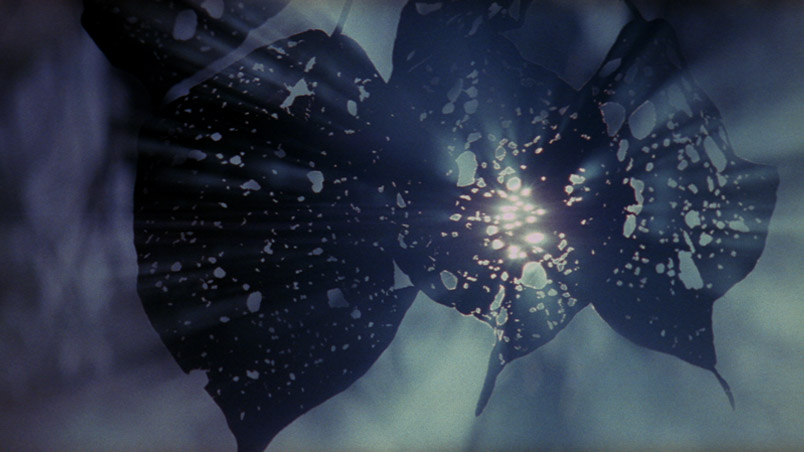

76. The Thin Red Line (Terrence Malick, 1998)
77. Eternal Sunshine of the Spotless Mind (Michel Gondry, 2004)
78. The Third Man (Carol Reed, 1949)
79. Lolita (Stanley Kubrick, 1962)
80. Miller's Crossing (Joel Coen and Ethan Coen, 1990)
81. Phantom of the Paradise (Brian De Palma, 1974)
82. Cabaret (Bob Fosse, 1972)
83. Creepshow (George A. Romero, 1982)
84. Hannah and Her Sisters (Woody Allen, 1986)
85. La Dolce Vita (Federico Fellini, 1960)
86. The Tree of Life (Terrence Malick, 2011)
87. Death Proof (Quentin Tarantino, 2007)
88. My Own Private Idaho (Gus Van Sant, 1991)
89. The Big Lebowski (Joel Coen and Ethan Coen, 1998)
90. The King of Comedy (Martin Scorsese, 1983)
91. Rosemary's Baby (Roman Polanski, 1968)
92. Spirited Away (Hiyao Miyazaki, 2001)
93. The Seventh Seal (Ingmar Bergman, 1957)
94. Nights of Cabiria (Federico Fellini, 1957)
95. True Romance (Tony Scott, 1993)
96. Fanny and Alexander (Ingmar Bergman, 1982)
97. Fearless (Peter Weir, 1993)
98. The Dark Crystal (Jim Henson and Frank Oz, 1982)
99. Star Trek II: The Wrath of Khan (Nicholas Meyer, 1982)
100. One From the Heart (Francis Ford Coppola, 1982)


101. The Silence of the Lambs (Jonathan Demme, 1991)
102. The Verdict (Sidney Lumet, 1982)
103. Lost in America (Albert Brooks, 1985)
104. A Trip to the Moon (Georges Méliès, 1902)
105. Re-Animator (Stuart Gordon, 1985)
106. Y tu mamá también (Alfonso Cuarón, 2001)
107. Django Unchained (Quentin Tarantino, 2012)
108. Before Midnight (Richard Linklater, 2013)
109. The World's End (Edgar Wright, 2013)
110. The Year of Living Dangerously (Peter Weir, 1982)
111. Planes, Trains & Automobiles (John Hughes, 1987)
112. Manhunter (Michael Mann, 1986)
113. Bambi (David Hand & various, 1942)
114. Eating Raoul (Paul Bartel, 1982)
115. Stop Making Sense (Jonathan Demme, 1984)
116. Seven Samurai (Akira Kurosawa, 1954)
117. The Conformist (Bernardo Bertolucci, 1970)
118. The Treasure of the Sierra Madre (John Huston, 1948)
119. Shoah (Claude Lanzmann, 1985)
120. Woodstock (Michael Wadleigh, 1970)
121. Robocop (Paul Verhoeven, 1987)
122. The Wolf of Wall Street (Martin Scorsese, 2013)
123. Bonnie and Clyde (Arthur Penn, 1967)
124. The Wizard of Oz (Victor Fleming, 1939)
125. Stroszek (Werner Herzog, 1979)


126. Mean Streets (Martin Scorsese, 1973)
127. The Last Emperor (Bernardo Bertolucci, 1987)
128. The Discreet Charm of the Bourgeoisie (Luis Buñuel, 1972)
129. Frenzy (Alfred Hitchcock, 1972)
130. The Dead Zone (David Cronenberg, 1983)
131. Andrei Rublev (Andrei Tarkovsky, 1966)
132. The Night of the Hunter (Charles Laughton, 1955)
133. Images (Robert Altman, 1972)
134. The American Friend (Wim Wenders, 1977)
135. Solaris (Andrei Tarkovsky, 1972)
136. Roma (Federico Fellini, 1972)
137. Aliens (James Cameron, 1986)
138. Superman (Richard Donner, 1978)
139. The Secret of Roan Inish (John Sayles, 1995)
140. Repulsion (Roman Polanski, 1965)
141. Bad Timing (Nicolas Roeg, 1980)
142. Almost Famous (Cameron Crowe, 2000)
143. Far From Heaven (Todd Haynes, 2002)
144. The Great Dictator (Charles Chaplin, 1940)
145. Throne of Blood (Akira Kurosawa, 1957)
146. The Bridge on the River Kwai (David Lean, 1957)
147. Solaris (Steven Soderbergh, 2002)
148. Mr. Smith Goes to Washington (Frank Capra, 1939)
149. Rear Window (Alfred Hitchcock, 1954)
150. Diner (Barry Levinson, 1982)


151. Betty Blue (Jean-Jacques Beiniex, 1986)
152. The Texas Chain Saw Massacre (Tobe Hooper, 1974)
153. Performance (Donald Cammell and Nicolas Roeg, 1970)
154. Poltergeist (Tobe Hooper, 1982)
155. Richard Pryor: Live on the Sunset Strip (Joe Layton, 1982)
156. Tokyo Story (Yasujirô Ozu, 1953)
157. M (Fritz Lang, 1931)
158. A.I. (Steven Spielberg, 2001)
159. Citizen Kane (Orson Welles, 1941)
160. Sideways (Alexander Payne, 2004)
161. Rashomon (Akira Kurosawa, 1950)
162. Ed Wood (Tim Burton, 1994)
163. Macbeth (Roman Polanski, 1971)
164. The Social Network (David Fincher, 2010)
165. The Road Warrior (George Miller, 1981)
166. Day of the Dead (George A. Romero, 1985)
167. Inferno (Dario Argento, 1980)
168. Sunset Boulevard (Billy Wilder, 1950)
169. The Red Shoes (Michael Powell and Emetic Pressburger, 1948)
170. Zero Dark Thirty (Kathryn Bigelow, 2012)
171. The Apartment (Billy Wilder, 1960)
172. Invasion of the Body Snatchers (Philip Kaufman, 1978)
173. Doctor Zhivago (David Lean, 1965)
174. If.... (Lindsay Anderson, 1968)
175. Kagemusha (Akira Kurosawa, 1980)


176. Catch-22 (Mike Nichols, 1970)
177. Coming Home (Hal Ashby, 1978)
178. The Deer Hunter (Michael Cimino, 1978)
179. Full Metal Jacket (Stanley Kubrick, 1987)
180. Three Kings (David O. Russell, 1999)
181. Gangs of New York (Martin Scorsese, 2002)
182. Eyes Without a Face (Georges Franju, 1960)
183. Spartacus (Stanley Kubrick, 1960)
184. The Nightmare Before Christmas (Henry Selick, 1993)
185. Kwaidan (Masaki Kobayashi, 1964)
186. Black Sunday (Mario Bava, 1960)
187. Being There (Hal Ashby, 1979)
188. Night Moves (Arthur Penn, 1975)
189. Sans Soleil (Chris Marker, 1983)
190. La jetée (Chris Marker, 1962)
191. The Umbrellas of Cherbourg (Jacques Demy, 1964)
192. Let the Right One In (Tomas Alfredson, 2008)
193. A Star is Born (George Cukor, 1954)
194. North by Northwest (Alfred Hitchcock, 1959)
195. Un Chien Andalou (Luis Buñuel and Salvador Dali, 1929)
196. Chungking Express (Wong Kar-wai, 1944)
197. Breathless (Jean-Luc Godard, 1960)
198. Peeping Tom (Michael Powell, 1960)
199. Do the Right Thing (Spike Lee, 1989)
200. An American Werewolf in London (John Landis, 1981)


201. 3 Women (Robert Altman, 1977)
202. Star Wars (George Lucas, 1977)
203. I'm Not There (Todd Haynes, 2007)
204. Being John Malkovich (Spike Jonze, 199)
205. The Iron Giant (Brad Bird, 1999)
206. Pather Panchali (Satyajit Ray, 1955)
207. Diabolique (Henri-Georges Clouzot, 1955)
208. Notorious (Alfred Hitchcock, 1946)
209. The Killing (Stanley Kubrick, 1956)
210. Casablanca (Michael Curtiz, 1942)
211. Pan's Labyrinth (Guillermo del Toro, 2006)
212. Dog Day Afternoon (Sidney Lumet, 1975)
213. Nosferatu, eine Symphonie des Grauens (F.W. Murnau, 1922)
214. 12 Years a Slave (Steve McQueen, 2013)
215. The Grapes of Wrath (John Ford, 1940)
216. Raising Arizona (Joel Coen and Ethan Coen, 1987)
217. American Beauty (Sam Mendes, 1999)
218. Inglorious Basterds (Quentin Tarantino, 2009)
219. Wings of Desire (Wim Wenders, 1987)
220. The Fountain (Darren Aronofsky, 2006)
221. Magnolia (Paul Thomas Anderson, 1999)
222. Pat Garrett & Billy the Kid (Sam Peckinpah, 1973)
223. The Assassination of Jesse James by the Coward Robert Ford (Andrew Dominik, 2007)
224. The Age of Innocence (Martin Scorsese, 1993)
225. Raiders of the Lost Ark (Steven Spielberg, 1981)


226. Under the Skin (Jonathan Glazer, 2014)
227. A Nightmare on Elm Street (Wes Craven, 1984)
228. Dazed and Confused (Richard Linklater, 1993)
229. Once Upon a Time in the West (Sergio Leone, 1968)
230. Popeye (Robert Altman, 1980)
231. Rushmore (Wes Anderson, 1998)
232. Double Indemnity (Billy Wilder, 1944)
233. Pulp Fiction (Quentin Tarantino, 1994)
234. The Birds (Alfred Hitchcock, 1963)
235. The Postman Always Rings Twice (Kay Garnett, 1946)
236. Dr. Strangelove or: How I Learned to Stop Worrying and Love the Bomb (Stanley Kubrick, 1964)
237. To Kill a Mockingbird (Robert Mulligan, 1962)
238. Belle de jour (Luis Buñuel, 1967)
239. Heavenly Creatures (Peter Jackson, 1994)
240. Hedwig and the Angry Inch (John Cameron Mitchell, 2001)
241. Some Like it Hot (Billy Wilder, 1959)
242. The 400 Blows (François Truffaut, 1959)
243. Beauty and the Beast (Jean Cocteau, 1946)
244. Breaking the Waves (Lars Von Trier, 1996)
245. Gravity (Alfonso Cuarón, 2013)
246. Inherent Vice (Paul Thomas Anderson, 2014)
247. Black Moon (Louis Malle, 1975)
248. The Adventures of Baron Munchausen (Terry Gilliam, 1988)
249. The Royal Tenenbaums (Wes Anderson, 2001)
250. Black Narcissus (Michael Powell and Emetic Pressburger, 1947)

Monday, June 01, 2015

I am into tacos like you are into turqoise.


This is my contribution to this year's White Elephant Blogathon, hosted by Philip Tatler IV at his blog Diary of a Country Pickpocket.

If a movie is repeatedly described by its fans as "Dadaist," isn't the joke on anyone who tries to write about it? Putting aside the question of whether "Dada" is a descriptor that has any real meaning outside of the zeitgeist that birthed it - WWI-era Europe - if a work, like Robert Downey Sr.'s Two Tons to Turquoise to Taos Tonight, is indeed deliberately artless as a protest against the crimes of polite society, is there anything else to say except to note its existence and move on? Maybe, but as I've been assigned Two Tons of Turquoise to Taos Tonight to write about, I will try.

For what it's worth, I wouldn't call the film (originally titled Moment to Moment) Dadaist so much as cheerfully nonsensical - while Downey's movies, most famously Putney Swope, were often designed to rankle the status quo, this plotless collection of brief sketches seems less like a calculated provocation than the result of Downey and his friends screwing around with a camera for their own amusement. One scene crashes into the next - there are men on horseback playing baseball, there's a scene aboard a spaceship, and at one point, it seems like the apocalypse might happen, but then it doesn't. The results are uneven as that sounds, though I admire the spirit of the movie even as the experience of actually watching it was something of a chore to get through. Writing that makes me feel like the lieutenant played by Fred Willard in This is Spinal Tap who tells the band he's a fan "not of your music personally, but the whole genre of rock and roll." That's how it is, though.

It's entirely possible that my feeling that I just watched a version of The Kentucky Fried Movie without jokes is on me for not being on Downey and his cast's wavelength. Everything about the way the movie jumps formlessly from one vignette to the next without concern for beginnings, endings or any kind of context suggests that, if it made Downey laugh, that was good enough for him. And as Putney Swope and some of his other movies combine this anarchic sensibility with more focused, pointed satire, I assume that he didn't set out to make a more conventionally satisfying comedy and screwed it up. This is the movie he wanted to make, and there's something admirable about how it's defiantly its own thing, even if I didn't enjoy it very much.

What enjoyment I did get out of it is reflected in the interview for the movie's Criterion release featuring Downey and Paul Thomas Anderson, where the younger director is clearly tickled by the notion that Downey convinced his cast - including his wife, Elsie, who appears in nearly every scene - to act out whatever crazy nonsense they could come up with, which is absurd in the way that all moviemaking is inherently absurd but which few movies acknowledge. My main takeaway is that Elsie, who, according to Downey, never said no to anything, must have been a real hip lady (young Robert Downey Jr. also appears in what seems to be home movie footage). Two Tons to Turquoise to Taos Tonight goes beyond personal into the realm of private filmmaking, and while I found myself thinking "that's clever" but not actually laughing throughout the movie, maybe it'll click with me if I revisit it sometime. And, while it's cheap to dismiss any surreal movie by accusing its makers of being on drugs, as the cast literally does lines at one point in the movie, it seems safe to say that I would have had a different experience if I was high.

Sidenote: I submitted one of my favorite movies, Dead Man, to the blog-a-thon, thinking that the person who was assigned it would be very lucky indeed. He actually hated it and spent multiple paragraphs rolling his eyes at it. Oh well, Jarmusch isn't for everyone. But I have to say, to the person that contributed Two Tons to Turquoise to Taos Tonight to the blog-a-thon: it wasn't my favorite, but if it's one of yours, thanks for nudging me to watch it, and I hope I haven't let you down.

Tuesday, March 10, 2015

Blatant self-promotion.

I'm making a movie this spring. It's called Most Likely, and it's a comedy about a group of lifelong friends spending a weird weekend in the country together for a wedding. We're scheduled to shoot in New Hampshire's White Mountains region in April, and we've assembled a talented cast and crew to make the movie, but we need your help. Please check out our Kickstarter page to learn more about the movie - at the very least, I highly recommend giving our ridiculous video a look. Whether or not you're able to contribute, sharing the link with your friends would be enormously helpful. Thanks very much!

Monday, February 02, 2015

It's not groovy to be insane.

I'm not sure exactly where to begin with Inherent Vice - I've seen it twice now, and I haven't completely wrapped my head around it, but I know it's a movie I'll be returning to for the rest of my life. It's not a problem of not understanding the plot, as the mystery at the center of Inherent Vice, while deliberately convoluted and elusive, isn't nearly as impenetrable as many of the reviews have made it out to be. It's that, beyond all of the missing real estate tycoons, Nazi bikers, Mansonoid conspiracies and coked-up dentists, at the heart of the movie is a pervasive undercurrent of melancholy that ties together its parade of sight gags and stoner humor and familiar faces popping up for brief, weird vignettes. It's a feeling captured perfectly by the song that plays over the end credits (and if you consider an end credits soundtrack cue a spoiler, consider yourself warned). I think I've listened to Chuck Jackson's version of "Any Day Now" every day since seeing the film - I was startled to hear it as the movie cut to black, but it's as perfect a coda for Paul Thomas Anderson's adaptation of Thomas Pynchon's book as it is unexpected.

"Then my wild beautiful bird
You will have flown
Any day now
Love will let me down
'Cause you won't be around"


The song serves as a requiem both for a lost love and for a brief, perfect moment that, as the movie begins, is already almost over, with the idealism of peace and love giving way to the inexorable march of time and "the ancient forces of greed and fear," as they're called by the movie's narrator, the possibly etheral, probably immortal flower child Sortilege (Joanna Newsom). Those forces are represented by the Golden Fang, the mysterious crime ring with a seemingly limitless reach that, as the movie begins, has apparently kidnapped real estate developer Mickey Wolfmann (Eric Roberts). The movie opens with muttonchopped private eye Doc Sportello (Joaquin Phoenix) being paid an unexpected visit from his ex-old lady and Mickey's current lover, Shasta Fay Hepworth (Katharine Waterston), who asks Doc for help. Watching the movie a second time, this entire scene took on a different meaning - it's clear that Doc, who is rendered defenseless by Shasta's "heavy combination of face ingredients," is being played, and throughout the movie, our well-meaning but hapless hero will be repeatedly manipulated into being in the right place at the wrong time, particularly by the ex and current old ladies in his life.

As the plot quickly expands and it becomes clear that the missing Mr. Wolfmann is only a fraction of a far greater conspiracy that encompasses heroin smuggling, a syndicate of dentists and a saxophone played turned government informant (Owen Wilson), Anderson - adapting Pynchon's novel mostly faithfully - is clearly having fun overloading us with information. One of the movie's many hilarious throwaway gags is Doc's diagram of the story's many players; our hero is as lost as we are. Some of the movie's fans have insisted that the plot doesn't matter, but it's not that, exactly - it's that, when by the time we meet the guy (or one of the guys) pulling the strings, it feels beside the point. The two obvious cinematic reference points for Inherent Vice are The Big Lebowski and Robert Altman's hazy, meandering film of Raymond Chandler's The Long Goodbye, and those are both unavoidably a part of the movie's DNA. But I also found myself thinking about Chinatown, another Los Angeles mystery where the specifics of the central shadowy plot are less important than our hero's realization of everything that he'll never know or be able to change. In Chinatown, this realization transfoms the noir into a horror story; here, it's met with a dopey shrug that betrays more than a hint of sadness, mixed with the hope that, if our hero or any of us can save one little kid from the little kid blues, maybe all isn't lost.

If Inherent Vice is lamenting the end of an era, it works as well as it does because it never underlines this point. The loss of an idealized memory of a perfect moment that maybe never existed is crystallized in the scenes between Doc and Shasta, seen in flashback in a perfect moment, scored to Neil Young's "Journey Through the Past." I can't help feeling like I'm wasting a lot of words when film critic Miriam Bale has already written the perfect one-sentence review of the movie on Twitter, observing that "Sometimes I think Inherent Vice is only for those who have exes that seem like certain Neil Young albums." Contrast that with a scene late in the film where Shasta uses her sexuality to manipulate Doc; Waterston is remarkably fearless in the scene, which is - sexy isn't the right word, but it's made doubly disturbing because it's not entirely unarousing for any male audience members of the audience who'd like to think of themselves as better than that. The scene casts a dark shadow over the rest of the movie, a lingering reminder that, whatever our attempts at living the hippie lifestyle then or now, our own animal attraction to power and control - whether we'd prefer to be on the giving or receiving end - thwarts us as much as the Golden Fang ever could.

It's scenes like this that set Doc Sportello apart from Jeff Lebowski, as much as both are the men for their times and places. Whereas the Dude is a truly Zen creation pulled into a situation beyond his control, there's a constant tension in Doc best illustrated by his favorite gesture, a peace sign followed by a middle finger. At one point, Doc casually jots down the phrase "Paranoia alert" in his notepad, and Phoenix's performance is a masterpiece of muttered asides and little gestures, facial expressions and whimpers that suggest he's always just barely keeping a full-blown panic attack at bay. He's matched by Josh Brolin as Detective "Bigfoot" Bjornsen, a Jungian shadow of sorts for Doc - Brolin uses his rugged screen presence to great effect, suggesting a wounded and strangely empathetic soul underneath the macho bluster, and Bigfoot and Doc's complicated relationship culminates in a scene that had me in hysterics both times I've seen the movie. The rest of the star-studded cast is terrific - I particularly enjoyed Martin Short, who does the most hilarious bump in film history; Michelle Sinclair (nee Belladonna), whose scene ends in a neat reversal of the same moment in the book; and Reese Witherspoon as Penny, an assistant D.A. and Doc's sometime lady. Penny's an upstanding citizen who sneaks away to Doc's shack at the fictional Gordita Beach for occasional deviance, and frankly, her simultanous giving Doc a hard time while clearly being totally into this weed-addled mess of anxiety and frayed synapses reminded me of me and my old lady. Perhaps it's not a great sign of how I'm doing if I'm relating to Doc Sportello, even if Sortilege assures him he's doing good*; on the other hand, out of recent releases, better that I see myself in Doc than in Birdman or Listen Up Philip or, especially, those knuckleheads in Whiplash.

But I digress. The real star here is Paul Thomas Anderson, and while he's content to translate much of Pynchon's book faithfully to the screen, it's still unmistakably his movie. Anderson has made enough movies now to chart an evolution from the look-at-me wunderkind who filled Boogie Nights and Magnolia with jaw-dropping tracking shots and bold gestures like, say, frogs falling from the sky. As a teen, my reaction to these moments was "Oh my God, this guy is fucking awesome and I want to be him when I grow up." Now I'm older than Anderson was when he made those movies, and I can also see how desparate he was for validation, which actually only makes me love them (and him) more. If There Will Be Blood and The Master signaled that he was becoming a more "mature" filmmaker, then Inherent Vice is both a logical next step and a surprising left turn for the director. Anderson has cited the Zucker brothers as an influence, and during the second viewing I caught enough ingenious peripheral sight gags (How did I miss the machine gun-toting Jesuses the first time?) that I'm eager to discover more. At the same time, the few elaborate tracking shots or other big stylistic flourishes are very brief and precisely chosen - for the most part, Anderson favors letting scenes unfold in long master shots, and any camera movements are very carefully motivated, including some beautiful handheld camerawork (just when I thought I was sick to death of handheld).

Probably the most impressive thing about Anderson's work here is his confidence in the material - this was never going to be a major crowd-pleaser, but it's obviously work of a guy who is content to follow the stories that interest him. It's a movie for anyone tuned into its own peculiar wavelength, the straight world be damned. While it would have been nice if, somehow, the movie became a hit, it really never stood a chance, and that's okay. I drove an hour to see Inherent Vice the first time, to a college town I'd never been to; on the way home, driving through the beautiful northern reaches of my state, the movie still buzzing around in my head, I felt alive in a way no new movie had made me feel in quite a while. It feels inevitable that Inherent Vice is on its way to becoming a cult classic - not on the order of The Big Lebowski, perhaps, as it doesn't lend itself as easily to costume contests and bowling tournaments, but I look forward to the movie gradually finding its audience. In the meantime, I'm as content to love it for my own reasons as Anderson clearly was in making it for his.

*Sidenote: I wasn't familiar with Joanna Newsom before the movie, but now, I'd gladly listen to her narrate anything. She could turn an industrial training video into a lullaby.

Friday, January 30, 2015

Top 10: 2014


Earlier today, I wrote a paragraph on each of the movies in my top ten, along with a 600-word introduction. I was struggling with the tone, and I realized it's because, in the past year, real life has changed the way I watch movies. My moviegoing habits haven't changed, but since my dad's death last spring, I find myself valuing movies for different reasons. But honestly, it read like it should be titled "Top 10 Sad Things That Happened To Me This Year." I just deleted it all, and it feels liberating. However, I did enjoy putting together a playlist of songs from the movies listed below, and, if you have the time, I think it actually serves as a pretty good mixtape for 2014. Happy new year, everyone.


My top ten:


1. Under the Skin
2. Inherent Vice 
3. The Babadook
4. Selma
5. Only Lovers Left Alive 
6. The Grand Budapest Hotel
7. Blue Ruin
8. Boyhood 
9. Love is Strange 
10. Birdman

The rest of my Muriels ballot:


Best Lead Performance, Male


1. Michael Keaton, Birdman
2. David Oyelowo, Selma
3. Joaquin Phoenix, Inherent Vice
4. Ralph Fiennes, The Grand Budapest Hotel
5. Macon Blair, Blue Ruin

Best Lead Performance, Female

1. Scarlett Johansson, Under the Skin
2. Essie Davis, The Babadook
3. Marion Cotillard, The Immigrant
4. Rosamund Pike, Gone Girl
5. Jenny Slate, Obvious Child

Best Supporting Performance, Male

1. Josh Brolin, Inherent Vice
2. Ethan Hawke, Boyhood
3. Patrick D'Assumçao, Stranger by the Lake
4. Tyler Perry, Gone Girl
5. Jonathan Pryce, Listen Up Philip

Best Supporting Performance, Female

1. Tilda Swinton, Snowpiercer
2. Patricia Arquette, Boyhood
3. Carrie Coon, Gone Girl
4. Emma Stone, Birdman
5. Emily Blunt, Into the Woods

Best Direction


1. Jonathan Glazer, Under the Skin
2. Paul Thomas Anderson, Inherent Vice
3. Jennifer Kent, The Babadook
4. Ava DuVernay, Selma
5. Jim Jarmusch, Only Lovers Left Alive


Best Screenplay

1. Wes Anderson, The Grand Budapest Hotel
2. Paul Thomas Anderson, Inherent Vice
3. Jennifer Kent, The Babadook
4. Ira Sachs and Mauricio Zacharias, Love is Strange
5. Gillian Flynn, Gone Girl

Best Cinematography

1. Robert Elswit, Inherent Vice
2. Dick Pope, Mr. Turner
3. Darius Khondji, The Immigrant
4. Emmanuel Lubezki, Birdman
5. Bradford Young, Selma

Best Editing 

1. Sandra Adair, Boyhood
2. Kirk Baxter, Gone Girl
3. Barney Pilling, The Grand Budapest Hotel
4. Leslie Jones, Inherent Vice
5. Simon Njoo, The Babadook


Best Music

1. Mica Levi, Under the Skin
2. Antonio Sanchez, Birdman
3. Hans Zimmer, Interstellar
4. Jonny Greenwood, Inherent Vice
5. Josef van Wissem, Carter Logan, Jim Jarmusch and Shane Stoneback, Only Lovers Left Alive


Best Documentary 

1. Life Itself
2. The Last of the Unjust
3. Citizenfour


Best Cinematic Moment 

1. “Trapped By a Thing Called Love,” Only Lovers Left Alive
2. Flying, Birdman
3. “Journey Through the Past,” Inherent Vice
4. Opening sequence, Under the Skin
5. Final shot, The Immigrant
6. Godzilla’s first appearance, Godzilla
7. School car, Snowpiercer
8. “I feel everything,” Lucy
9. Creation story, Noah
10. “Escape (The Pina Colada Song),” Guardians of the Galaxy


Best Cinematic Breakthrough 

1. Jennifer Kent, The Babadook
2. Ava DuVernay, Selma
3. Jeremy Saulnier, Blue Ruin
4. Ana Lily Amirpour, A Girl Walks Home Alone at Night
5. Gillian Robespierre, Obvious Child


Best Body of Work 

1. Scarlett Johansson
2. Tilda Swinton
3. Joaquin Phoenix
4. Emily Blunt
5. Jake Gyllenhaal


Best Ensemble Performance 

1. Selma
2. Inherent Vice
3. Love is Strange
4. Birdman
5. We Are the Best!

Friday, January 23, 2015

Top 10: 2004


1. Kill Bill vol. 2 (Tarantino)
2. Eternal Sunshine of the Spotless Mind (Gondry)
3. Sideways (Payne)
4. Birth (Glazer)
5. Spider-Man 2 (Raimi)
6. Shaun of the Dead (Wright)
7. Before Sunset (Linklater)
8. The Incredibles (Bird)
9. The Aviator (Scorsese)
10. Million Dollar Baby (Eastwood)

Friday, January 16, 2015

Top 10: 1994


1. Ed Wood (Burton)
2. Heavenly Creatures (Jackson)
3. Pulp Fiction (Tarantino)
4. Chungking Express (Wong)
5. Hoop Dreams (James)
6. Red (Kieslowski)
7. Natural Born Killers (Stone)
8. Mrs. Parker and the Vicious Circle (Rudolph)
9. Little Women (Armstrong)
10. The Hudsucker Proxy (Coen)

Friday, January 09, 2015

Top 10: 1984


1. Once Upon a Time in America (Leone)
2. Amadeus (Forman)
3. The Terminator (Cameron)
4. A Nightmare on Elm Street (Craven)
5. This is Spinal Tap (Reiner)
6. Paris, Texas (Wenders)
7. Gremlins (Dante)
8. Ghostbusters (Reitman)
9. Stop Making Sense (Demme)
10. Repo Man (Cox)

Friday, January 02, 2015

Top 10: 1974


1. The Conversation (Coppola)
2. Chinatown (Polanski)
3. The Godfather Part II (Coppola)
4. Phantom of the Paradise (De Palma)
5. The Texas Chain Saw Massacre (Hooper)
6. A Woman Under the Influence (Cassavetes)
7. Celine and Julie Go Boating (Rivette)
8. Young Frankenstein (Brooks)
9. Arabian Nights (Pasolini)
10. Black Christmas (Clark)

Friday, October 31, 2014

'90s Horror Poll: Day 30 - Braindead (aka Dead Alive)


#1 - 21 Votes

The surprise (to me, anyway) victory of Braindead - re-titled Dead Alive in North America - in this poll must be at least partly attributable to the enduring popularity of zombies. The walking dead were in a bit of a lull during the decade - other than the screenplay for the Night of the Living Dead remake, George A. Romero took a break from zombies, and besides Cemetery Man, the list of other notable zombie movies is pretty short (only Return of the Living Dead 3 and the comedy My Boyfriend's Back come to mind). When Braindead was released in the U.S. in 1993, trends in horror movies were making a distinct turn away from the fantastic in favor of serial killers and sci-fi horror, which helped the film stand out in a crowded genre. And director Peter Jackson's take on the undead is nothing if not fantastic; in a little over an hour and a half, Jackson manages to put his rapidly rotting supporting cast through just about every puerile, gory gag one could think of, and even manages to invent a few new ones. Even if you're not a fan of constant, stomach-turning violence, you can't help admiring his showmanship.

As Stephen King put it in his book Danse Macabre, Jackson goes directly for the gross-out here. His first two features, the practically homemade Bad Taste and the slightly more polished Meet the Feebles, were gleefully tasteless, with content as crude as his filmmaking often was. Braindead was a big step forward for the filmmaker - the direction and performances are more assured from the start, and his screenplay (co-written with his partner Fran Walsh and Stephen Sinclair) is impressively nuanced, which isn't something one can always say about a movie where a lady's ear lands in a bowl of custard. When nebbishy mama's boy Lionel's (Timothy Balme) mum Vera (Elizabeth Moody) is infected by the bite of a Sumatran rat monkey, he continues caring for her after she's taken to eating dogs and tearing peoples' heads off, which threatens to put a stop to his budding romance with shop girl Paquita (Diana Peñalver). It's a story that would work as a romantic comedy with an Oedipal conflict even before you add in the dog eating and decapitations.

It's a big step forward, too, in terms of the effects Jackson, who cooked the makeup appliances for Bad Taste in his parents' oven, was able to work with a team of makeup artists, including Bob McCarron, who'd worked on The Road Warrior and Razorback. The effects are the star here, as Jackson and his team let their imaginations run wild; Braindead's zombies' individual parts keep on ticking even after they've been removed from the rest of the body, which allows for flying limbs, bisected heads with eyes that continue to see, and a large intestine that becomes a sort of character of its own towards the end. The showstopper is the climactic scene where Lionel mows down dozens of zombies with his lawnmower; the scene used 300 gallons of fake blood, and the movie in general reportedly used more fake blood than any other, though I'm not sure if there's any way to be sure (does every horror movie crew keep a count?). The movie would be unwatchable if it weren't for the peculiarly cheerful, cartoonish approach Jackson takes - the gore here isn't too far, in spirit, from my six-year-old's bloody drawings of zombies and monsters biting off peoples' heads, and the movie's grisly sight gags and physical comedy owe as much to Chuck Jones as they do to Sam Raimi. Braindead's best and funniest scene, Lionel's trip to the park with a zombie baby, wouldn't seem out of place in an episode of Monty Python's Flying Circus, and I love that the scene was thought up on the fly when Jackson and his crew wrapped early and had an extra day left in the shooting schedule.

Of course, the scene where a priest discovers zombies outside his church and reveals himself to be a kung fu master is another favorite, and for good reason - we're given no advance context for the priest's martial arts abilities, which only makes it funnier, and the line "I kick ass for the Lord" is just perfect. But the scene also points towards the influence Braindead, like the Evil Dead movies, had on lesser imitators. We've been inundated in recent years with countless low-rent zombie movies - Zombie Strippers, Ninjas vs. Zombies, Zombeavers - where the filmmakers combined blood and guts with some sort of obvious juxtaposition between zombies and strippers, ninjas, beavers or whatever they thought of after fifteen seconds of effort. There are enough of these movies that, presumably, stoners browsing Netflix are enough to keep them in the black. Shaun of the Dead was one of the few movies to take the right lesson from Braindead, creating a grounded story with relatable characters, then seeing how introducing zombies into the movie shakes up the relationships and personal conflicts the movie has already established. While there have been plenty of solid horror movies in recent years, the glut of half-assed horror-comedies makes one wish that Jackson - who followed up Braindead with the drama Heavenly Creatures, still his best movie, starting him on the path towards Oscars and billion-dollar grosses - might be inclined to make a movie that nods to his roots, as Sam Raimi did with Drag Me to Hell, now that he's finally done with Middle Earth (one can hope). Either way, Dead Alive is as fun as it was two decades ago, and the perfect way to end the '90s Horror Poll - thanks again to everyone who submitted a list, and especially to my contributors, Alex Jackson and Christopher Fujino. Happy Halloween!

U.S. Release Date: February 12, 1993 (Also released that day: Groundhog Day, Untamed Heart, The Temp, Love Field, Strictly Ballroom)

What critics said at the time:

"Because all of this looks blatantly unreal, and because the timing of the shock effects is so haphazard, 'Dead Alive' isn't especially scary or repulsive. Nor is it very funny. Long before it's over, the half-hour-plus bloodbath that is the climax of the film has become an interminable bore." - Stephen Holden, New York Times

"Jackson, obviously aware of the cliché-ridden dangers of 'horror comedies,' chucks convention and good taste out the window and goes for the gusto (or is that 'gutso'?) with uncanny results. The film moves from gag to gore to gag again like a rocket from the crypt and never lets up - just when you think you've seen the worst, Jackson tops himself and there you are squirming in your seat again (and loving every minute of it). Sick. Perverse. Brilliant." - Marc Savlov, Austin Chronicle

Thursday, October 30, 2014

'90s Horror Poll: Day 29 - Scream


#2 (Tie) - 15 Votes

It's hard to explain what the initial impact of Scream was like to people who were too young to see it when it was released (back then, popcorn cost a dime, we had to walk five miles through the snow to get to the nickelodeon, and so forth). Released with little fanfare during the holiday season alongside several higher-profile movies, the movie's opening weekend was small, and while the reviews were generally positive, nobody was predicting it would be the start of a blockbuster franchise. A few TV spots and a review in the Boston Globe comparing the movie to Halloween had me intrigued, so I convinced my older brother to take us. The audience was far from packed, but as the movie began, we were almost immediately on the edge of our seats. There are always anecdotal stories about audiences screaming and talking back to the screen at horror movies, but Scream was one of the few times I personally experienced anything like that.

The famous opening sequence is so crucial to the success of the rest of the movie because it raises the stakes to such a severe degree that, no matter how jokey and self-referential the movie gets, the gruesome image of a disemboweled Drew Barrymore hanging from a tree lingers in our recent memories. The opening introduces the premise of horror movie victims (and killers) who are well versed in horror movie tropes, but though the killer name-drops Freddy Krueger and Jason Voorhees, there's no sense of ironic detachment in how Craven stages the stalking and murder of Barrymore's character, Casey. From the cold open on Casey answering the phone, the way Craven constructs the sequence is not quite like anything we'd seen from him before; he was always a very intelligent filmmaker, but never quite as stylistically precise. Much of this was likely built into Kevin Williamson's script, with doorbells, Jiffy Pop and the ringing of Casey's phone punctuating the scene and keeping us on edge. But the scene might be Craven's strongest work as a director; as the killer flirts with, then taunts and eventually chases after Casey, the eerily smooth Steadicam shots tracking her around and outside the house do a fantastic job of tightening the screws. And between Barrymore's excellent, visibly shaken performance and the great, tragic moment where Casey's parents arrive moments too late, it's the rare slasher movie scene with pathos and a palpable sense of loss.

The tone of the rest of the movie is considerably lighter; with the brutal opening sequence hanging over everything, it doesn't have to get as grisly to keep us on edge. The premise is well-known by now, and Scream was far from the first horror movie to feature cinema-literate characters and call attention to itself as a movie. What made it feel fresh was not just that the teenagers in the movie had seen scary movies, but that they had a very '90s, very teenage sense of irony and cynicism. When movie geek Randy is lecturing a room full of people with the rules to survive a scary movie, it doesn't matter that the rules immediately remind of a long list of exceptions (Jamie Lee Curtis doesn't have sex in Halloween, but she does smoke a joint while listening to Blue Oyster Cult). What matters is that this media-literate smartass thinks that being able to identify horror cliché somehow protects him from real-life horror (it doesn't). Underneath the clever pop culture references, the darker existential irony of Scream is that these characters can know they're victims and joke about it, but most of them are still going to die. While some aspects of the movie are distinctly of their time (remember when Skeet Ulrich was a thing?), it's that funny/queasy central joke that makes the movie hold up today.

Scream was released by Dimension films, the genre-based division of Miramax, whose founders, Bob and Harvey Weinstein, had produced The Burning, one of the first wave of slashers, fifteen years earlier. Dimension was their attempt to mimic the success New Line had seen with the Nightmare on Elm Street series, which mostly resulted in crappy sequels to Hellraiser and Children of the Corn. Scream was Dimension's first big success, and it led to a brief period when Kevin Williamson was a mini-industry, as well as a slew of Scream-influenced self-referential horror movies with casts handpicked from the WB. In the three years after Scream's release, Scream 2, I Know What You Did Last Summer, I Still Know What You Did Last Summer, The Faculty, Halloween H20, Disturbing BehaviorUrban Legend and Teaching Mrs. Tingle were all made from the template of Craven's movie with varying degrees of shamelessness. To trace Scream's influence, do an image search on any of these movies and you'll see they all have the same poster - a glossy shot with the star in the center, flanked on both sides by the other young, photogenic members of the cast. Still, as easy as it is to begrudge Scream for its influence, it really was a breath of fresh air for a genre that had grown very stale in 1996. Also, anyone who knows Wes Craven's body of work had to take some perverse enjoyment out of the fact that the director of Last House on the Left made a blockbuster that was beloved by 12-year-old girls. 

U.S. Release Date: December 20, 1996 (Also released that day: Beavis and Butt-Head Do America, One Fine Day, My Fellow Americans, Ghosts of Mississippi, Marvin's Room, The Whole Wide World, In Love and War)

What critics said at the time:

"Director Wes Craven is on familiar turf with his latest thriller, 'Scream.' The setting is a small town, the protagonists are teens, and there’s a psychotic killer on the prowl. But he may have gone to the trough once too often, attempting an uneasy balance of genre convention and sophisticated parody. The pic’s chills are top-notch, but its underlying mockish tone won’t please die-hard fans. That adds up to no more than modest commercial returns and fast theatrical playoff." - Leonard Klady, Variety

" [...] Craven and Williamson turn 'Scream' into a self-reflexive romp that owes as much to the experimental fiction of Borges and Calvino as the seminal work of John Carpenter ('Halloween') and Sean S. Cunningham ('Friday the 13th'). With Courteney Cox as a tabloid TV reporter, David Arquette as the town's bumbling deputy and Drew Barrymore as a special guest victim, 'Scream' builds to a splattering finale that should leave genre fans highly satisfied. Here's to one of the year's better thrillers, just in time for Christmas." - Dave Kehr, New York Daily News


Wednesday, October 29, 2014

'90s Horror Poll: Day 28 - The Silence of the Lambs


#2 (Tie) - 15 Votes

Few films hook me from the beginning the way The Silence of the Lambs does. The opening notes of Howard Shore's haunting score, which would fit a fantasy movie as well as a horror movie, over the Orion logo, give way to the first shots of the movie's heroine, Clarice Starling, making her way through a daunting obstacle course at Quantico. This introduction was Jodie Foster's idea - originally, the movie was to open with Clarice on a dangerous mission that is revealed to be a training simulation. Foster wanted to do the movie because she saw Clarice's story as the rare female version of the archetypal hero's journey in film, a woman who saves women, and we meet her as she's preparing for the journey the movie will send her on though she doesn't know it yet). It'soften easy to look too hard for symbolism in a film, but the way that cinematographer Tak Fujimoto shoots the forest path as murky and foreboding while emphasizing Clarice's strength and tenacity can't help but serve as foreshadowing for two things about the movie we're about to see: that, like the archetypal hero, Clarice is going to be sent into the dark wilderness to defeat a monster, and that she's more than up to the task.

While the things everyone remembers first about The Silence of the Lambs are the quotable lines from the story's two murderers - fava beans, lotion in the basket, Chianti, great big fat person, etc. - it's Clarice's journey that provides the movie with its narrative backbone and much of its emotional resonance, and director Jonathan Demme proved to be the perfect person to bring that story to the screen. Demme seemed like an unlikely choice at the time, as there was little in his filmography of quirky, humanistic comedies to suggest he could tackle such dark material. The one hint that he might have it in him was the second half of Something Wild, a New Wave version of a screwball romantic comedy that, with the introduction of the character of Ray (Ray Liotta), the obsessed ex-husband of Lulu (Melanie Griffith), takes a sharp left turn into violent thriller territory, a very jarring tonal shift that the director was able to pull off.

Demme's ability to create a very direct sense of audience identification with his characters works brilliantly in The Silence of the Lambs, particularly in emphasizing Clarice's sense of other-ness as a female trainee trying to catch a killer in a male-dominated field. It's a theme that dominates the movie, even though it almost never comes up in dialogue; it doesn't have to, thanks to Demme's so-simple-it's-brilliant manipulation of our perspective. We adopt Clarice's point of view when she walks into a funeral home filled with local cops and all eyes are on her, or when a nerdy entomologist hits on her (she handles both situations like a total badass, incidentally). Demme finds the perfect balance here, encouraging us to empathize with Clarice and understand the ever-present specter of the male gaze without being too on the nose about it (okay, maybe the smarmy Dr. Chilton is on the nose, but he's hilarious).

The director makes choices like this throughout the movie that would be too obvious if they weren't so perfect - take, for instance, the introduction of Buffalo Bill's future captive, Catherine Martin (Brooke Smith), as she's singing along to Tom Petty's "American Girl" in her car. In ten seconds, you know exactly who this character is. And the movie is pretty much a master course in shot composition and editing. This is most obvious in the scenes between Clarice and Dr. Lecter, which depend on us believing that our hero and a psychopathic cannibal (albeit a very charming and polite cannibal with exquisite taste) develop an intimate relationship for the rest of the film to work, and with the added visual barrier of a constant wall between them (first glass, then a literal cage). Demme is forced to cover the scenes with a shot/reverse shot pattern, which doesn't lend itself to visual fireworks; however, the next time you watch the movie, pay attention to how each cut, each time the camera pushes in closer on Foster or Anthony Hopkins, is perfectly motivated the dialogue and the emotional through-line of the scene, and how any sense of a barrier, literal or otherwise, between the two actors is completely erased. It's incredible work, and the movie is one of those rare ones that could double as a textbook on how to make a movie; when I was making my first movie, I was surprised to find that it was Demme, more than any other filmmaker, that I turned to for inspiration when I was stuck on how to shoot a scene.

Demme's work here was strong enough to help earn Anthony Hopkins win the Oscar, even though he's onscreen for less than half hour -his performance looms over the rest of the movie even when Dr. Lecter is elsewhere. Some people consider Hopkins' performance hammy and over the top; these people will inevitably bring up either Mads Mikkelsen (he's terrific, but it's apples and oranges) or, if they're hardcore nerds, Brian Cox (I like Manhunter too, but come on) as the superior Hannibal. And it's true that Hopkins goes big, especially in Hannibal's early scenes, but it's important to remember where the character is at this point in the story. In Hannibal (the show, not Ridley Scott's endearingly silly movie), he's a monster in hiding, and in Manhunter, we only see him interacting with the protagonist who caught him, prison guards and a secretary he's trying to get information from over the phone. When the fava beans scene arrives in The Silence of the Lambs, Ted Tally's screenplay has already cannily used supporting characters to describe the horrible crimes he's committed, stoking our sense of anticipatory dread. When Clarice first sees Hannibal, he's standing still and at attention, waiting for her (Hopkins' idea, and a good one). So all the business with fava beans and "pft-ft-ft-ft-ft" and what have you, as big as it is, works because it's Hannibal that's deliberately being theatrical in order to screw with this "hustling rube with a little taste."

As he starts to care about her and wants to help her succeed, Hopkins mostly drops the theatrics, and it's here that we can see why Demme was inspired by Hopkins' performance as the good Dr. Treves in The Elephant Man to cast him here. You can hear a little of the doctor with the patient determination to teach John Merrick to speak in this monster with a brilliant mind who genuinely wants to help Clarice catch another monster and conquer her own demons. Thomas Harris' next book made Hannibal's affection for Clarice explicitly romantic, and that's left open as a possibility in The Silence of the Lambs. However, I prefer to think of him as a dark counterpart to the father figure of Jack Crawford; this is as good a place as any to mention, too, that Scott Glenn, who is often left out of conversations about the movie, is just as good as his two co-stars in a much less show-y role. He plays Crawford perfectly so that you don't know how, on the first viewing, whether he's really trying to be a mentor to Clarice or just exploiting her to get information from Lecter, until that great moment, during the late-film fake-out, when he realizes he's put Clarice in real danger.

In the first three books featuring Lecter, Harris makes the story's progressively more repulsive and devoid of Lecter's humor and charisma, making Lecter seem much more, er, palatable by comparison. Red Dragon's Francis Dolarhyde was at least pitiable, but while we have to assume that Jame Gumb was created out of some kind of hellish upbringing, we're never privy to it; we meet him as a horribly, irreparably broken person. There were protests and complaints from the LGBTQ community, at the time, that Buffalo Bill perpetuated stereotypes of crazy, dangerous transsexuals, and it's a fair point to bring up. However, even if one shrugs off Lecter explicitly stating that Buffalo Bill isn't really a transsexual as a quick bit of ass-covering on the part of the filmmakers, it's pretty clear from one look around his house, where swastikas rest next to feather boas and Polaroids of Jame with strippers, that this guy is confused in ways far beyond his gender identity (and while it's a cliché to commend a "brave performance," Ted Levine's work here earns it). Also, Lecter and Clarice might not be straight either; after hearing Keith Uhlich suggest that this might be the case, I have to say that there's at least a possibility that Kasi Lemmons' character, Ardelia, is more than Clarice's buddy and roommate. 

In any case, the final descent into Buffalo Bill's lair is the perfect climax to Clarice's journey, in addition to being intensely frightening. Some have dismissed The Silence of the Lambs as a tasteful, A-list gloss on rape-revenge cycles that had been present in horror and exploitation movies for years. That's not untrue, but who cares, and besides, as much as I love even the most crudely made '80s slasher movie, The Silence of the Lambs is so much better crafted than 90 percent of horror movies that it seems weird to me to essentially criticize it for being above average. And it's not like Demme shies away from the gruesome aspects of the story - it's still remarkable that a movie with a severed head, decaying corpses, a disemboweling and Ted Levine tucking his sack back won Best Picture. By the time Clarice is in Bill's dark basement, the camera taking his POV through his night vision goggles, it's the most terrifying scene of its kind since Wait Until Dark; then our hero slays the monster and begins her return from the wilderness, permanently changed for better or worse. It's a perfect ending - empowering in a genre that, admittedly, rarely has that effect for women - in a movie that never hits a false note, and while the final two movies I'll be writing about are both great, The Silence of the Lambs is easily my choice for the best horror movie of the decade.

U.S. Release Date: February 15, 1991 (Also released that day: King Ralph, Nothing But Trouble, Iron and Silk)

What critics said at the time:


"Dr. Lecter is no Boy Scout by comparison; he likes to eat the body parts of his victims. And right now you are probably thinking, "Maybe I'll go see "Home Alone" again.' Smart move. Or you could take a chance and screen on home video 'Henry: Portrait of a Serial Killer,' which was a fascinating, illuminating, deadpan portrait of the same lethal subject. Instead, director Demme superheats 'The Silence of the Lambs' to the point of silliness, in terms of both gross behavior and a pulsating soundtrack. The conclusion of the film is nothing more than a grisly version of every mad-slasher picture you've ever missed. Jodie's in trouble. Shoot, Jodie, shoot." - Gene Siskel, Chicago Tribune
"If the movie were not so well made, indeed, it would be ludicrous. Material like this invites filmmakers to take chances and punishes them mercilessly when they fail. That's especially true when the movie is based on best-selling material a lot of people are familiar with. [...] The director, Jonathan Demme, is no doubt aware of the hazards but does not hesitate to take chances. His first scene with Hopkins could have gone over the top, and in the hands of a lesser actor almost certainly would have. But Hopkins is in the great British tradition of actors who internalize instead of overacting, and his Hannibal Lecter has certain endearing parallels with his famous London stage performance in 'Pravda,' where he played a press baron not unlike Rupert Murdoch. There are moments when Hopkins, as Lecter, goes berserk, but Demme wisely lets a little of this go a long way, so that the lasting impression is of his evil intelligence." - Roger Ebert, Chicago Sun-Times