Friday, September 08, 2006


Psycho or Apocalypse Now?

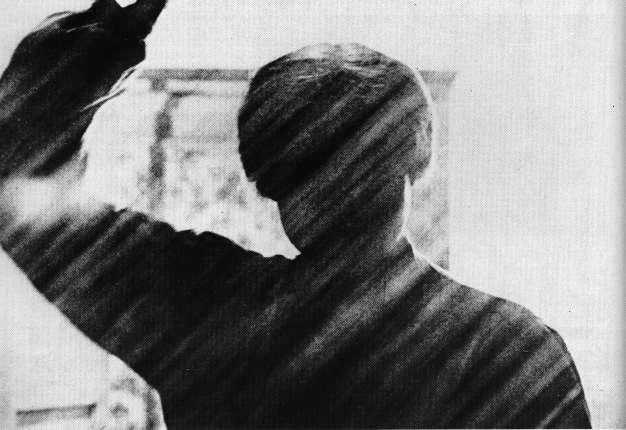
UPDATED: When it becomes a contest between Psycho and Apocalypse Now, it's a little like trying to decide between the Eiffel Tower and the Empire State Building. Coppola's acid-rock vision of Vietnam wins it by a vote. The horror...

Thursday, September 07, 2006


The Wicker Man or Blue Velvet?

UPDATED: I hate to be a sore loser, and The Wicker Man is a great movie, but really - the naked Britt Ekland movie? Over Blue Velvet? Over the severed ear and the bugs in the grass and the lady dancing on the car?

Ah well, that's that. This is a contest to inaugurate Cinevistaramascope's favorite film, so I like the idea that my opinion is no more or less valid than anyone else's. I sort of hate it when internet film critics make fun of their readers for having different taste, so let it be known that diverse opinions are embraced here. And and least my favorite film lost to an indisputably chilling and thought-provoking horror movie. Jeffrey, Sandy, Dorothy, Frank, Ben, you were beaten by the best. More to come soon. Sorry for rambling, but this has been a positive learning experience.

Yep, that's a human ear, all right.

Wednesday, September 06, 2006

The Trim Bin #38


- I hope those of you who have participated in The Gauntlet are having fun, as I know I am. It's been a good way to find out where your loyalties are. The parings in this first round were completely random, and it's fun to watch people choose between two movies that are completely apples and oranges (though, as Chuck Klosterman points out, apples and oranges aren't actually very different). As the field narrows, upcoming rounds will examine each competing film in more detail, and hopefully you'll all get less polite and resort to childish name-calling - stay tuned!

- Yesterday, Jess and I saw Monster House in digital 3-D at the Crossgates Mall. Although I prefer the IMAX 3-D format (it's sharper and more immersive), the process was still a lot of fun, bringing the titular monster to creaky, spooky life. It's a nifty gimmick, but a gimmick nonetheless; while it's a fun change of pace, ultimately good storytelling is the bottom line on how to get people back into cinemas. Truthfully, I stopped paying attention to the 3-D once the story - Monster House is a fun, surprisingly creepy movie very much in the vein of 80's Amblin productions, and it would have been on my all-time top 10 list when I was eight years old. I'm looking forward to The Nightmare Before Christmas in 3-D, but I found the trailer's assertion that the film has been stuck in two dimensions sort of smug; I heart Jack Skellington without the aid of special glasses, thank you very much.

- Check out these pictures of Kurt Russell's deadly car from Quentin Tarantino's Death Proof. Finally, a reason to look forward to Easter.

- This just became one of my most-anticipated movies: The Pervert's Guide to Cinema, a history of sexual subtext in cinema starring Slavoj Žižek and featuring a score by Brian Eno.

- This week has been encouraging for me. A piece I wrote about Marta Renzi's Porch Stories, my first for a newspaper, is running in the North Adams Transcript tomorrow. And Dennis Cozzalio ran a very kind mention of Cinevistaramascope in his Labor Day Weekend Reading List. I must confess that until recently, I thought this blog was read by about six people, so it's exciting to know that it's making tiny ripples in the world of online film writing (and that I don't completely suck at this). I don't want to overstate its significance; I just wanted to say thanks for reading.


Films watched this week:

The Godfather 10
A Wedding
8
Up in Smoke 7
Monster House
7
The Funhouse
8
The Howling 8

Ed Wood or Harold and Maude?

UPDATED: Harold and Maude wins by a vote. This is the closest pairing for me so far - Ed Wood is Tim Burton's best movie, Harold and Maude is Hal Ashby's best, and they're both completely sweet and inspiring. So I'm relieved that I didn't have to cast a tiebreaker vote - they're both just too wonderful.

Tuesday, September 05, 2006


Stop Making Sense or Raging Bull?

UPDATED: Looks like I'll have to cast the tiebreaker vote again. This pains me to do because the pro-Stop Making Sense comments are very sweet (always go with your heart). But my heart tells me to go with Raging Bull; borne out of desperation (Scorsese had just gone through a period of physical and emotional breakdown), it speaks to me in a way few films have - it touches the transcendent. But you emphatic Stop Making Sense fans, please hang around for the eventual wild card races.

Monday, September 04, 2006

You stopped talking because of Friederich Nietzsche?

I wasn't particularly looking forward to Little Miss Sunshine, as the trailers made it seem like a too-familiar collection of self-conscious "indie" quirk. And as the entire concept of independent cinema has been so frequently copied, co-opted, bought, sold, and processed, I wasn't in the mood for yet another movie that reminds us how every dysfunctional family is adorable in its own way. Luckily, while Little Miss Sunshine doesn't reinvent the mold, it cuts deeper than I expected. From the title card displayed over Steve Carrell's broken, teary-eyed face, the film displays an understated wit and sensitivity; it earns its laughs.

At the heart of the film is Olive Hoover (Abigail Breslin), a little girl who dreams of becoming Miss America. After Olive qualifies as a semifinalist in the Little Miss Sunshine competition, her entire family (for reasons too complicated to relate here) accompanies her on a two-day road trip to the pageant in California. A rickety old VW bus with a tempermental transmission houses Olive's dad Richard (Greg Kinnear), a motivational speaker struggling to keep his finances and marriage afloat; mom Sheryl (Toni Collette), who stares at her husband with silent disdain; Sheryl's brother Frank (Steve Carrell), the self-declared "premier Proust scholar," who is recovering from a broken heart and a suicide attempt; teen son Dwayne (Paul Dano), who has taken a vow of silence and jots "I hate everybody" on a notepad; and Grandpa (Alan Arkin), who snorts heroin, swears like a sailor, and adores his granddaughter. The film could have easily devolved into a sitcom, turning the Hoovers into a group of one-dimensional caricatures. But while Little Miss Sunshine has some broad laughs (particularly at the expense of beauty pageant contestants), it never panders to its characters. Some of the funniest moments come from small bits of observation, such as Carrell's hilariously painful encounter with his ex-boyfriend and his new, more successful lover. While the scene ends on a punchline, the real humor can be found in Frank's wounded expression as he feigns happiness. It's the kind of moment that goes beyond the joke to reveal an underlying truth, and Little Miss Sunshine is full of such moments.

Husband-and-wife directing team Jonathan Dayton and Valerie Faris, working on their first feature (previous credits include episodes of Mr. Show and the video for The Smashing Pumpkins' "Tonight Tonight"), and they achieve a fun, sunshine-yellow visual style that emphasizes the vast empty spaces that punctuate the American landscape - comedies are rarely this good-looking. But they're also smart enough to let the actors dominate the proceedings, and the well-cast ensemble has a field day with Michael Arndt's screenplay. Collette and Dano both project a quiet, seething anger that make them sweetly believable as mother and son. Kinnear has made a career out of playing smug authority figures, but he uncovers new shades of meaning in this particular smug authority figure. Arkin delivers Grandpa's profane words of wisdom with gusto, refusing to fall victim to the "horny old guy" cliché. But the real standouts here are Carrell, deserves an Oscar nomination for his subtle, bittersweet work as Frank, and Breslin (previously seen as Mel Gibson's hyperactive tot in Signs), whose wide-eyed, solemn dreams of being Miss America carry us through the film - you can't help but root for the kid.

Dayton and Farris balance slapstick with tragedy with the lightest of touches, creating a film that avoids sentimentality but inspires our optimism. As the Hoovers make their way towards the pageant, we observe how, no matter how hard they try to alienate themselves from one another, they remain a family. It's not the newest or boldest message, but Little Miss Sunshine earns it honestly. And the climax, which blows a big, gratifying raspberry at the "#1" mentality, is worthy of The Bad News Bears. The term "broad appeal" too often refers to completely generic films that have been made for noone in order to placate everyone. But Little Miss Sunshine is the best kind of crowd-pleaser; it's about our collective hopes and anxieties, our secret dreams, the ways in which we struggle to make any emotional connection, and the joy that comes from learning to understand one another. After a typical summer of prepackaged "fun," its a breath of fresh air.

Alien or My Own Private Idaho?

UPDATED: A unanimous victory for Alien. It's a bummer to see one of my personal favorites get so thoroughly beaten, but Alien is in my top twenty, and it's one of the films that started my obsession with movies, so it's an honorable defeat. Plus, I get to post a bloodied John Hurt, which is nice.

Sunday, September 03, 2006


It's a Wonderful Life or Akira?

UPDATED: It looks like I'll have to cast my tiebreaking vote for the first time with two very different films. I love Akira, but I'll have to go with It's a Wonderful Life. Even if it's overplayed, it's a lovely film with one of James Stewart's best performances. And if you think that this match was apples and oranges, wait for the next one.

Play the game (9/3/06)

Last week (sort of): The Untouchables

Saturday, September 02, 2006


Eternal Sunshine of the Spotless Mind or The Wild Bunch?

UPDATED: And it's Eternal Sunshine of the Spotless Mind in another 1-0 victory! That's my choice as well, though if it had been Pat Garrett and Billy the Kid, it'd be another story.

Friday, September 01, 2006

Round 1


The Good, the Bad and the Ugly or Kill Bill: Vol. 2?

UPDATED: It's The Good, the Bad and the Ugly in a landslide with a whopping 1-0 lead over Kill Bill: Vol. 2. Thanks to Dennis Cozzalio of Sergio Leone and the Infield Fly Rule for keeping the game alive (for at least another day). It's a bit saddening to see one of my top ten lose right out of the gate, particularly when all it took was one vote. But Leone's film is a masterpiece and a worthy adversary (even if I prefer Once Upon a Time in the West). Round 1 continues shortly.

Thursday, August 31, 2006

The Trim Bin #37


- A quick reminder: The Gauntlet begins tomorrow. Ready the cannons.

- I'm not a huge fan of In the Bedroom, but after seeing the trailer for Little Children, the second feature from director Todd Field (aka Nick Nightingale), I can't wait. Field's adaptation of a Tom Perotta novel is set up in two minutes of quiet, fragmented, haunting images. This sort of thing is hard to do well, and it's done brilliantly here, hinting at unspoken menace; I hope the film lives up to it (that it stars Kate Winslet and Jennifer Connelly couldn't hurt).

- And here's the trailer for Shortbus, John Cameron Mitchell's sex film that I mentioned a while back. It's candy-colored and cheeky, and it looks like way more fun than Nine Songs.

- A must-read: Walter Chaw brilliantly demolishes Fried Green Tomatoes.

- Finally, a tip of the hat to Joseph Stefano, screenwriter of Psycho, who died last week at the age of 84:

"It is sad when a mother has to speak the words that condemn her own son. I can't allow them to think I would commit murder. Put him away now as I should have years ago. He was always bad and in the end he intended to tell them I killed those girls and that man, as if I could do anything but just sit and stare like one of his stuffed birds. They know I can't move a finger and I want to just sit here and be quiet just in case they suspect me. They're probably watching me. Well, let them. Let them see what kind of a person I am. I'm not even going to swat that fly. I hope they are watching... they'll see. They'll see and they'll know, and they'll say, 'Why, she wouldn't even harm a fly...'"


Films watched this week:

Scoop 4
Rushmore 10
The Untouchables 9
Wayne's World 6
Singles
8
Heathers
10
Little Miss Sunshine
9
Reservoir Dogs
10
Taxi Driver
10
Nosferatu: Phantom der Nacht
10
Monty Python and the Holy Grail
9

Saturday, August 26, 2006

We have to build a barrier between us and the snakes!

Andre Bazin wrote that "The fantastic in the cinema is possible only because of the irresistible realism of the photographic image. It is the image that can bring us face to face with the unreal, that can introduce the unreal into the world of the visible." This is the secret behind the appeal of Snakes on a Plane. The title caught on not only because of its hilarious directness, but also because it is a matter-of-fact promise of six reels of the uncanny. While the film's appeal is solely as a superficial internet in-joke for much of an audience, there are some of us who want to laugh and squirm and really believe in motherfucking snakes on a motherfucking plane. And for us, Snakes on a Plane really delivers.

After surfer Sean Jones (Nathan Phillips) witnesses a murder at the hands of vicious gangleader Eddie Kim (Byron Lawson), he is escorted by FBI Agent Nelville Flynn (Samuel L. Jackson) to testify at Kim's trial. Unfortunately, their red-eye flight is carrying some extra passengers - a variety of poisonous snakes (as Kim puts it, "We've tried everything else!"). The setup is easily the worst thing about Snakes on a Plane - the opening scenes tread clunkily through stale action movie conventions, and the characters are mostly disposable (this excludes Jackson, the pilot [David Koechner], a snake expert [Todd Louiso], and a stewardess [Lin Shaye]). But what would normally add up to substantial criticism feels like nitpicking here; Snakes on a Plane is ultimately a "Boo!" movie, and once it kicks into high gear, it succeeds wonderfully on that level.

The smartest thing that director David R. Ellis does is to a find a tone that is toungue-in-cheek without being overly ironic or self-referential. Principal photography on Snakes on a Plane wrapped last fall, so you'll find none of the lame "Best Week Ever"-style quipping that has ruined the fun of a film called Snakes on a Plane here. Instead, it's a direct descendant of films like Piranha and Alligator that turned outlandish concepts into unpretentious, good-natured moviegoing film. While Snakes on a Plane surely knows it is ridiculous, it doesn't wink at this fact, instead assuming its audience is intelligent enough to get the joke. It's a stupid film made by smart people.

But the key to Snakes on a Plane is Samuel L. Jackson, who has seemingly promoted this film with more pride than he did Eve's Bayou. Perhaps the only actor in the universe who can have total conviction as he tasers a snake, Jackson confirms his status as one of the greatest actors of all time. He's so frequently wasted in generic crap that it's encouraging to see him given a truly unique premise; when he delivers his much-anticipated line regarding his desire to see the snakes exit the plane, he commands not only laughs but respect. He's as cool here as he was ten years ago, and that's as much of a reason to see Snakes on a Plane as the sight of an agitated serpent sinking its fangs into a pot-smoking passenger's improbably large tit. Movies like this are made for scenes like that, and Snakes on a Plane loves us enough to live up to the promise of its title. There are indeed snakes, and a plane as well, and for this, we can be thankful.

Friday, August 25, 2006

I GET THE JOB DONE


It's at best frivolous and at worst totally irrelevant to try to place movies in competition with each other. But let's assume for a second that this is not the case - that awards ceremonies or top-ten lists are at least valuable for the debate they spark. It is out of this assumption that The Gauntlet is born. To commemorate the upcoming first anniversary of this, I'll be running an ongoing contest to determine Cinevistaramascope's Favorite Film. And to do this, I'll need the support of you, faithful reader.

E-mail your top ten list to me at MookymanAJB@msn.com before August 31st (please use the subject "Top Ten." Beginning September 1st around 6pm, all of the nominated films will be paired up randomly and placed in a series of elimination matches updated daily, culminating on October 27th with the announcement of the winner. There will also be prizes.

If this all sounds convoluted, it is. Let The Gauntlet begin.

Wednesday, August 23, 2006

The Trim Bin #36


- I had the pleasure last night of seeing Snakes on a Plane at the Hollywood Drive-In in Averill Park, NY with Jess, Doug and Jack. A review of Snakes is forthcoming, but the drive-in experience was something special. The last (and only) time I've been to a drive-in was a screening of Who Framed Roger Rabbit when I was five; I was happy to find that a movie screened under the stars had lost none of the magic from my childhood. It's a valuable thing to learn that some joys don't fade with age (such as the joy of watching a snake chomp on a bare breast - but more on that later).

- The early-70's video zine Radical Software is now online (thanks to Wiley Wiggins for pointing me in the right direction). It's about video art, technology, and philosophy, and it sort of makes me hot. A sample passage from an article by Dean Evanson entitled "Open Ended Nervous System:"

"Each of us is a channel and source for the life force which nature sings to. We are emitters of energy on many levels and bandwidths. We are each producing a song deep inside which, when unfettered, can join with others in a choir of harmonious sound. We have the ability to control our technology by learning of our life source, our energy song. The ego in us wants to force the gross parts of our songs down other people's throats. But harmony and beauty swell not from homogenity from diversity and love."

Get addicted now.

- I've been revisiting a lot of Brian De Palma's films this month, and I feel more strongly than ever that he is one of the most underappreciated filmmakers working today. From a purely technical standpoint, he's a master - even his failures are grounded by an inspired, witty visual style. Whether his subject is vengeful telekenetic teens, transvestite slackers or cocky Cuban coke dealers, he manages to elevate even the schlockiest subject matter to an operatic level without ever becoming pretentious. At once subtextual, metatextual, and sometimes self-referential, his films continue to inspire passionate analysis and debate; he's achieved the rare feat of making ambitious, artistically rich films that are also incredibly fun. An ongoing retrospective at Slate promises to shed light on De Palma's elusive appeal. I'd love to hear your choices for underrated filmmakers (you can also see the trailer for De Palma's upcoming film noir The Black Dahila here).

- This means something. This is important.

Films watched this week:

The Adventures of Buckaroo Banzai Across the 8th Dimension 10
Die Hard
8
Dressed to Kill
8
Monkey Shines
6
Henry and June
8
Fahrenheit 451
10
Snakes on a Plane
7

Monday, August 21, 2006

Play the game (8/21/06)


Last week: Y Tu Mama Tambien

Friday, August 18, 2006

Wyoming's not a country.


The only music in Dog Day Afternoon is Elton John's "Amoreena," which plays over an opening montage of a summer afternoon in Brooklyn in the early 1970s. The music and images establish the tone of the film, which is a perfect distillation of the zeitgeist - anti-authoritarian sentiment, radically changing social politics, police brutality, etc. - in a way that never feels didactic or forced. The opening titles inform us that the bank robbery we are about to see really took place in 1972, and it feels inevitable; there's a sense of momentum even in these early, seemingly irrelevant images. And Dog Day Afternoon never loses that momentum - it's like a runaway train.

Director Sidney Lumet and screenwriter Frank Pierson tell the story of Sonny Wortzik (Al Pacino), who decides to rob a bank in order to pay for his wife Leon (Chris Sarandon)'s sex change, with precision, starting right outside the bank as Sonny and his partners enter. Things start going wrong almost immediately - one of Sonny's partners bails, leaving him with the intense, dull-witted Sal (John Cazale). Before Sonny knows it, the bank is surrounded by cops and he finds himself buying time with the earnest, affable Det. Sgt. Eugene Moretti (Charles Durning). The standoff quickly becomes a circus, with television cameras circling and massive crowds cheering Sonny on. Lumet and cinematographer Victor J. Kemper create remarkable tension as the camera constantly weaves its way through the bank and the street outside. This is a masterpiece of filmmaking designed to not call attention to itself; each cut is perfectly timed, and each lighting cue is at once natural within the setting and illustrative of the emotional motivation behind the scene. This is the sort of movie they should be teaching on day one of film school: it is totally believable without falling victim to the faux-gritty "realism" plaguing character-driven cinema today.

And while it is a heist movie, Dog Day Afternoon is first and foremost a character study, one than cuts far deeper than Spike Lee's overrated Inside Man (which doesn't earn its Dog Day references). Pacino turns Sonny into a man under severe pressure - nagged by his shrewish first wife (Susan Peretz) and burdened by his turbulent relationship with Leon, Sonny seems capable of both extreme sensitivity and violent rage (it's fascinating to read Sonny's real-life counterpart John Wojtowicz's response to the film). His famous "Attica!" outburst works as more than a then-recent reference; its an exclamation of his (and much of the country's) basic distrust of the system. As the crowd outside paints Sonny as an antihero, Pacino refuses to let him become a stereotype or a joke - he's an everyman pushed to his limits.

Pacino is ably supported by Durning, whose Moretti is an honest man trying to resolve the situation without violence (a more complex portrait of "The Man" than the one-dimensional hicks in Easy Rider). The ensemble playing the hostages are never less than believable, yielding achingly true moments like timid bank teller Jenny (Carol Kane) reassuring her husband over the phone that he can make dinner on his own. And John Cazale once again performs the trick of making a supporting character every bit as compelling as the lead (he even improvised his famous line, "Wyoming"). His Sal is alternately spooky, silly, pathetic, and tragic. Cazale appeared in only five features before his death, but those performances are enough to establish him as one of the all-time great screen actors. Even the bit players have classic moments, like the pizza delivery man who excalims, "I'm a fuckin' star!"

Revisiting the film after many years, I was suprised to find that the film deals with its "gay" material with candor and maturity unusual in films today. While Sonny's sexual confusion, and the responses of others (Sal asks news reporters to stop referring to them as "two homosexuals") are an important part of the film, Dog Day Afternoon is, in a larger sense, about a man unable to come to terms with himself. This is evident in the phone call between Sonny and Leon. Sarandon creates a vulnerable, unbalanced pre-op transsexual that manages to avoid stereotype, and as the two men talk, Lumet allows his camera to rest on their faces, in close-up. On their faces, we can see the entire story of a failed relationship - confusion, frustration, self-loathing, anxiety, and a lingering affection that never quite seems to fade. It's a rueful scene, and it's at the heart of a film about a tragicomic moment in the middle of a tragicomic decade. It's films like Dog Day Afternoon that give the 1970's its reputation as the greatest decade in American cinema, but I suspect that it was the exception even it its day; art this truthful and humane is all too rare even in the best of times.

Thursday, August 17, 2006

The Trim Bin #35


- I intended to begin this week by remembering actor Bruno Kirby, only to find that Bill Chambers at Film Freak Central had already done so with more eloquence than I could hope to match. Let it suffice to say that The Legend of Curly's Gold was nothing without him.

- Unfortunately, I'll be working tomorrow and will have to miss the opening night of Snakes on a Plane. It's nobody's fault, but it is a shame. So, plans are afoot to see it at a drive-in on Tuesday. Whether you've seen it or not, you're welcome to come (I can take three passengers). This invitation extends to anyone reading this. Prism, Craig in Ottowa, Mr. President, Hogarth - this means you.

- A general request: two of the three short films I'll be filming soon require songs as background. Rather than jump through hoops trying to license songs, I was wondering if any of the musicians that read this have always wanted to hear their songs in a movie. Each song is integral to the story, so it'd have to be a perfect match. If you're interested, e-mail me at mookymanajb@msn.com and I'll send you the screenplays and details shortly.

- The double feature at Images this week, Sketches of Frank Gehry and Leonard Cohen: I'm Your Man, offered two films documenting the experience of making art. While neither film was perfect, it was still a pleasantly inspiring evening at the movies. What was your best double feature - the time that two movies hit you in the right place at the right time?

- Finally, the following, from the IMDB, made me laugh for ten minutes:

"Veteran actor James Woods has dumped his 20-year-old girlfriend, Ashley Madison, after the stress from the May-December relationship sent him to the emergency room. The 59-year-old star was distraught after his brother Michael died unexpectedly of a heart attack last month and was shocked by Madison's insensitivity during his funeral. Woods' friend Scott Sandler tells the New York Daily News that Madison showed up for the service dressed inappropriately 'in a 3-inch miniskirt and chain-smoking.' He explains, 'At the funeral she was concerned about the amount of magazines she was in. Jimmy was on his knees with tears staining his shirt, and she was showing pictures of herself. Jimmy was so overcome by grief his blood pressure went through the roof early last week, and he had to go to the hospital. When he came out, it was like he had seen the light.' The actor has known Madison, the pal of a golfing buddy, since she was five-years-old. Adds Sandler, 'She's the anti-Christ. She truly has the soul of a moth and the brain of a dead trout.'"

Films watched this week:

The Toxic Avenger 7
Dog Day Afternoon 10
Sketches of Frank Gehry 7
Leonard Cohen: I'm Your Man 7
Scarface 10
Network 9
Big Trouble in Little China 9
Phantom of the Paradise 10

Sunday, August 13, 2006

Zardoz is pleased.


I owe a good deal of my film education to the Sci-Fi Channel. Back in the cable channel's early days, the schedule relied heavily on reruns of new-to-me shows like The Prisoner and movie marathons that captured my impressionable nine-year-old imagination on many solitary weekends. One on such weekend I discovered Zardoz, a film that completely overwhelmed me with its strange, sprawling vision of the future that featured an Olmec-like floating idol, weird sexual situations, and Sean Connery in a red loincloth. Upon revisiting Zardoz, I was happy to discover that my appreciation for the film has deepened beyond delight at its bizarre antics; it's a genuinely one-of-a-kind film, perhaps the quintessential example of the kind of work that somehow managed to squeak through the studio system in the 1970's.

Nearly 300 years from now, humanity is divided between the violent, inarticulate Brutals and the "civililized" Eternals, who harness extrasensory mental powers and are blessed (or cursed?) with immortality. The Brutals worship Zardoz, a giant stone head that bellows commandments like "The gun is good! The penis is evil!" and travels the countryside vomiting weapons from its permanent grimace. But when one of the Brutals, Zed (Sean Connery), discovers an old library where a mysterious stranger teaches him how to read, he learns a secret about his god and stows away in the stone head as it returns to the Vortex (the isolated community where the Eternals live). As Zed lives among the Eternals, he learns of the vast plan that led him to the Vortex, and how his own fate is tied in with the Eternals' wish for the release of death. Zardoz is the kind of science fiction driven more by ideas than special effects (although the floating Zardoz head is pretty sweet), and director John Boorman deserves a great deal of credit for the sheer audacity of following his hit Deliverance with a film that defies all conventional filmmaking wisdom; it's a film that never slows down for the audience to catch up. While Zardoz is frequently baffling, it's also totally mesmerizing.

Boorman's vision is relentlessly fatalistic; we find out that not only Zed but all of the characters have been manipulated by some unseen force, represented by a powerful computer called the Tabernacle. He seems to argue that the inarguable fact of death is nothing to lose sleep over; the Eternals either become Renegades punished for negative thoughts with extreme old age or Apathetics who stand silently, indifferent to the world around them. Zed begins to change the order of things by reintroducing bloodlust and carnality into the Vortex (casting James Bond as a singleminded killing-and-screwing machine was an inspired move). Zardoz is also curious as an affirmation of the patriarchy; the Vortex is mostly populated by women and effeminate men who are fascinated and disturbed by Zed's ability to achieve erection. But eventually, Zed teaches the women, particularly the man-hating Consuella (Charlotte Rampling), to respect the cock. It's loopy stuff, for sure, but Boorman never lacks the courage of his conviction, achieving a delicate balance of solemnity and knowing humor. The cinematography by Geoffrey Unsworth, who also shot 2001, the meandering pace and gloomy, understated score by David Munrow create a dreamy, soft-focus vision of the future that proceeds inexorably to its violent climax - the audience, like Zed, has been carried along by unseen hands.

Ultimately, though, Zardoz is an affirmation of humanity, for all its limitations and flaws, as noble. There's plentiful nudity of the free-spirited early-70's variety on display, and the performances are gleefully unhinged (particularly Niall Buggy, who plays the demented genius behind Zardoz). Not all of Zardoz works, and it's extremely questionable if read as an angry response to women's lib (which it very well might be). But this is what it looks like when a filmmaker takes genuine risks, and it's intriguing to see Boorman, who would later dive into the Arthurian legend with his masterpiece Excalibur, create his own skewed mythology here. The film ends, as Beethoven's Symphony No. 7 soars on the soundtrack, with a sweeping demonstration of the passage of time that is at once devastating and hopeful. And to achieve that sort of insight into the human condition, sometimes you have to put Sean Connery in a diaper.

Play the game (8/13/06)